Artwork
Italian style landscape
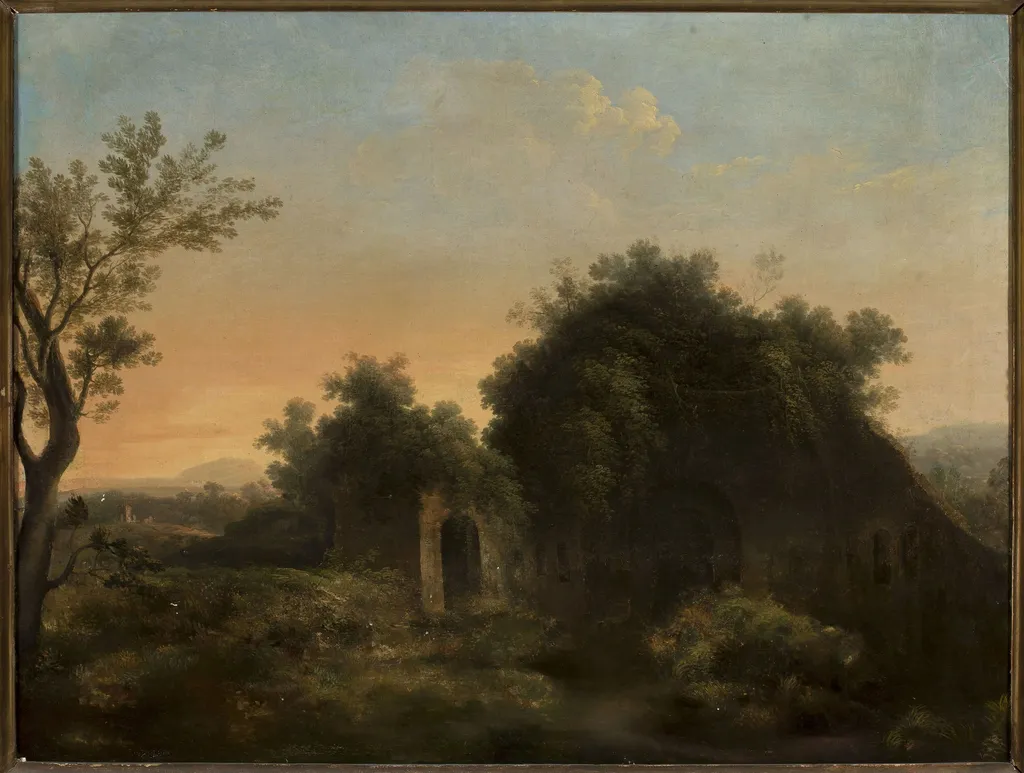
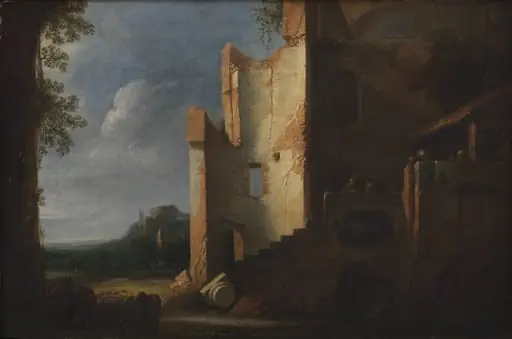
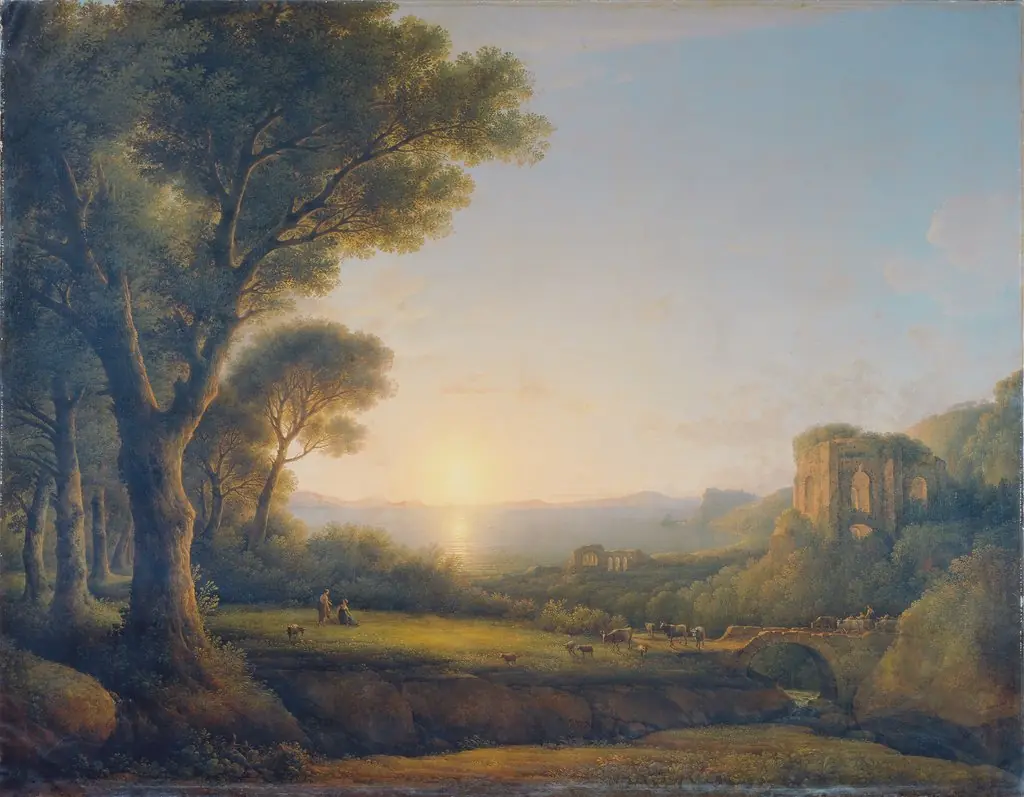
Italian style landscape is an oil painting by Gregorio Fidanza. It dates from 1800 and is held in the collection of the National Museum in Warsaw.
About this work
Overview
Painted in 1800 by Gregorio Fidanza, this oil-on-canvas landscape reflects an idealized interpretation of the Italian countryside. It is part of the collection at the National Museum in Warsaw, where it remains as an example of early 19th-century European landscape painting influenced by classical traditions. The work avoids dramatic narrative, instead focusing on quiet natural harmony.
Subject & Meaning
The ruins imply the passage of time, while the enduring trees suggest resilience, together forming a meditative reflection on nature and decay.
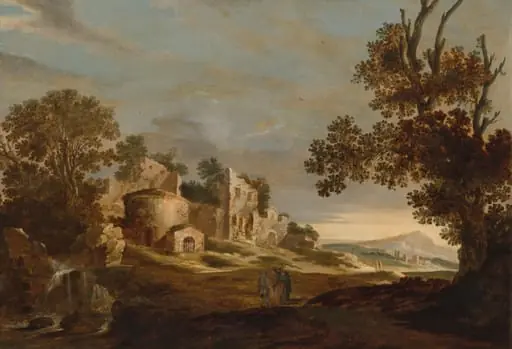
The composition centers on a weathered structure, possibly ancient ruins, flanked by a robust tree on the left and a gently rolling hill lined with foliage on the right. The soft transition between blue and orange hues in the sky suggests dawn or dusk, evoking a contemplative mood. The ruins imply the passage of time, while the enduring trees suggest resilience, together forming a meditative reflection on nature and decay.
Technique & Style
Fidanza employed fine brushwork to render intricate details in the foliage and stonework, emphasizing texture without overt realism. The lighting, with warm tones against cooler shadows, demonstrates a subtle use of chiaroscuro to model forms and guide the viewer’s eye. The palette is restrained yet harmonious, avoiding vivid contrasts in favor of atmospheric cohesion and quiet luminosity.
History & Provenance
The painting entered the National Museum in Warsaw’s collection in the early 20th century, though its earlier ownership remains undocumented. It was likely acquired during a period of increased interest in Italianate landscapes among Central European collectors. No records indicate it was exhibited publicly before its inclusion in the museum’s holdings.
Context
Created during the Napoleonic era, the work aligns with a broader European trend of romanticizing the Italian landscape as a site of classical memory and serene beauty. While not tied to a specific historical event, its composition echoes the idealized vistas popularized by 18th-century Grand Tour artists, filtered through a more intimate, less theatrical sensibility.
Legacy
Fidanza’s painting contributes to a lesser-known strand of Polish museum collections that preserve works by minor Italianate painters active in the early 1800s. It has not been widely reproduced or studied, but it remains a quiet example of how regional collectors engaged with continental landscape traditions. Its preservation offers insight into aesthetic tastes beyond major artistic movements.
Artist & collection