Artwork
Copilul cu fluturele
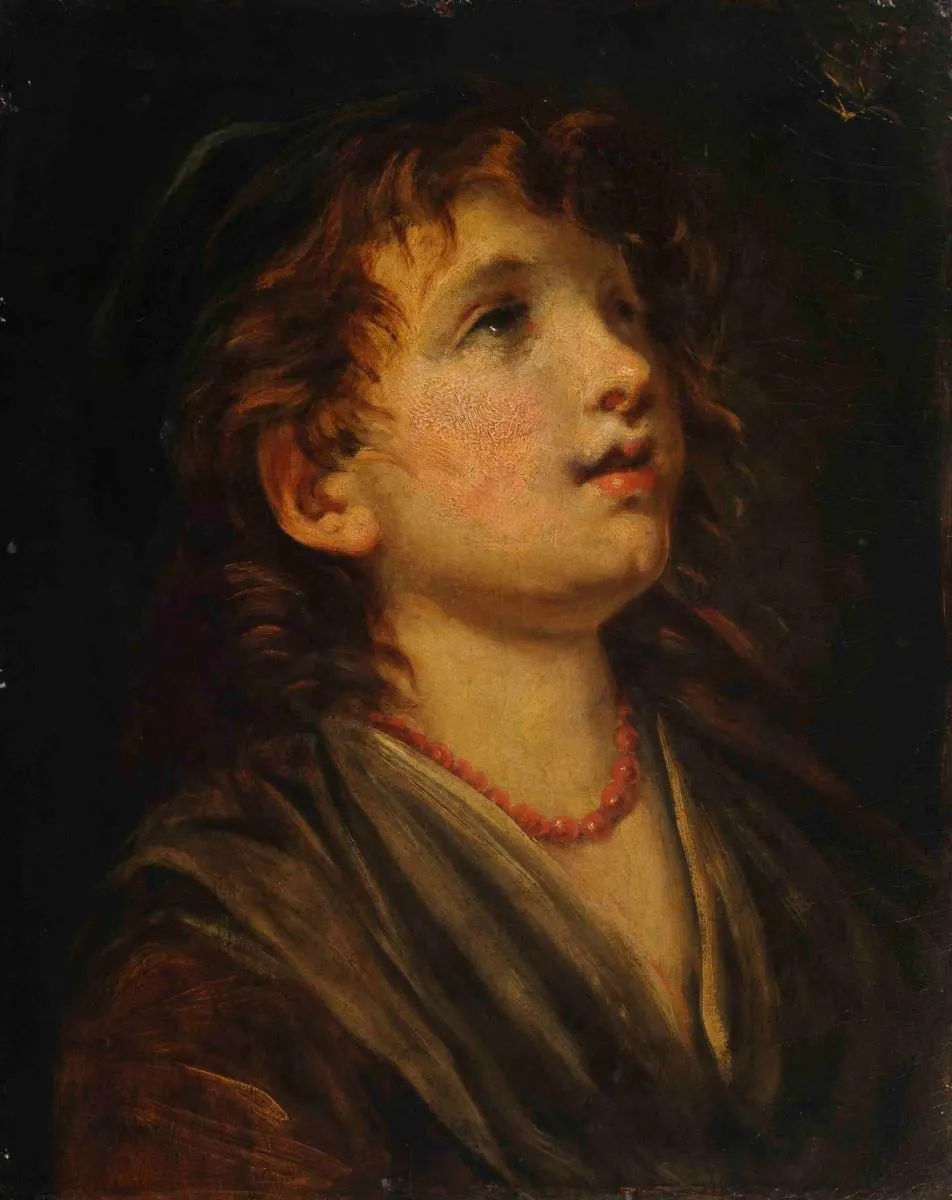
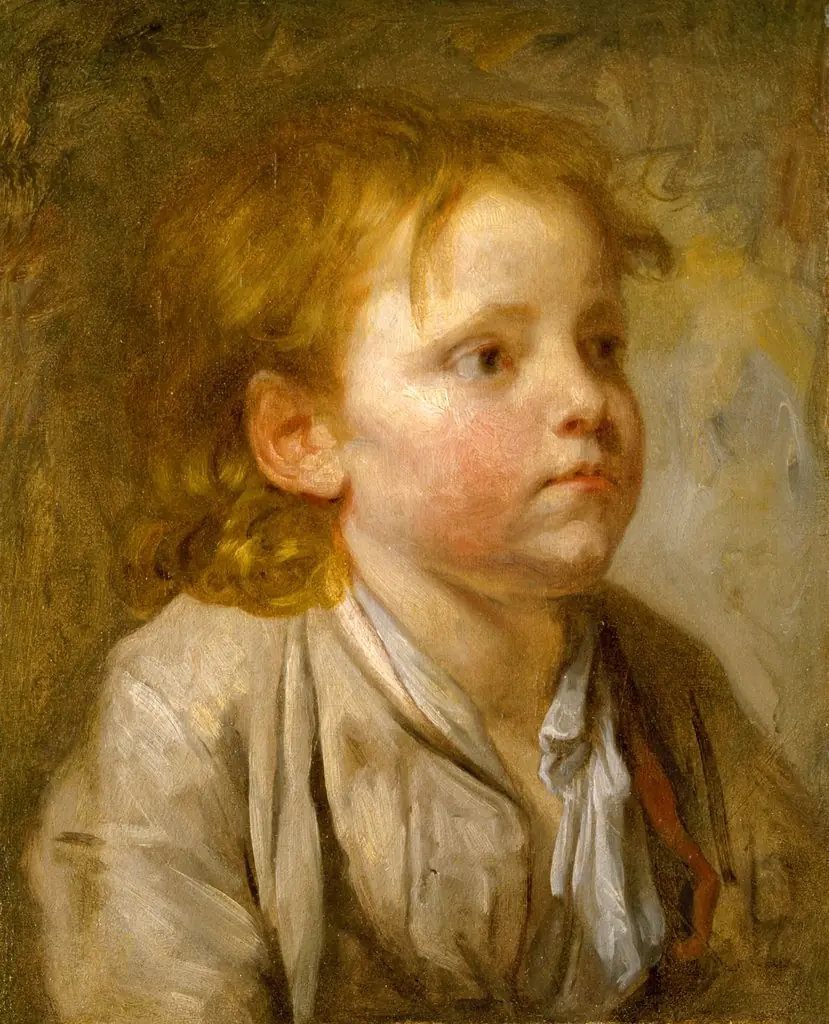
Copilul cu fluturele is a print by the Rococo painting artist Jean-Baptiste Greuze. It dates from 1775 and is held in the collection of the National Museum of Art of Romania.
About this work
Overview
The work belongs to the collection of the Museum of Ethnography, where it is preserved as an example of 18th-century reproductive printmaking.
Created around 1775 by Jean-Baptiste Greuze, this image portrays a young boy holding a butterfly on his fingertip. Rendered as a print, the composition isolates the figure against a deep, unmodulated background, drawing attention to the delicate interaction between child and insect. The work belongs to the collection of the Museum of Ethnography, where it is preserved as an example of 18th-century reproductive printmaking.
Subject & Meaning
The boy’s upward gaze and the butterfly’s fragile perch suggest a moment of quiet wonder, common in Greuze’s genre scenes that evoke innocence and transience. The red necklace may signify childhood vulnerability or cultural identity, while the butterfly, often a symbol of fleeting life, enhances the painting’s contemplative tone. The scene avoids narrative drama, instead inviting quiet reflection on youth and impermanence.
Technique & Style
Greuze employed fine linear detail to define the boy’s curly dark hair and the butterfly’s spotted wings, contrasting with the flat, dark background that eliminates spatial context. The print’s tonal range relies on subtle ink gradations to model the boy’s face and robe, emphasizing texture without heavy shading. The restrained palette—dominated by darks and a single red accent—focuses attention on the central gesture.
History & Provenance
The work is a reproductive print derived from Greuze’s original painting, likely produced to meet demand for his popular sentimental subjects. It entered the Museum of Ethnography’s collection through unspecified means, possibly as part of a broader acquisition of European graphic art. Its status as a print, rather than an oil painting, reflects its role in disseminating Greuze’s imagery beyond elite collectors.
Context
In mid-to-late 18th-century France, Greuze gained recognition for moralizing genre scenes that idealized domestic virtue and childhood purity. This image aligns with his broader output, which responded to Enlightenment ideals of natural emotion and the moral education of the viewer. Though often reproduced, such works were not intended as ethnographic records but as expressions of contemporary sentiment.
Legacy
While Greuze’s paintings are more widely studied, prints like this one helped extend his influence across social classes. The image’s enduring presence in museum collections underscores its role in shaping perceptions of childhood in visual culture. It remains a quiet example of how reproductive prints preserved and circulated emotional themes from the era’s artistic mainstream.
Artist & collection
Artist
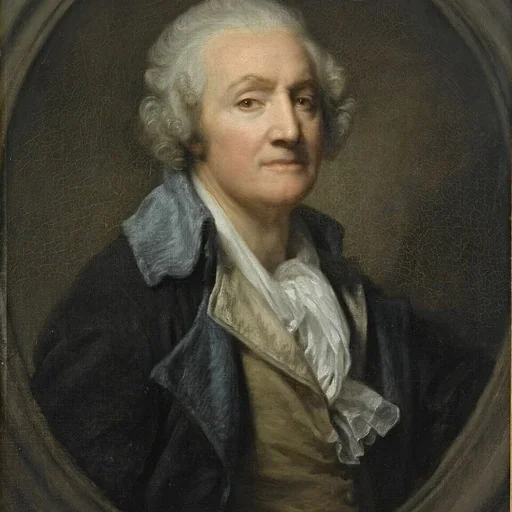
Jean-Baptiste Greuze (French pronunciation: , 21 August 1725 – 4 March 1805) was a French painter of portraits, genre scenes, and history painting.