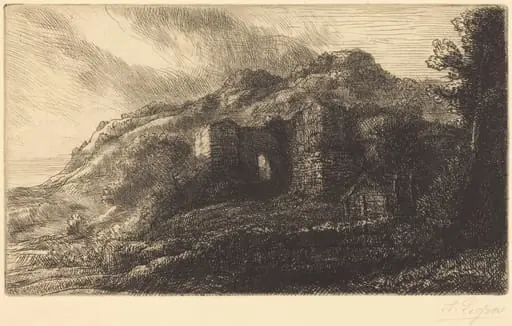
Artwork
Sellenger
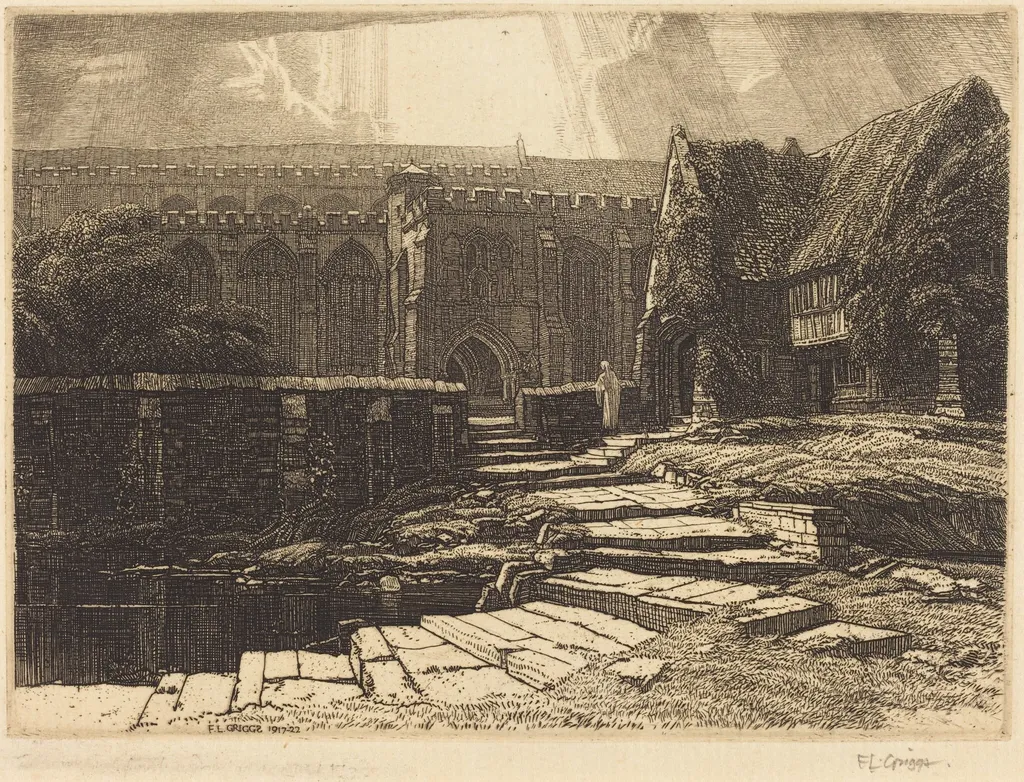
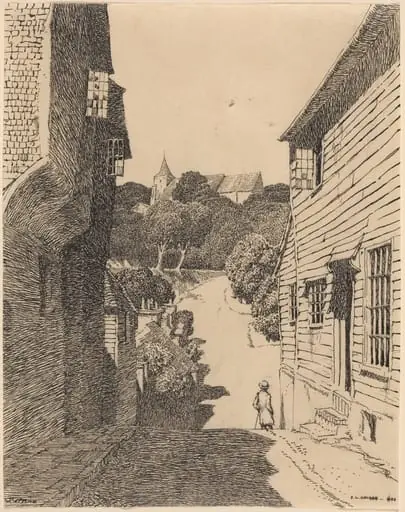
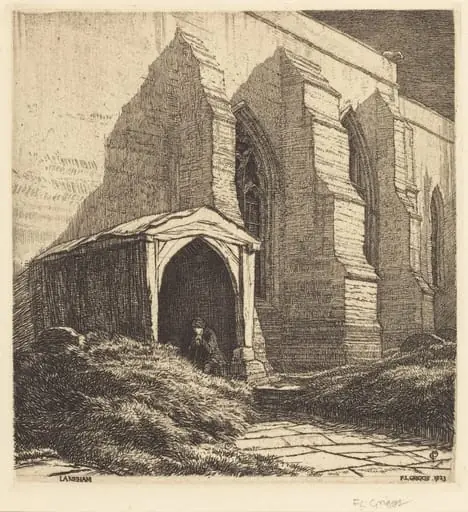
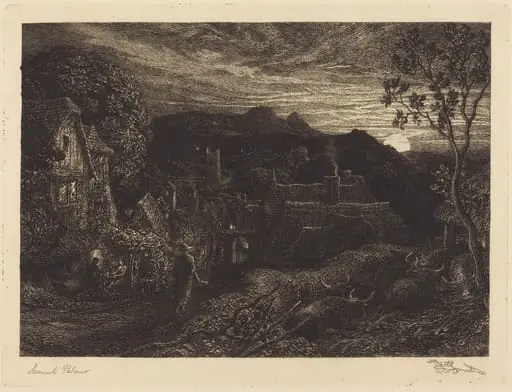
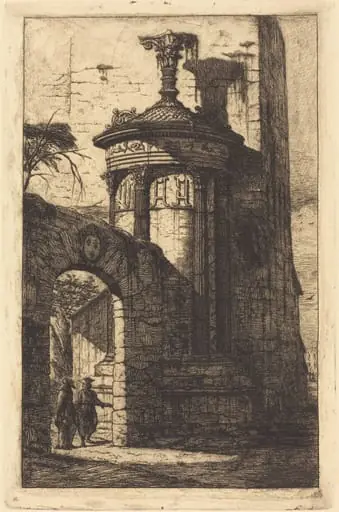
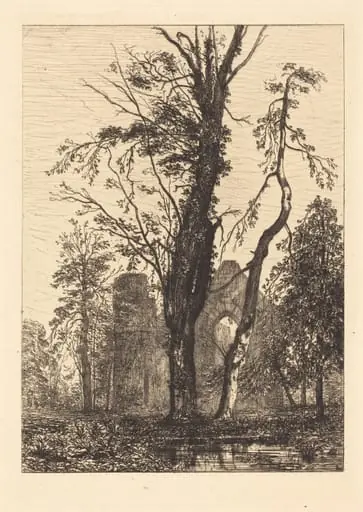
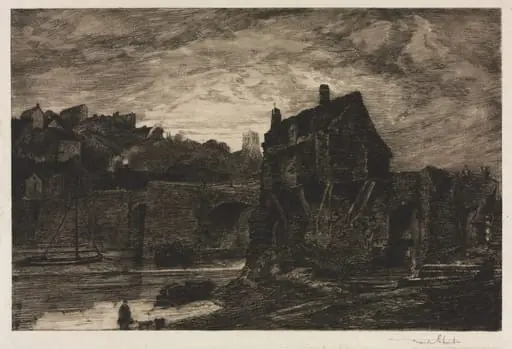
Sellenger is an ink print by F. L. Griggs. It dates from 1920 and is held in the collection of the National Gallery of Art.
About this work
Overview
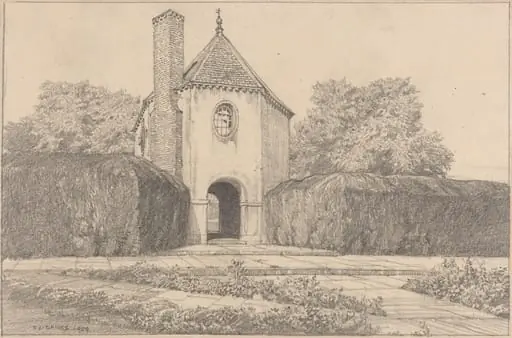
Sellenger is a black‑ink etching on laid paper executed by the British printmaker Frederick Lawrence Griggs in 1920. The work presents a quiet architectural scene rendered in fine line work, characteristic of Griggs’s meticulous approach to printmaking.
Subject & Meaning
The composition centers on a modest building with a broad arched doorway, its stone and brick façade illuminated by subtle contrasts of light and shadow. A solitary figure in a long robe stands near the entrance, suggesting a contemplative presence within the tranquil setting.
Technique & Style
Griggs employed traditional intaglio methods, incising the image into a copper plate and printing it onto laid paper, which imparts a faint ribbed texture. The careful modulation of tone, achieved through varied line density, creates depth and emphasizes architectural details such as the sloping roof and chimney.
History & Provenance
Created shortly after the First World War, the print reflects Griggs’s post‑war interest in rural and historic English landscapes. It entered private collections early in the 20th century and has since been documented in several catalogues of the artist’s oeuvre.
Context
Griggs, known for his watercolours of medieval and vernacular architecture, often translated his painterly sensibility into print. Sellenger aligns with his broader body of work that idealizes England’s built heritage, offering a serene counterpoint to the industrial upheavals of his time.
Artist & collection