Artwork
Laneham
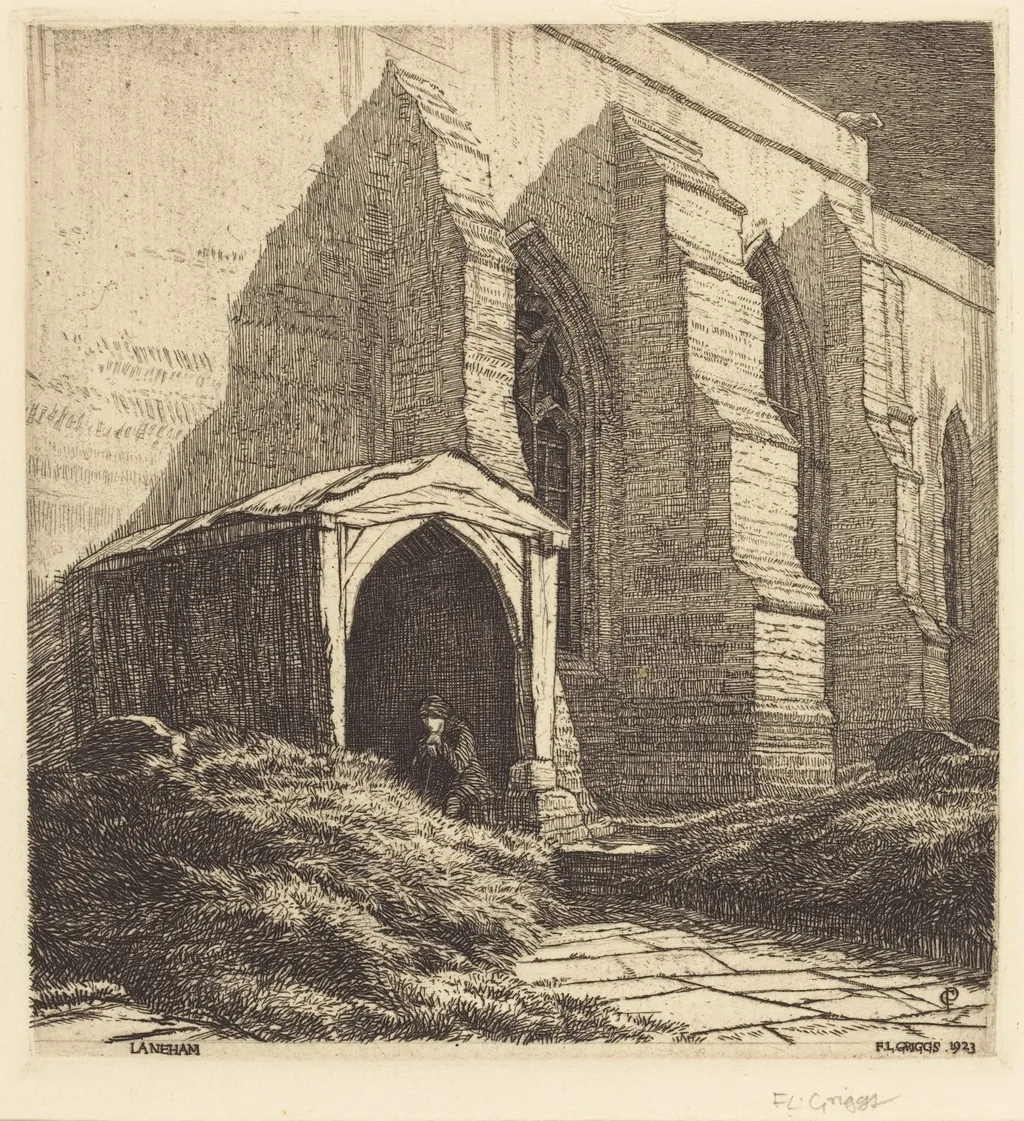
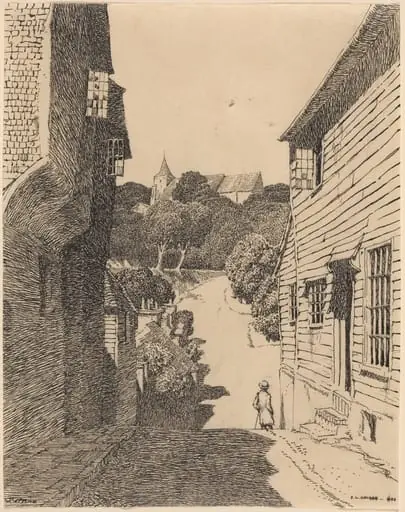
Laneham is an ink print by F. L. Griggs. It dates from 1923 and is held in the collection of the National Gallery of Art.
About this work
Overview
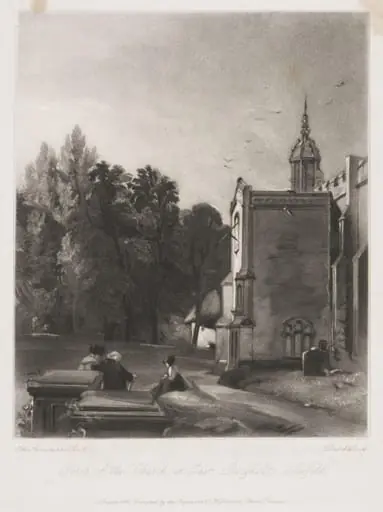
Laneham, executed in 1923 by the British printmaker F. L. Griggs, is an etching rendered in black on laid paper. The work measures the modest scale typical of Griggs’s prints and presents a solitary, weathered stone church set within a dense, overgrown landscape.
Subject & Meaning
The composition centers on an ancient church whose arched doorway opens onto a dim interior, where a faint, solitary figure stands near the altar. The building, half concealed by tall grass and trees, suggests themes of abandonment, the passage of time, and the persistence of spiritual space amid nature’s encroachment.
Technique & Style
Griggs employs fine, incised lines to delineate the rough stonework, the texture of foliage, and the subtle gradations of light and shadow. The left‑hand illumination casts the right side of the structure into deep shadow, while cross‑hatching creates a sense of depth and materiality characteristic of early‑20th‑century British etching.
History & Provenance
Created in the post‑World War I period, Laneham reflects Griggs’s interest in rural English architecture. The print has circulated through several private collections and was later acquired by a regional museum, where it remains part of the institution’s holdings on early modern British printmaking.
Context
Griggs, a member of the Society of Painter‑Etchers, often depicted historic buildings and landscapes, aligning his work with the Arts and Crafts movement’s reverence for vernacular heritage. Laneham fits within this broader oeuvre, echoing contemporary concerns about preserving England’s architectural past.
Artist & collection


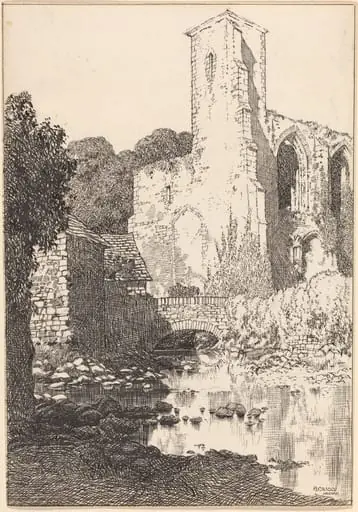
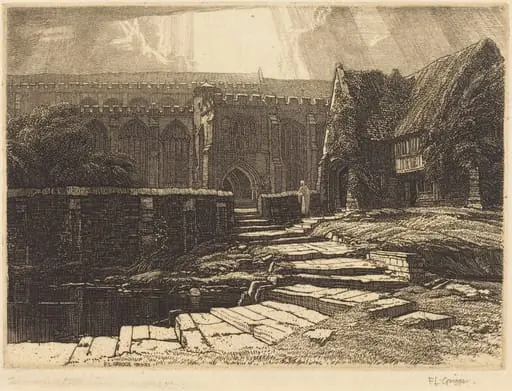 Sellenger
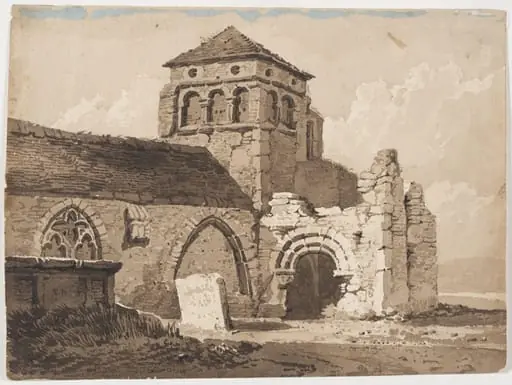 Old Shoreham Church, Sussex
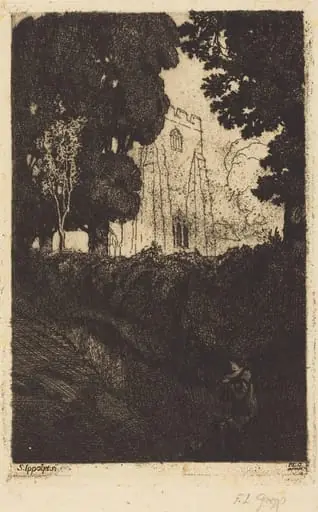 St. Ippolyts, No. 2
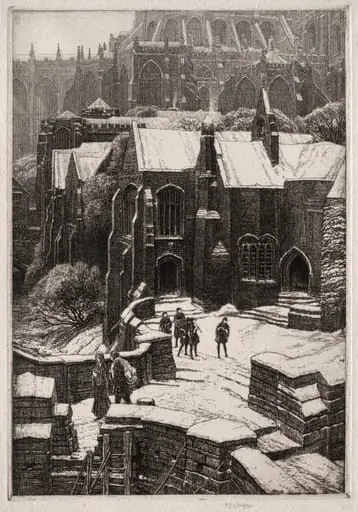 The Almonry
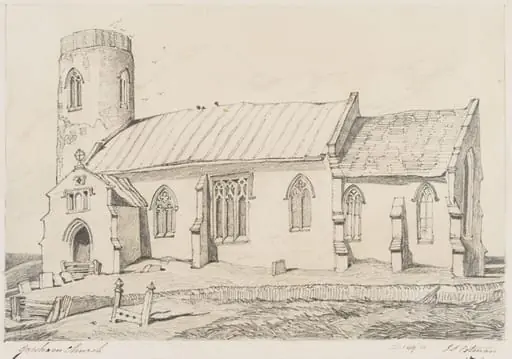 Gresham Church
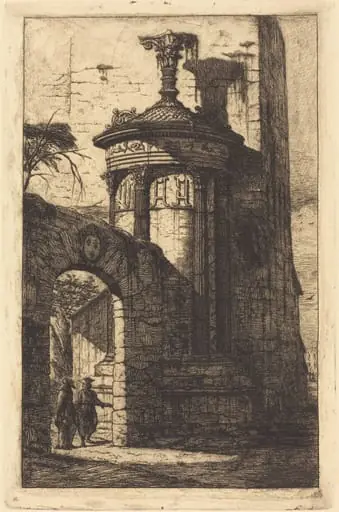 Entrée du Couvent des Capucins français à Athenes (Entrance to the French Capuchin Convent at Athens)
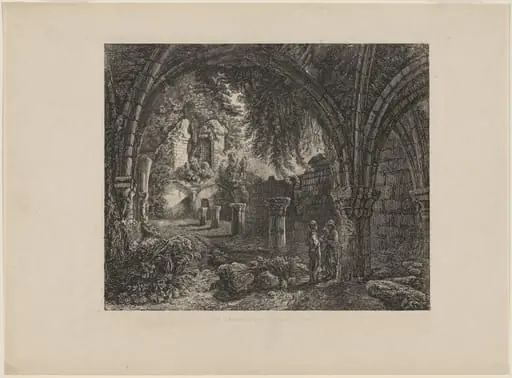 The Chapterhouse, Fountains Abbey
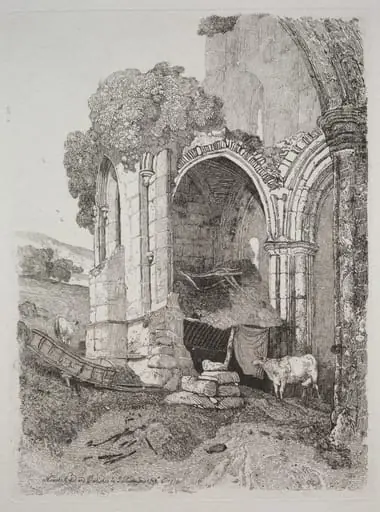 Rievaulx Abbey, Yorkshire
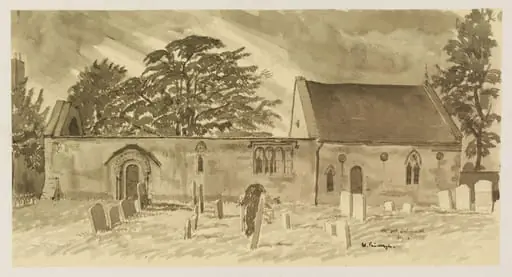 St.George's Church, Hatford
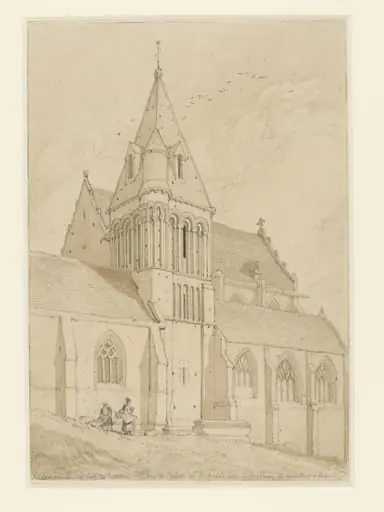 Church of St Michel, Vaucelles, near Bayeux
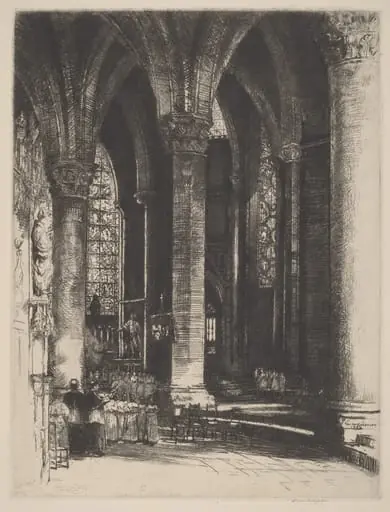 Interior of Chartres
 Porch of the Church at East Bergholt, Suffolk