Artwork
Garden House
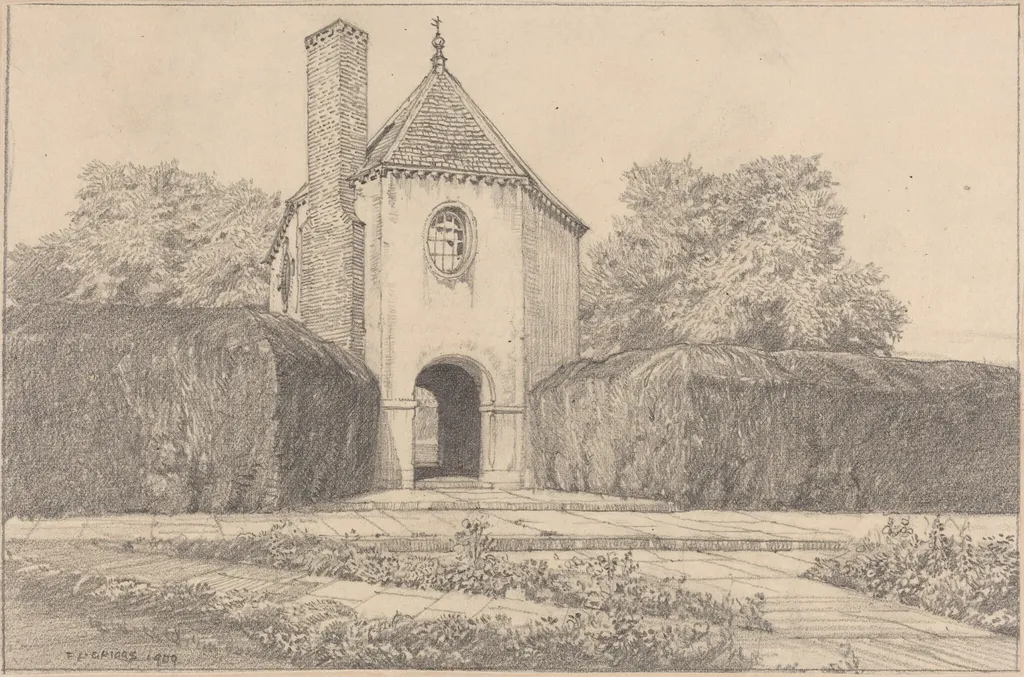
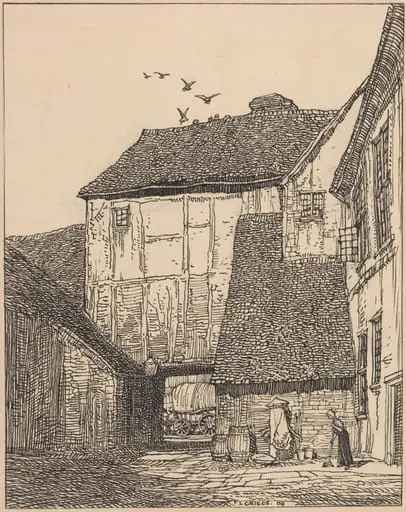
Garden House is a graphite drawing by F. L. Griggs. It dates from 1909 and is held in the collection of the National Gallery of Art.
About this work
The painting is called Garden House.
It's an architectural drawing made with graphite.
The artist, Griggs, F. L., created it in 1909, which is interesting because it's a year after the artist's listed lifespan, suggesting a possible posthumous creation or error in the records.
You can learn more about the artist's style and other works by looking up Griggs, F. L.
Overview
Garden House is a graphite drawing by F. L. Griggs, dated 1909. The work belongs to a series of architectural studies in which Griggs explored English country buildings with precise, contemplative line work. Though some records suggest the artist died before this date, the drawing’s style and medium align with his known practice, indicating the date may reflect completion rather than creation.
Subject & Meaning
The subject is a modest rural structure, likely a garden pavilion or outbuilding, rendered with quiet attention to form and proportion. Griggs avoids ornamentation, focusing instead on the building’s relationship to its surroundings. The drawing conveys a sense of stillness and time-worn permanence, reflecting his interest in vernacular architecture as a vessel of memory.
Technique & Style
Executed in graphite, the drawing employs fine, controlled lines to define architectural details without shading or tonal contrast. Griggs favors clarity over drama, using measured strokes to suggest texture and structure. The composition is balanced and restrained, typical of his approach to topographical drawing, where accuracy serves an atmospheric rather than decorative purpose.
History & Provenance
The drawing’s date of 1909 appears inconsistent with the artist’s documented death in 1908, suggesting either a misattribution or posthumous cataloging error. No definitive provenance is recorded, but the work likely passed through private collections or institutional archives associated with Griggs’s estate. Its survival reflects ongoing scholarly interest in his lesser-known drawings.
Context
In early 20th-century Britain, architectural drawing was a respected discipline among artists invested in preserving regional heritage. Griggs was part of a movement that documented disappearing rural structures, often with antiquarian precision. His work, though not widely exhibited, contributed to a broader cultural effort to record England’s architectural past amid rapid modernization.
Legacy
Garden House exemplifies Griggs’s quiet contribution to British topographical art. While he is less known than contemporaries, his drawings remain valued for their technical discipline and emotional restraint. The work continues to inform studies of early modern architectural preservation and the role of drawing in historical documentation.
Artist & collection


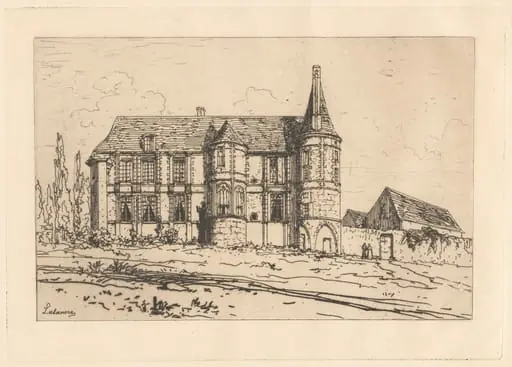 Castle with Two Towers
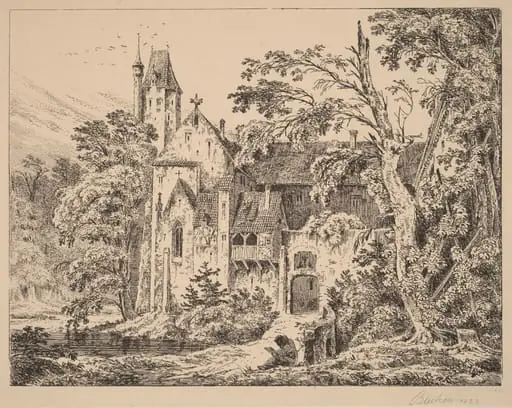 The Monastery in the Forest
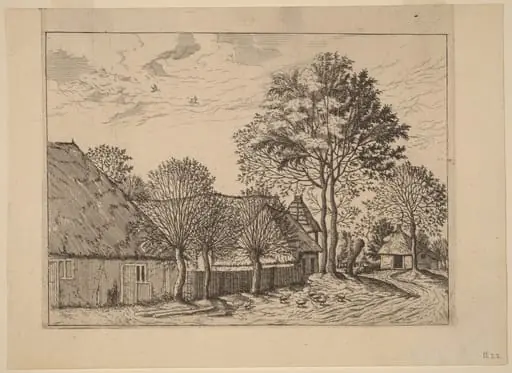 Farms
Farms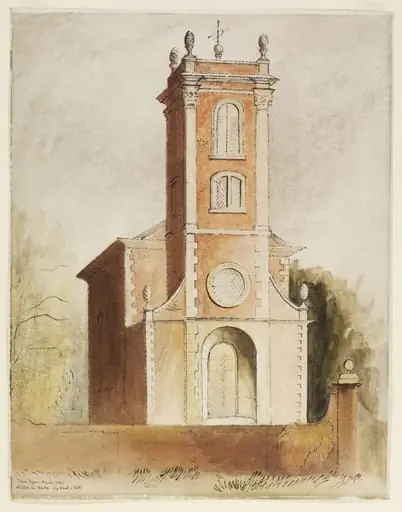 Busby's Church, Willen
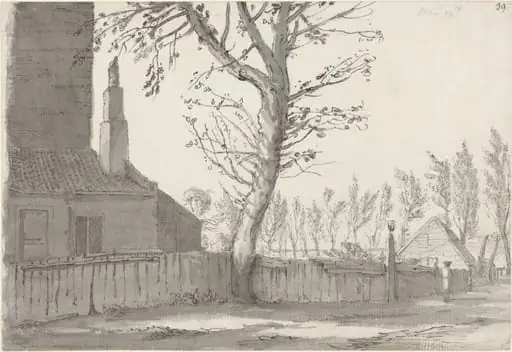 High Street at the Manor House, Marylebone
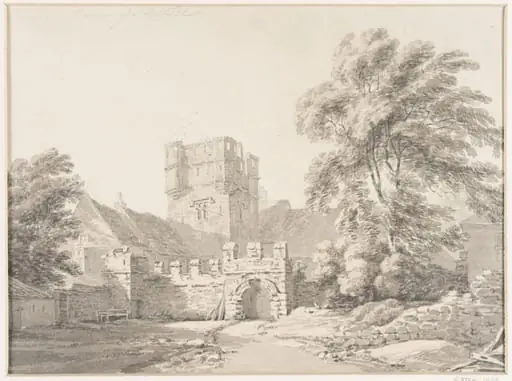 Mortham Tower, near Rokeby, Yorkshire.
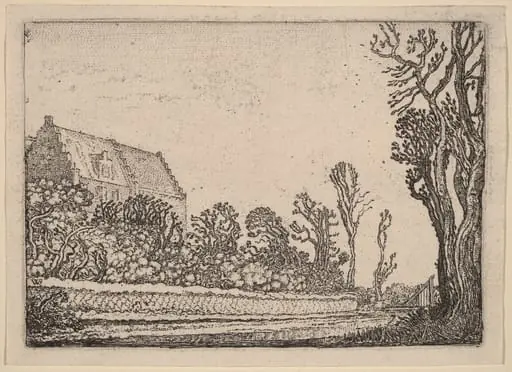 The House with the Stepped Gable
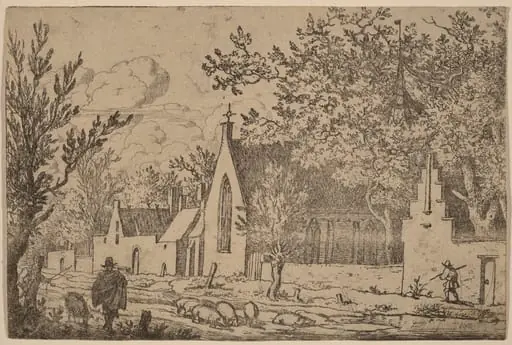 Swine Herd near a Chapel
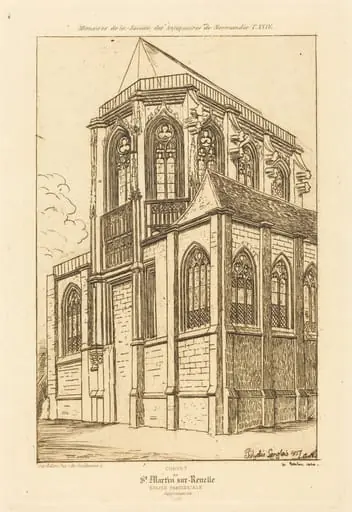 Chevet de St. Martin-sur-Renelle (The Apsis of the Church of St. Martin-sur-Renelle)
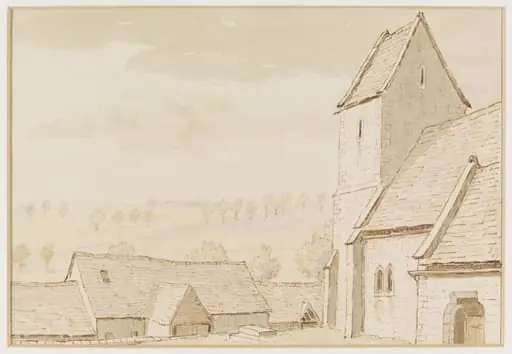 Syde Church
![Tower of a Fortified House [recto], by Friedrich Salathé](https://artifactworldgallery.com/img/friedrich-salathe--tower-of-a-fortified-house-recto--123693842ba6a52f-w320.webp) Tower of a Fortified House [recto]
Tower of a Fortified House [recto]