Artwork
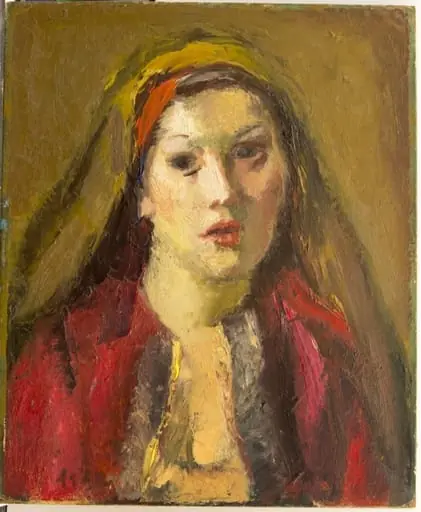
Femeie cu jachetă roșie
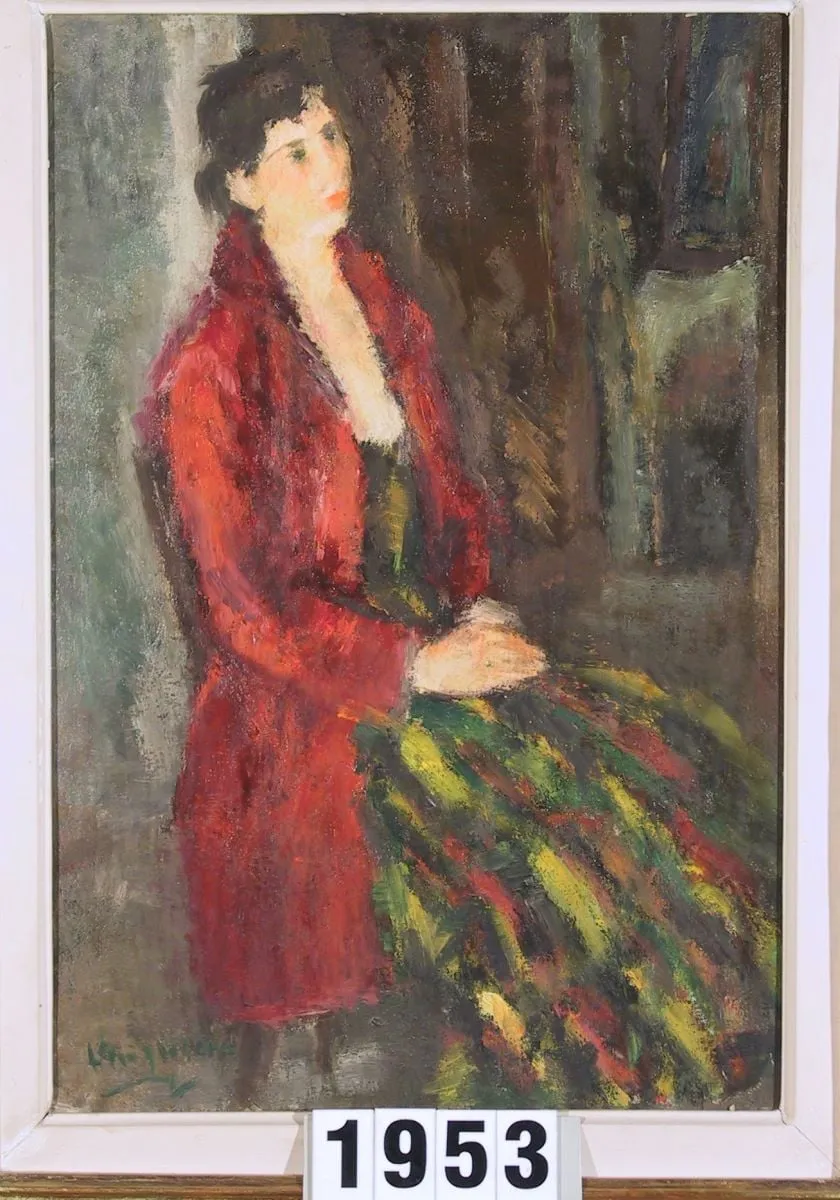
Femeie cu jachetă roșie is a print by Lucian Grigorescu. It dates from 1939 and is held in the collection of the Brukenthal National Museum.
About this work
Overview
Grigorescu, active during the interwar period, used bold color and expressive brushwork to convey emotional presence rather than strict realism.
Painted around 1939 by Romanian artist Lucian Grigorescu, *Femeie cu jachetă roșie* is a portrait that reflects the artist’s engagement with post-impressionist principles. Grigorescu, active during the interwar period, used bold color and expressive brushwork to convey emotional presence rather than strict realism. The work captures a quiet, interior moment, emphasizing mood through pigment and texture rather than narrative detail.
Subject & Meaning
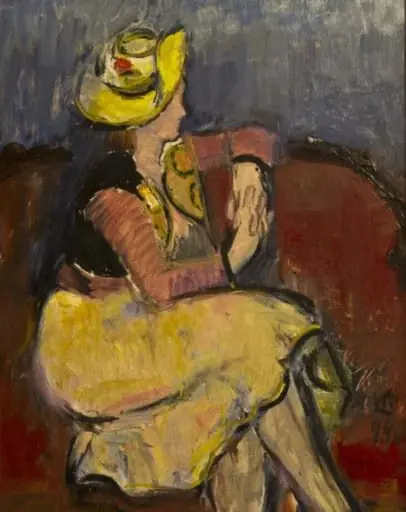
The subject is a woman dressed in a vivid red jacket with a white collar, standing still in an indoor space. She holds a small, indistinct object, suggesting a moment of pause or contemplation. The absence of clear context or facial detail shifts focus to her posture and the emotional weight of color. The painting evokes solitude and introspection, with the red garment acting as both visual anchor and psychological signal.
Technique & Style
Grigorescu employed thick, visible brushstrokes and impasto to build the red jacket and the swirling textile behind the figure. The paint is applied with tactile urgency, creating a surface that catches light unevenly. Background tones are muted and blended, allowing the saturated red to dominate. This contrast between energetic foreground and subdued surroundings aligns with post-impressionist priorities: emotional resonance over optical accuracy.
History & Provenance
Created in the late 1930s, the painting emerged during a period of cultural consolidation in Romanian art. Grigorescu, who later became a corresponding member of the Romanian Academy in 1948, was part of a generation seeking to define a national artistic voice. While the painting’s early ownership is undocumented, its survival and recognition reflect its status within Romania’s modernist canon.
Context
In the years leading to World War II, Romanian artists increasingly turned to expressive styles as a response to political uncertainty and shifting cultural identities. Grigorescu’s work, including this portrait, participated in a broader movement away from academic realism toward personal, color-driven expression. The interior setting and intimate scale align with trends in Eastern European modernism that favored psychological depth over grand narratives.
Legacy
Though not widely exhibited outside Romania, *Femeie cu jachetă roșie* remains a representative example of Grigorescu’s mature style. It illustrates how post-impressionist techniques were adapted to local sensibilities, blending Western formal innovations with domestic subject matter. The painting continues to be referenced in studies of interwar Romanian art as a quiet but potent statement of individual presence through color and texture.
Artist & collection
Artist
Lucian Grigorescu (Romanian pronunciation: ; 1 February 1894, Medgidia – 28 October 1965, Bucharest) was a Romanian post-impressionist painter.