Artwork
Femeie pe canapea
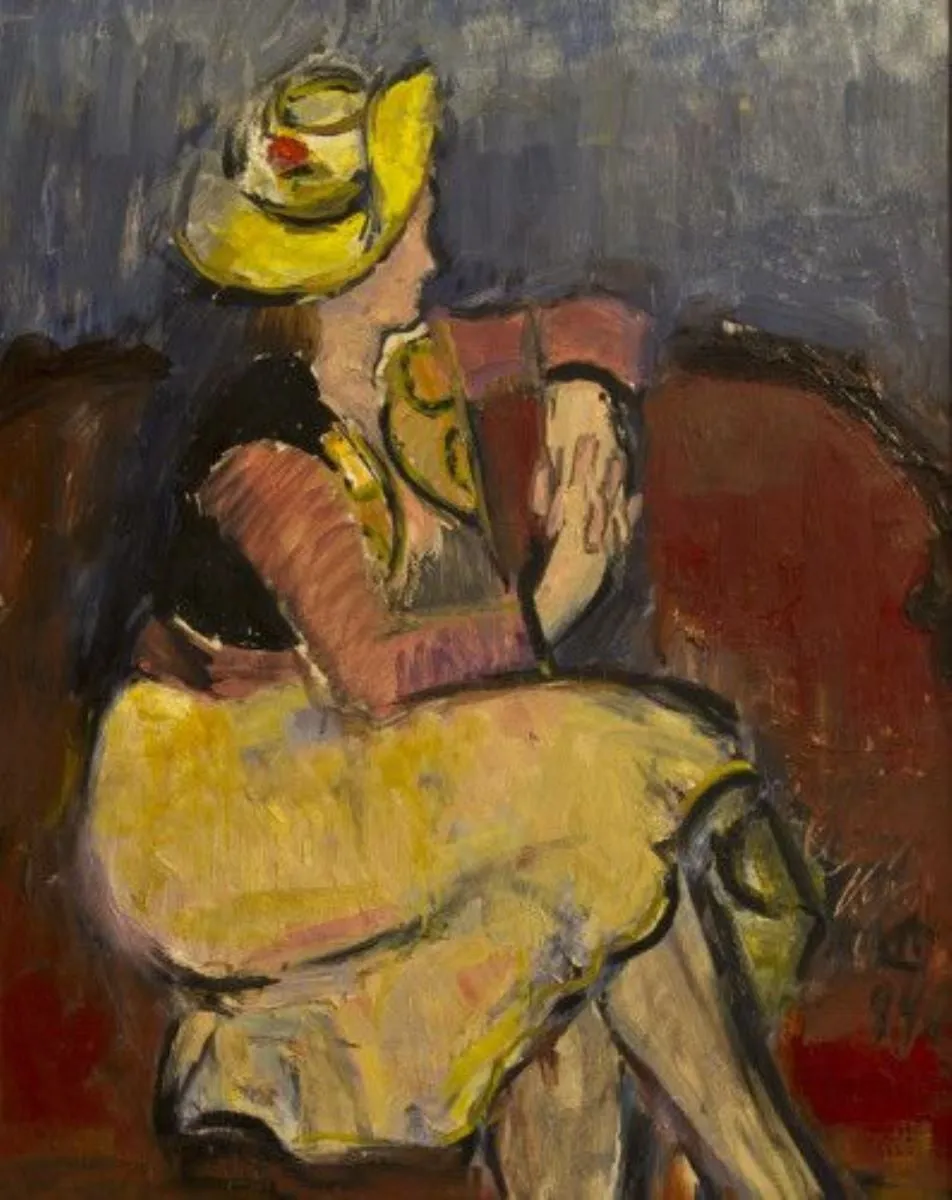
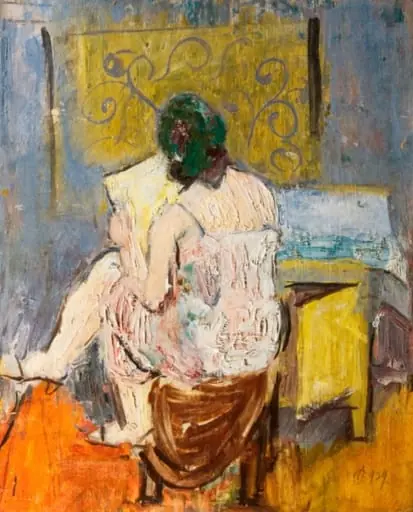
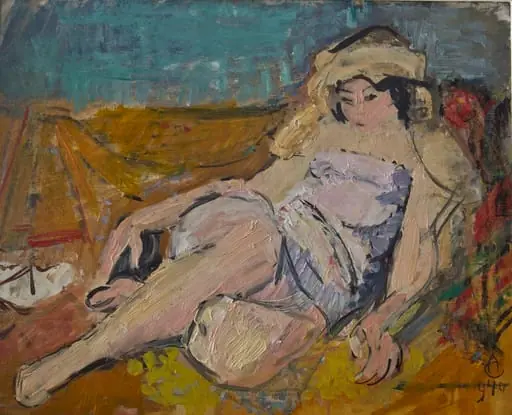
Femeie pe canapea is an unspecified painting by Alexandru Ciucurencu. It dates from 1940 and is held in the collection of the National Museum of Art of Romania.
About this work
Overview
The work reflects his synthesis of structured composition and emotive color, characteristic of his mature style after returning to Romania.
Painted in 1940 by Romanian artist Alexandru Ciucurencu, *Femeie pe canapea* is a portrait rooted in Post-Impressionist principles. Ciucurencu, trained in Bucharest and later in Paris at the Académie Julian, absorbed European modernist approaches during his time abroad. The work reflects his synthesis of structured composition and emotive color, characteristic of his mature style after returning to Romania.
Subject & Meaning
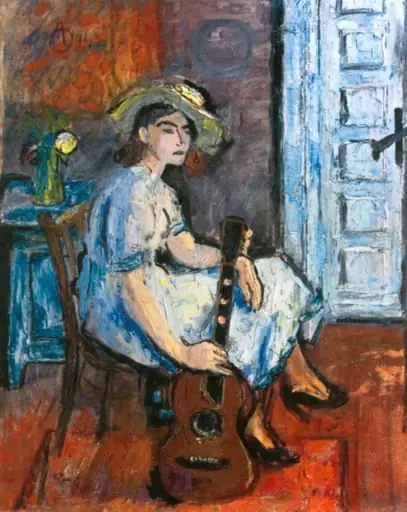
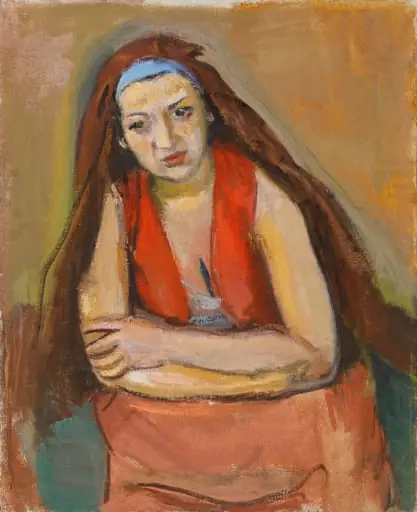
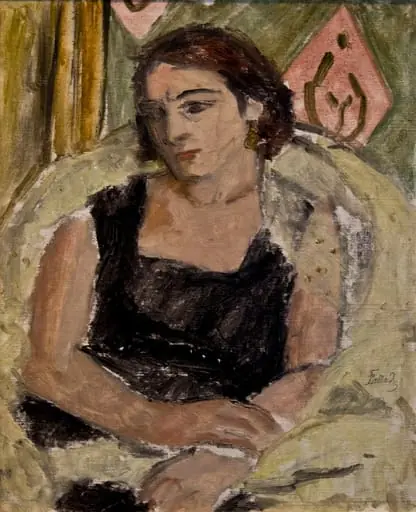
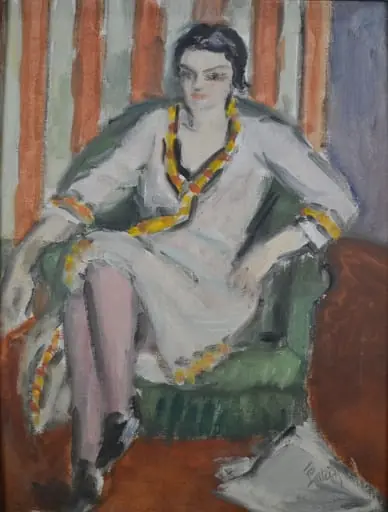
The painting portrays a woman seated sideways on a sofa, her posture calm and contained. She wears a wide-brimmed yellow hat adorned with a red flower, a loose warm-toned shirt, and a dark vest. Her hands are gently clasped before her, suggesting introspection. The figure is isolated against a muted, indistinct background, emphasizing her presence without narrative context, inviting quiet contemplation rather than storytelling.
Technique & Style
Ciucurencu employed thick, textured brushwork to build form and intensity, using impasto to give the figure physical presence. Colors—particularly the vivid hat and shirt—contrast sharply with the dark, blurred surroundings. The application is deliberate yet expressive, balancing structural clarity with emotional resonance. This approach, influenced by his studies under André Lhote, prioritizes sensory impact over photographic realism.
History & Provenance
Created during a period of cultural consolidation in interwar Romania, the painting emerged from Ciucurencu’s established career as a painter and academic. As a corresponding member of the Romanian Academy, his work was recognized nationally. While specific ownership history is not widely documented, the piece remains part of the broader corpus of Romanian modernist art from the 1930s–40s, often exhibited in institutional collections.
Context
In 1940, Romania was navigating political instability and shifting cultural identities. Artists like Ciucurencu sought to align with international modernism while maintaining local relevance. His Post-Impressionist style, shaped by French training, offered a bridge between European avant-garde trends and Romanian artistic traditions, resisting both academic conservatism and radical abstraction.
Legacy
Ciucurencu’s work, including *Femeie pe canapea*, contributed to the legitimization of modernist painting in Romania. His fusion of structured form and expressive color influenced later generations of Romanian artists seeking to reconcile European modernism with national identity. Though less known internationally, his paintings remain significant within Romania’s 20th-century art canon as examples of thoughtful, non-dogmatic modernism.
Artist & collection
Artist
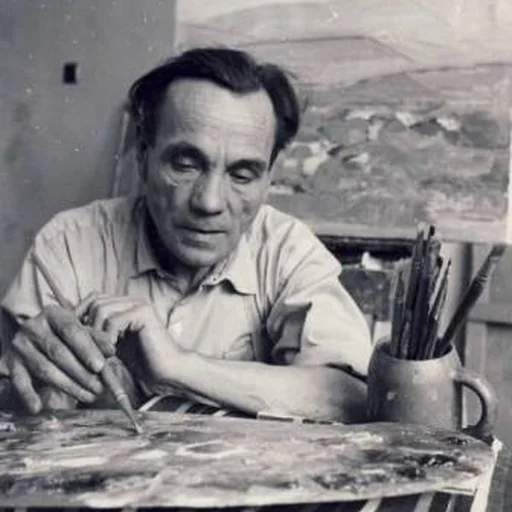
Alexandru Ciucurencu (Romanian pronunciation: ; 27 September 1903 – 27 December 1977) was a Romanian Post-Impressionist painter, and a corresponding member of the Romanian Academy.