Artwork
Peisaj cu fabrică
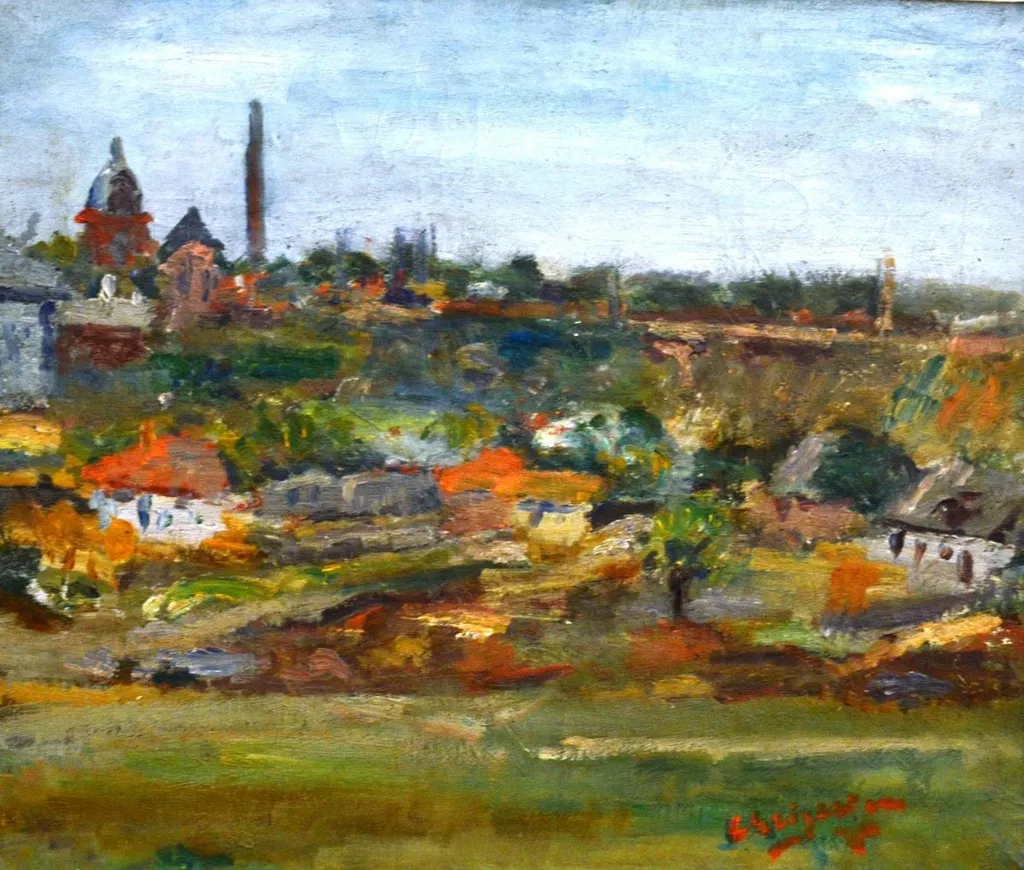
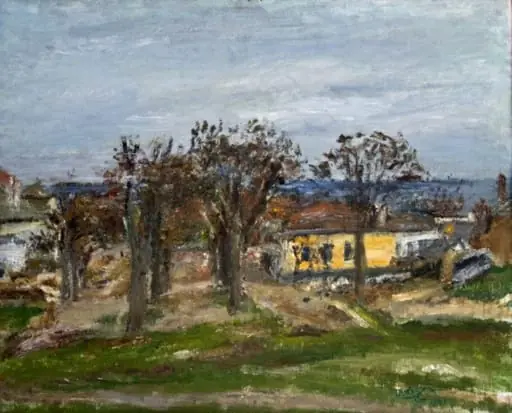
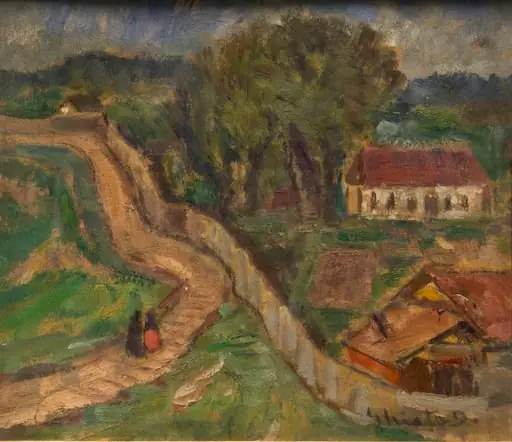
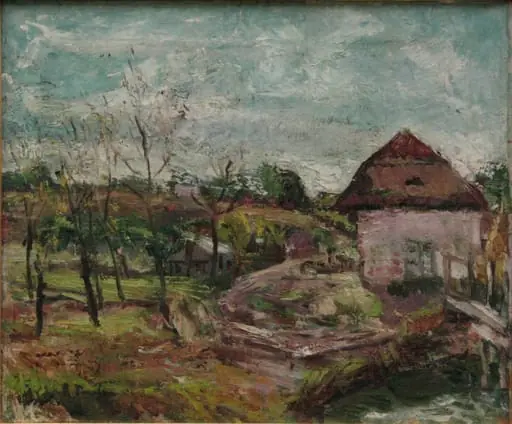
Peisaj cu fabrică is a print by Lucian Grigorescu. It dates from 1939 and is held in the collection of the Art Museum of Constanta.
About this work
Overview
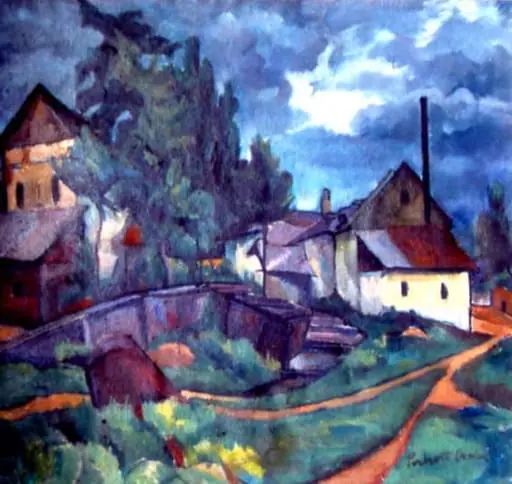
Painted around 1939 by Romanian artist Lucian Grigorescu, *Peisaj cu fabrică* is a landscape that integrates industrial elements into a rural setting.
Painted around 1939 by Romanian artist Lucian Grigorescu, *Peisaj cu fabrică* is a landscape that integrates industrial elements into a rural setting. Executed in oil, the work reflects Grigorescu’s alignment with post-impressionist tendencies, emphasizing emotional tone over precise representation. It resides in the Museum of Ethnography’s collection, where it is valued for its documentation of early 20th-century Romanian industrialization through a personal, non-idealized lens.
Subject & Meaning
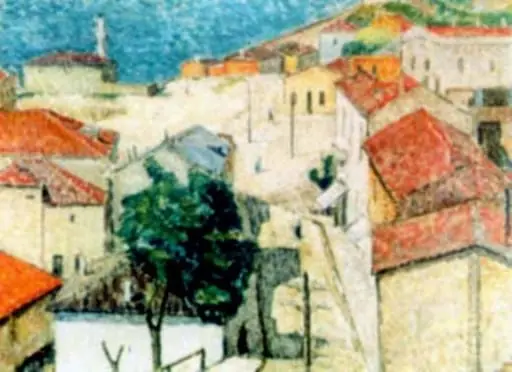
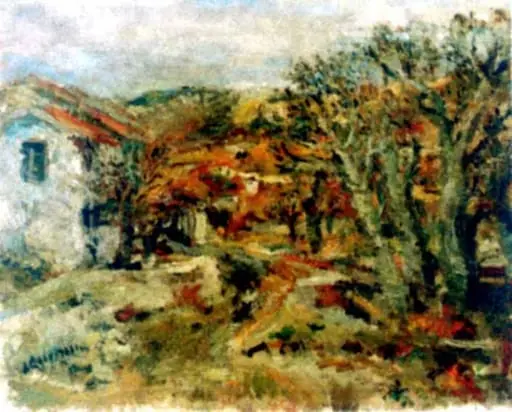
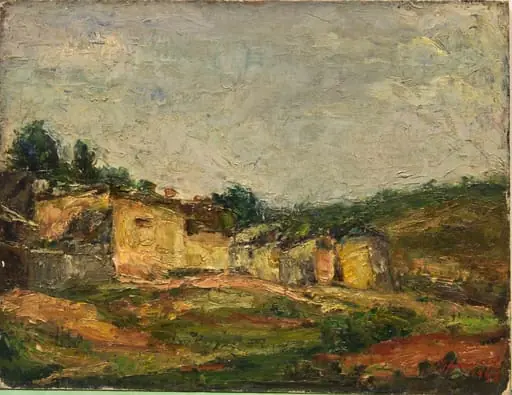
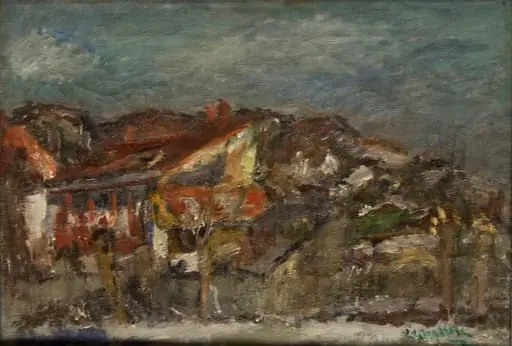
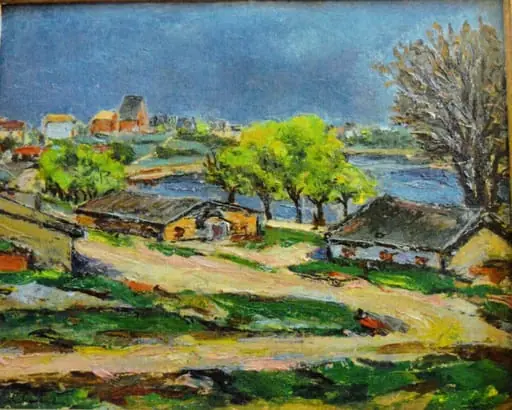
The painting presents a factory with a tall brick chimney nestled among trees and scattered buildings, alongside a distant church spire. This juxtaposition of industry and tradition suggests a quiet tension between modernization and enduring rural life. The absence of human figures amplifies a sense of solitude, as if the landscape itself bears witness to economic change. The muted palette and blurred forms convey a mood of ambiguity rather than celebration or condemnation.
Technique & Style
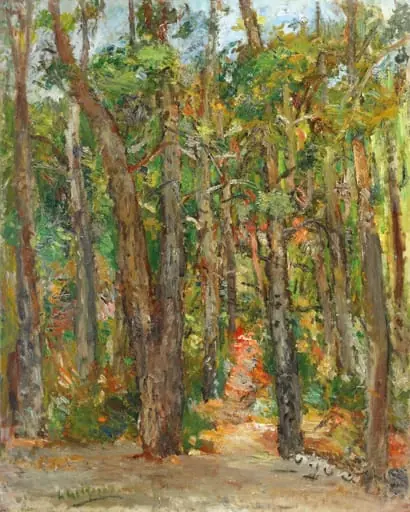
Grigorescu employed thick, uneven brushstrokes and a restricted palette dominated by earthy greens and browns, punctuated by sporadic orange accents. The surface is heavily textured, with paint applied in a loose, almost hasty manner that prioritizes atmosphere over detail. Forms dissolve into one another, particularly in the foreground, where rocks, foliage, and structures merge through impasto. This approach aligns with post-impressionist interests in subjective perception over realism.
History & Provenance
The painting entered the Museum of Ethnography’s holdings after Grigorescu’s death, likely through donation or acquisition by Romanian cultural institutions in the mid-20th century. Its preservation in a museum focused on folk and social history, rather than fine art, underscores its value as a cultural document. No significant exhibition or publication history is recorded, suggesting it remained a personal or regional work rather than a widely circulated one.
Context
Created in the late 1930s, the painting reflects Romania’s rapid, uneven industrialization during the interwar period. While cities expanded and factories rose, many rural communities retained traditional structures and rhythms. Grigorescu’s depiction avoids propaganda or nostalgia, instead offering a quiet, unembellished view of coexistence. His style diverges from academic norms, aligning more with regional modernists who sought authenticity in everyday scenes.
Legacy
Though not widely exhibited beyond Romania, *Peisaj cu fabrică* contributes to understanding how local artists responded to industrial change without overt political messaging. Its raw technique and emotional tone distinguish it from more polished contemporary works. Today, it stands as an example of how post-impressionist methods were adapted in Eastern Europe to capture the subtle shifts in landscape and society during a period of transition.
Artist & collection
Artist
Lucian Grigorescu (Romanian pronunciation: ; 1 February 1894, Medgidia – 28 October 1965, Bucharest) was a Romanian post-impressionist painter.