Artwork
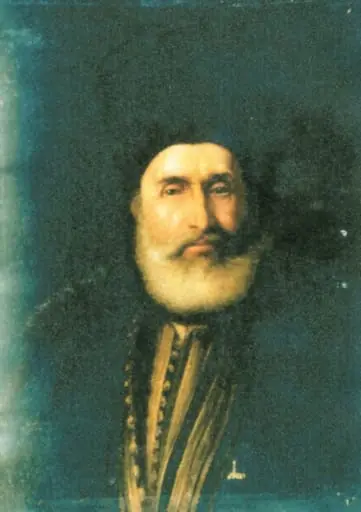
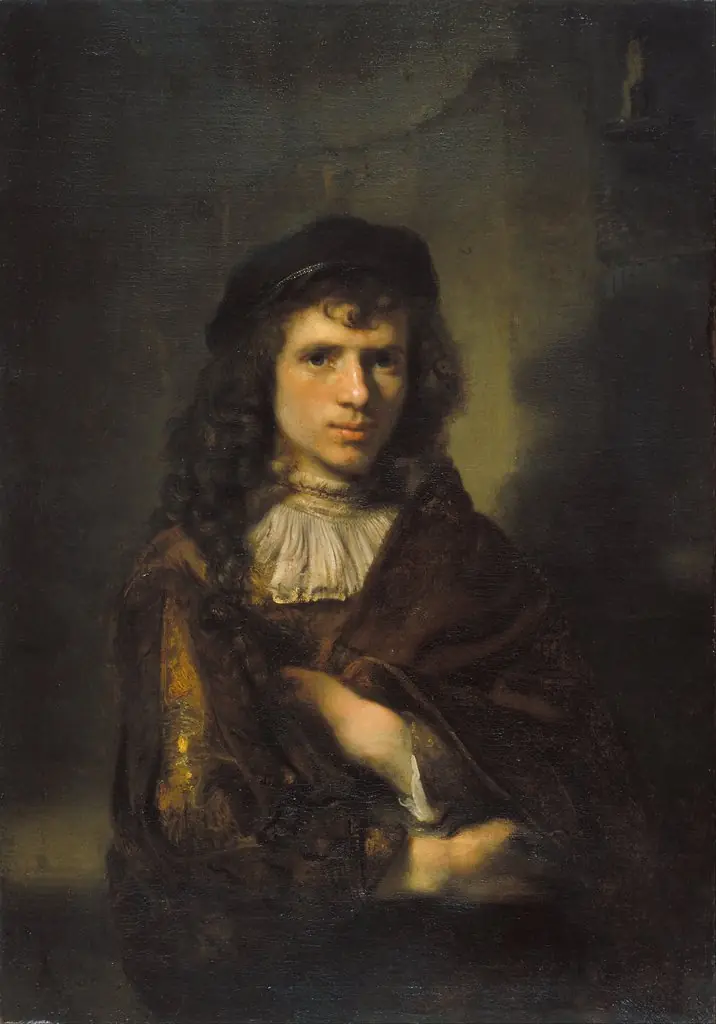
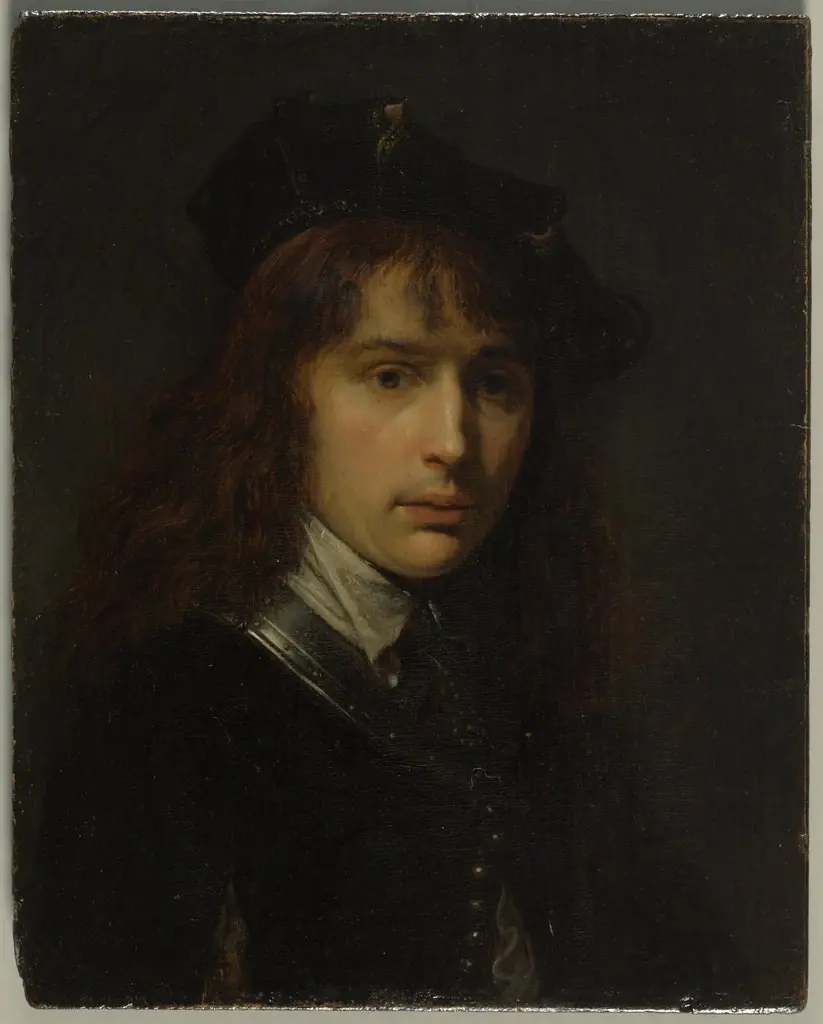
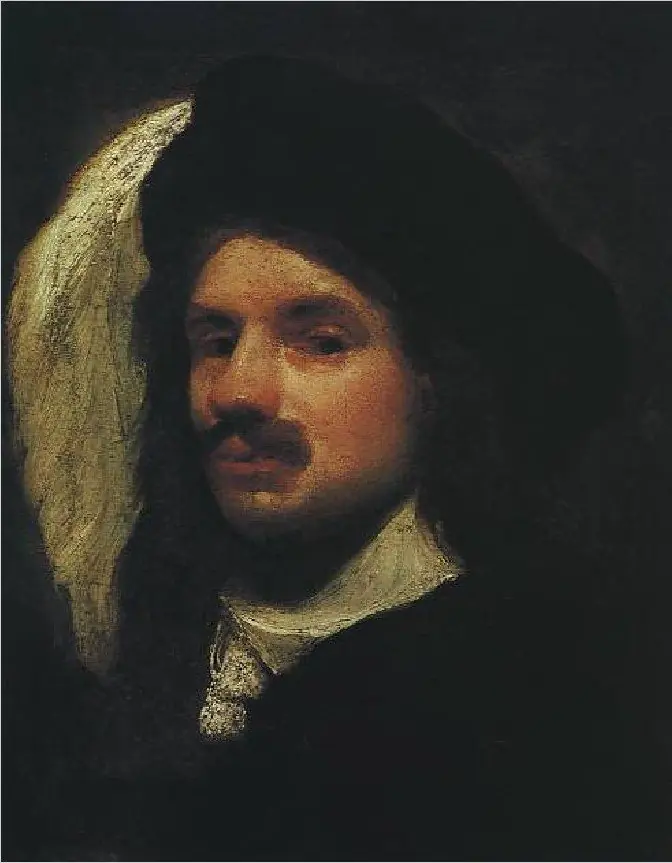
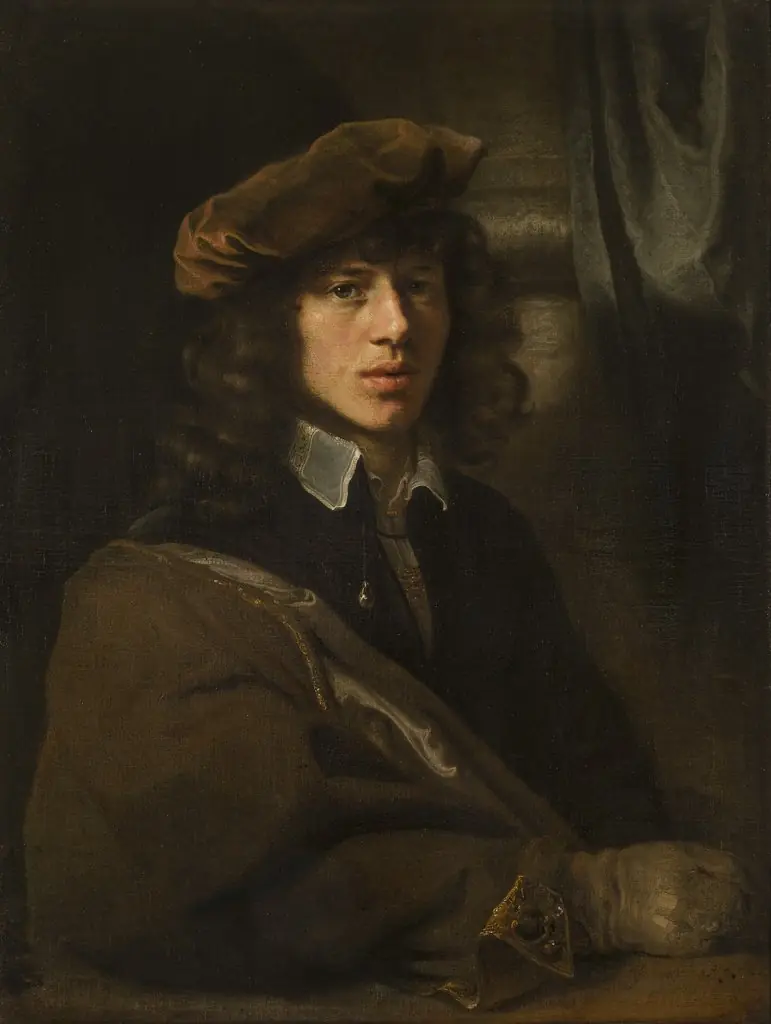
Bărbatul cu baston - copie după Rembrandt
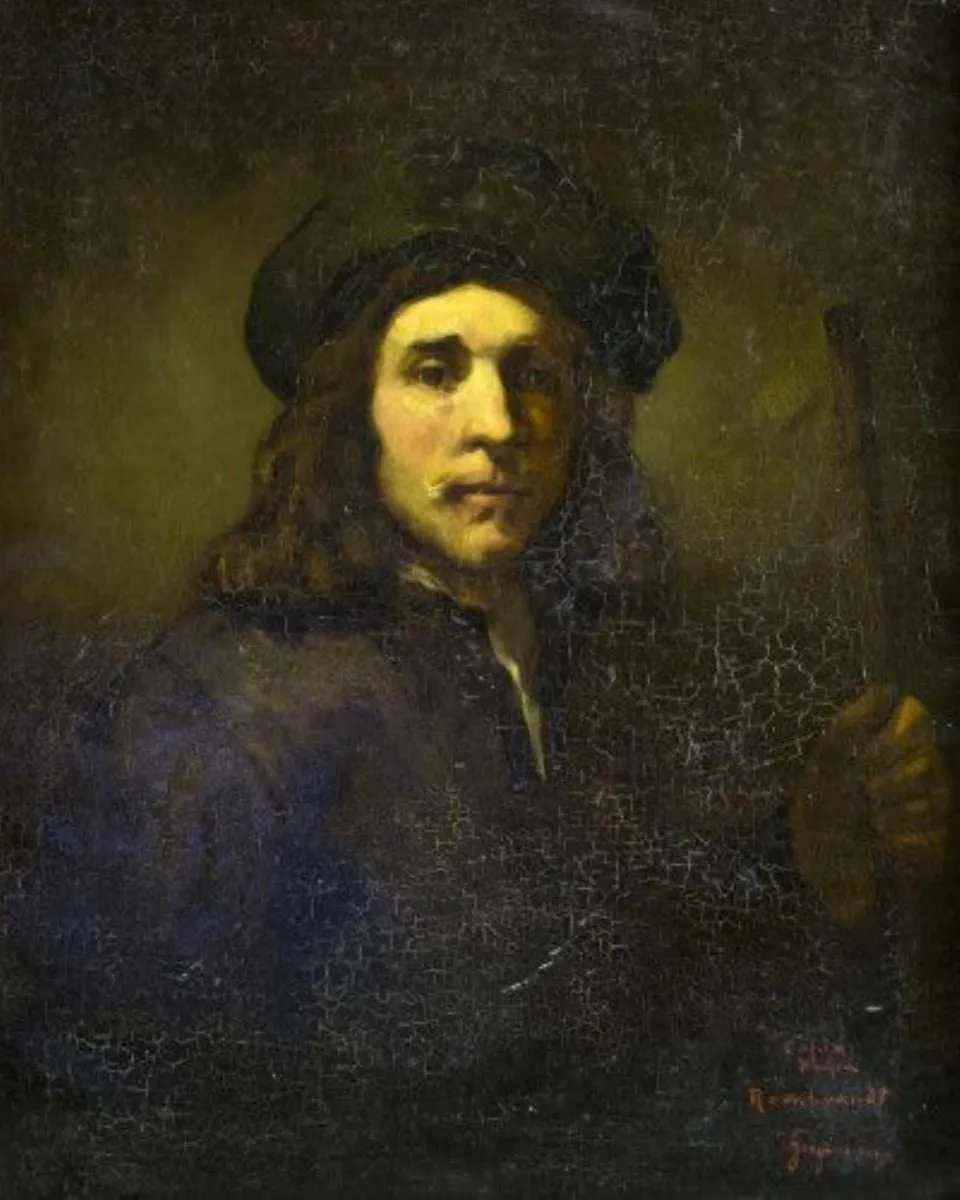
Bărbatul cu baston - copie după Rembrandt is a print by Nicolae Grigorescu. It dates from 1882 and is held in the collection of the National Museum of Art of Romania.
About this work
Overview
Nicolae Grigorescu painted this portrait around 1882 as a study after Rembrandt’s style. It presents a solitary male figure in a dark, atmospheric setting, emphasizing mood over narrative. The work reflects Grigorescu’s engagement with Dutch Golden Age portraiture during his time in Europe, particularly his interest in capturing psychological depth through light and form.
Subject & Meaning
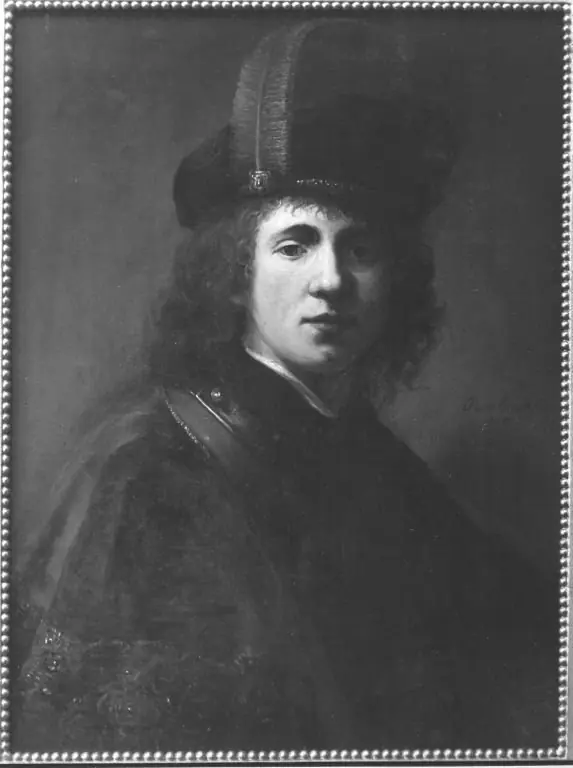
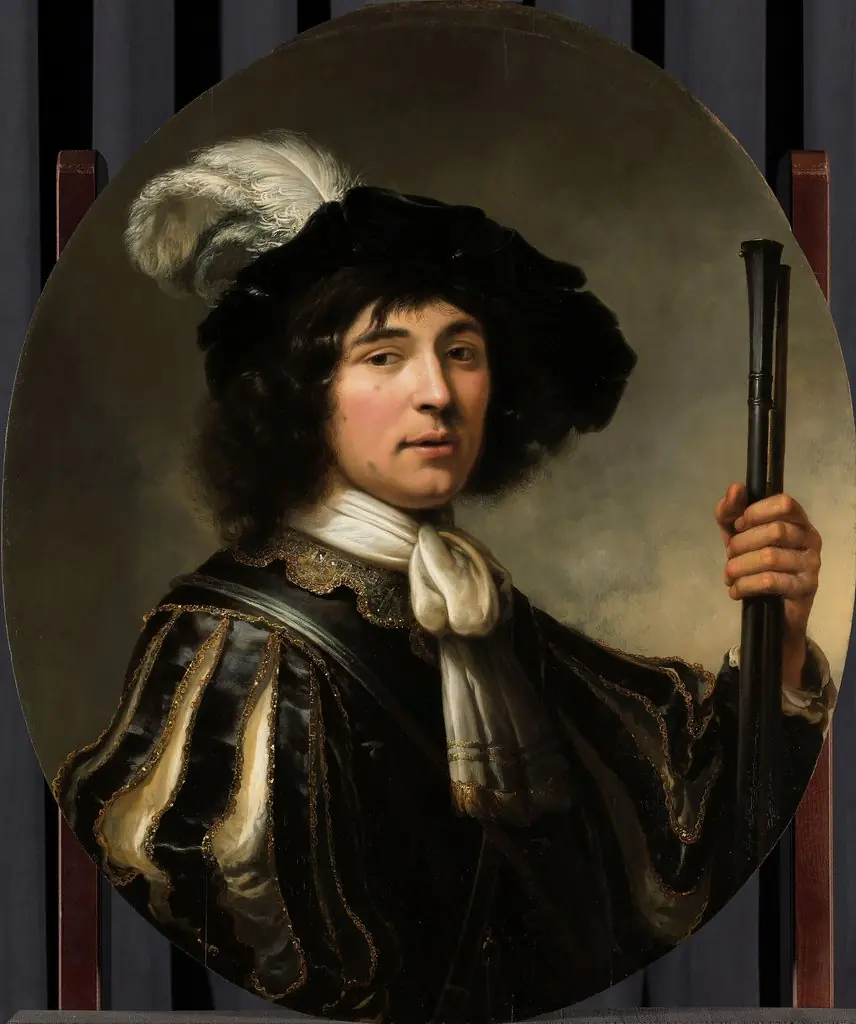
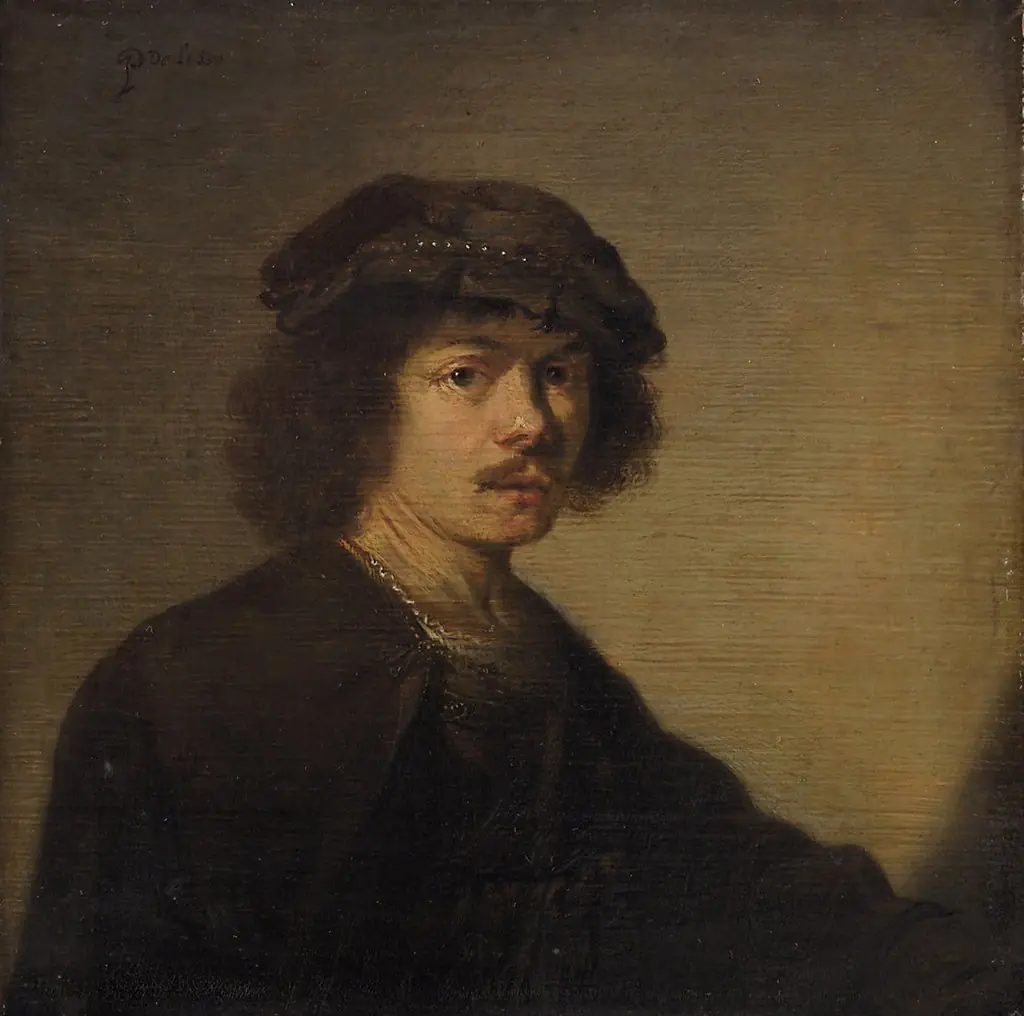
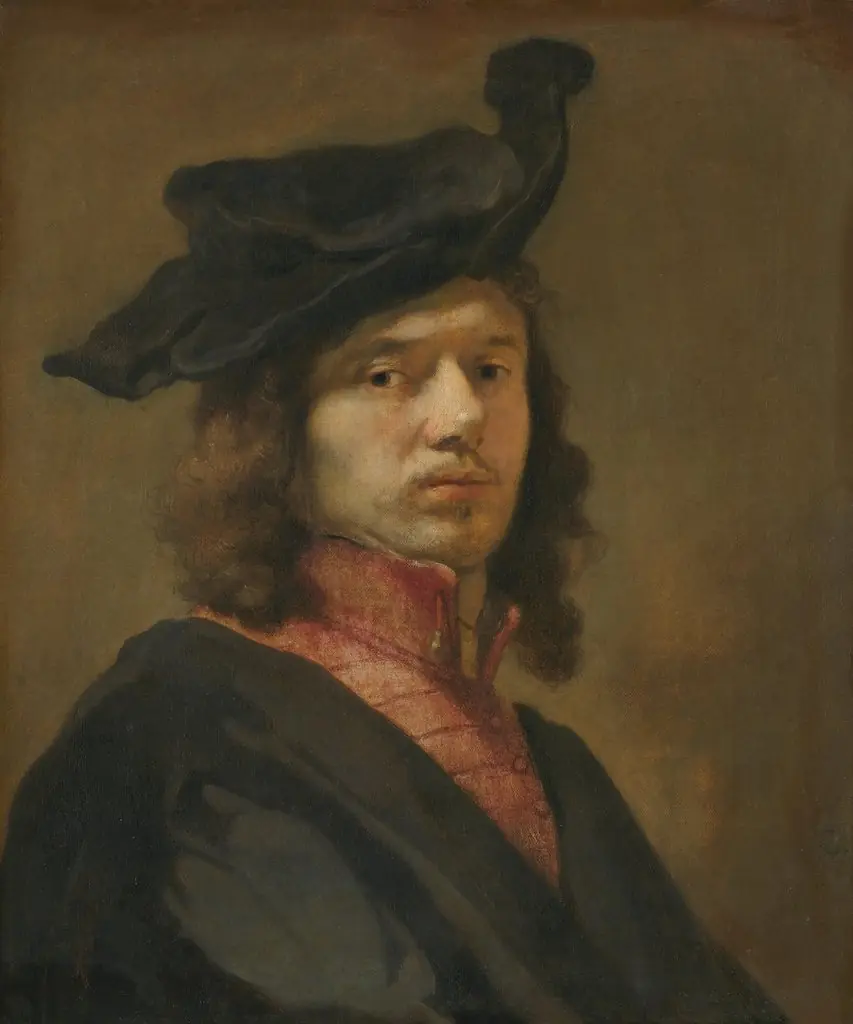
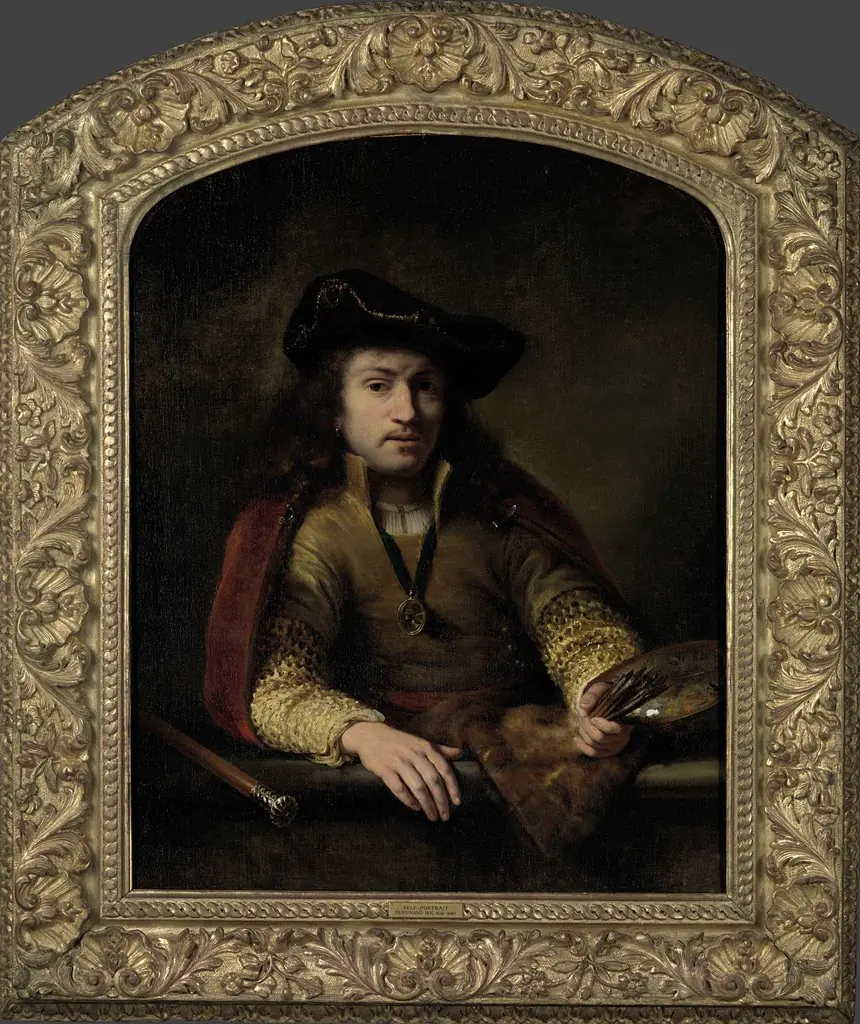
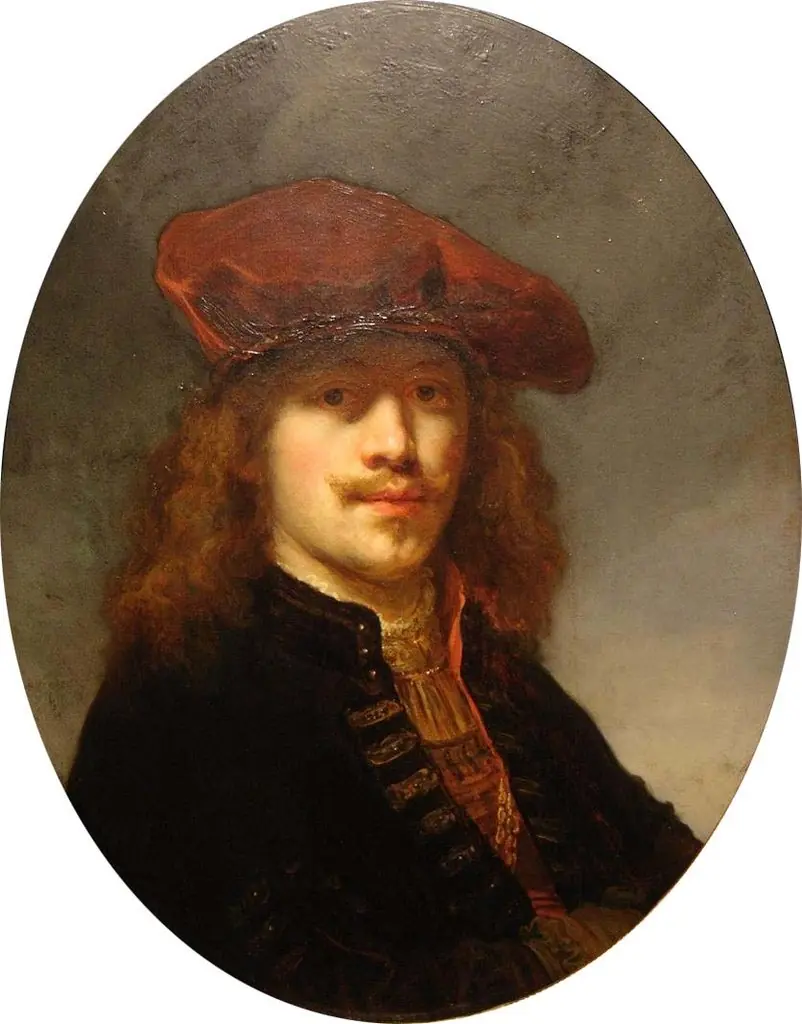
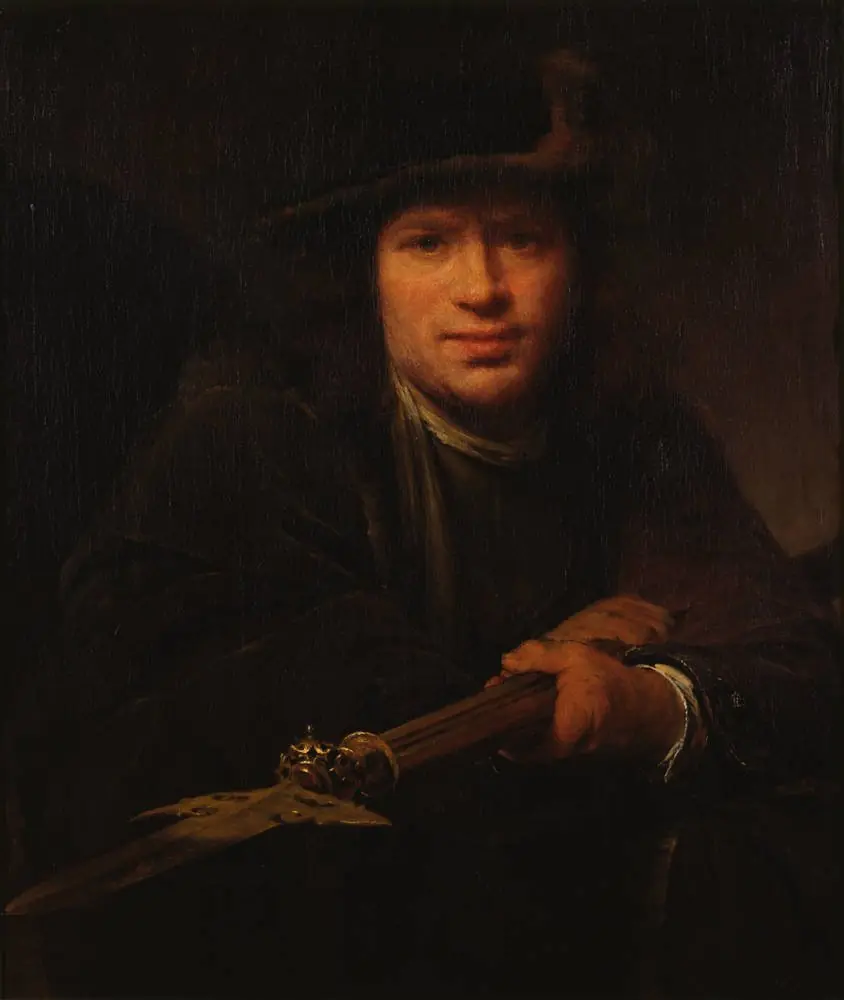
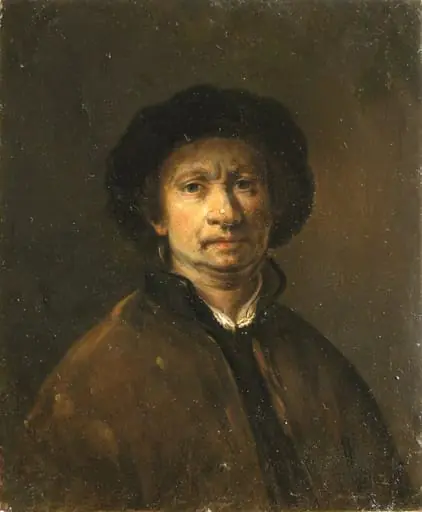
The figure is a bearded man with long hair, dressed in a dark coat and hat, holding a cane and resting one hand on his hip.
The figure is a bearded man with long hair, dressed in a dark coat and hat, holding a cane and resting one hand on his hip. His gaze is directed outward, not at the viewer, suggesting inward reflection. The absence of identifying details invites interpretation as a universal study of contemplation rather than a specific individual, aligning with the introspective tone of Rembrandt’s character studies.
Technique & Style
Grigorescu employs chiaroscuro to model the figure’s form, using subtle gradations of light and shadow to define the face, hands, and fabric. The background recedes into near darkness, enhancing the figure’s presence. Brushwork is loose yet deliberate, suggesting texture without overdetailing. The composition follows Rembrandt’s tradition of isolating the subject against a void to heighten emotional resonance.
History & Provenance
Created during Grigorescu’s formative years abroad, this piece stems from his time in Paris and the Netherlands, where he studied Old Master paintings. It was not commissioned but rather a personal exercise in mastering Rembrandt’s approach to light and psychological nuance. The work remained in Romanian collections, later entering public museum holdings as part of his documented academic studies.
Context
In the late 19th century, Romanian artists increasingly looked to Western European traditions to develop a national artistic identity. Grigorescu’s engagement with Rembrandt was part of a broader trend among Eastern European painters seeking to move beyond academic formalism. This portrait reflects his effort to absorb and reinterpret Northern Renaissance techniques within a modern, personal idiom.
Legacy
This work stands as a testament to Grigorescu’s dedication to learning from historical models while cultivating his own expressive voice. Though not widely exhibited, it influenced later Romanian realists who valued emotional restraint and technical discipline. It remains a key example of how 19th-century artists used emulation not as imitation, but as a path to originality.
Artist & collection

Artist
Nicolae Grigorescu was one of the founders of modern Romanian painting. He is considered by Romanians the greatest Romanian painter, and one of the founders of modern Romanian art. He is most known for paintings…