Artwork
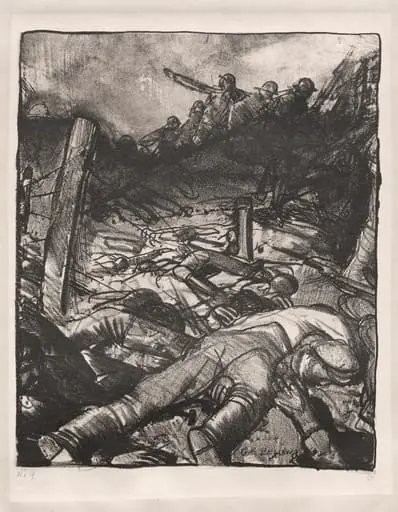
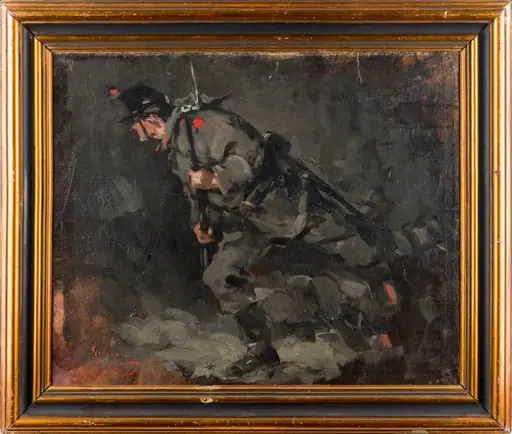
Dorobanț la atac
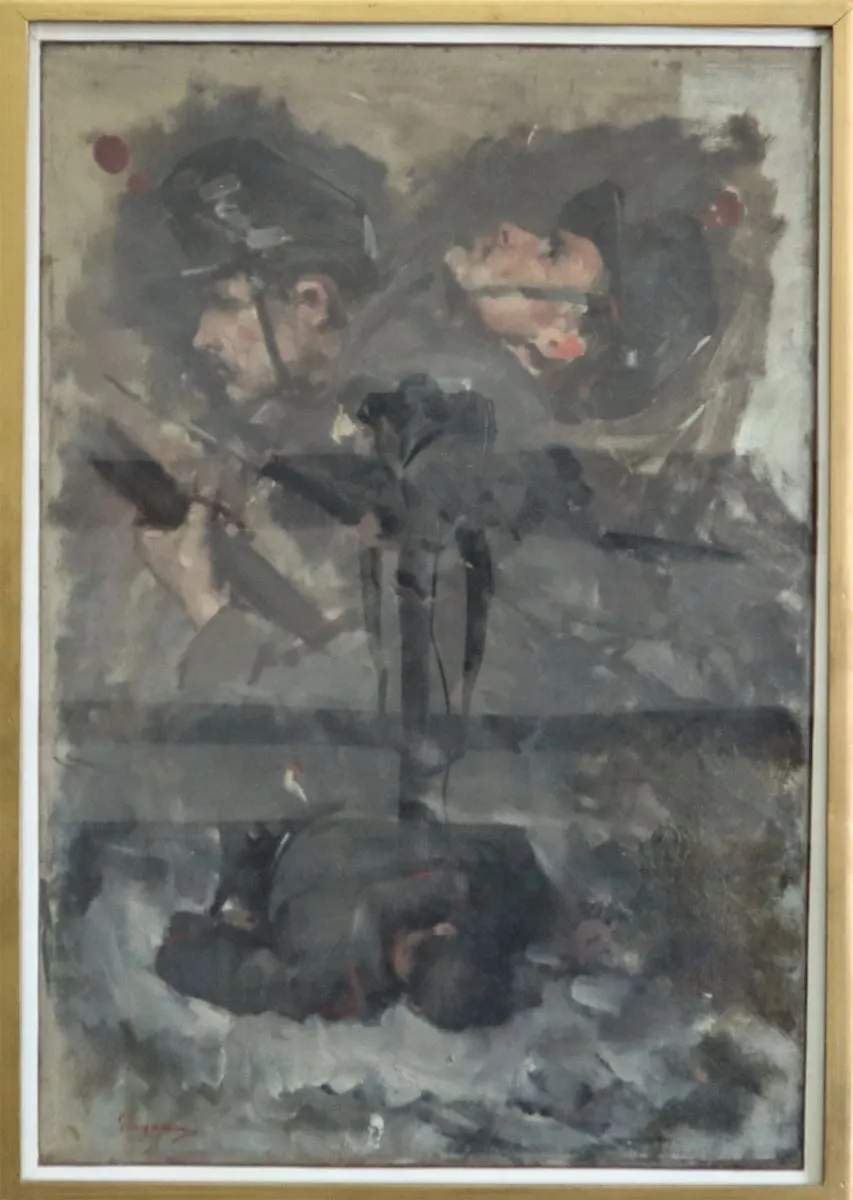
Dorobanț la atac is a print by Nicolae Grigorescu. It dates from 1882 and is held in the collection of the King Ferdinand I National Military Museum.
About this work
Overview
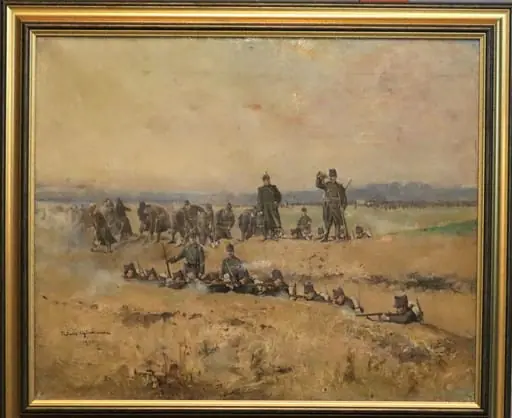
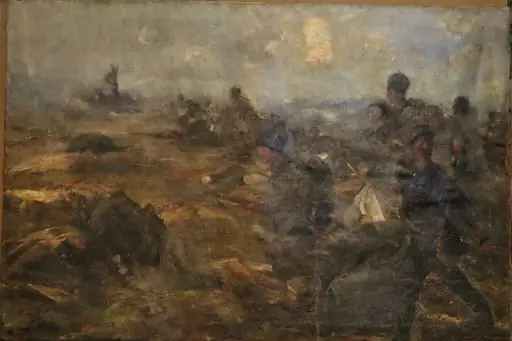
Painted around 1882 by Nicolae Grigorescu, Dorobanț la atac captures a moment of military engagement with minimal detail and heightened emotional weight.
Painted around 1882 by Nicolae Grigorescu, Dorobanț la atac captures a moment of military engagement with minimal detail and heightened emotional weight. The work belongs to the collection of the Museum of Ethnography and reflects the artist’s interest in depicting Romanian soldiers in moments of raw, unidealized action. Its subdued palette and dynamic composition convey immediacy rather than grandeur.
Subject & Meaning
The painting portrays a disordered battlefield scene centered on a fallen soldier in the foreground, surrounded by figures in motion. The faces of some soldiers turn toward the viewer, creating a direct, almost confrontational engagement. Rather than glorifying war, the work emphasizes vulnerability and chaos, suggesting a quiet tribute to the individual soldier’s experience amid turmoil.
Technique & Style
Grigorescu employs loose, energetic brushwork and a restricted palette dominated by grays, with accents of red and white to suggest blood and uniforms. The forms are suggested rather than meticulously rendered, emphasizing movement and atmosphere over precision. This approach aligns with his broader shift toward impressionistic methods, prioritizing emotional resonance over narrative clarity.
History & Provenance
Created during Grigorescu’s mature period, the painting entered the Museum of Ethnography’s collection in the early 20th century. Its acquisition reflects institutional interest in documenting national military life through art. Unlike official war commissions, this work was likely painted from personal observation or memory, preserving an unvarnished perspective on soldiering.
Context
In the decades following Romania’s independence, artists like Grigorescu turned from mythic history toward contemporary scenes of national identity. Dorobanț la atac fits within this trend, portraying soldiers not as heroes but as individuals caught in the chaos of conflict. The work responds to a cultural moment seeking authenticity over romanticism in representations of military life.
Legacy
The painting contributes to a broader redefinition of Romanian art in the late 19th century, moving away from academic idealism toward intimate, observational realism. Though not widely exhibited outside specialized collections, it remains a key example of Grigorescu’s ability to convey psychological depth through simplified forms and restrained color, influencing later generations of Romanian painters.
Artist & collection

Artist
Nicolae Grigorescu was one of the founders of modern Romanian painting. He is considered by Romanians the greatest Romanian painter, and one of the founders of modern Romanian art. He is most known for paintings…
Museum
King Ferdinand I National Military Museum
Continue through works from the same source collection.