Artwork
Trandafiri sălbatici
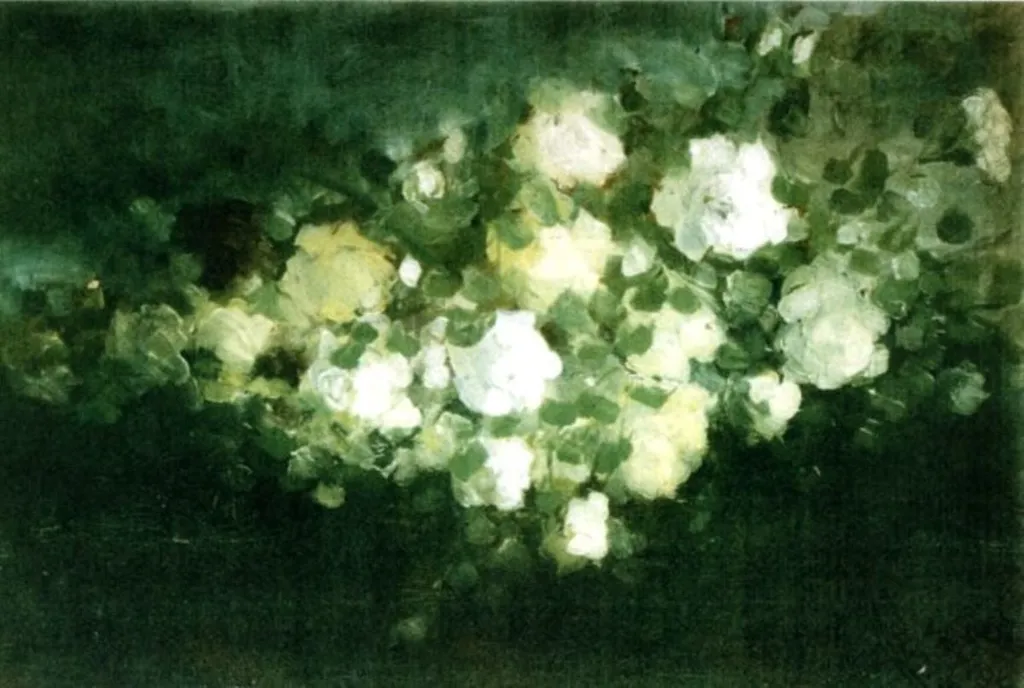
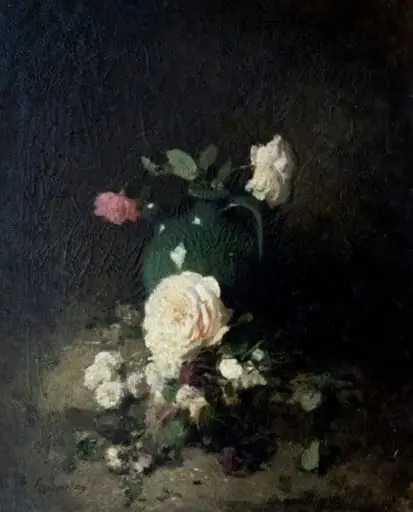
Trandafiri sălbatici is an unspecified painting by Nicolae Grigorescu. It dates from 1850 and is held in the collection of the Colecție particulară - Iordania.
About this work
Overview
The work is part of the collection at the Museum of Ethnography in Bucharest, where it is recognized for its intimate scale and restrained palette.
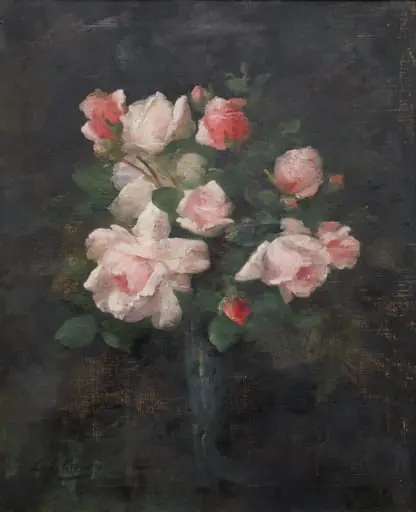
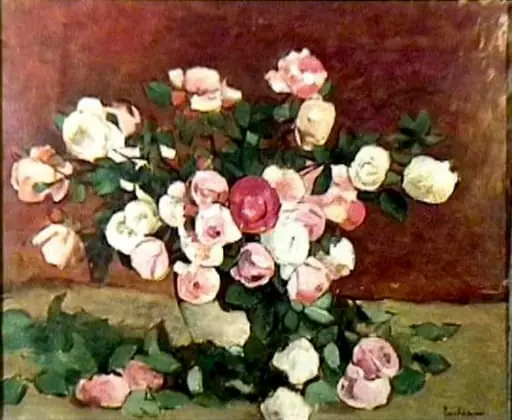
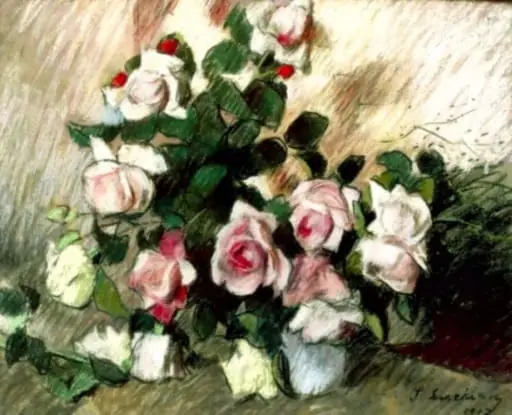
Trandafiri sălbatici, dated around 1850, is a small-scale oil painting by Romanian artist Nicolae Grigorescu. It depicts a group of wild roses rendered with quiet precision against a deep green backdrop. The work is part of the collection at the Museum of Ethnography in Bucharest, where it is recognized for its intimate scale and restrained palette. Unlike grand historical or religious subjects common at the time, this piece focuses on a modest natural motif, reflecting Grigorescu’s early interest in direct observation.
Subject & Meaning
The painting presents wild roses in varying stages of openness, from tightly furled buds to fully expanded blooms. This natural progression suggests the passage of time and the quiet cycles of growth and decay. The absence of context—no soil, stems, or surrounding flora—draws attention to the flowers as solitary, self-contained entities. Their simplicity evokes a sense of solitude and resilience, aligning with rural Romanian sensibilities toward nature as both humble and enduring.
Technique & Style
Grigorescu employs thin, layered brushwork to capture the translucency of petals and the depth of the background. The white flowers are built from subtle gradations of gray, cream, and faint pink, avoiding pure white to enhance realism. The dark green foliage is rendered with loose, textured strokes, creating contrast without harsh edges. The composition is deliberately uncluttered, emphasizing balance and spatial harmony through minimal elements and careful tonal modulation.
History & Provenance
The painting was likely created during Grigorescu’s formative years, before his formal training in Paris. It remained in private hands in Romania until acquired by the Museum of Ethnography in the early 20th century. Its inclusion in the museum’s collection reflects its value as a representative work of Romanian rural realism, rather than as a major public commission. Documentation from the period is sparse, but its attribution to Grigorescu is consistent with his known early style and subject choices.
Context
In mid-19th century Romania, academic art favored idealized historical scenes. Grigorescu’s focus on ordinary natural forms was unconventional, aligning more with emerging European trends toward plein air painting and direct observation. Though not yet influenced by French Impressionism, his attention to light and texture in Trandafiri sălbatici anticipates those developments. The work reflects a broader cultural shift toward valuing local, everyday subjects as worthy of artistic attention.
Legacy
Trandafiri sălbatici is regarded as an early indicator of Grigorescu’s lifelong commitment to naturalism and his rejection of academic formalism. It influenced later Romanian painters who sought to depict the countryside with sincerity rather than ornament. While not widely exhibited, the painting remains a touchstone in studies of Romanian art’s transition from tradition to modern observation, valued for its quiet integrity and technical restraint.
Artist & collection

Artist
Nicolae Grigorescu was one of the founders of modern Romanian painting. He is considered by Romanians the greatest Romanian painter, and one of the founders of modern Romanian art. He is most known for paintings…