Artwork
Fairlop Oak and Fairlop Fair
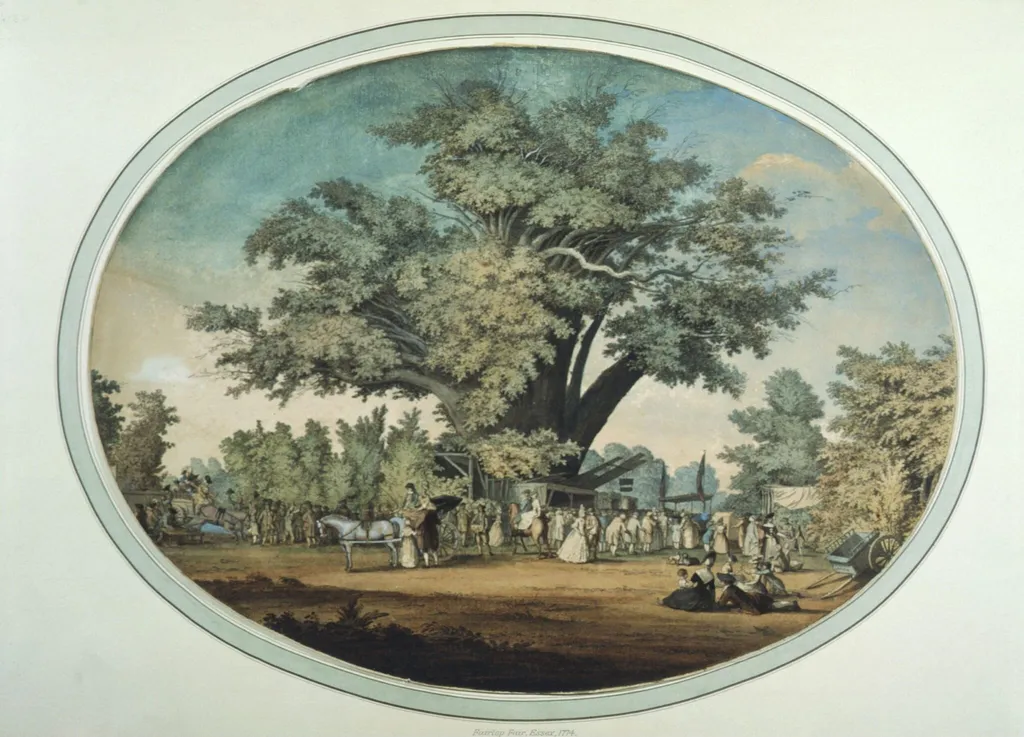
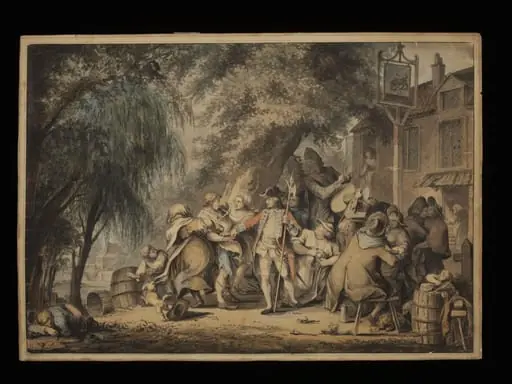
Fairlop Oak and Fairlop Fair is a watercolor work on paper by the Rococo painting artist Grimm. It dates from 1774 and is held in the collection of the Victoria and Albert Museum.
About this work
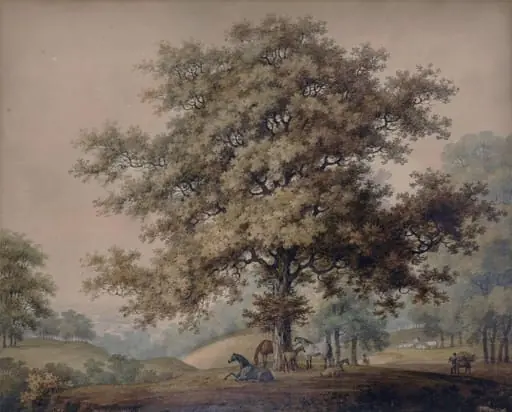
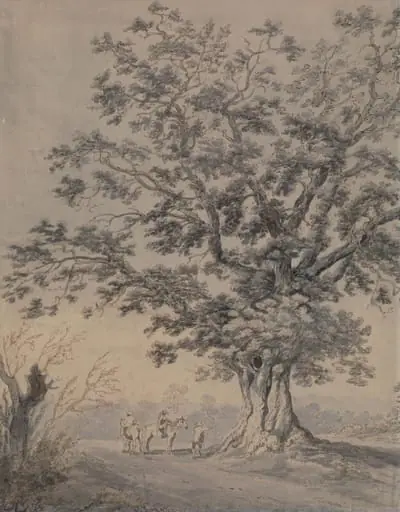
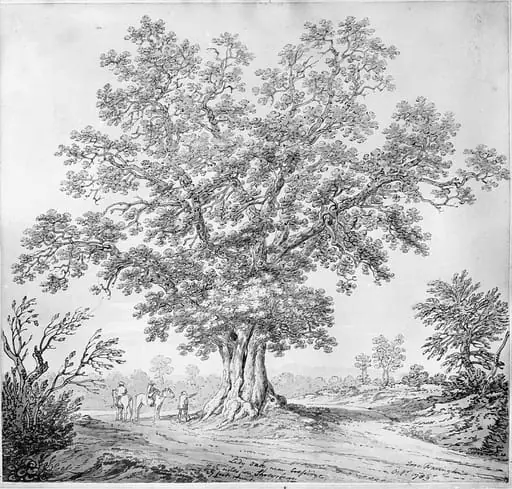
This painting shows a big, leafy tree in the center with people walking and standing around it.
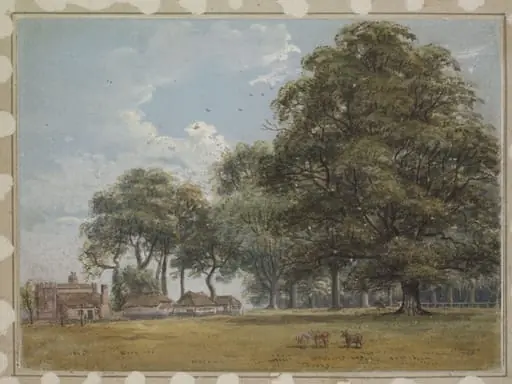
This painting shows a big, leafy tree in the center with people walking and standing around it. Some folks are dressed in old-fashioned clothes, and a few are near horses or carriages. In the background, there’s a small building and more trees under a soft sky.
The artist painted this scene in 1774, showing a fair near a famous oak tree. The colors are gentle, with greens and blues blending together.
Check out the Victoria and Albert Museum to see this painting in person.
Overview
Created in 1774, this watercolour depicts the Fairlop Oak, a notable tree in Hainault Forest, Essex, surrounded by attendees of a seasonal fair. The oval composition frames the scene with quiet balance, emphasizing the tree’s prominence. The artist signed the work, affirming its personal and observational nature. Soft washes of green and blue suggest a hazy, late-summer atmosphere, characteristic of the medium’s delicate handling.
Subject & Meaning
The painting captures a rural gathering centered on the Fairlop Oak, a landmark known for hosting annual fairs. Figures in 18th-century dress mingle near horses and carriages, suggesting a community event tied to seasonal tradition. The tree, both natural monument and social anchor, implies a connection between landscape and public life. The scene reflects ordinary leisure rather than grand spectacle, grounding the image in everyday rural experience.
Technique & Style
Executed in watercolour, the work employs translucent layers to render foliage and sky with subtle gradations. The tree’s canopy is suggested through loose, layered strokes, while figures are rendered with minimal detail, prioritizing atmosphere over precision. The oval format directs focus inward, enhancing the sense of enclosure around the central tree. Gentle tonal transitions between greens and blues create a soft, diffused light, typical of topographical watercolours of the period.
History & Provenance
The painting was completed in 1774 and remained in private hands until entering the Victoria and Albert Museum’s collection. Its survival reflects its status as a documentary record of a now-lost cultural site. The Fairlop Oak was felled in the 19th century, making this image one of the few visual accounts of the tree in its prime. The artist’s signature confirms authorship and situates the work within the tradition of topographical art.
Context
In the late 18th century, public fairs near ancient trees were common rural traditions, blending commerce, entertainment, and communal ritual. The Fairlop Oak, a landmark in Hainault Forest, drew visitors from London and surrounding areas. Such gatherings were increasingly documented by artists as urbanization transformed the countryside. This watercolour belongs to a genre that preserved vanishing landscapes and customs before industrial change.
Legacy
Though not widely exhibited, the painting serves as a quiet historical record of a vanished landmark and its associated customs. It contributes to the understanding of how 18th-century artists engaged with local topography and social life. The work’s preservation in a major museum underscores its value as evidence of pre-industrial rural culture, offering insight into the rhythms of everyday life beyond elite subjects.
Artist & collection
Artist
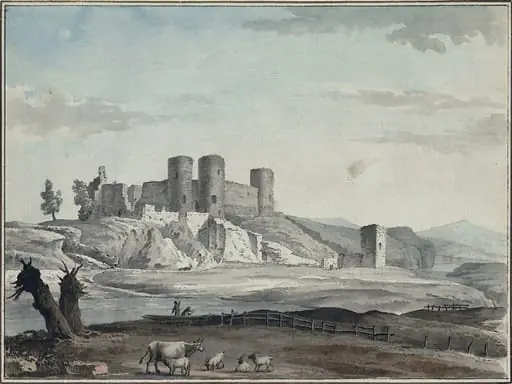
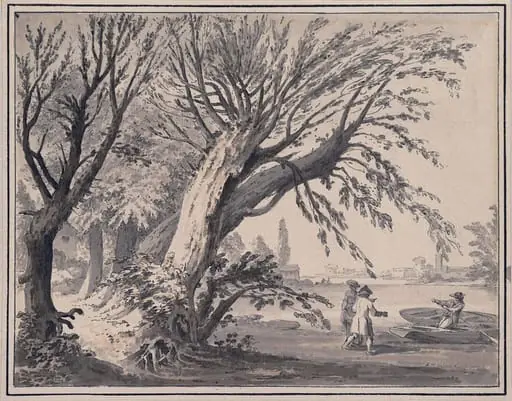
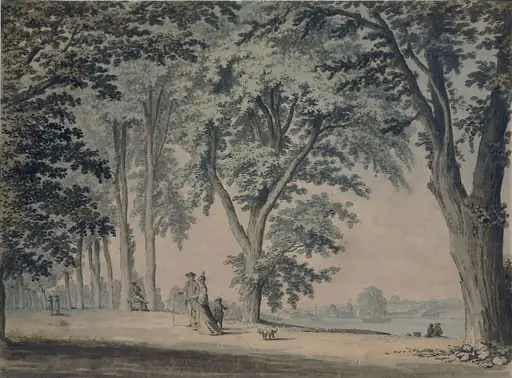
These watercolor scenes show everyday places and moments along the Thames and in Wales between the 1760s and 1770s.