Artwork
Untitled
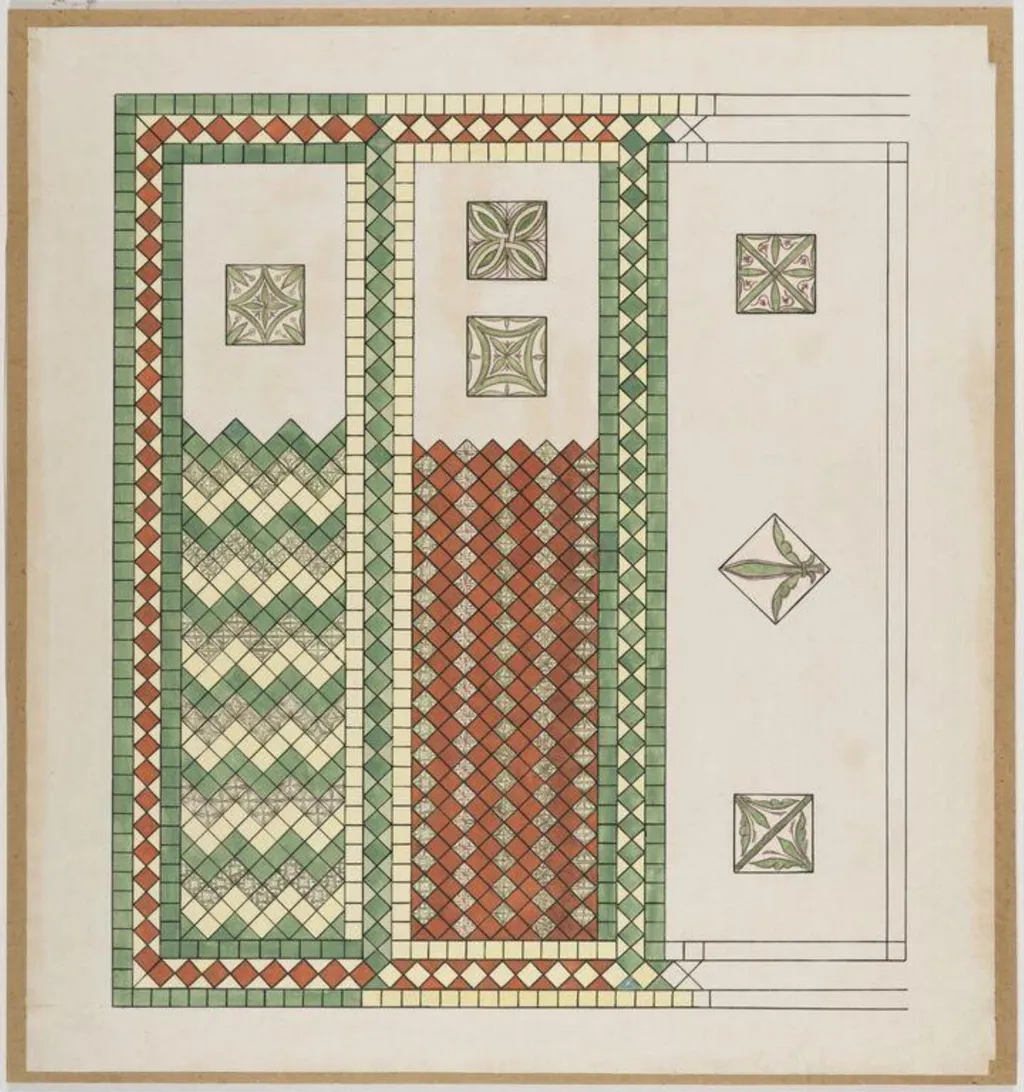
Untitled is a drawing by A Groneman. It dates from 1960 and is held in the collection of the Victoria and Albert Museum. This drawing, created by A.
About this work
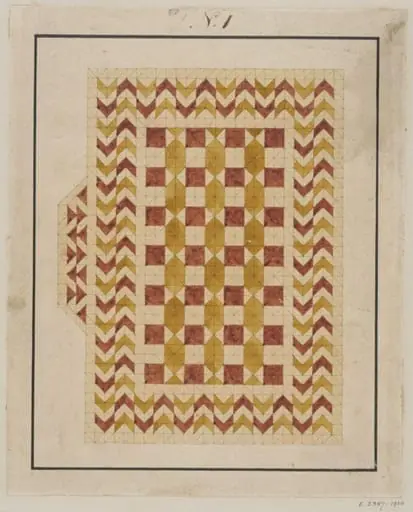
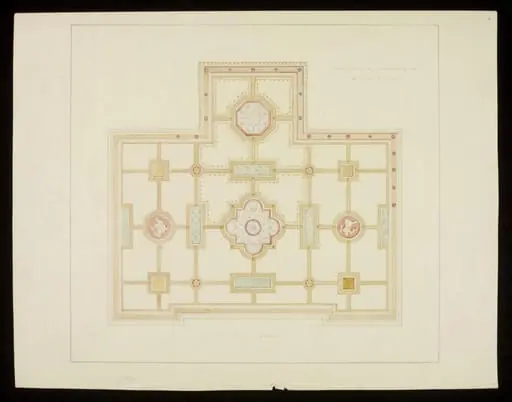
This drawing records the tiled floor of a quiet church in the Pyrenees. A. Groneman made it around 1960, copying an earlier drawing from the 1900s. Back then the floor was buried under dirt and the church was a barn.
The work helps archaeologists see how the tiles once looked. It shows a side chapel that had just been cleared.
Look up the Victoria and Albert Museum.
Overview
It documents a section of the abbey church’s tiled floor, which at the time was largely buried beneath soil and repurposed as a barn.
This drawing, created by A. Groneman around 1960, is a copy of an earlier 20th-century sketch made by an English visitor to the Cistercian Abbey of Escaladieu. It documents a section of the abbey church’s tiled floor, which at the time was largely buried beneath soil and repurposed as a barn. The work serves as a preserved record of a fragile archaeological site, capturing details otherwise lost to neglect.
Subject & Meaning
The drawing depicts a partially excavated portion of the floor in one of the side chapels, revealing fragments of tin-glazed earthenware tiles arranged in a geometric pattern. Its significance lies not in aesthetic detail but in its function as a spatial archive, anchoring surviving ceramic fragments to their original placement within the church’s layout. The surrounding dirt suggests the broader, unexplored extent of the site.
Technique & Style
Executed in pencil or ink on paper, the drawing employs precise linear notation to outline tile patterns and architectural boundaries. The style is utilitarian, prioritizing clarity over ornamentation. Shading and scale are carefully rendered to convey spatial relationships, reflecting its role as a documentary tool rather than an artistic expression.
History & Provenance
The original sketch was made in the early 1900s during a brief excavation of the abbey, then privately owned and used as a barn. Groneman’s copy, produced decades later, preserved the sketch’s content as the site remained largely undisturbed. The drawing entered the V&A’s collection to support the study of its ceramic holdings, linking physical artifacts to their architectural context.
Context
At the time of both drawings, the abbey church was in a state of disuse and partial ruin. The tiles, once part of a liturgical space, had been buried under centuries of debris. The drawing captures a moment of transition—when archaeology began to intervene in a landscape shaped by rural adaptation, before modern conservation efforts.
Legacy
The drawing remains a key reference for understanding the original arrangement of Escaladieu’s floor tiles in the V&A’s ceramics collection. It underscores how ephemeral records, even those made under modest conditions, can sustain scholarly inquiry long after their physical subjects have been left undisturbed.
Artist & collection
Artist
A Groneman spent her days sketching at a diner on Route 66, where the waitresses called her "Pencil" for the way she never stopped drawing.

 Untitled
 lasimaalaussuunnitelma, kasviornamentiikkaa, hedelmäkulhoja
 Untitled
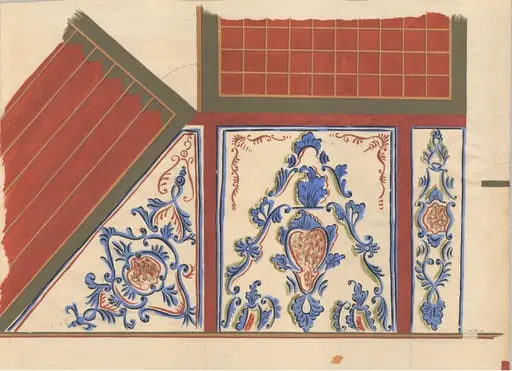 Αρχοντικό Εμμανουήλ, Καστοριά
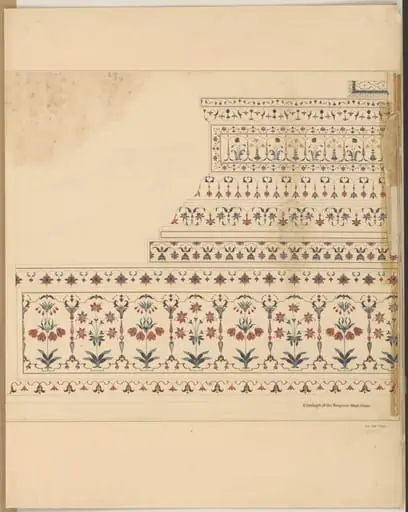 Pietra-dura inlay work on the side of the cenotaph of Shah Jahan, Taj Mahal, Agra.
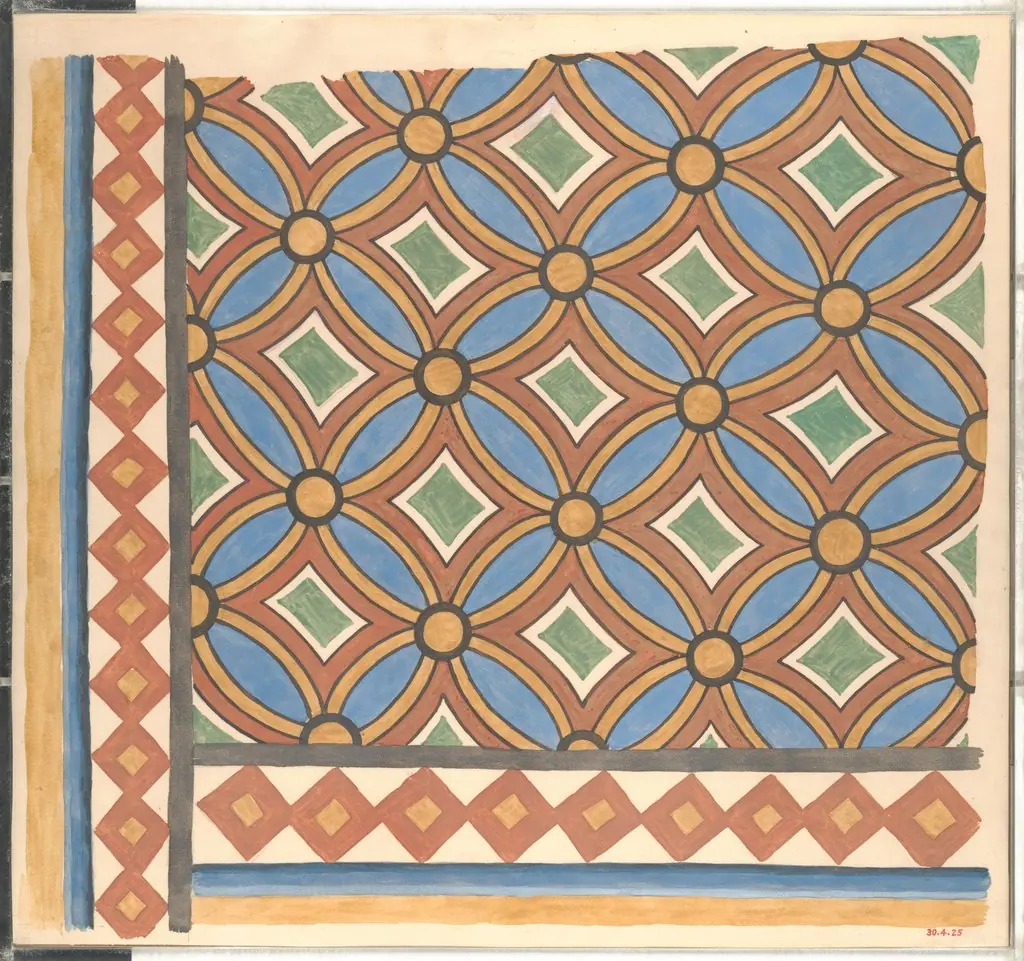 Ceiling Fragment
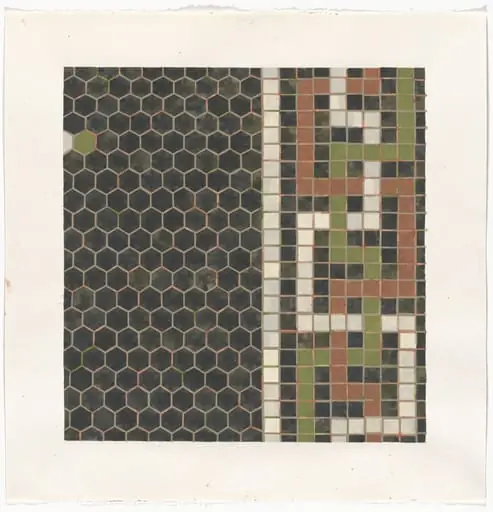 Untitled
 Untitled
 Untitled
 'Panells of Drawing room'
 Embers Glow: Lotus Pattern Frame
 Ceiling of a drawing room at Rowfant, Crawley