Artwork
Αρχοντικό Εμμανουήλ, Καστοριά
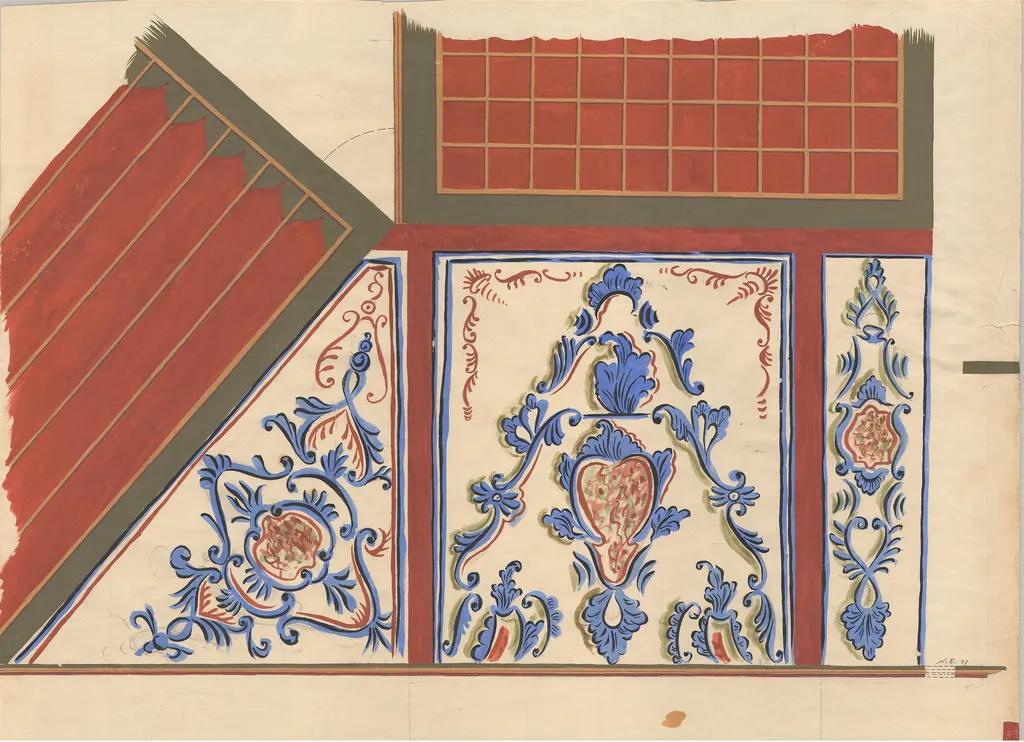
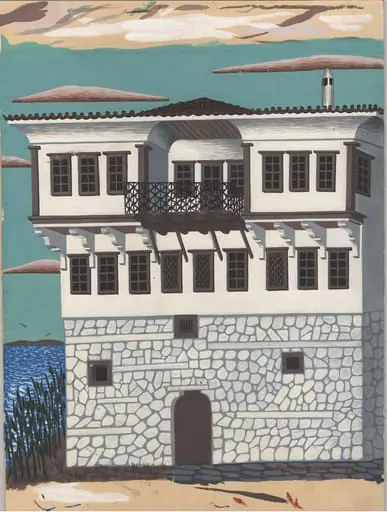
Αρχοντικό Εμμανουήλ, Καστοριά is an unspecified painting by Engonopoulos Nikos. It dates from 1937 and is held in the collection of the Historical & Ethnological Society of Greece. Painted in 1937 by Nikos Engonopoulos, this work depicts a stylized architectural corner from Castoria.
About this work
Overview
Painted in 1937 by Nikos Engonopoulos, this work depicts a stylized architectural corner from Castoria. Rendered in flat, saturated hues, the composition focuses on decorative surface patterns rather than realistic space. It belongs to the collection of the Museum of Ethnography, reflecting the artist’s interest in folk motifs and regional aesthetics during the interwar period.
Subject & Meaning
The subject is a fragment of a traditional building facade, emphasizing ornamental details over structural function. The red and blue motifs—heart shapes, vines, and geometric grids—draw from local decorative traditions, suggesting cultural identity and domestic pride. The absence of human figures directs attention to the architecture as a vessel of communal heritage.
Technique & Style
Engonopoulos employed simplified forms and unmodulated color to create a graphic, almost poster-like effect. The red walls, white trim, and vivid blue patterns are applied with clean edges and minimal shading. This deliberate flatness aligns with modernist tendencies of the time, yet the subject matter roots the work in vernacular craftsmanship.
History & Provenance
Created during Engonopoulos’s early career, the painting was acquired by the Museum of Ethnography shortly after its completion. It was not exhibited widely at the time but later gained recognition as part of a broader effort to document and preserve regional artistic expressions in Greece during the 1930s.
Context
In the 1930s, Greek artists increasingly turned to folk and architectural motifs as a means of asserting national identity amid political instability. Engonopoulos, influenced by both European modernism and local traditions, used this painting to bridge the gap between contemporary art and inherited visual culture.
Legacy
The painting remains a key example of how modern Greek artists reinterpreted regional decoration through a modernist lens. While not widely reproduced, it continues to inform scholarly discussions on the intersection of folk art and avant-garde practice in interwar Greece.
Artist & collection
Artist
Museum
Historical & Ethnological Society of Greece
Continue through works from the same source collection.
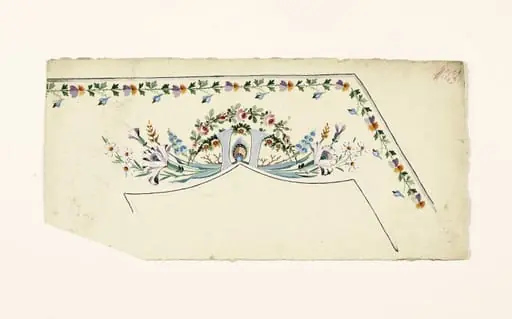 Composition avec brins et guirlandes de fleurs encadrant une plume de paon, projets de broderies de gilet, XVIIIème siècle
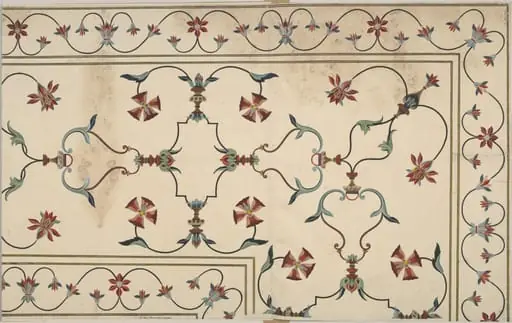 Pietra-dura work decoration on the top of the cenotaph of the Empress Arjumand Banu Begam, Taj Mahal, Agra
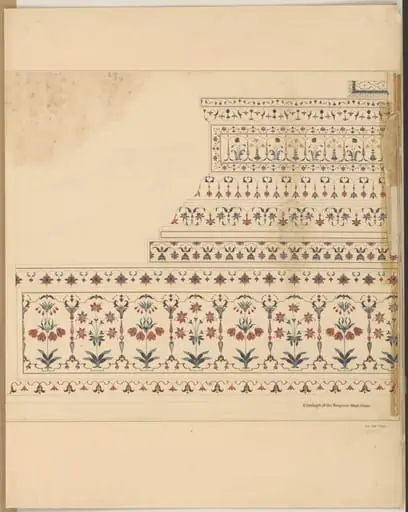 Pietra-dura inlay work on the side of the cenotaph of Shah Jahan, Taj Mahal, Agra.
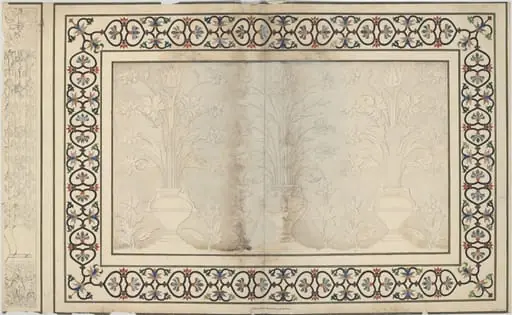 Relief panel of white marble with inlaid border of pietra-dura work on the inside of the entrance to the Taj Mahal, Agra.
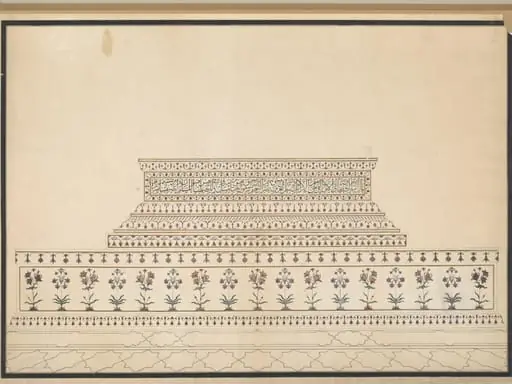 Cenotaph of Mumtaz Mahal, Taj Mahal, Agra
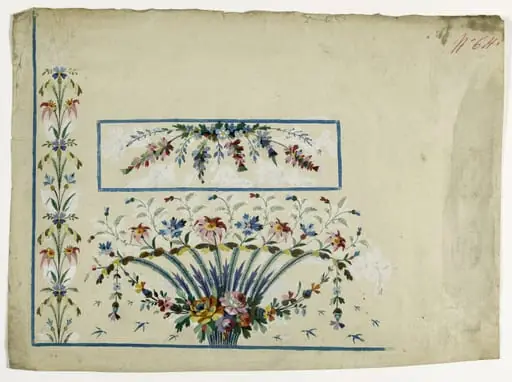 Gilet décor bouquet oeillets et églantines, projets de broderies de gilet, XVIIIème siècle
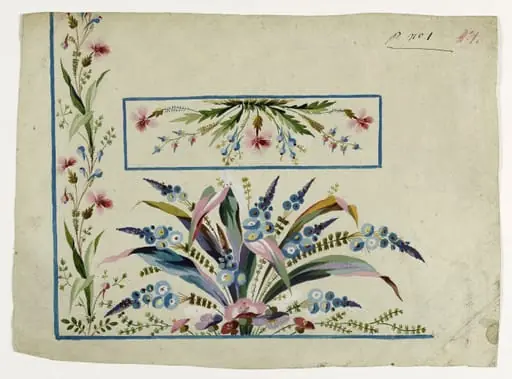 Gilet décor bouquet de bleuets et d'oeillets, projets de broderies de gilet, XVIIIème siècle
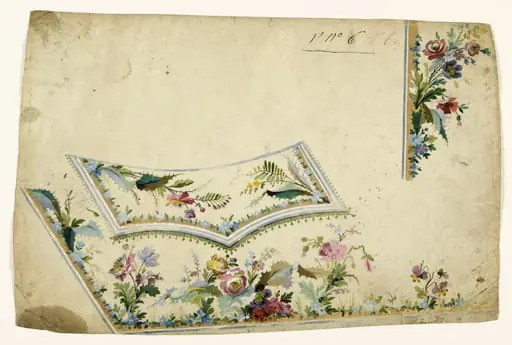 Composition florale aux bleuets, projets de broderies de gilet, XVIIIème siècle
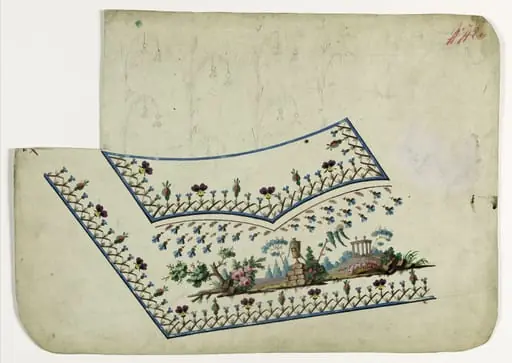 Paysage avec urne et ruine antique, projets de broderies de gilet, XVIIIème siècle
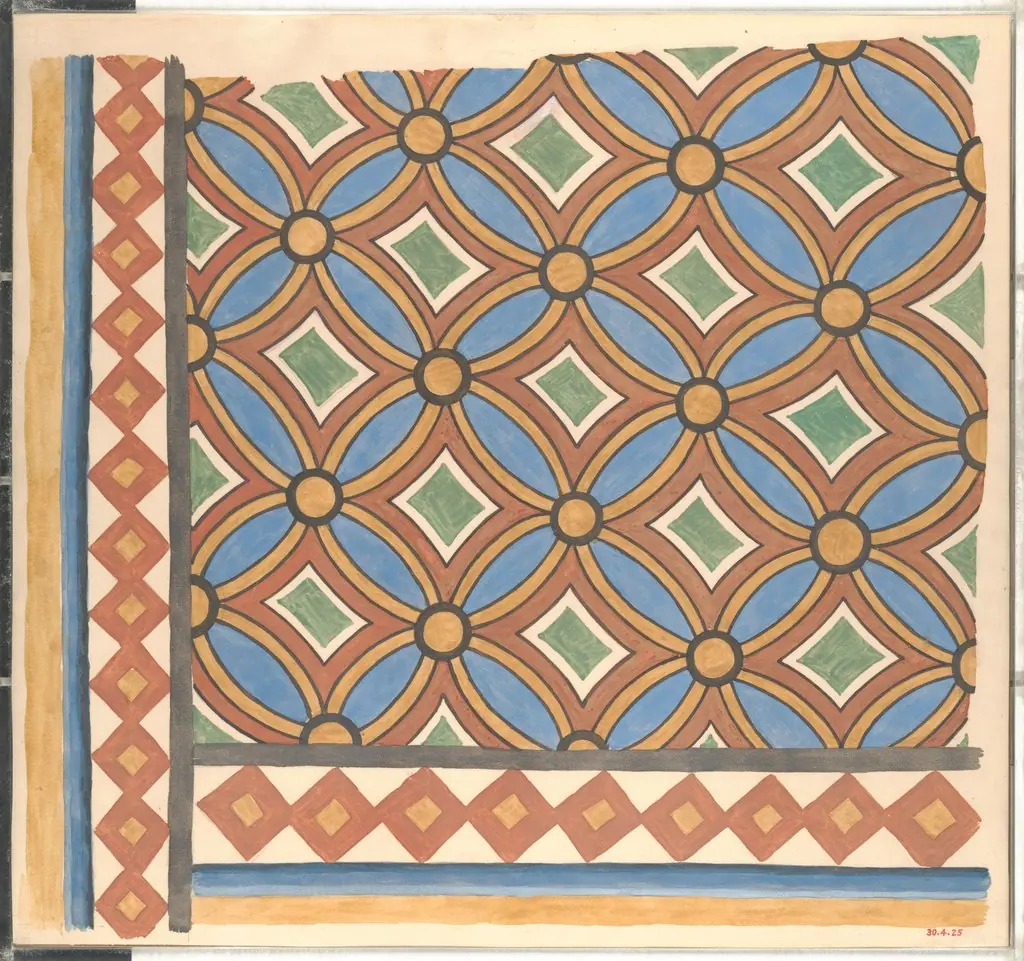 Ceiling Fragment
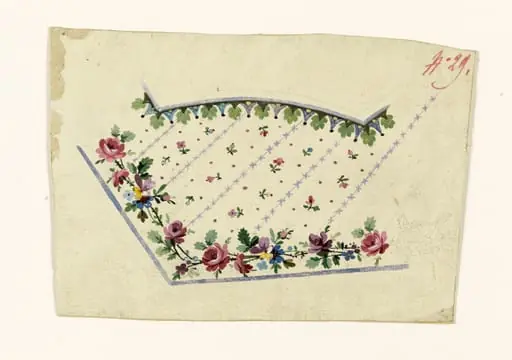 Composition avec guirlande de fleurs et rayures mauves, projets de broderies de gilet, XVIIIème siècle
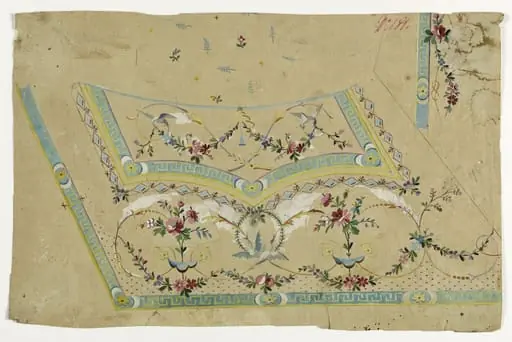 Gilet à la bordure de svastika, projets de broderies de gilet, XVIIIème siècle