Artwork
Ceiling of a drawing room at Rowfant, Crawley
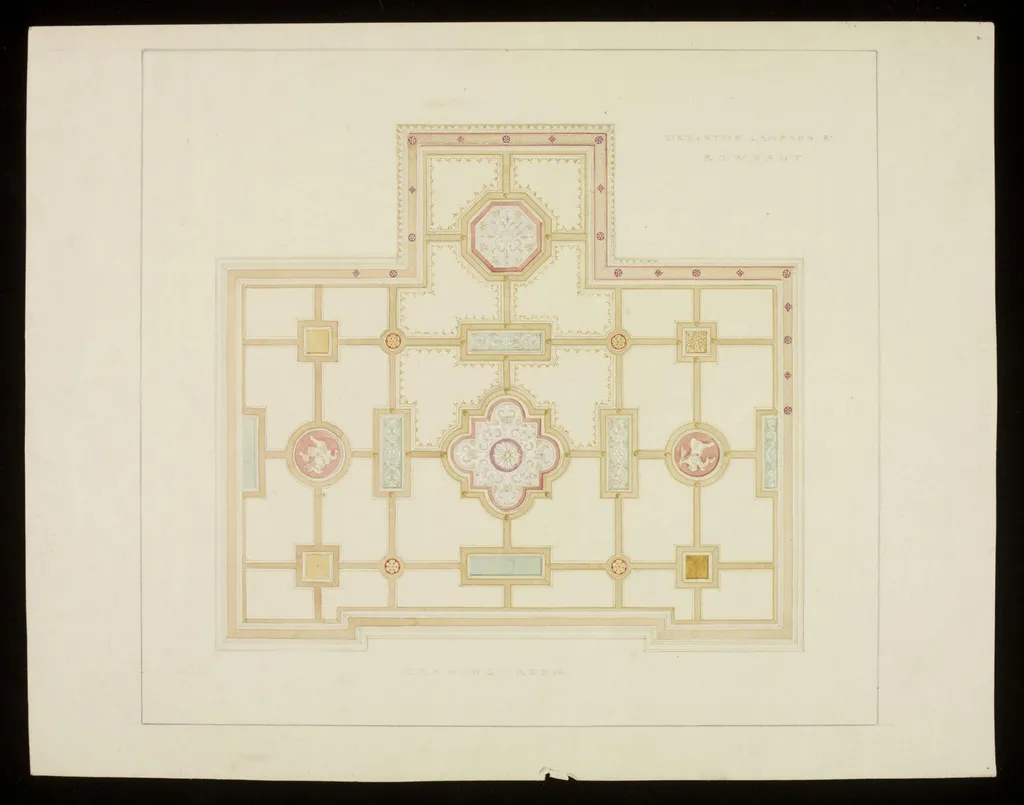
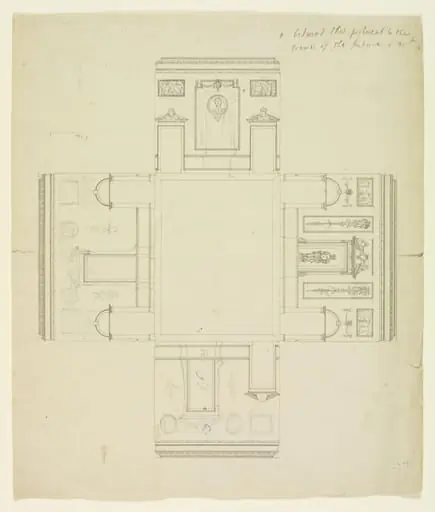
Ceiling of a drawing room at Rowfant, Crawley is a drawing by Crace. It dates from 1850 and is held in the collection of the Victoria and Albert Museum. This is a preparatory drawing for the ceiling of a drawing room at Rowfant, a country house in Crawley.
About this work
Overview
This is a preparatory drawing for the ceiling of a drawing room at Rowfant, a country house in Crawley. Executed in ink and watercolor, it presents a flat, planar layout of the ceiling’s architectural divisions, serving as a design proposal rather than a finished decorative surface. The composition emphasizes symmetry and order, with geometric panels arranged in a square grid.
Subject & Meaning
These elements suggest an aesthetic rooted in 18th-century interior decoration traditions, where nature-inspired patterns softened architectural rigidity.
The design proposes an ornamental ceiling composed of repeating geometric compartments, each containing delicate floral or swirling motifs. These elements suggest an aesthetic rooted in 18th-century interior decoration traditions, where nature-inspired patterns softened architectural rigidity. The inclusion of the house’s name, 'Rowfant,' anchors the work to a specific domestic space, indicating its function as a commissioned design document.
Technique & Style
The drawing employs fine ink outlines to define panel boundaries, with subtle washes of pale pink and blue filling the interior shapes. Gold accents trace the edges of the compartments, enhancing their structural clarity. The motifs—small flowers and curvilinear patterns—are rendered with precision, reflecting a hand trained in decorative arts and architectural drafting.
History & Provenance
The drawing originates from the estate of Rowfant, a residence associated with the 18th-century British gentry. It likely belonged to a family commissioning interior renovations, and was preserved among architectural papers. Its survival suggests it was valued as a record of design intent, possibly retained by the household or an artisan’s workshop.
Context
Such ceiling plans were common in elite British homes during the late 1700s, where interior decoration was increasingly treated as a coordinated art form. Similar designs appear in the collections of the Victoria and Albert Museum, reflecting a broader trend toward systematic planning of domestic interiors, blending architecture, ornament, and craftsmanship.
Legacy
This drawing contributes to the historical record of domestic design practices in Georgian England. It illustrates how decorative schemes were conceived before execution, revealing the collaborative nature of interior projects between patrons, architects, and artisans. Its preservation offers insight into the quiet, meticulous work underpinning period interiors.
Artist & collection
Artist
John Gregory Crace spent his life turning the inside of other people’s houses into art.

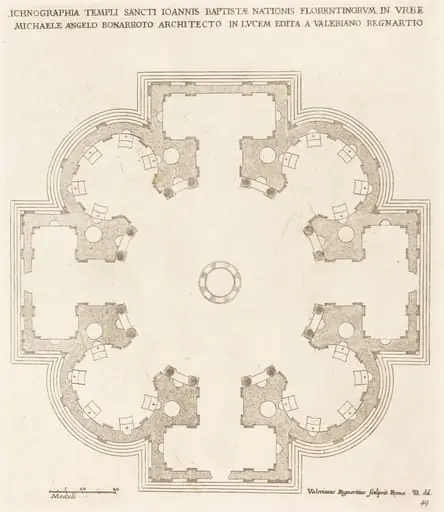 Ground Plan of the Church of Saint John the Baptist
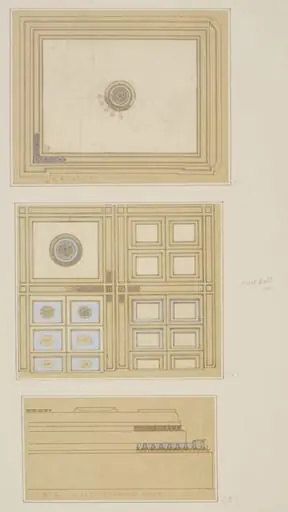 Untitled
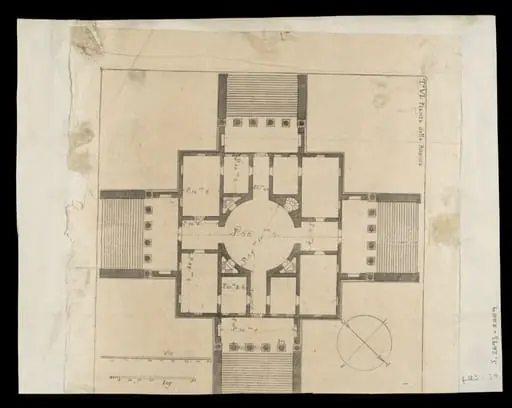 H Beard Print Collection
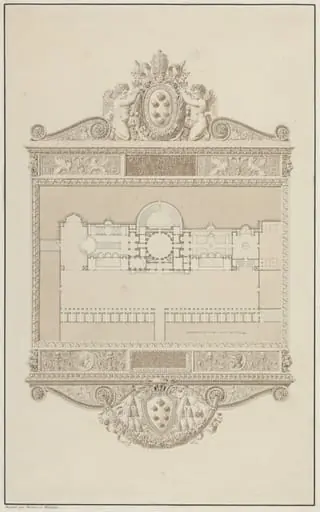 Villa Madama a Rome
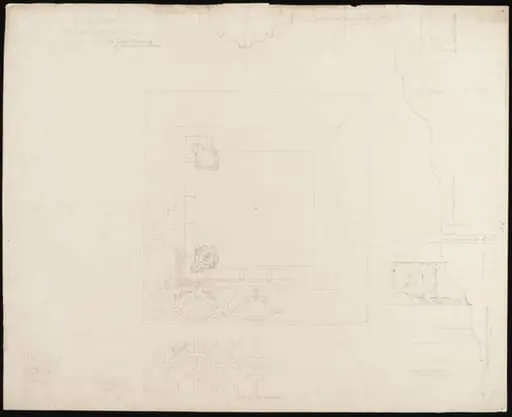 Kinmel Hall, drawing no. 348 and 354, plan of ceiling for principal staircase
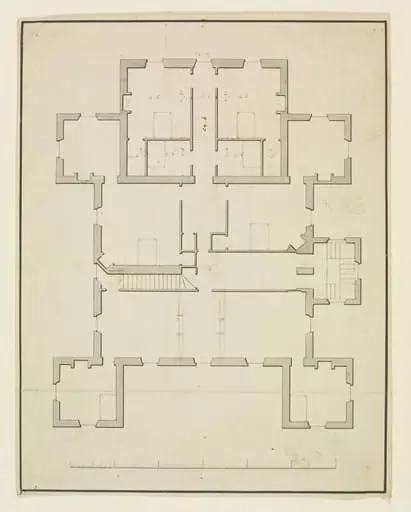 Plan of the Chamber floor, Combe Bank
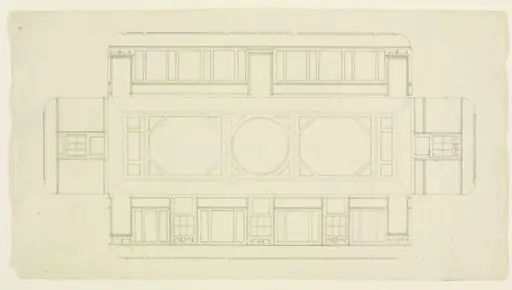 Elevations of the interior wall of Combe Bank
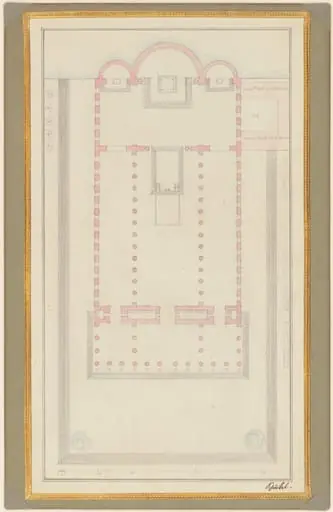 Ground Plan of a Cathedral for Berlin
 Elevations of the interior walls of the Hall, Combe Bank.