Artwork
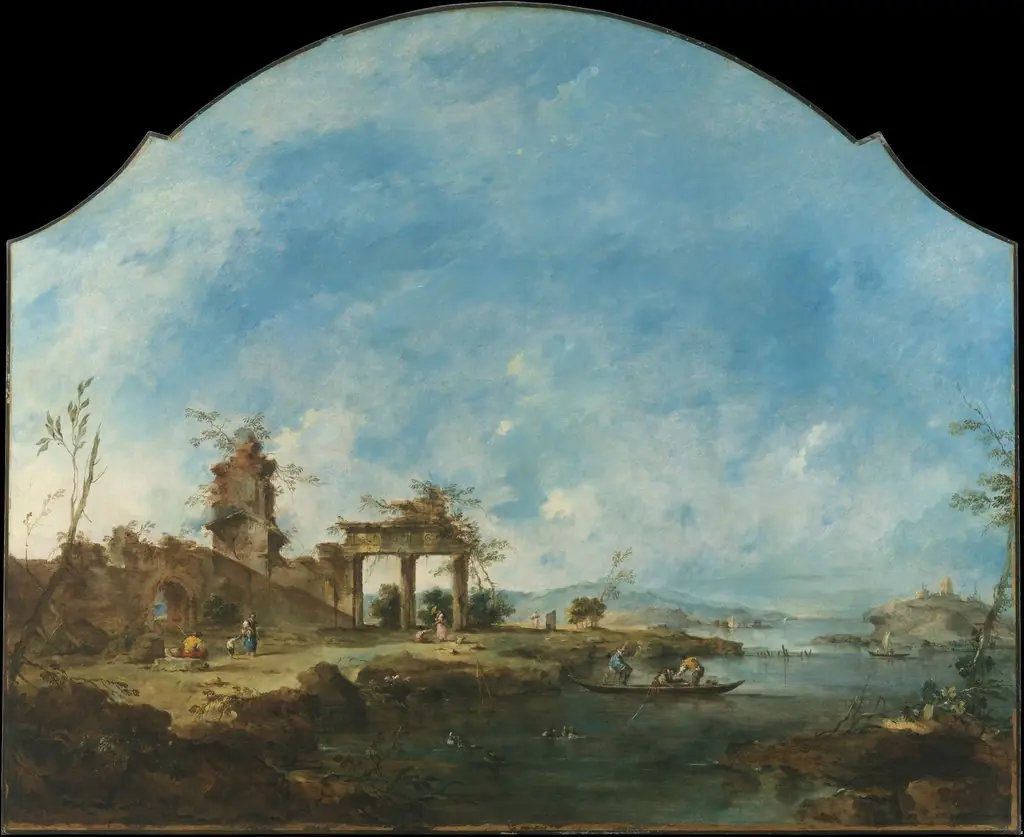
A Capriccio of Ruins by the Lagoon
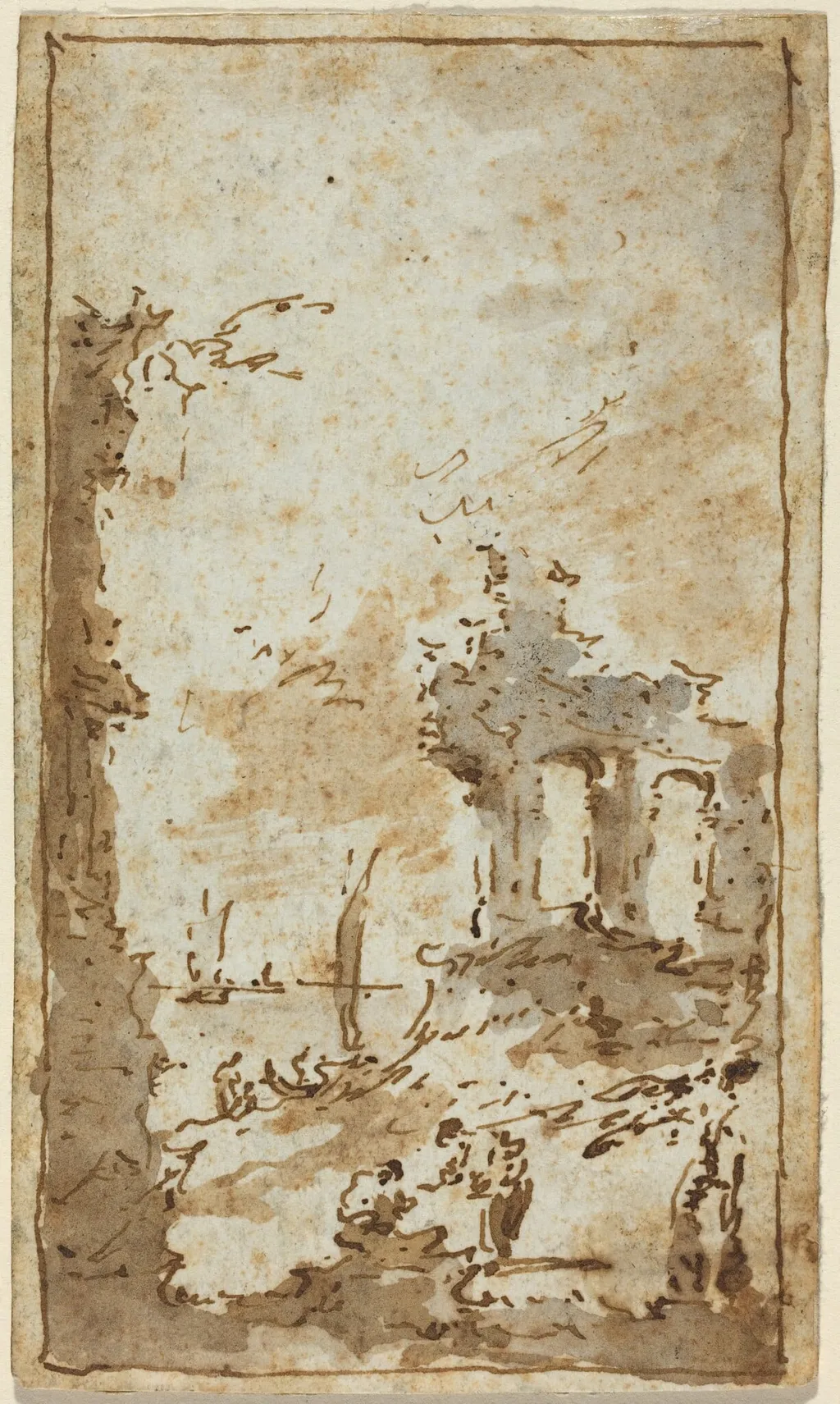
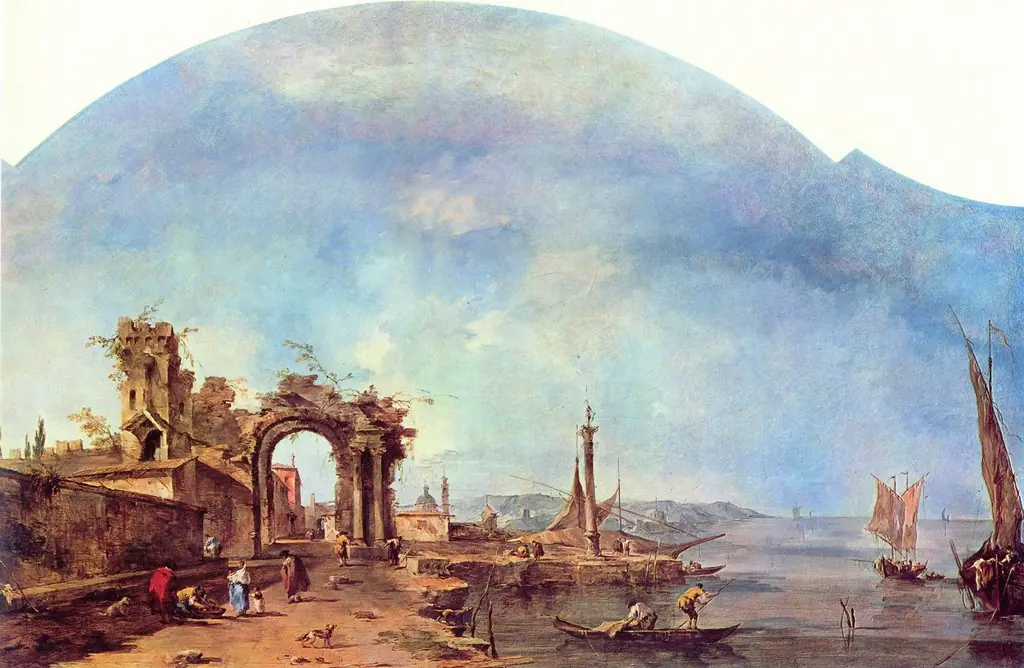
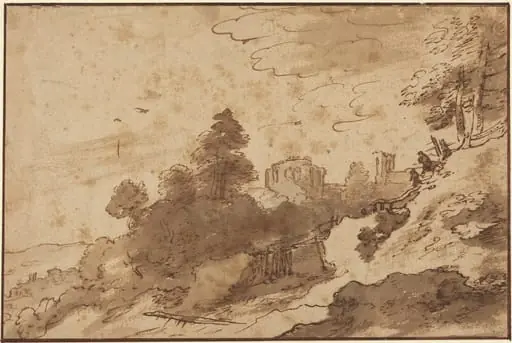
A Capriccio of Ruins by the Lagoon is an ink drawing by the Baroque artist Francesco Guardi. It dates from 1752 and is held in the collection of the National Gallery of Art.
About this work
Overview
Executed in pen and brown ink with washes of gray and brown on laid paper, it reflects Guardi’s transition from religious subjects to topographical scenes.
Created in 1752, this drawing by Francesco Guardi is a capriccio—a fanciful composition blending real and imagined architectural elements—set near a Venetian lagoon. Executed in pen and brown ink with washes of gray and brown on laid paper, it reflects Guardi’s transition from religious subjects to topographical scenes. The work is mounted on a support, indicating its preservation as a finished piece rather than a preliminary sketch.
Subject & Meaning
The scene assembles crumbling classical ruins, arches, and columns in a dreamlike arrangement, not tied to any specific location. These fragments evoke the passage of time and the decay of grandeur, common themes in 18th-century Venetian art. The lagoon’s presence suggests a quiet, reflective mood, contrasting with the monumental remains, inviting contemplation rather than narrative.
Technique & Style
Guardi employed fluid, expressive pen lines and layered washes to suggest texture and atmosphere. Unlike the precise linear clarity of Canaletto, his approach is looser, with soft gradations of gray ink creating atmospheric depth. The use of laid paper, with its subtle texture, enhances the tactile quality of the ink and wash, reinforcing the work’s intimate, spontaneous character.
History & Provenance
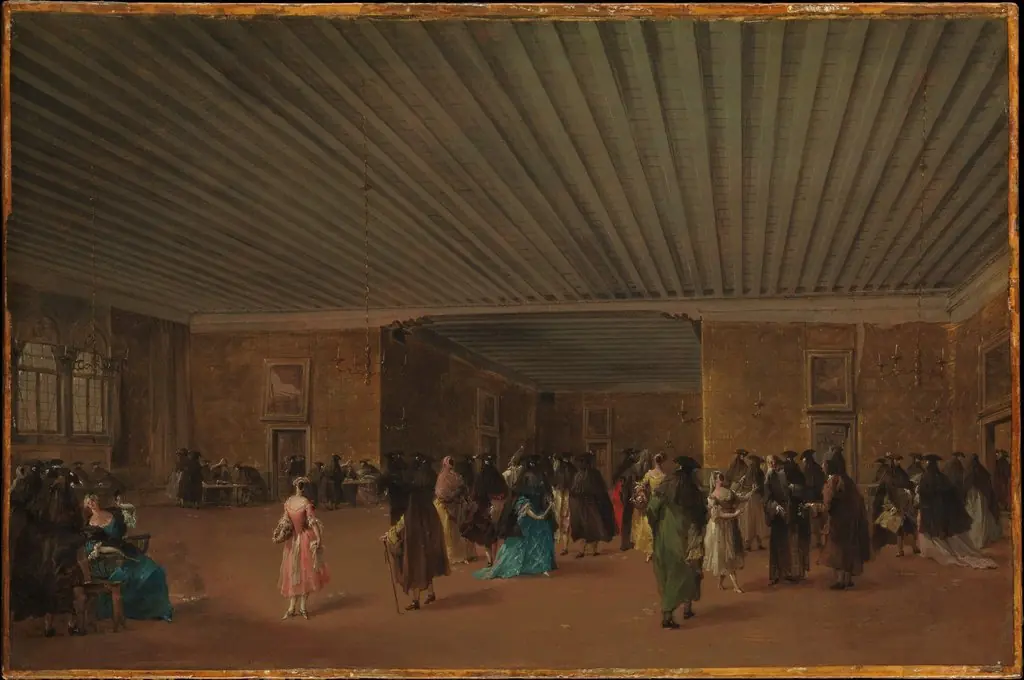
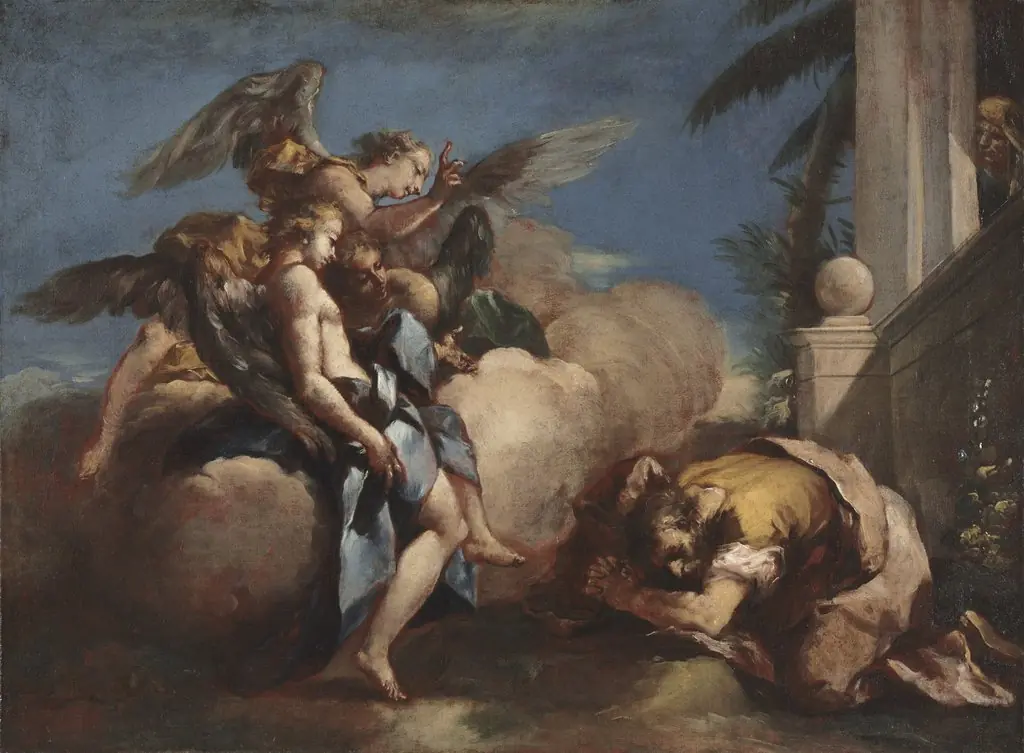
Guardi, born into Venetian nobility, began his career alongside his brother Gian Antonio, painting religious subjects. By the 1750s, he increasingly turned to vedute and capricci, refining a personal style that diverged from his contemporaries. This drawing predates his mature vedute period but signals his shift toward more interpretive, mood-driven landscapes, a direction that would define his later reputation.
Context
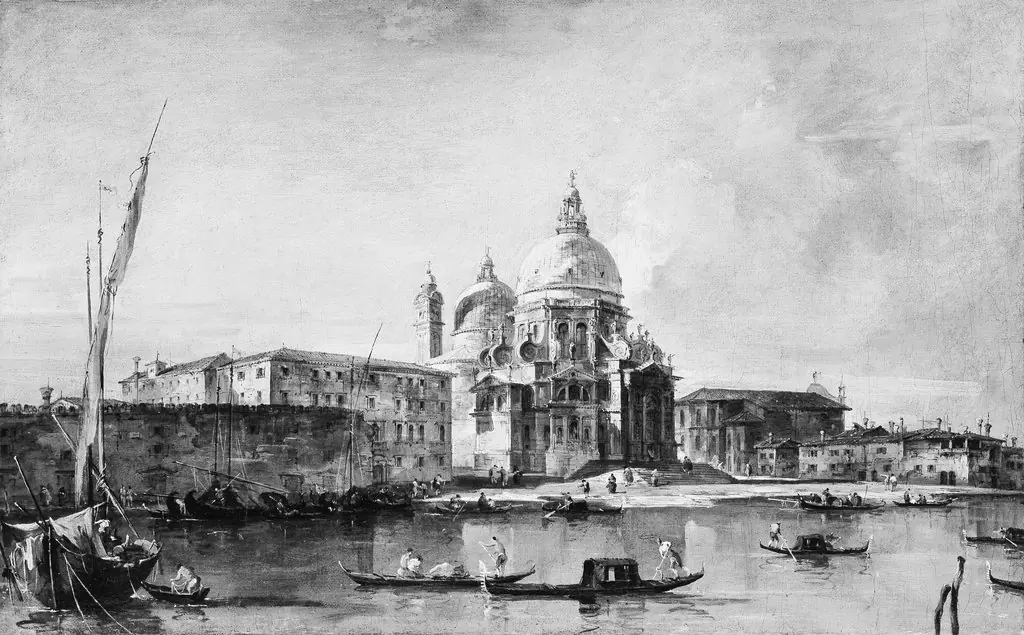
In mid-18th-century Venice, interest in antiquity and ruins flourished among travelers and collectors. While Canaletto documented the city with topographical accuracy, Guardi and others explored emotional resonance through imaginative reconstructions. This capriccio aligns with a broader European fascination with classical decay, filtered through Venice’s own layered history of empire and decline.
Legacy
Guardi’s expressive handling of ink and wash influenced later Romantic artists who valued mood over precision. Though less celebrated in his lifetime than Canaletto, his atmospheric capricci gained recognition in the 19th century for their poetic sensibility. This drawing exemplifies his role in redefining Venetian landscape art, moving from observation toward evocation.
Artist & collection

Artist
Francesco Lazzaro Guardi (Italian pronunciation: ; 5 October 1712 – 1 January 1793) was an Italian painter, nobleman, and a member of the Venetian School.