Artwork
Gondolas
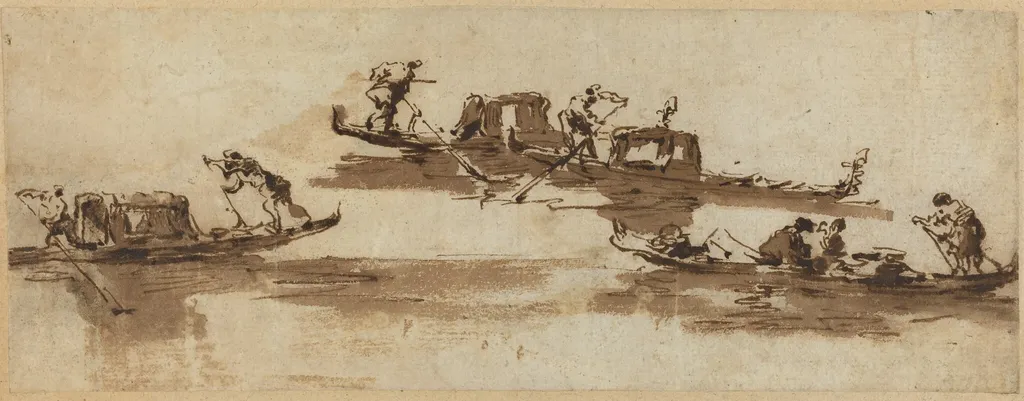
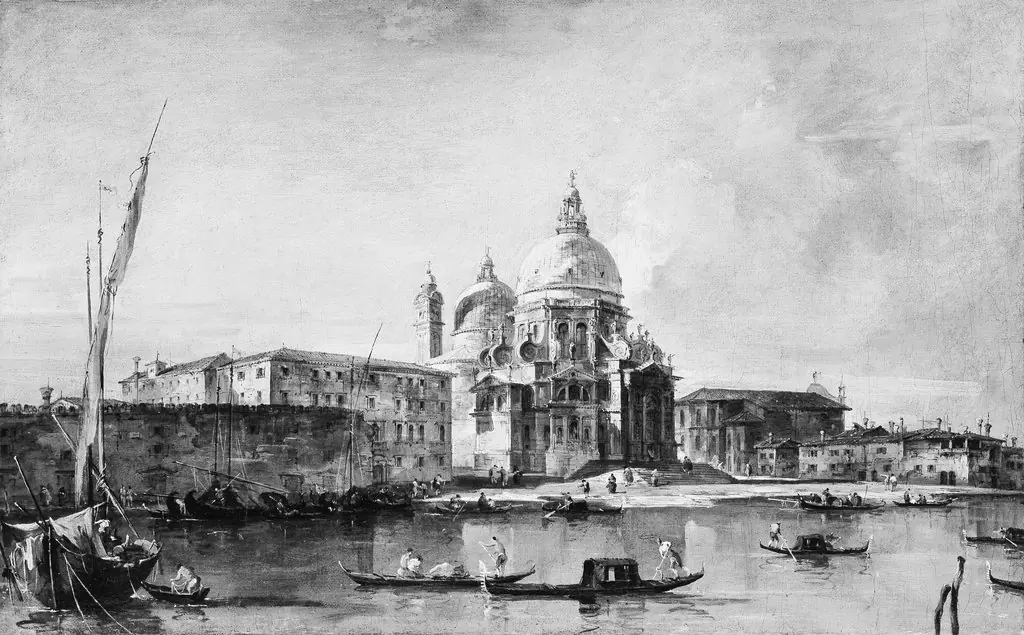
Gondolas is an ink drawing by the Baroque artist Francesco Guardi. It dates from 1752 and is held in the collection of the National Gallery of Art.
About this work
Overview
Created in 1752, this ink and wash drawing by Francesco Guardi captures a quiet moment on Venice’s waterways. Executed on laid paper and later mounted, it reflects the artist’s early engagement with urban scenes before his full transition to vedute. The medium—pen and brown ink with wash—allows for both precision and fluidity, suited to the transient quality of the city’s canals.
Subject & Meaning
Three gondolas drift along a narrow canal, each with two rowers and a few passengers. The scene is unembellished, focusing on daily life rather than spectacle. The calm water and modest architecture suggest an intimate, untheatrical view of Venice, emphasizing rhythm and routine over grandeur. The work conveys the city’s identity through its waterborne commerce and quiet motion.
Technique & Style
Guardi employs swift, economical pen strokes to suggest the gondolas’ movement and the ripple of water. Brown wash adds depth beneath the boats and along building facades, while minimal detail in windows and doors keeps focus on form and light. The loose handling anticipates his later, more expressive style, rejecting Canaletto’s precision in favor of atmospheric immediacy.
History & Provenance
This drawing predates Guardi’s post-1760 focus on vedute, made after his brother Gian Antonio’s death. It belongs to his formative period, when he was developing his own approach to Venetian views. The paper’s laid texture and mounting suggest it was preserved early, likely by a collector or fellow artist familiar with the emerging Venetian drawing tradition.
Context
In mid-18th century Venice, drawings like this served as both studies and independent works, valued for their spontaneity. While Canaletto’s detailed views dominated the market, Guardi’s looser style offered a more personal response to the city. This piece reflects a shift in artistic priorities—from topographical accuracy to sensory impression.
Legacy
Though not widely exhibited in his lifetime, Guardi’s drawings like this one influenced later artists drawn to evocative, impressionistic renderings of urban landscapes. His use of wash and rapid line to convey motion and atmosphere became a model for 19th-century sketch artists seeking to capture fleeting moments rather than fixed monuments.
Artist & collection
Artist
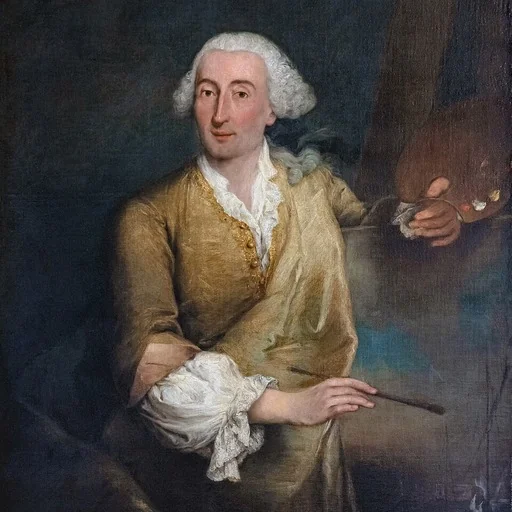
Francesco Lazzaro Guardi (Italian pronunciation: ; 5 October 1712 – 1 January 1793) was an Italian painter, nobleman, and a member of the Venetian School.

 A drawing of the Praya Grande, Macau, with figures beaching a Tanka boat and other craft in the bay
 View of Dordrecht from the River
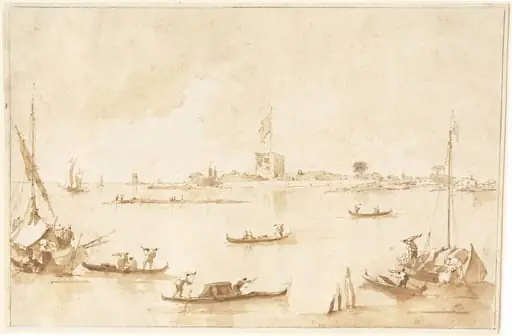 The Fortress of San Andrea from the Lagoon
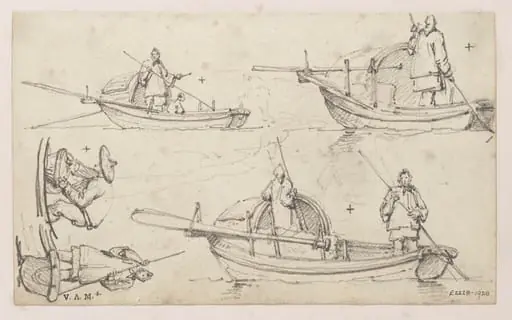 Five drawings of figures in Tanka boats
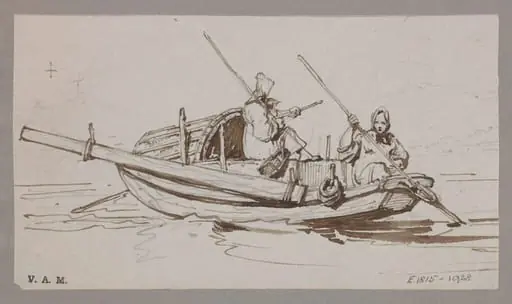 A Tanka boat operated by two boatwomen
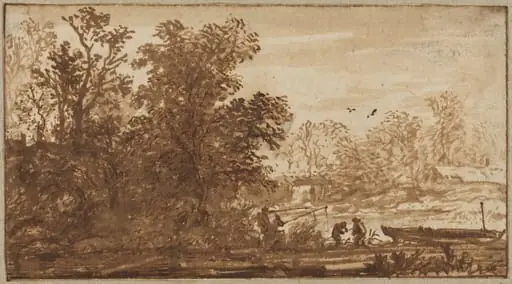 Fisherman in a River Landscape
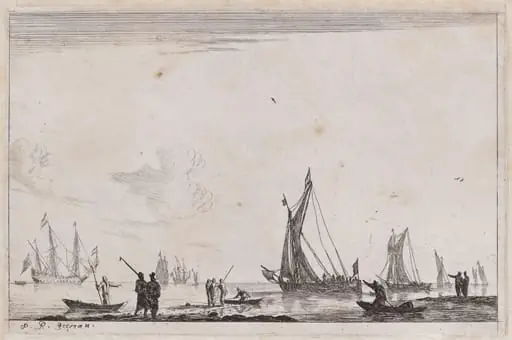 Inland Waterway with Two Galliots at the Right
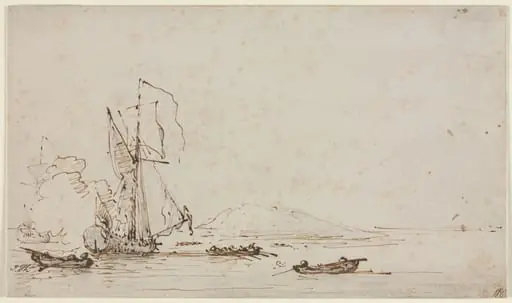 Yacht Receiving Salute
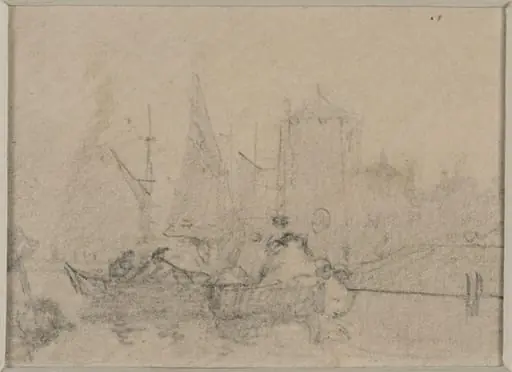 Rocky Promontory with Castle
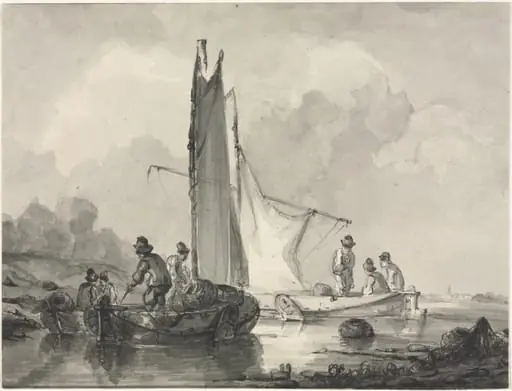 River Landscape with Fisherman and Three Boats
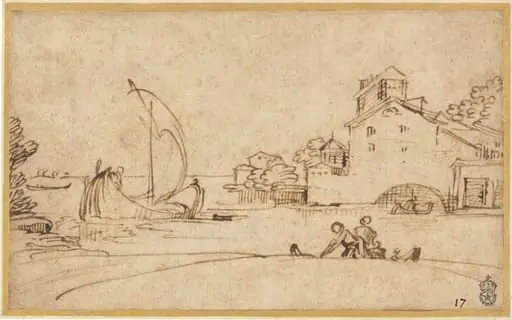 Landscape with Figures by an Estuary with Sailing Boats
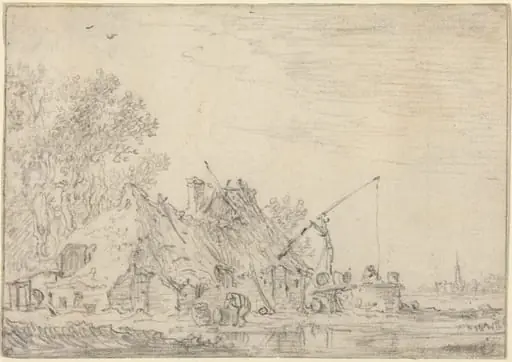 Rustic House with a Well