Artwork
View of Dordrecht from the River
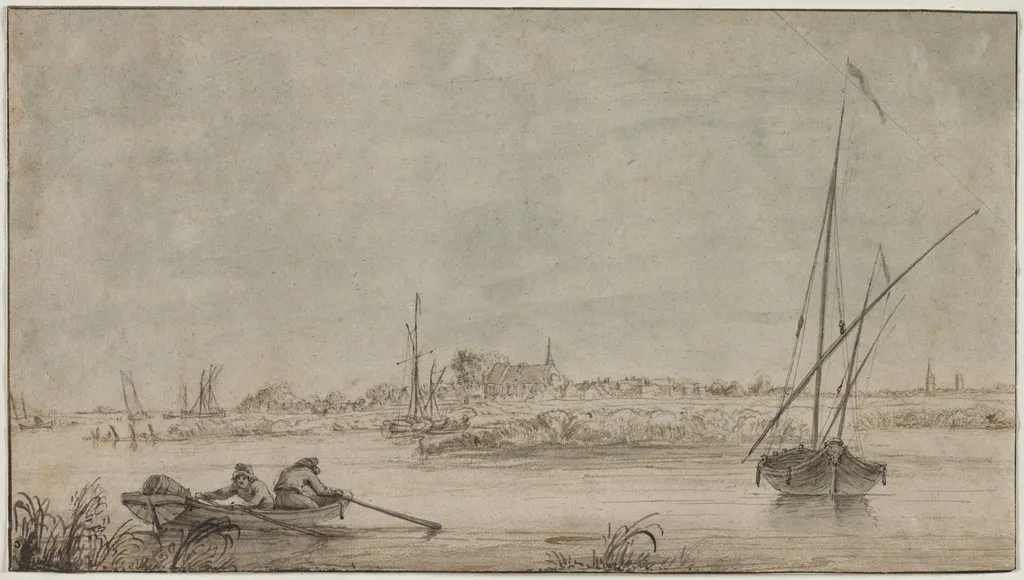
View of Dordrecht from the River is a drawing by the Romanticist artist Jacob van Strij. It dates from 1786 and is held in the collection of the Cleveland Museum of Art.
About this work
Overview
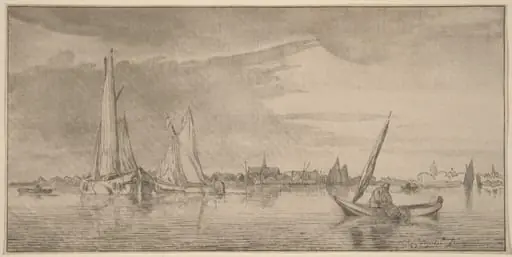
Created in 1786 by Jacob van Strij, this pencil drawing captures a tranquil riverside view of Dordrecht. Executed with delicate, light strokes, the work belongs to the collection of The Cleveland Museum of Art. Unlike grand historical or dramatic landscapes, the scene emphasizes quiet, everyday activity along the water, reflecting the artist’s consistent interest in maritime and urban river life.
Subject & Meaning
The focus on ordinary vessels and unassuming architecture suggests an appreciation for the quiet continuity of river commerce and local habitation.
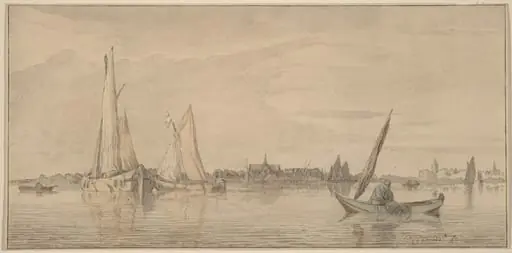
The drawing portrays a modest stretch of the river with two small rowboats, one carrying two figures in simple attire, and distant sailing vessels near the town’s low buildings and a single church spire. There is no narrative drama—only the rhythm of daily life. The focus on ordinary vessels and unassuming architecture suggests an appreciation for the quiet continuity of river commerce and local habitation.
Technique & Style
Van Strij employed soft, light pencil strokes to suggest form and atmosphere without heavy shading or detail. The water is rendered with minimal lines, conveying stillness; figures and boats are indicated with economical contours. The sketchlike quality implies immediacy, as if observed directly from a boat or riverbank, prioritizing mood over precision—a hallmark of his observational approach to landscape.
History & Provenance
The drawing was completed in 1786 during van Strij’s active period as a Dutch draftsman and printmaker. It entered the collection of The Cleveland Museum of Art at an unknown date, likely through acquisition or donation. No earlier ownership records are widely documented, but its preservation reflects its value as a representative example of late 18th-century Dutch topographical drawing.
Context
In the late 1700s, Dutch artists increasingly turned to intimate, unidealized views of local waterways and towns, moving away from grand historical themes. Van Strij’s work aligns with this trend, documenting the functional, lived-in character of Dordrecht’s riverfront. Such drawings served both as personal records and as records of a changing urban landscape shaped by trade and navigation.
Legacy
Van Strij’s drawings, including this one, contribute to a broader understanding of Dutch visual culture in the late Enlightenment. They offer a quiet counterpoint to monumental landscapes, emphasizing observation over spectacle. While not widely exhibited, such works remain important for their documentation of regional life and their influence on later topographical and genre-oriented practices.
Artist & collection
Artist
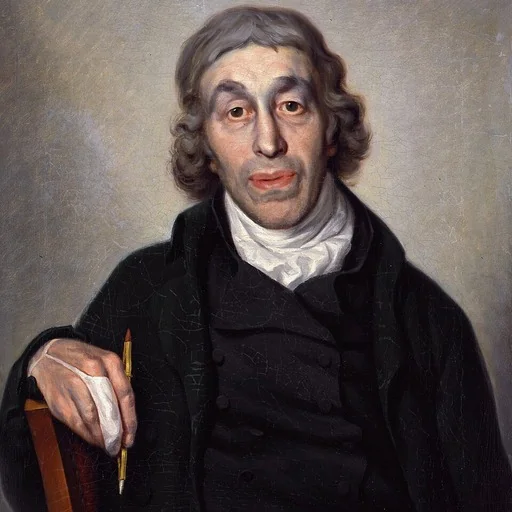
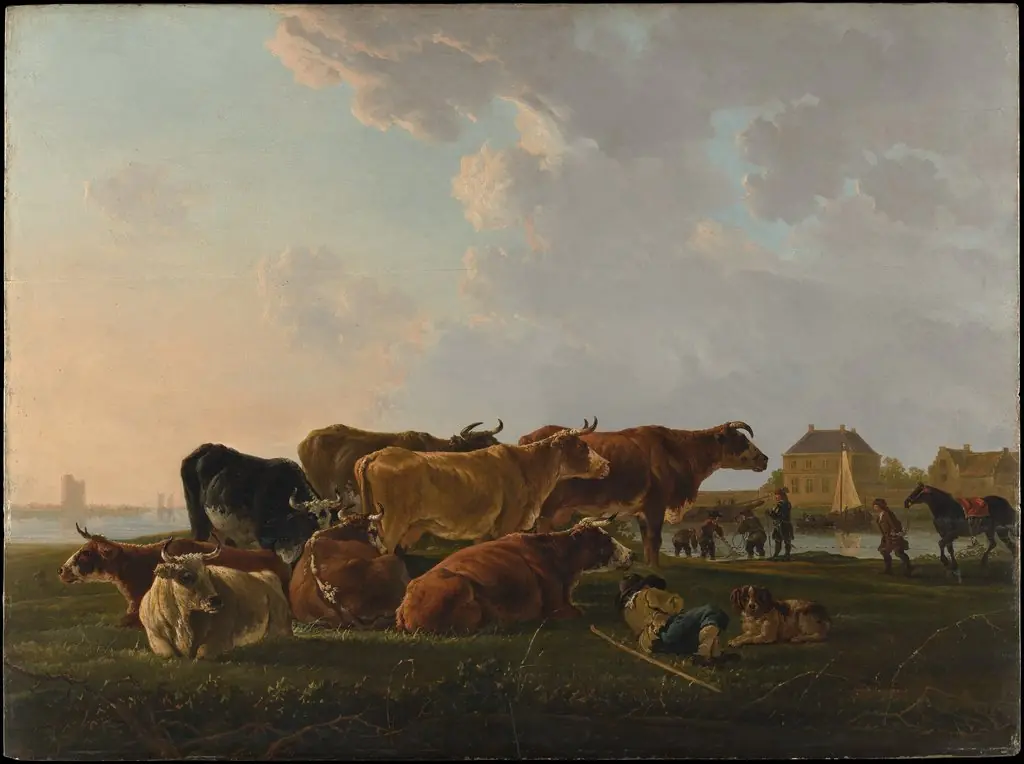
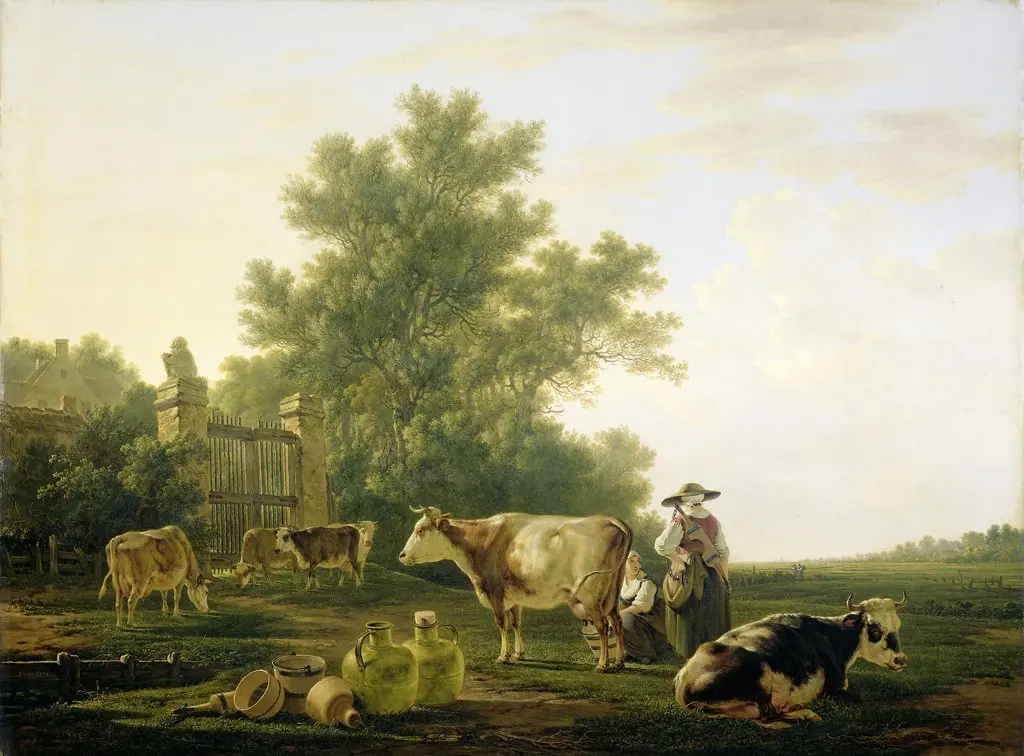
Jacob van Strij (2 October 1756 – 4 February 1815) was a Dutch painter, printmaker, and draftsman who was mainly interested in landscape painting, including mountain landscapes, winter landscapes and marines.

![View of Houtewael near the Sint Anthoniespoort [recto], by Rembrandt](https://artifactworldgallery.com/img/rembrandt--view-of-houtewael-near-the-sint-anthoniespoort-recto--2919925de9060e70-w320.webp) View of Houtewael near the Sint Anthoniespoort [recto]
View of Houtewael near the Sint Anthoniespoort [recto]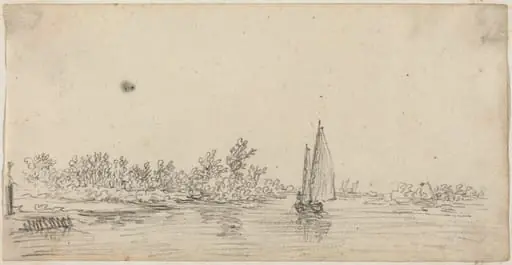 Sailboat on an Estuary
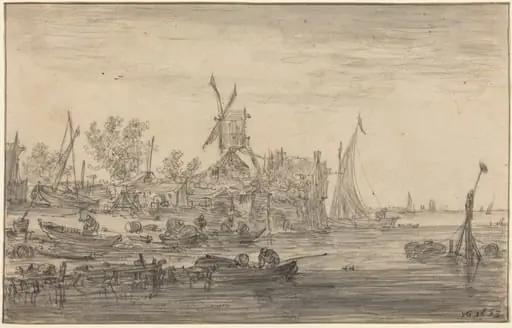 Foreshore Scene with Windmill
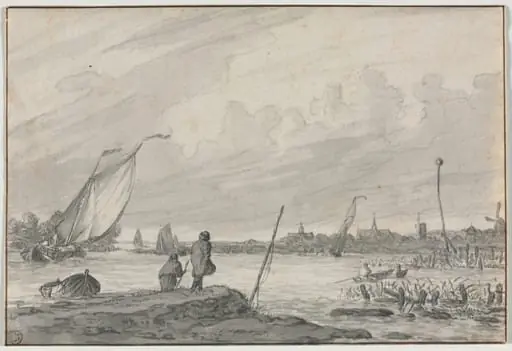 View of Alkmaar with Boats
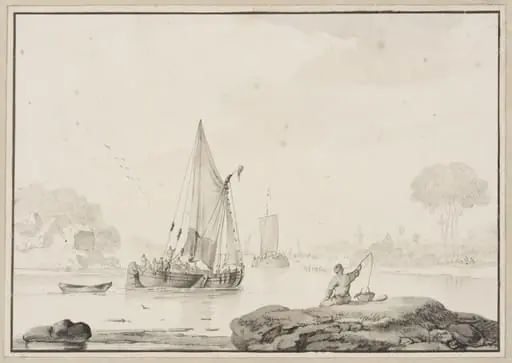 Dutch River Barges
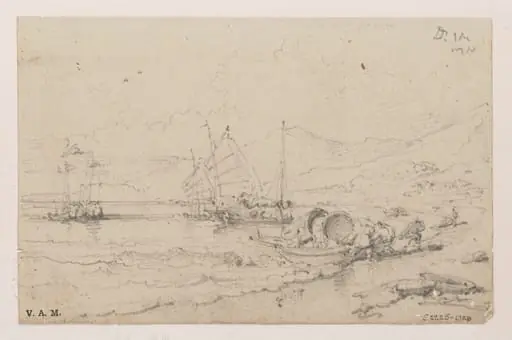 A drawing of the Praya Grande, Macau, with figures beaching a Tanka boat and other craft in the bay
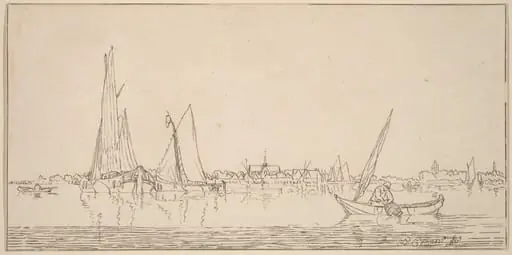 River with Town
 River with Town
 River with Town
 View over the Amstel from the Rampart