Artwork
Group of Many Figures
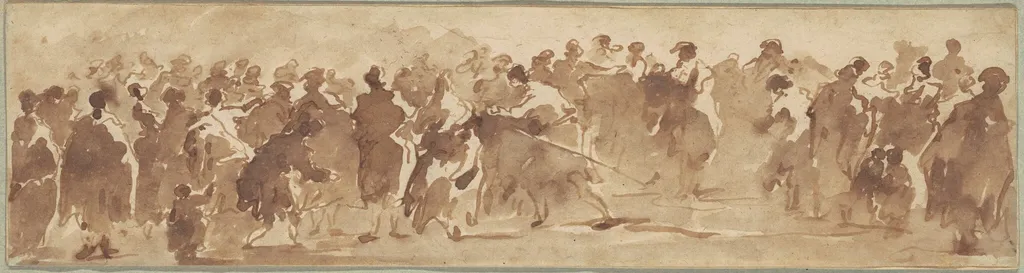
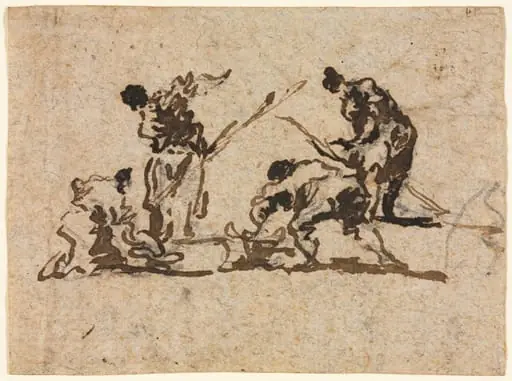
Group of Many Figures is a drawing by the Romanticist artist Francesco Guardi. It dates from 1780 and is held in the collection of the National Gallery of Art.
About this work
Overview
Created in 1780, this drawing by Francesco Guardi is a study in movement and atmosphere, executed in brown wash on laid paper.
Created in 1780, this drawing by Francesco Guardi is a study in movement and atmosphere, executed in brown wash on laid paper. Unlike finished compositions, it captures a fleeting moment in public life, reflecting Guardi’s shift from formal vedute to more spontaneous, observational works. The medium’s fluidity allowed him to record motion and gesture with minimal detail, emphasizing rhythm over precision.
Subject & Meaning
The drawing depicts a dense procession of individuals moving through an undefined urban space. Figures, some carrying sticks, others wrapped in cloaks or wearing hats, advance in varied directions, suggesting a crowd in transit—perhaps a religious procession, market day, or civic event. No single narrative dominates; instead, the work conveys the energy and anonymity of collective movement in 18th-century Venice.
Technique & Style
Guardi employed loose, rapid washes to suggest form rather than define it. Contours are implied through smudged tones and overlapping strokes, avoiding sharp outlines. The brown pigment, applied with varying pressure, creates depth through gradations of gray and sepia, harmonizing with the paper’s natural texture. This method prioritizes immediacy and emotional resonance over anatomical accuracy or architectural detail.
History & Provenance
The drawing originates from Guardi’s later period, after he moved away from the detailed vedute of his early career and his collaborations with his brother Gian Antonio. While its exact provenance before the 20th century is undocumented, it aligns with a body of sketches Guardi produced as personal studies, likely intended for his own use rather than public display.
Context
In late 18th-century Venice, the city’s social fabric was marked by public rituals and daily commerce, both of which offered rich subject matter for artists. Guardi’s sketches like this one reflect a broader trend among Venetian painters to document transient moments, responding to a changing urban landscape and a growing interest in the everyday over grand historical or mythological themes.
Legacy
Guardi’s sketchy, expressive style influenced later generations of artists seeking to capture motion and mood over formal composition. Though not widely exhibited in his lifetime, these drawings gained recognition in the 19th and 20th centuries as precursors to modern observational practices, valued for their honesty and sensitivity to the rhythms of ordinary life.
Artist & collection
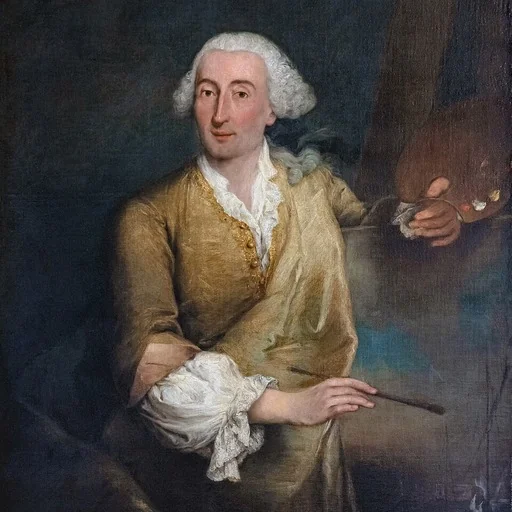
Artist
Francesco Lazzaro Guardi (Italian pronunciation: ; 5 October 1712 – 1 January 1793) was an Italian painter, nobleman, and a member of the Venetian School.

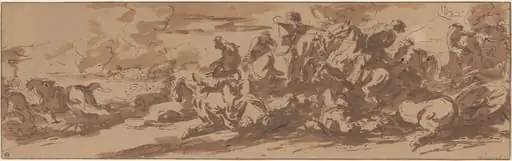 Cavalry Battle near a River
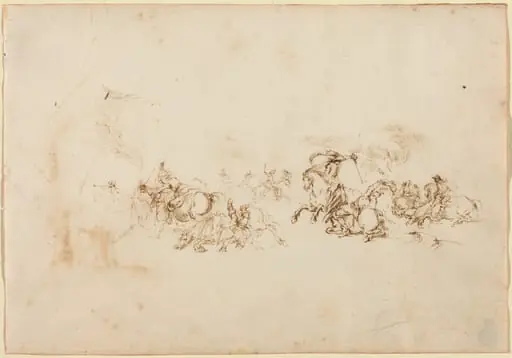 The Cavalry Combat
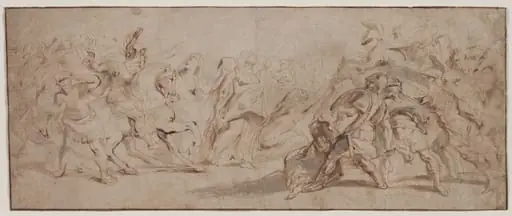 Reconciliation of the Romans and the Sabines (recto)
![Magdalene Washing the Feet of Christ with Eight Disciples Looking On [recto], by Donato Creti](https://artifactworldgallery.com/img/donato-creti--magdalene-washing-the-feet-of-christ-with-eight-disciples-lo--25318e941cc7fc91-w320.webp) Magdalene Washing the Feet of Christ with Eight Disciples Looking On [recto]
Magdalene Washing the Feet of Christ with Eight Disciples Looking On [recto]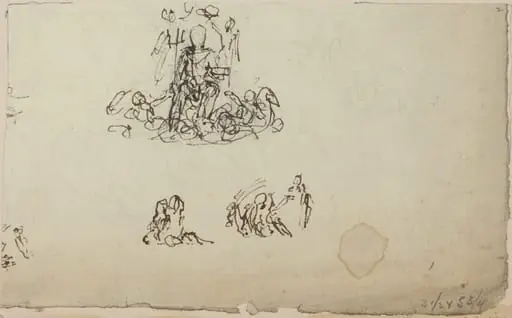 Study of Neptune and Sea Creatures (?)
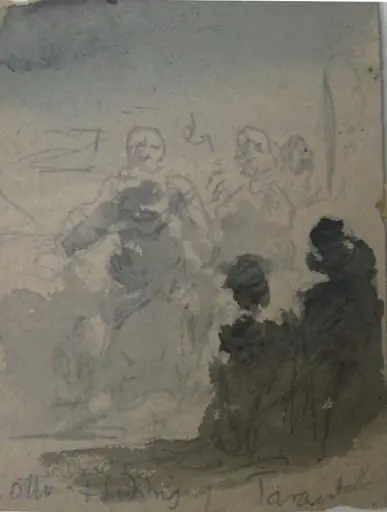 Schiță de grup
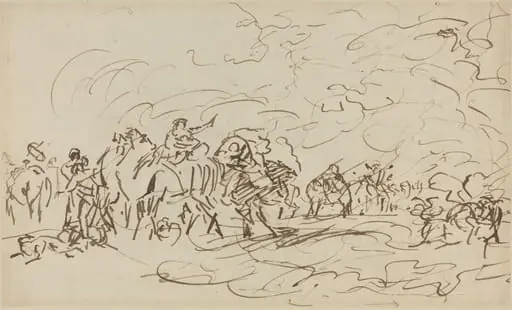 Sandstorm in the Desert Overtaking a Caravan
 The Large Lion Hunt
 Flight into Egypt: The Embarkment of the Holy Family
 Rape of the Sabines
 The Murder of Archbishop Sharpe
 Farmers and Fisherman Working