Artwork
A Grain Merchant
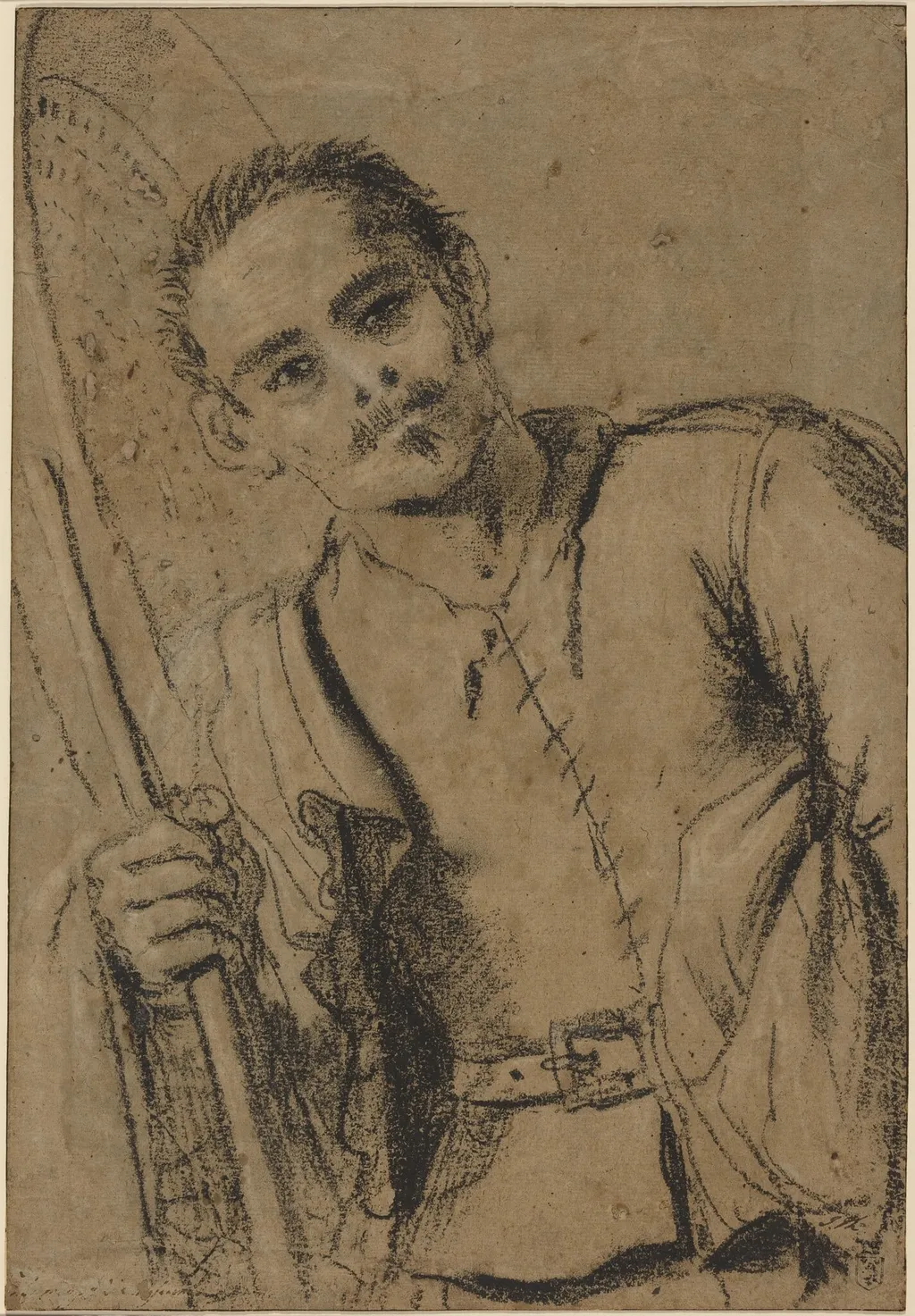
A Grain Merchant is a chalk drawing by the Baroque artist Guercino. It dates from 1620 and is held in the collection of the National Gallery of Art.
About this work
Overview
Created by Giovanni Francesco Barbieri, known as Guercino, the work reflects the artist’s early period, marked by a commitment to naturalistic representation.
This drawing, executed around 1620, portrays a grain merchant in black chalk with white heightening on paper prepared with a brown wash. Created by Giovanni Francesco Barbieri, known as Guercino, the work reflects the artist’s early period, marked by a commitment to naturalistic representation. The medium and technique emphasize volumetric form and subtle tonal contrasts, aligning with broader Baroque draftsmanship practices of the era.
Subject & Meaning
The figure depicted is a merchant, identifiable by the large object—likely a sack or bundle—held behind his back, suggesting labor or trade. His downward gaze and neutral expression convey a moment of quiet engagement, devoid of overt drama. The subject’s ordinary status and unidealized features underscore Guercino’s interest in capturing everyday individuals, a hallmark of his early naturalistic approach.
Technique & Style
Guercino employs black chalk heightened with white to model the merchant’s form, exploiting the warm brown wash of the paper as a mid-tone. This method allows for nuanced gradations of light and shadow, lending the figure a three-dimensional presence. The loose, energetic handling of chalk reinforces the immediacy of the drawing, while the restrained palette focuses attention on the interplay of textures—fabric, skin, and the implied weight of the merchant’s burden.
History & Provenance
Created in Emilia around 1620, the drawing originates from Guercino’s formative years in Cento, prior to his relocation to Rome and Bologna. As with many of his preparatory works, its early ownership history remains unclear. The sheet’s survival as an independent work—rather than a study for a painting—highlights its value as an example of the artist’s draftsmanship during a period of stylistic experimentation.
Context
The drawing emerges from the Baroque period, a time when artists increasingly turned to naturalism and dynamic compositions. Guercino’s work reflects the influence of Carracci and Caravaggio, blending observational precision with a sensitivity to light. Such studies of ordinary figures served both as exercises in form and as demonstrations of the artist’s ability to capture life with immediacy, a skill prized in the competitive artistic circles of seventeenth-century Italy.
Artist & collection
Artist
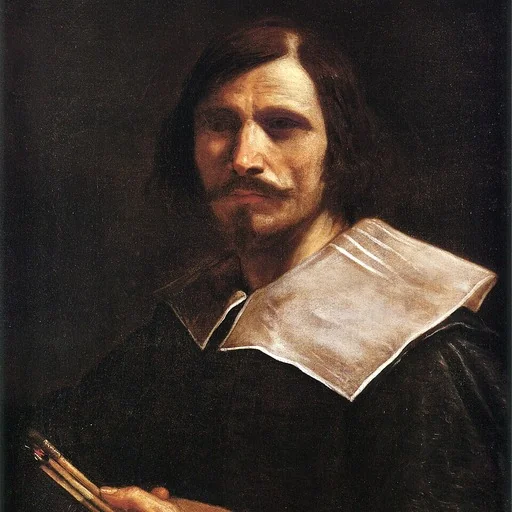
Giovanni Francesco Barbieri (8 February 1591 – 22 December 1666), better known as (il) Guercino (Italian pronunciation: ), was an Italian Baroque painter and draftsman from Cento in the Emilia region, who was active in Rome and Bologna.

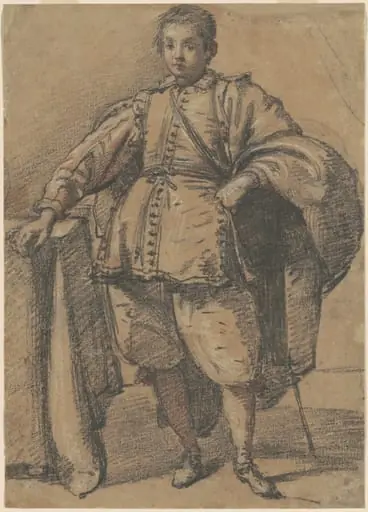 Portrait of a Young Nobleman
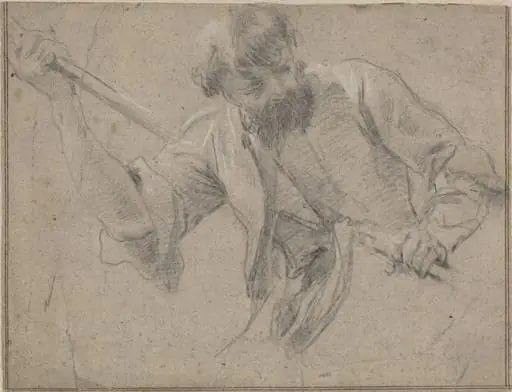 A Bearded Man with a Staff
 The Quacksalver
 A Young Man
 Figure Costume Study for Columbus Mural, Washington, D.C.
 Standing Cavalier Wearing a Sword
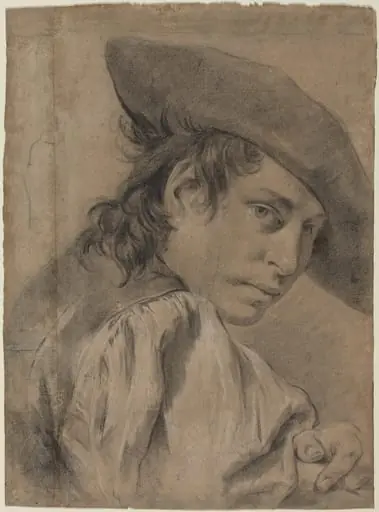 A Young Man in a Broad Hat
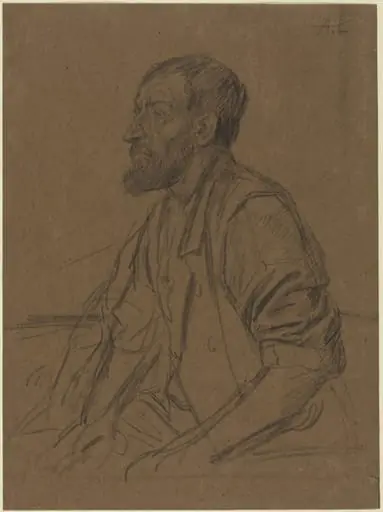 Study of a Workman
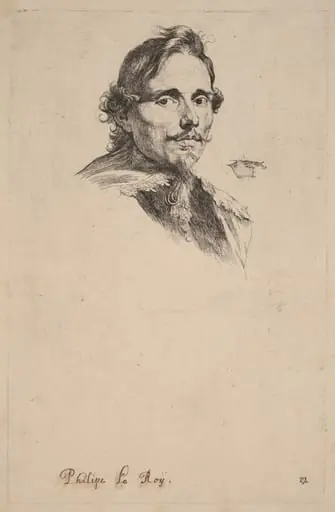 Philippe le Roy, Lord of Ravels
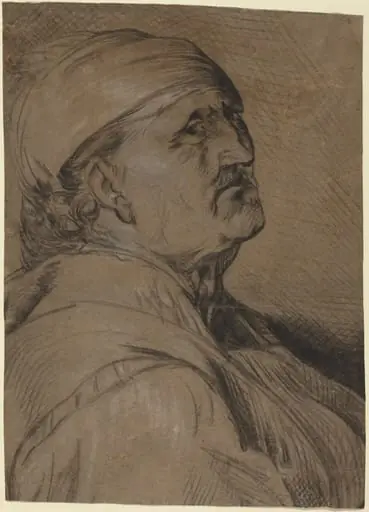 Head of an Old Man
 A Standing Saint Holding a Book and a Palm Frond
 Standing Peasant