Artwork
A Young Man
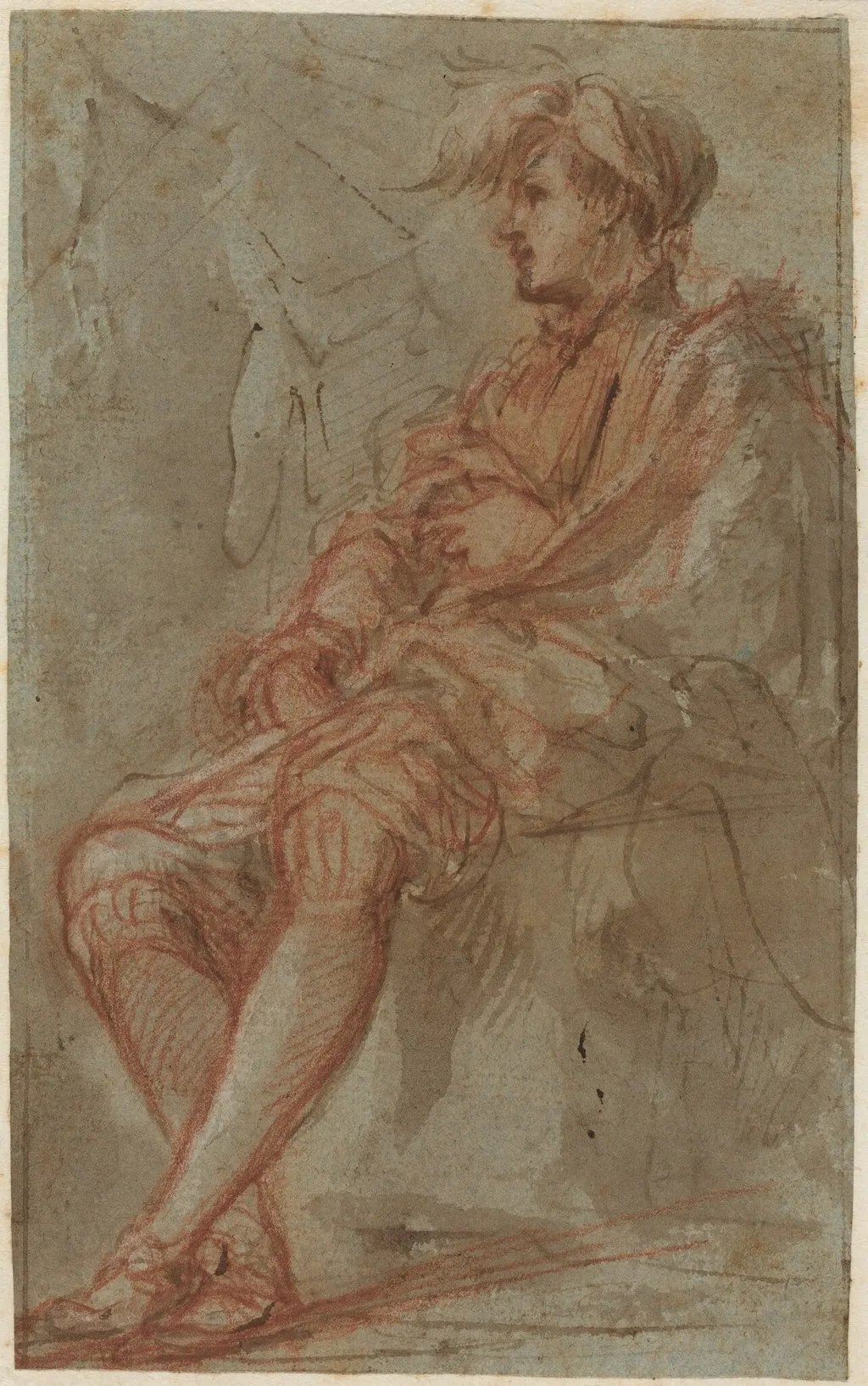
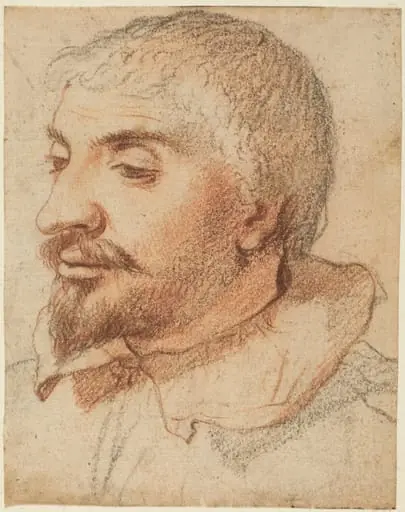
A Young Man is an ink drawing by the Renaissance artist Italian 17th Century. It dates from 1501 and is held in the collection of the National Gallery of Art. This drawing depicts a youthful male figure rendered in pen and brown ink, brown wash, and red chalk on blue laid paper.
About this work
Overview
The choice of materials—ink, wash, and chalk—creates a restrained yet expressive effect, emphasizing both contour and volume.
This drawing depicts a youthful male figure rendered in pen and brown ink, brown wash, and red chalk on blue laid paper. Executed during a period dominated by painting, the work stands out for its reliance on graphic media, which allowed for precise linear definition and tonal modulation. The choice of materials—ink, wash, and chalk—creates a restrained yet expressive effect, emphasizing both contour and volume.
Subject & Meaning
The subject is a young man dressed in modest attire, gazing directly outward. His expression and posture suggest a moment of quiet introspection or casual observation. While the drawing lacks overt narrative elements, its focus on an ordinary individual reflects a broader interest in human presence and character, a theme increasingly explored in Renaissance and early modern draftsmanship.
Technique & Style
The artist employed a combination of penwork, ink wash, and red chalk to build form and texture. Delicate cross-hatching and layered strokes define anatomical details, while the wash softens transitions between light and shadow. The use of red chalk beneath the ink enhances warmth and depth, a method that permitted both spontaneity and control. This approach aligns with techniques favored by draftsmen seeking to balance precision with atmospheric effect.
History & Provenance
The drawing’s early history remains undocumented, though its materials and stylistic traits place it within the European tradition of the late 15th to early 16th century. Such works often circulated among collectors and workshops, serving as studies or independent compositions. Its survival on blue laid paper, a support less durable than panel or canvas, underscores its value to subsequent owners.
Context
During the Renaissance, drawings transitioned from preparatory sketches to finished works in their own right. This shift coincided with a growing appreciation for draftsmanship as an art form, distinct from painting. The use of mixed media—ink over chalk—allowed artists to explore tonal range and texture, reflecting broader experimentation with materials. Such drawings often functioned as both technical exercises and autonomous expressions of skill.
Artist & collection

Artist
This Italian artist worked in the 17th century, making engravings, ink drawings, and oil paintings.

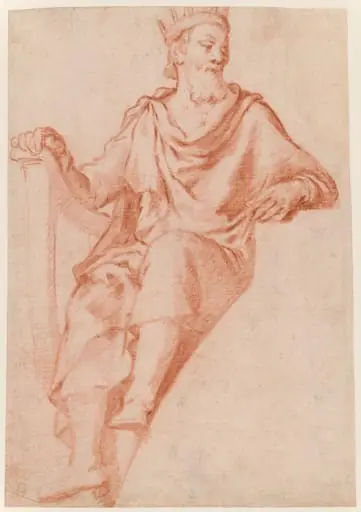 King David (Design for a Lunette)
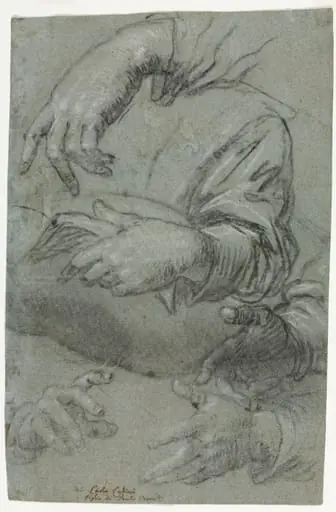 Studies of Hands (recto)
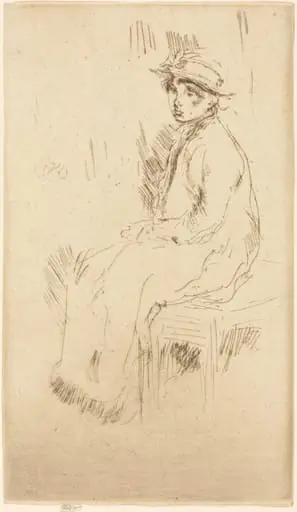 Nora Quinn
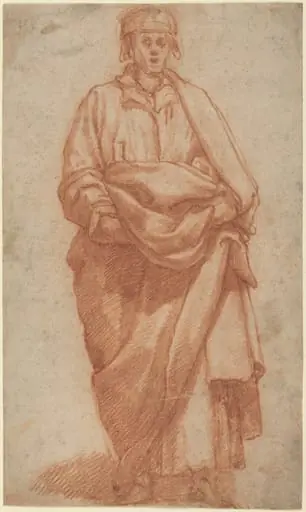 Standing Man
![Standing Draped Man [recto], by Jacopo da Empoli](https://artifactworldgallery.com/img/jacopo-da-empoli--standing-draped-man-recto--b3cdc92a1134339d-w320.webp) Standing Draped Man [recto]
Standing Draped Man [recto]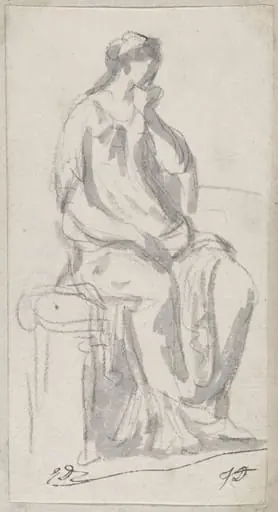 Classical Sculpture of a Pensive Woman
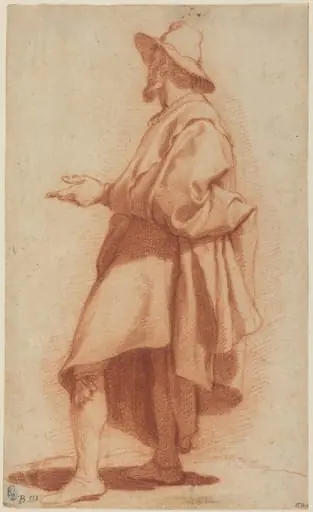 Standing Man Wearing a Cloak and Hat
![Man Leaning on a Rail [verso], by Matteo Rosselli](https://artifactworldgallery.com/img/matteo-rosselli--man-leaning-on-a-rail-verso--c9936b6777df930d-w320.webp) Man Leaning on a Rail [verso]
Man Leaning on a Rail [verso]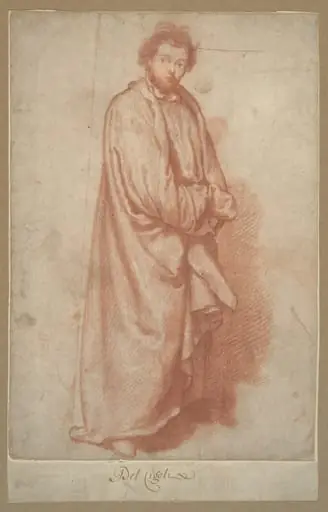 A Standing Bearded Man
![Seated Draped Man [verso], by Jacopo da Empoli](https://artifactworldgallery.com/img/jacopo-da-empoli--seated-draped-man-verso--e4aec542e44bf41e-w320.webp) Seated Draped Man [verso]
Seated Draped Man [verso]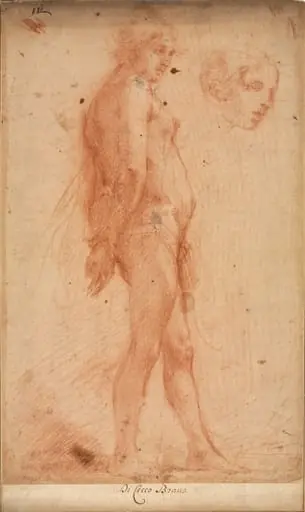 Study of a Standing Male Nude, with a Study of Head in Three-Quarter Profile
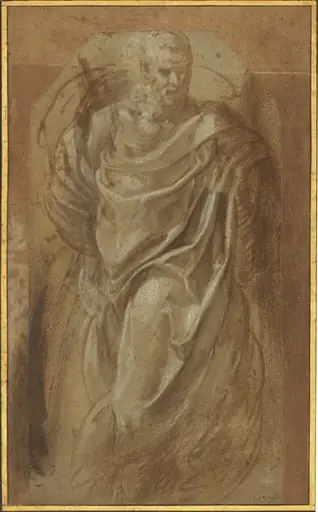 A Standing Man in Classical Drapery