Artwork
Portrait of a Young Nobleman
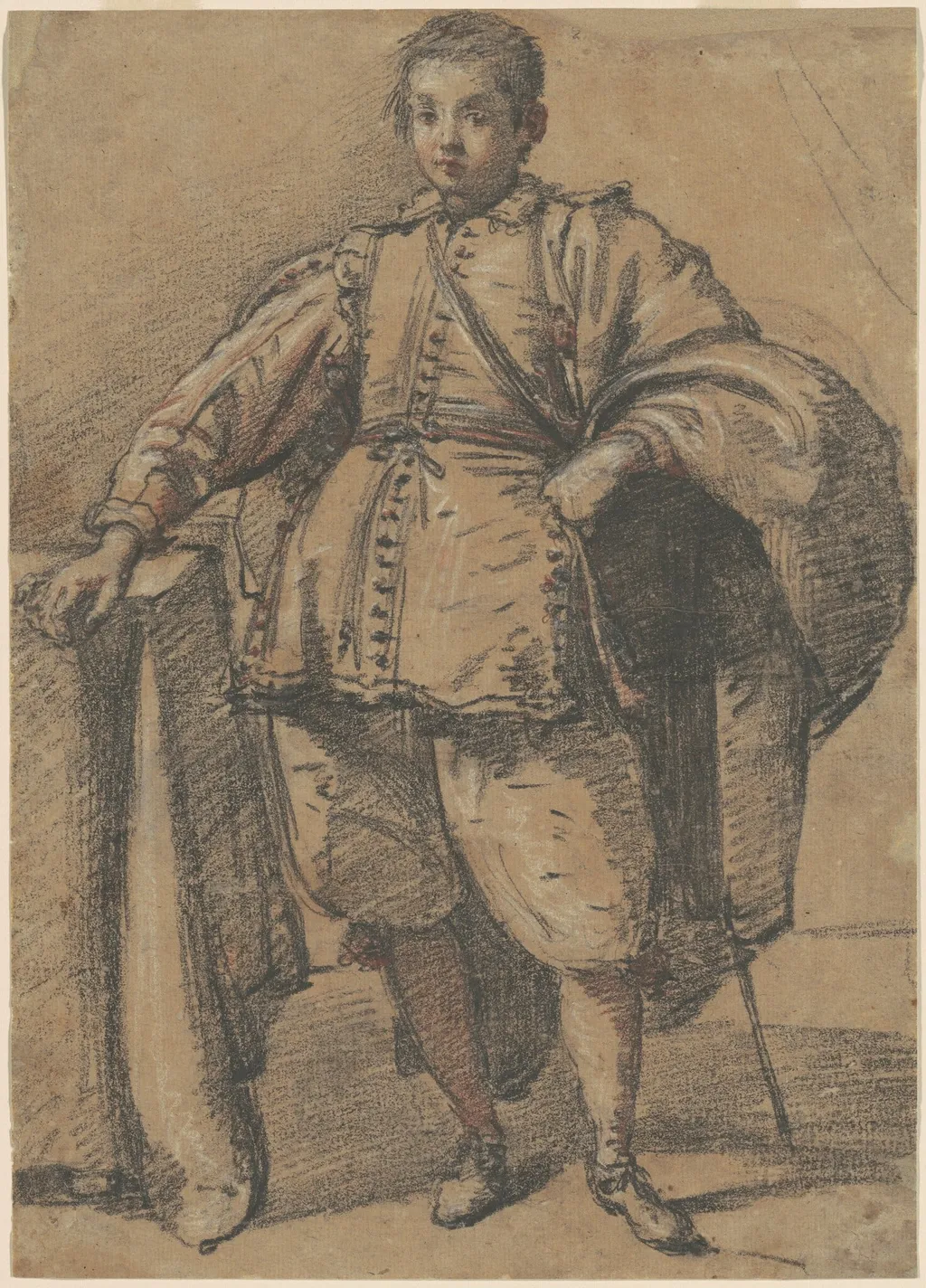
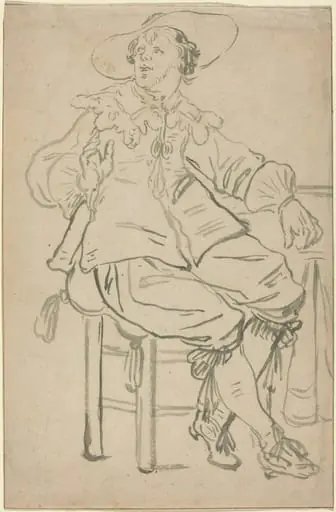
Portrait of a Young Nobleman is a chalk drawing by the Baroque artist Italian 17th Century. It is held in the collection of the National Gallery of Art. The drawing presents a young aristocrat rendered in a three‑quarter pose, his right hand resting on a ledge or table.
About this work
Overview
The drawing presents a young aristocrat rendered in a three‑quarter pose, his right hand resting on a ledge or table. He is dressed in an elaborate costume, with a cloak draped over his left shoulder, while the background remains largely unfinished, directing focus to the figure.
Subject & Meaning
The work captures a member of the nobility, emphasizing status through sumptuous attire and a composed stance. The unfinished backdrop suggests an intent to foreground the individual's presence rather than situate him within a detailed setting.
Technique & Style
Executed with black chalk, the drawing incorporates accents of red chalk and highlights of white chalk to model form. Strong contrasts between light and shadow create a chiaroscuro effect, giving the figure a sense of volume and dramatic presence characteristic of Baroque drawing practices.
Context
The use of chiaroscuro aligns the piece with broader Baroque tendencies toward heightened drama and three‑dimensionality in drawing. Such techniques were commonly employed to convey the vitality and social standing of portrait subjects during the period.
Artist & collection

Artist
This Italian artist worked in the 17th century, making engravings, ink drawings, and oil paintings.

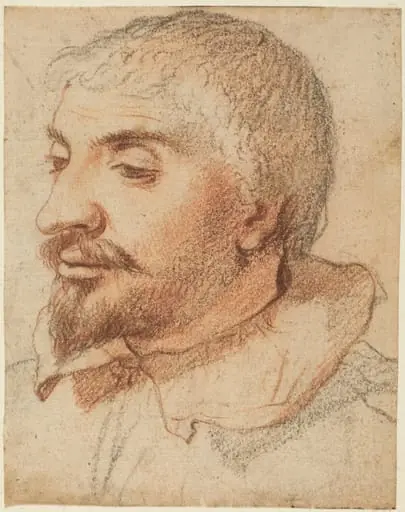
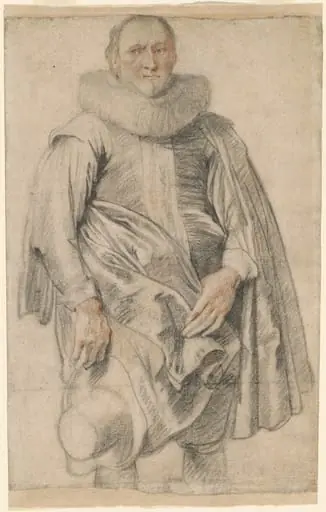 Portrait of a Man Standing
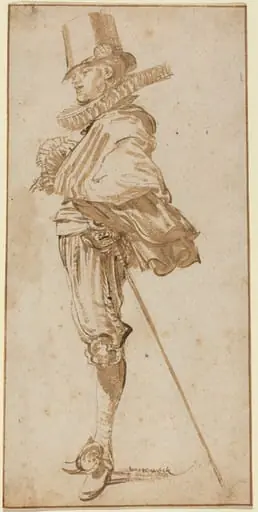 Standing Cavalier Wearing a Sword
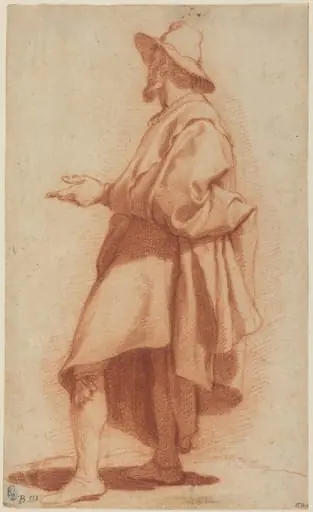 Standing Man Wearing a Cloak and Hat
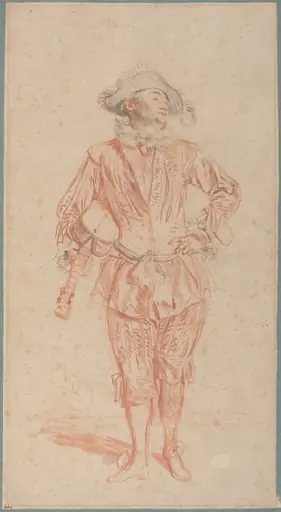 Mezzetin
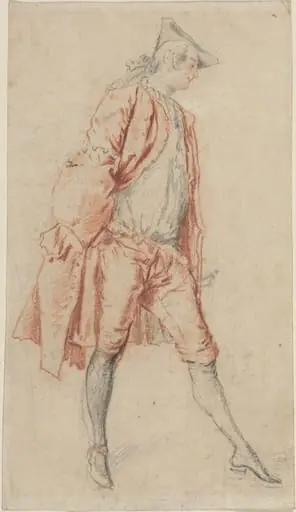 A French Gentleman Standing
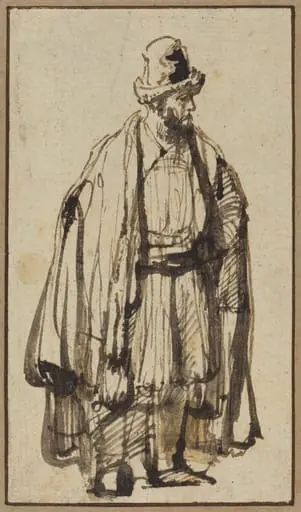 An Oriental
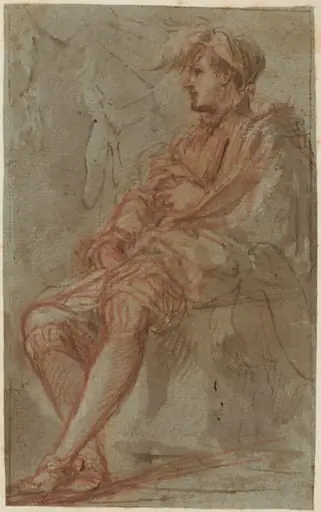
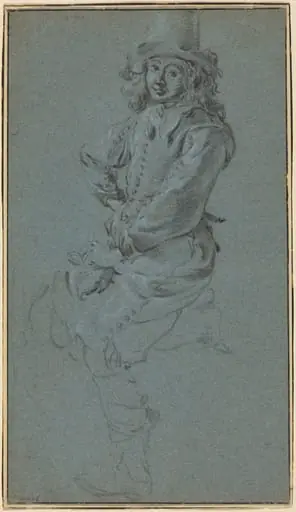 Seated Cavalier with His Arm Akimbo
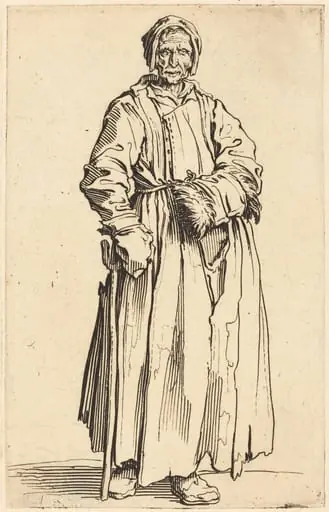 One-Eyed Woman
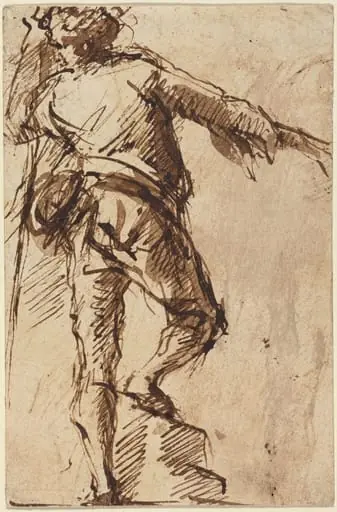 A Young Man with a Staff
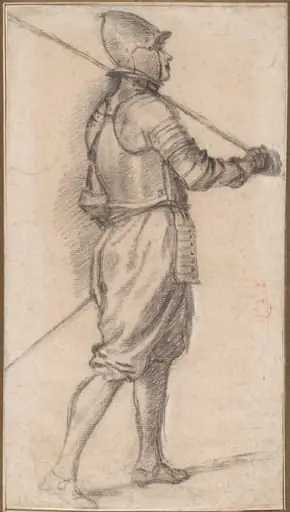 Standing Soldier, Facing Right
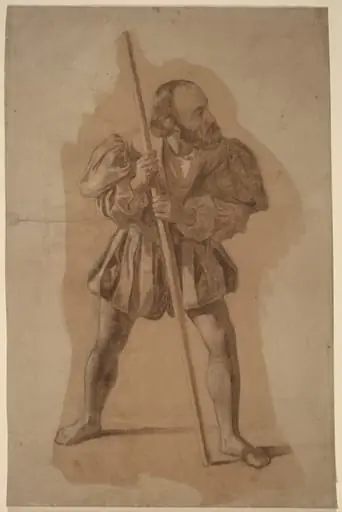 Figure Costume Study for Columbus Mural, Washington, D.C.
 Seated Cavalier