Artwork
Bethlehemitischer Kindermord
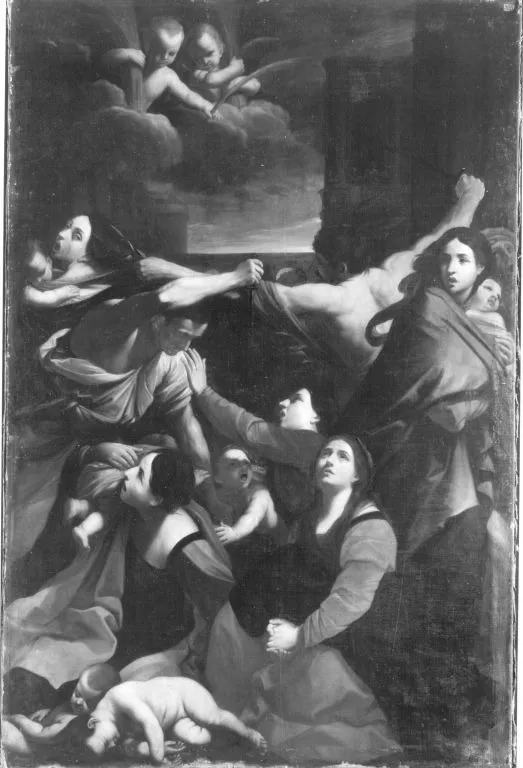
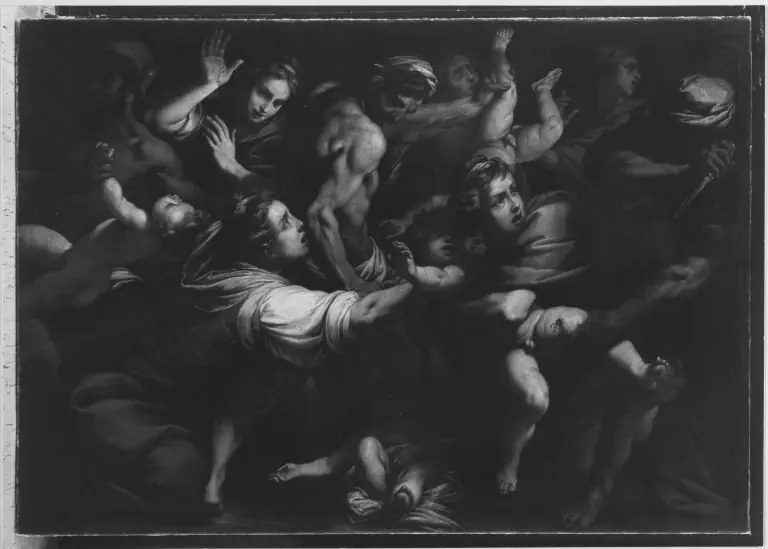
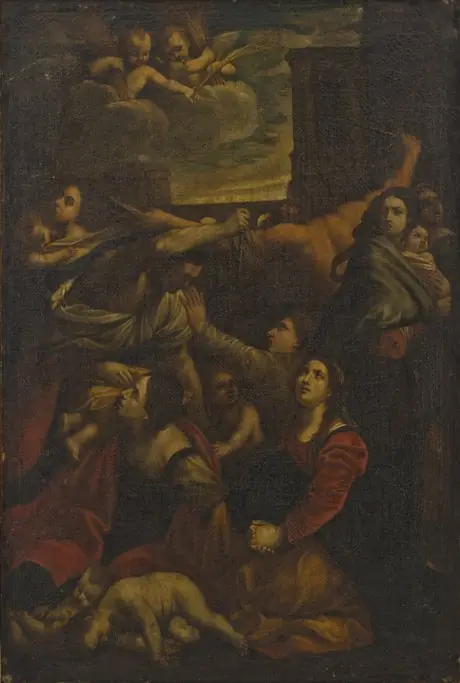
Bethlehemitischer Kindermord is an unspecified painting by the Early Baroque Italian artist Guido Reni. It dates from 1608 and is held in the collection of the Bavarian State Painting Collections.
About this work
Overview
Guido Reni’s 1608 oil painting, known as the Bethlehemitischer Kindermord, depicts a tumultuous biblical episode.
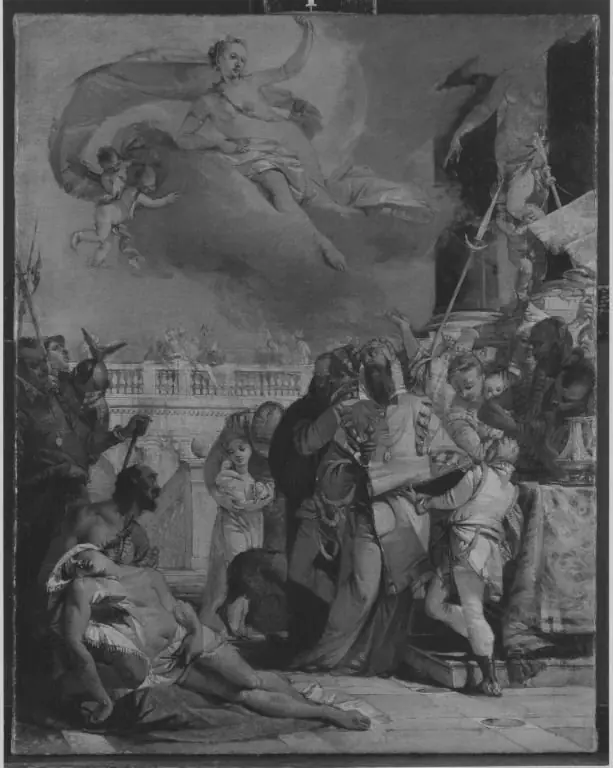
Guido Reni’s 1608 oil painting, known as the Bethlehemitischer Kindermord, depicts a tumultuous biblical episode. Six intertwined figures dominate the canvas, their draped garments swirling amid a stark, dimly lit setting. A central figure cradles an infant while another appears to be descending or being drawn downward. The composition is framed by a vague architectural outline against a cloudy, shadowed sky.
Subject & Meaning
The work visualises the Massacre of the Innocents, the biblical narrative in which King Herod orders the killing of newborns in Bethlehem. Reni captures the panic and desperation of the fleeing mothers and the brutal force of the soldiers, emphasizing the tragedy through the tangled bodies and the vulnerable child held aloft, underscoring themes of innocence threatened by tyrannical power.
Technique & Style
Reni employs pronounced chiaroscuro, allowing a high, overhead light to illuminate portions of the figures while consigning others to deep shadow. This contrast heightens the drama, accentuating muscular tension and the emotional intensity of the scene. The painter’s handling of drapery and flesh demonstrates his mastery of Baroque realism, with soft transitions that suggest movement within a static tableau.
History & Provenance
Completed in 1608, the painting entered the collection of the Alte Pinakothek in Munich, where it remains on display. Its provenance traces back to early 17th‑century patronage, though specific ownership records before its acquisition by the museum are sparse. The work has been catalogued among Reni’s religious commissions, reflecting his reputation for biblical subjects.
Context
Created during the Counter‑Reformation, the painting aligns with the Catholic Church’s emphasis on emotionally resonant religious imagery intended to inspire devotion. Reni, active in Bologna, was influenced by the dramatic tenebrism of Caravaggio and the classical compositional balance of the Carracci, situating this work within the broader Baroque movement that sought to engage viewers through theatricality and pathos.
Artist & collection
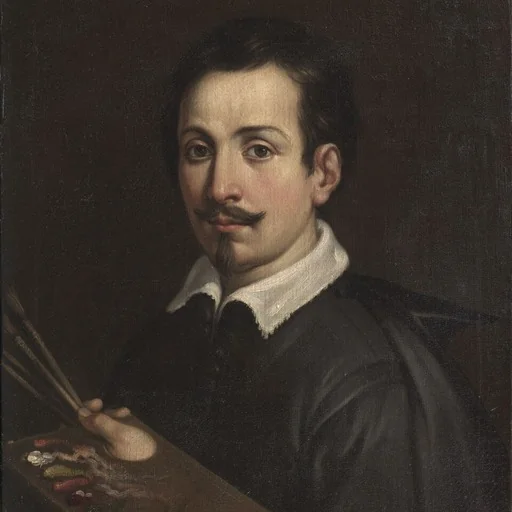
Artist
Guido Reni was an Italian Baroque painter, although his works showed a classical manner, similar to Simon Vouet, Nicolas Poussin, and Philippe de Champaigne.