Artwork
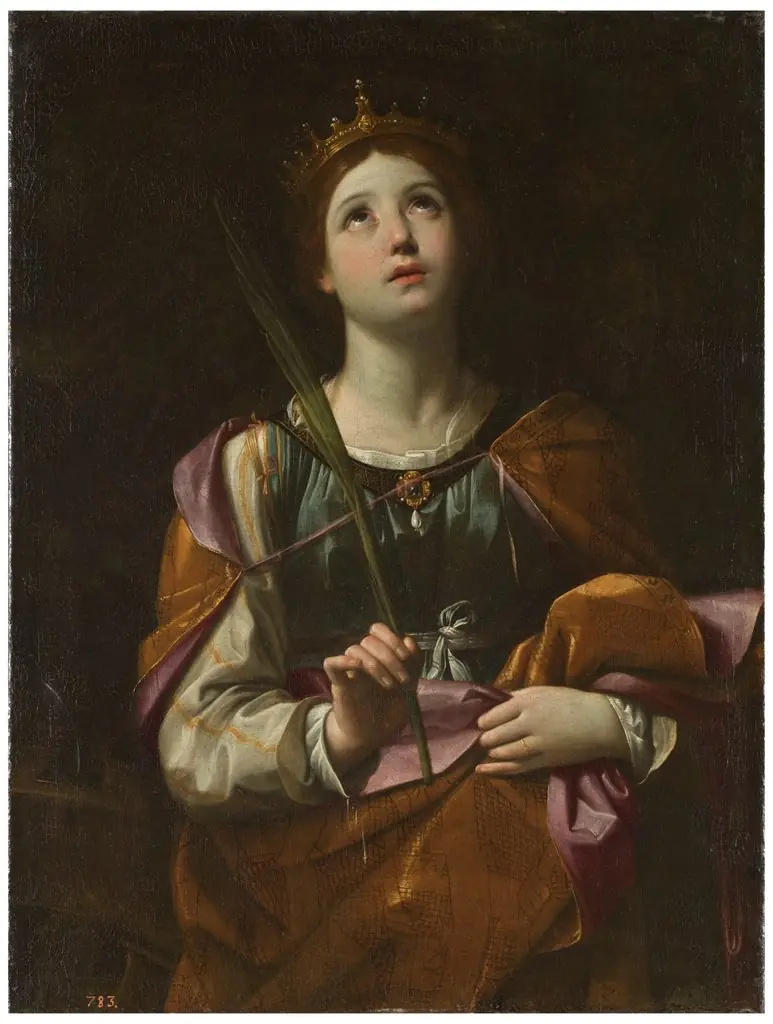
Santa Apolonia en oración
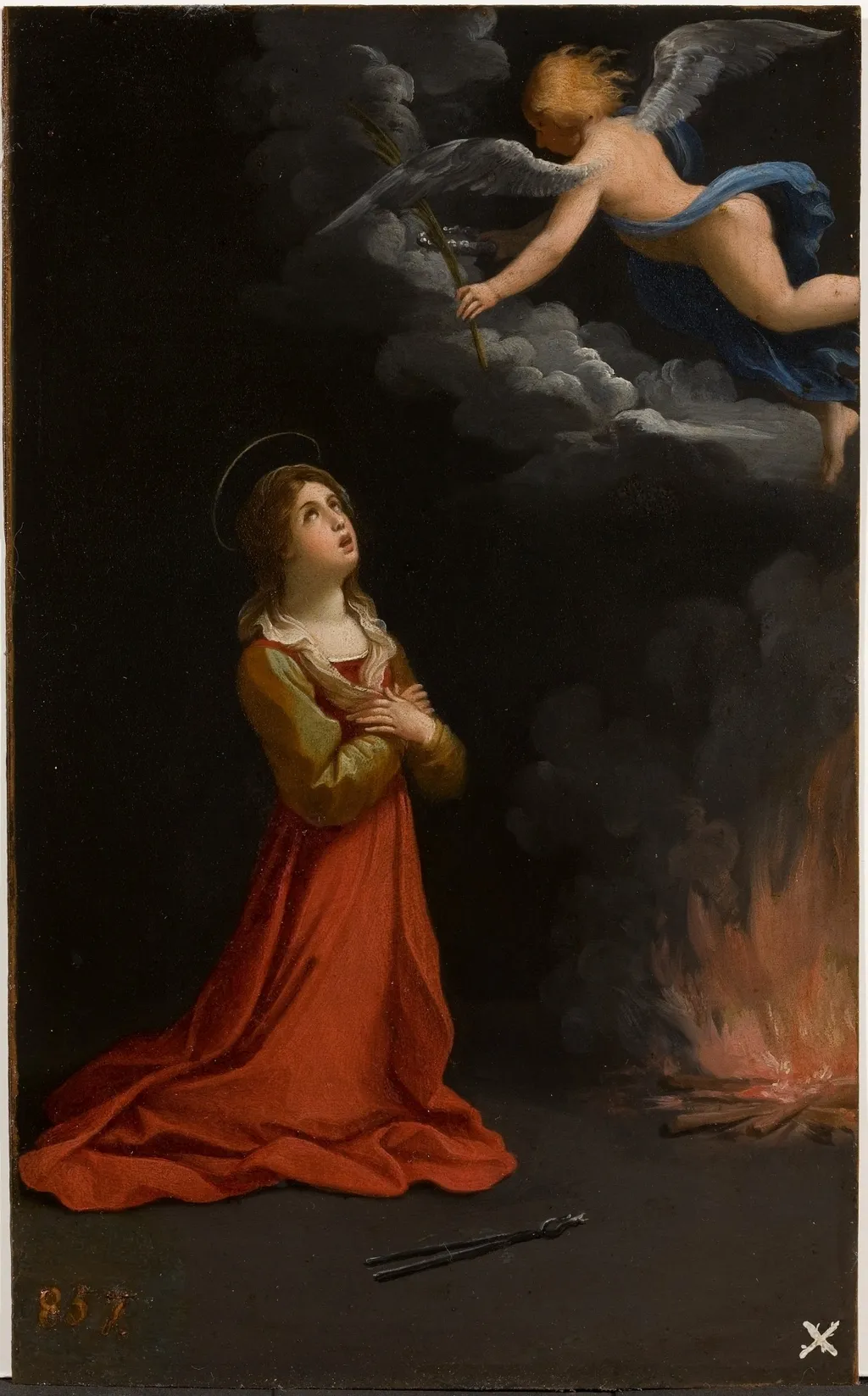
Santa Apolonia en oración is an oil painting by the Early Baroque Italian artist Guido Reni. It dates from 1600 and is held in the collection of the Museo del Prado.
About this work
Overview
Guido Reni’s early seventeenth‑century oil, titled Santa Apolonia en oración, presents a devotional scene in which a kneeling female figure, dressed in red, offers prayer before a celestial messenger. The work is part of the collection of the Museo del Prado and dates to around 1600.
Subject & Meaning
The composition centers on Saint Apollonia, identified by the presence of metal pincers—a reference to her martyrdom, during which her teeth were extracted with such instruments. The saint’s serene expression and clasped hands convey acceptance, while the angel’s focus on the tool underscores the narrative of her suffering and steadfast faith.
Technique & Style
Reni employs a dark, tenebristic background that heightens the contrast between the illuminated figures and the surrounding gloom. A subtle flame flickers on the right, adding a warm glow that accentuates the red of the saint’s garment and the metallic sheen of the pincers. The brushwork is smooth, typical of Reni’s early Baroque approach, emphasizing idealized forms and calm dignity.
History & Provenance
Created circa 1600, the painting entered the Spanish royal collection before being transferred to the Museo del Prado, where it remains on display. Its attribution to Reni has been consistently affirmed by scholarly catalogues and technical analysis of the oil medium and stylistic traits.
Context
The work reflects Counter‑Reformation devotional practices that promoted the veneration of martyr saints as exemplars of faith. By pairing a human figure with an angelic attendant, Reni aligns the earthly suffering of Apollonia with divine intercession, a common motif in early Baroque religious art.
Artist & collection
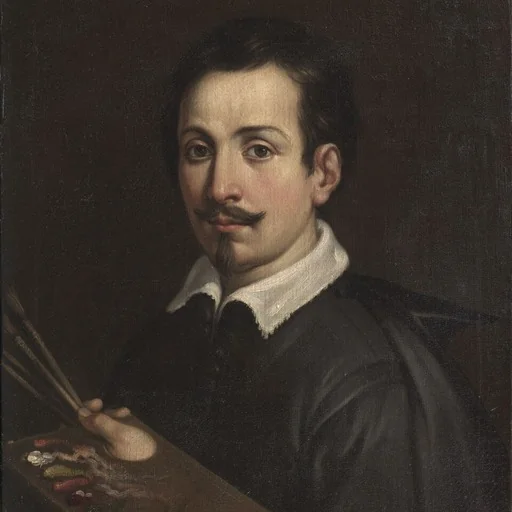
Artist
Guido Reni was an Italian Baroque painter, although his works showed a classical manner, similar to Simon Vouet, Nicolas Poussin, and Philippe de Champaigne.