Artwork
Saint Matthew and the Angel
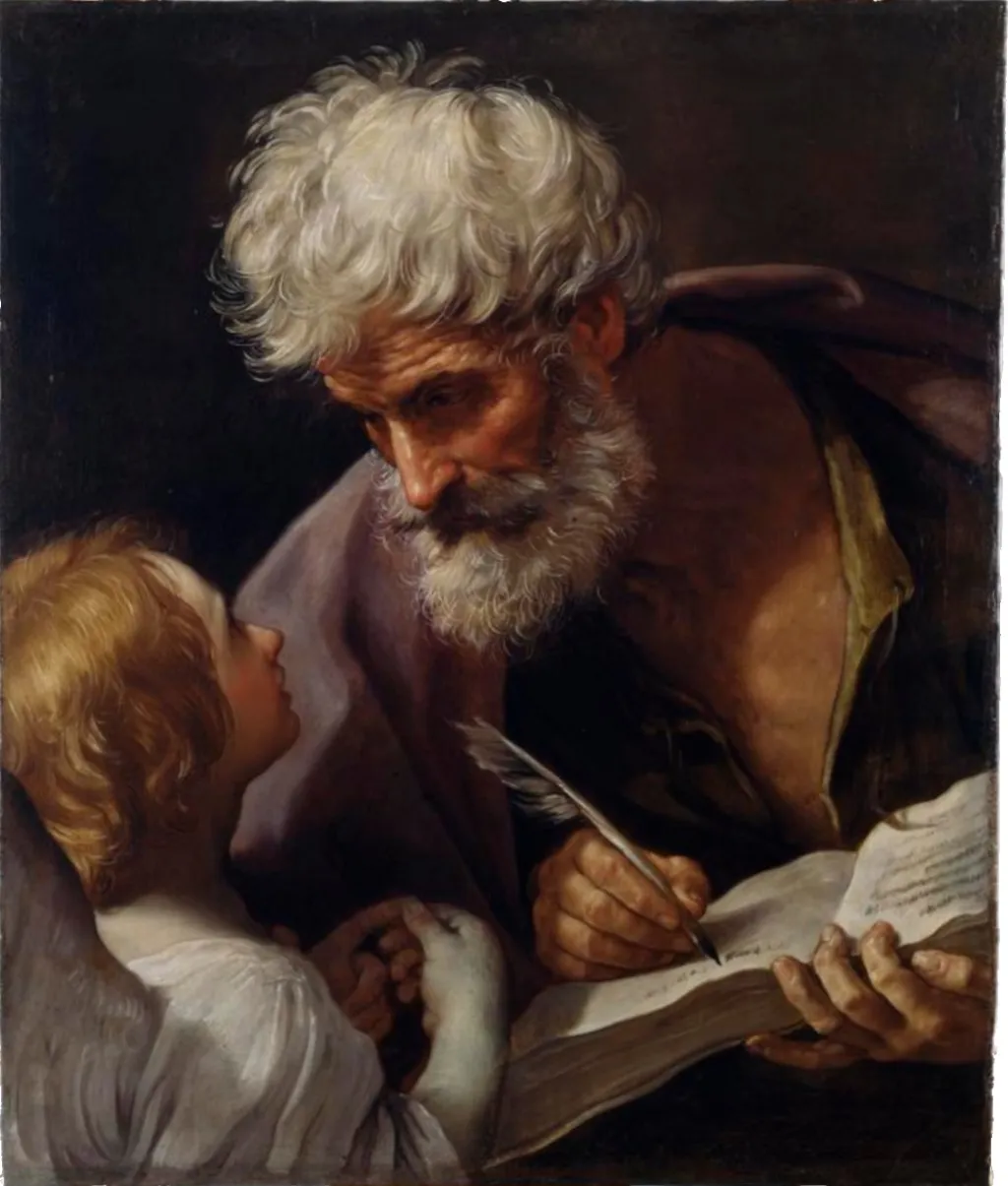
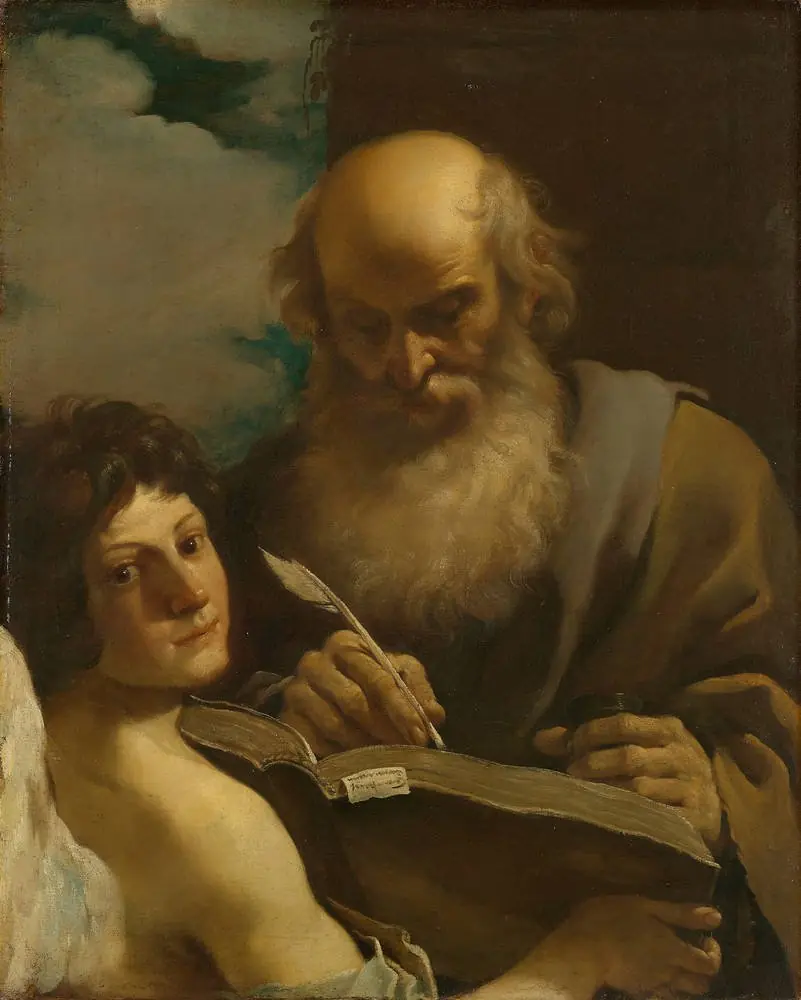
Saint Matthew and the Angel is an oil painting by the Early Baroque Italian artist Guido Reni. It dates from 1620 and is held in the collection of the Pinacoteca Vaticana.
About this work
Overview
After decades of misattribution, the painting was correctly identified in 2010 using a documentary note found on its reverse.
Painted around 1635, Saint Matthew and the Angel is an oil on canvas work by Guido Reni. It depicts the evangelist in quiet contemplation, accompanied by a youthful angel. After decades of misattribution, the painting was correctly identified in 2010 using a documentary note found on its reverse. It now resides in the Pinacoteca Vaticana, having been transferred from Santa Maria della Concezione dei Cappuccini in Rome following its donation to the Holy See in 1924.
Subject & Meaning
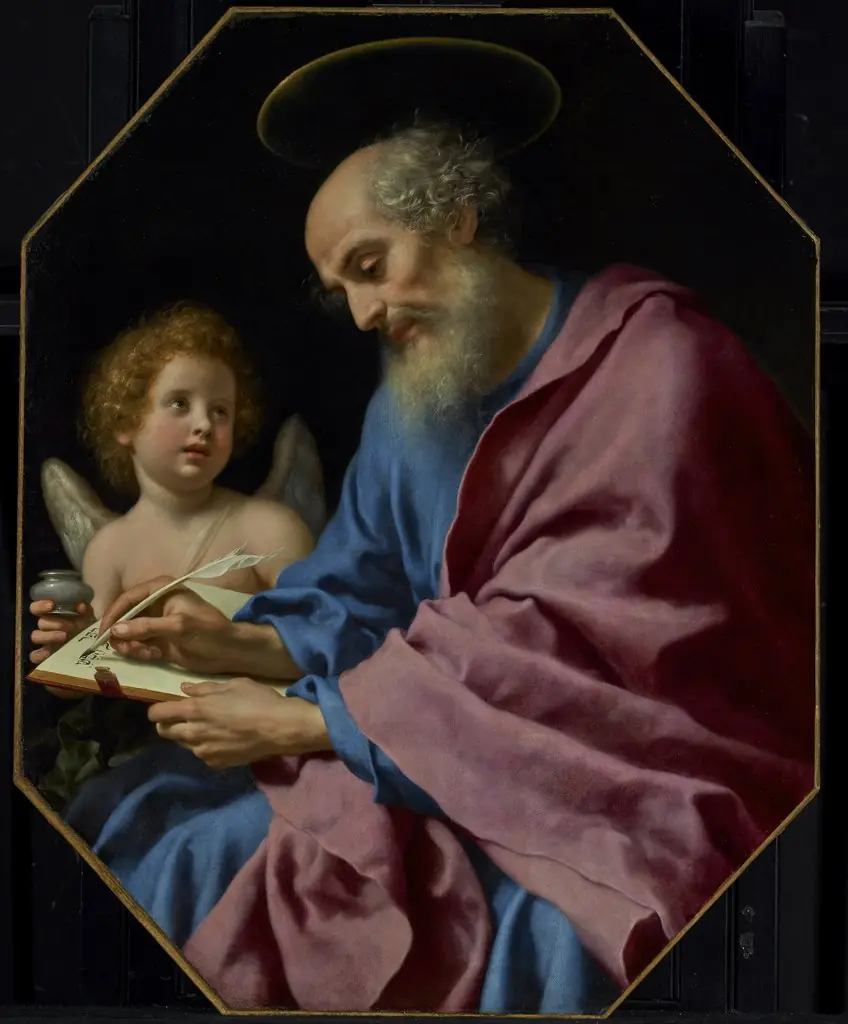
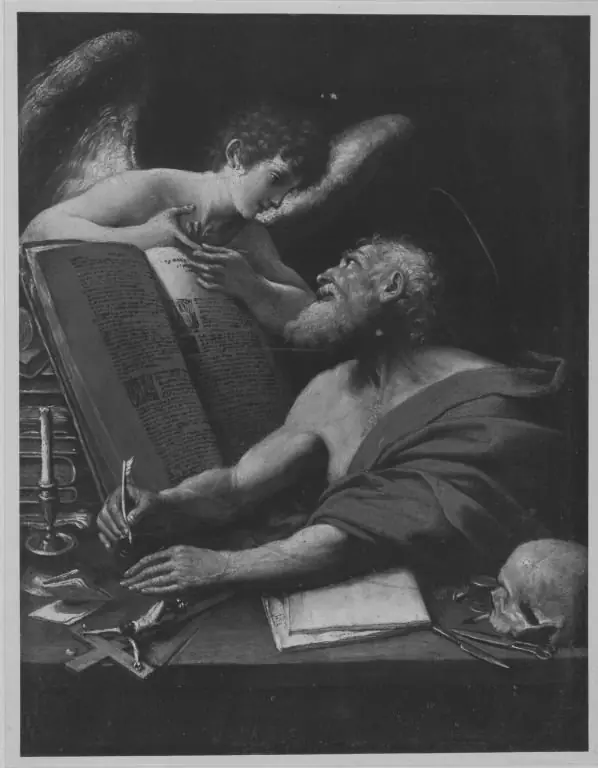
The painting portrays Saint Matthew, an elderly man with white hair and beard, in the act of writing his gospel. He holds a quill over an open book, his gaze fixed downward in focused concentration. Beside him, a young angel watches with quiet curiosity, suggesting divine inspiration. The interaction implies a moment of sacred collaboration—human effort guided by celestial presence—without overt theatricality.
Technique & Style
Reni employs soft modeling and muted tones to render the figures with quiet dignity. The dark, unbroken background isolates the pair, drawing attention to their gestures and expressions. The textures of fabric—brown robe, yellow undergarment, white tunic—are rendered with subtle gradations of light. The composition is restrained, emphasizing psychological intimacy over dramatic movement, characteristic of Reni’s later style.
History & Provenance
The painting was donated to the Holy See in 1924 by Antonio Castellano of Naples and displayed for many years in Santa Maria della Concezione dei Cappuccini. From 1955 to 2010, it was incorrectly attributed to Lucio Massari. Its true authorship was confirmed after a 1642 inscription on the reverse was discovered, linking it directly to Reni’s workshop and establishing its provenance within Roman ecclesiastical collections.
Context
Created during Reni’s mature period, the work reflects the Counter-Reformation emphasis on clarity, devotion, and the sanctity of scripture. Unlike the dynamic compositions of Caravaggio’s followers, Reni’s approach favors calm introspection, aligning with the Church’s preference for orderly piety. The pairing of saint and angel echoes contemporary devotional imagery meant to inspire contemplative prayer among the faithful.
Legacy
The correction of its attribution in 2010 restored Reni’s place in the narrative of Roman Baroque religious art. The painting now serves as a key example of his refined, emotionally restrained style, distinct from the more theatrical trends of his time. Its presence in the Vatican’s Pinacoteca underscores its significance as a document of both artistic practice and ecclesiastical patronage in 17th-century Italy.
Artist & collection
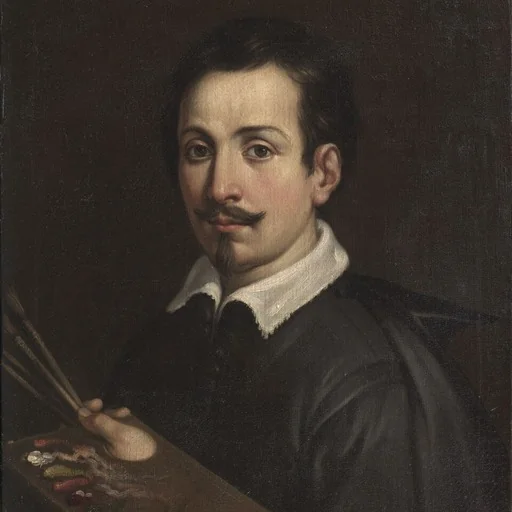
Artist
Guido Reni was an Italian Baroque painter, although his works showed a classical manner, similar to Simon Vouet, Nicolas Poussin, and Philippe de Champaigne.