Artwork
Arab Horse Soldiers
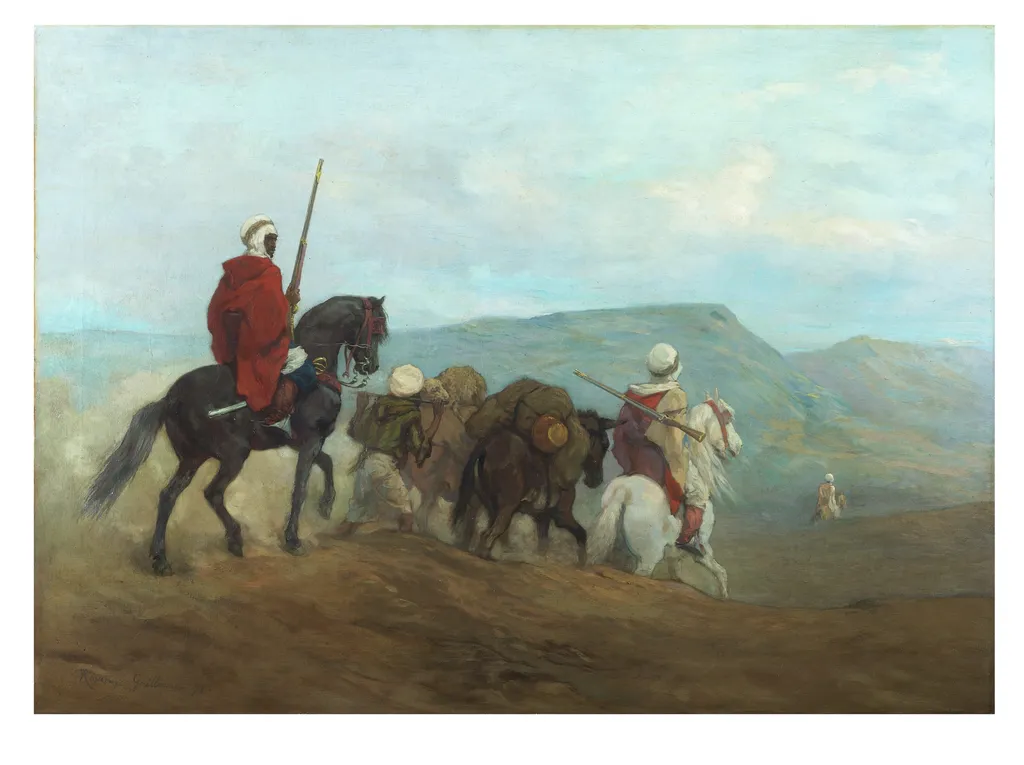
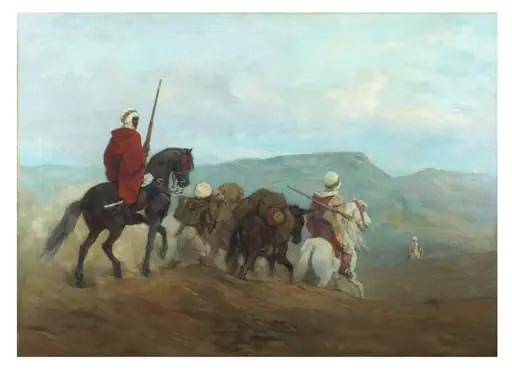
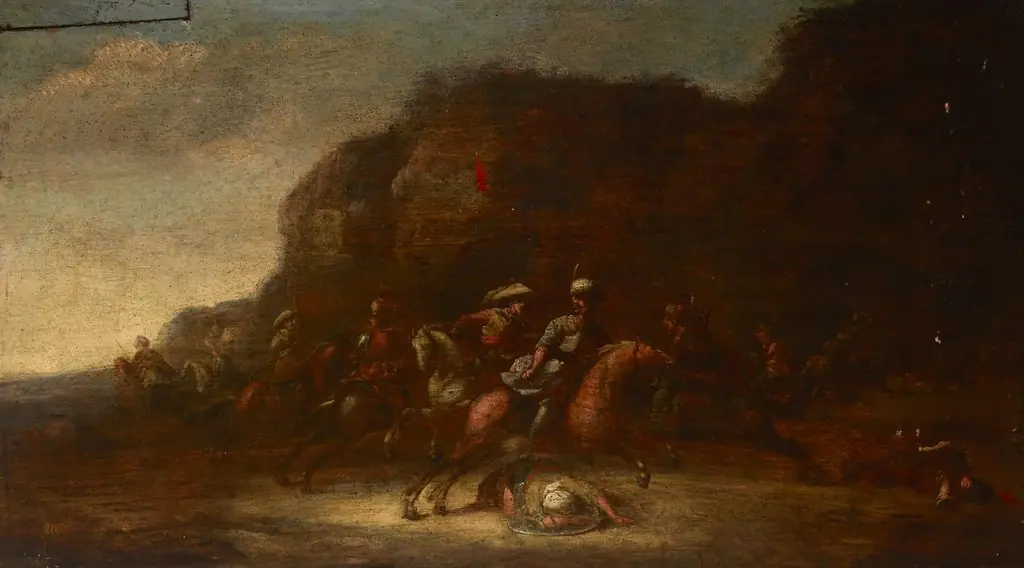
Arab Horse Soldiers is an oil painting by the Orientalist artist Guillaume Urban Régamey. It dates from 1871 and is held in the collection of the Victoria and Albert Museum.
About this work
Overview
Painted in 1871 by Guillaume Urban Régamey, this oil work depicts a group of Arab horsemen traversing a desert expanse. It resides in the Victoria and Albert Museum’s collection. The scene captures motion and stillness among riders and mounts, rendered with deliberate brushwork and a palette that contrasts the warmth of the dunes with the coolness of the sky.
Subject & Meaning
The figures are shown in traditional Arab attire—flowing robes and headscarves—suggesting a military or nomadic context. Their varied postures imply movement across arid terrain, possibly during transit or patrol. The absence of narrative detail invites interpretation as a study of presence and endurance rather than a specific historical event.
Technique & Style
Régamey employed bold, energetic brushstrokes to convey the dynamism of the riders and horses. Color is used expressively: ochres and siennas dominate the ground, while muted blues and grays suggest distance in the sky. The composition avoids rigid symmetry, enhancing the sense of spontaneous motion across the landscape.
History & Provenance
Completed in 1871, the painting entered the Victoria and Albert Museum’s collection shortly after its creation. Régamey, a French artist with an interest in North African subjects, produced several works during this period inspired by military and cultural encounters in the region. Its acquisition reflects 19th-century European institutional interest in Orientalist themes.
Context
Created during a period of French colonial expansion in North Africa, the painting aligns with broader 19th-century European artistic trends that depicted Middle Eastern and North African life. While not overtly political, it reflects the fascination with Arab equestrian culture prevalent among Western artists and audiences of the time.
Legacy
Though not widely exhibited today, the work remains a representative example of Orientalist painting within the V&A’s holdings. It contributes to scholarly understanding of how European artists interpreted and idealized Arab military and nomadic life during the late 19th century, without overt romanticization or overt documentation.
Own this work as a print
Artist & collection