Artwork
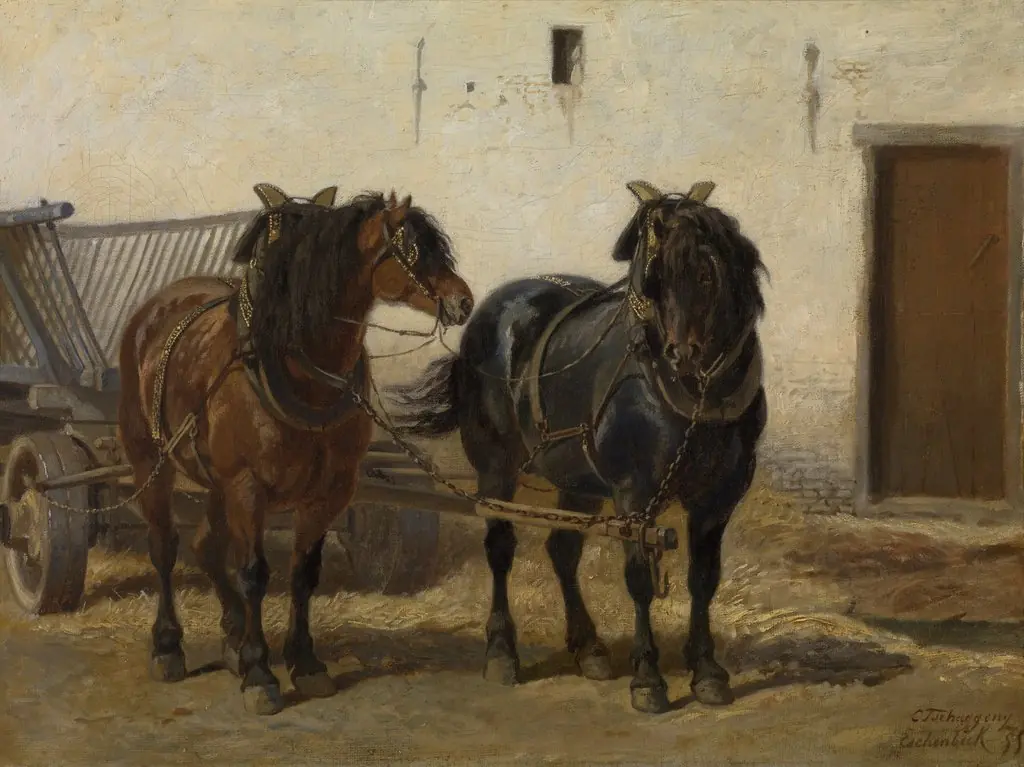
A Team of Percheron Horses
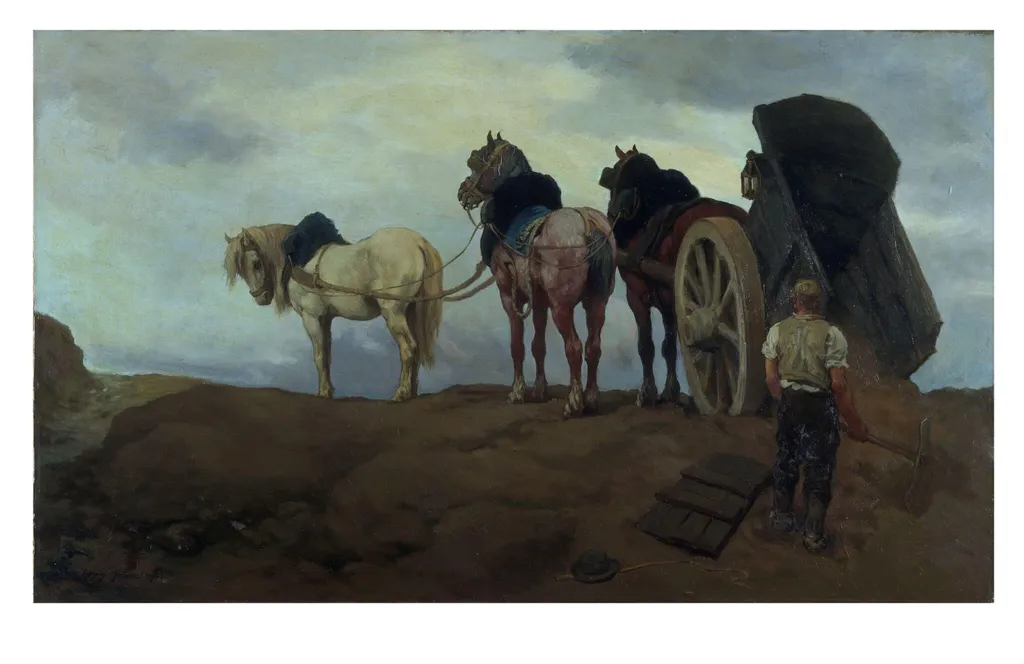
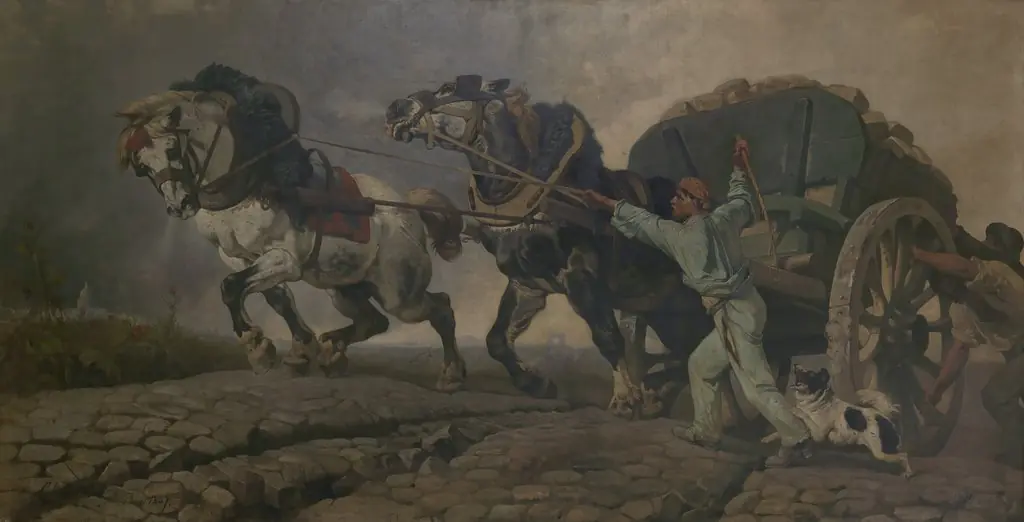
A Team of Percheron Horses is an oil painting by the Impressionist artist Guillaume Régamey. It dates from 1870 and is held in the collection of the Victoria and Albert Museum.
About this work
Overview
His work, though limited in volume due to his early death at 37, is noted for its attentive observation of horses in everyday labor.
Guillaume Régamey, a French painter active in the mid-19th century, focused his brief career on equine subjects. Trained under Horace Lecoq de Boisbaudran and associated with Naturalist circles, he exhibited at the 1859 Salon des Refusés. His work, though limited in volume due to his early death at 37, is noted for its attentive observation of horses in everyday labor. A retrospective of his paintings was held at the École des Beaux-Arts in 1876, cementing his reputation among contemporaries.
Subject & Meaning
The painting depicts four Percheron horses straining to pull a mud cart up a sloped street after rain. A driver walks beside them, bundled against the damp. Rather than idealizing the animals, Régamey presents them as working beings—muscular, weary, and immersed in routine labor. The scene carries no overt narrative, but the weight of the task and the wet, glistening coats suggest the physical toll of urban transport in industrializing Paris.
Technique & Style
Régamey employed rapid, textured brushwork to capture the sheen of rain-slicked horsehide and the reflective quality of wet cobblestones. His palette favors muted earth tones—ochres, browns, and grays—consistent with Naturalist principles. Unlike contemporaries who favored static, dry depictions, he emphasized movement and atmospheric conditions, using light to model form and convey moisture, a technique that lent immediacy to his subjects.
History & Provenance
Régamey’s oeuvre remained largely private during his lifetime, with few works publicly exhibited. After his death in 1875 at age 37, a memorial exhibition was organized at the École des Beaux-Arts in 1876, bringing his horse studies to broader attention. The painting’s early ownership is undocumented, but its subject matter and style align with works known from his studio, suggesting it was painted in the early 1870s, shortly before his death.
Context
In 1870s Paris, horse-drawn carts were essential to urban infrastructure, particularly for waste removal. Régamey’s focus on working animals reflected a broader cultural shift toward depicting ordinary labor, influenced by Realist and Naturalist movements. His attention to anatomical accuracy and environmental conditions distinguished his work from academic traditions, aligning him with artists who sought truth in the mundane rather than the heroic.
Legacy
Though his career was cut short, Régamey’s dedication to equine subjects influenced later depictions of animals in motion. His brother Frédéric, also a painter, shared this interest, producing watercolors of similar themes. Régamey’s emphasis on wet surfaces and dynamic posture prefigured techniques adopted by Impressionists. His work remains a quiet but significant record of 19th-century urban labor and the role of horses within it.
Own this work as a print
Artist & collection
Artist
French painter Guillaume Régamey captured 19th-century military life and animal power in bold oils.