Artwork
Traveling on a River After Snow
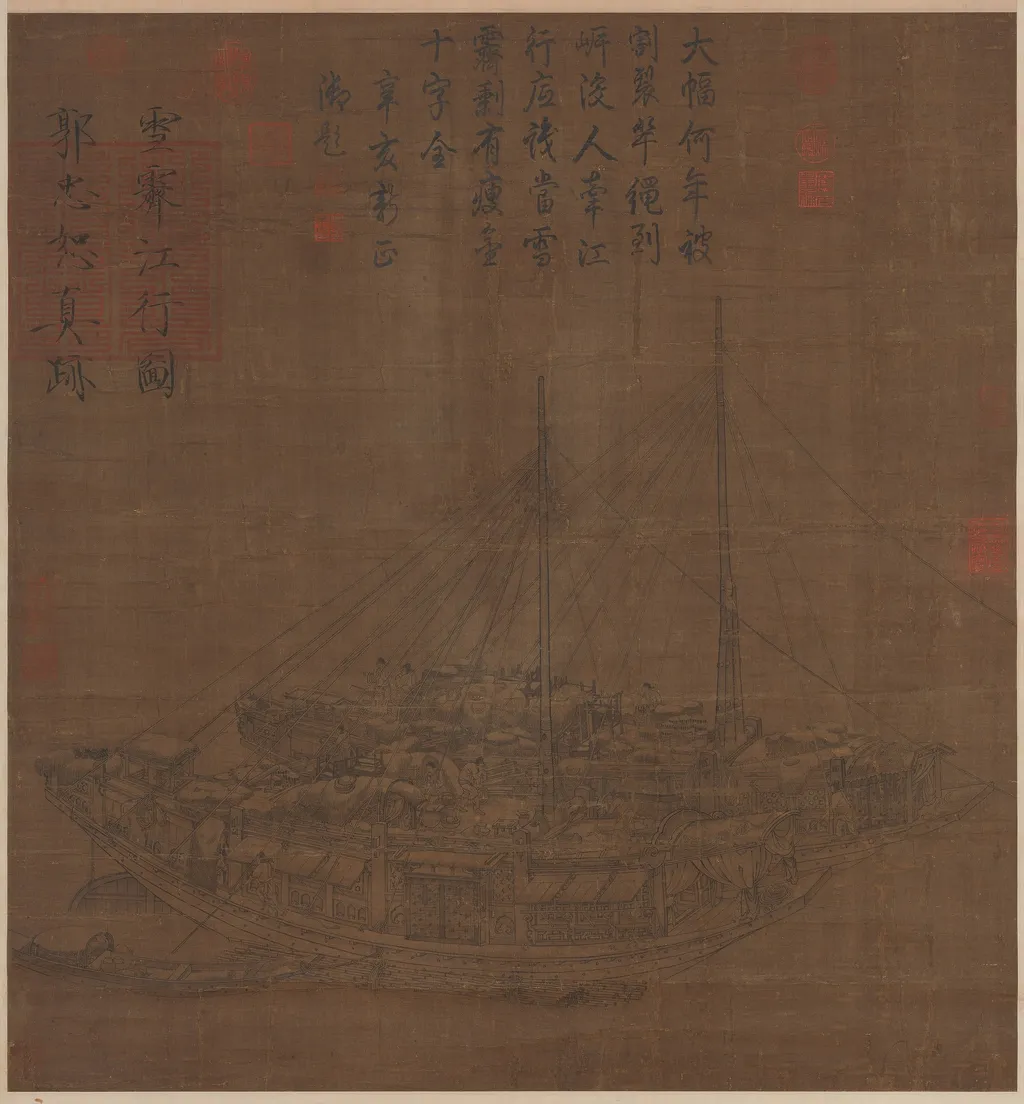
Traveling on a River After Snow is an unspecified painting by the Song dynasty landscape artist Guo Zhongshu. It dates from 950 and is held in the collection of the National Palace Museum.
About this work
Overview
The piece captures a moment of stillness after snowfall, with figures and architecture integrated subtly into a vast, muted environment.
Painted around 950 by Guo Zhongshu, *Traveling on a River After Snow* is a landscape work from the transitional period between the Five Dynasties and the early Song dynasty. It belongs to a tradition of scholarly painting that emphasized quiet contemplation of nature. The piece captures a moment of stillness after snowfall, with figures and architecture integrated subtly into a vast, muted environment. It remains in the National Palace Museum’s collection today.
Subject & Meaning
The scene depicts a small boat gliding along a frozen river, carrying passengers past snow-laden banks where modest buildings stand. The absence of dramatic action and the subdued tones suggest a meditative mood, aligned with Confucian and Daoist ideals of harmony with nature. The travelers appear not as tourists but as observers, reinforcing the painting’s role as a vessel for introspection rather than narrative.
Technique & Style
Guo employed fine, controlled brushwork to render delicate snowfall and architectural details with precision. His palette relies on muted blues, grays, and earth tones, avoiding bright colors to preserve atmospheric cohesion. Spatial depth is achieved through layered mountain forms and minimalistic rendering of figures, reflecting the literati preference for restraint and suggestion over elaborate detail.
History & Provenance
Guo Zhongshu, a scholar-official known for his intellectual rigor and unconventional conduct, painted this work during a period of political instability. Despite his service in multiple courts, his erratic behavior led to repeated exiles. The painting’s survival and eventual inclusion in imperial collections suggest its early recognition among elite circles, though its exact provenance before the Qing dynasty remains undocumented.
Context
This painting emerged during a time when literati painters sought to distinguish their work from courtly decorative styles. Landscape art became a medium for expressing personal integrity and philosophical depth. Guo’s focus on quiet, snow-bound scenes aligned with broader trends favoring solitude and natural order, contrasting with the more dynamic compositions of professional artisans.
Legacy
Though Guo Zhongshu’s oeuvre is limited, *Traveling on a River After Snow* exemplifies the early Song scholarly aesthetic that influenced later masters like Li Cheng and Fan Kuan. Its emphasis on restraint, spatial ambiguity, and emotional subtlety helped define the trajectory of Chinese ink landscape painting, serving as a reference point for generations of artists seeking to convey inner stillness through external scenery.
Artist & collection
Artist
Guo Zhongshu (c. 929 – 977), courtesy name Shuxian (or Guobao, according to Xuanhe Huapu), was a Chinese calligrapher, painter, philologist, and scholar during the Five Dynasties period and Song dynasty. He was noted…

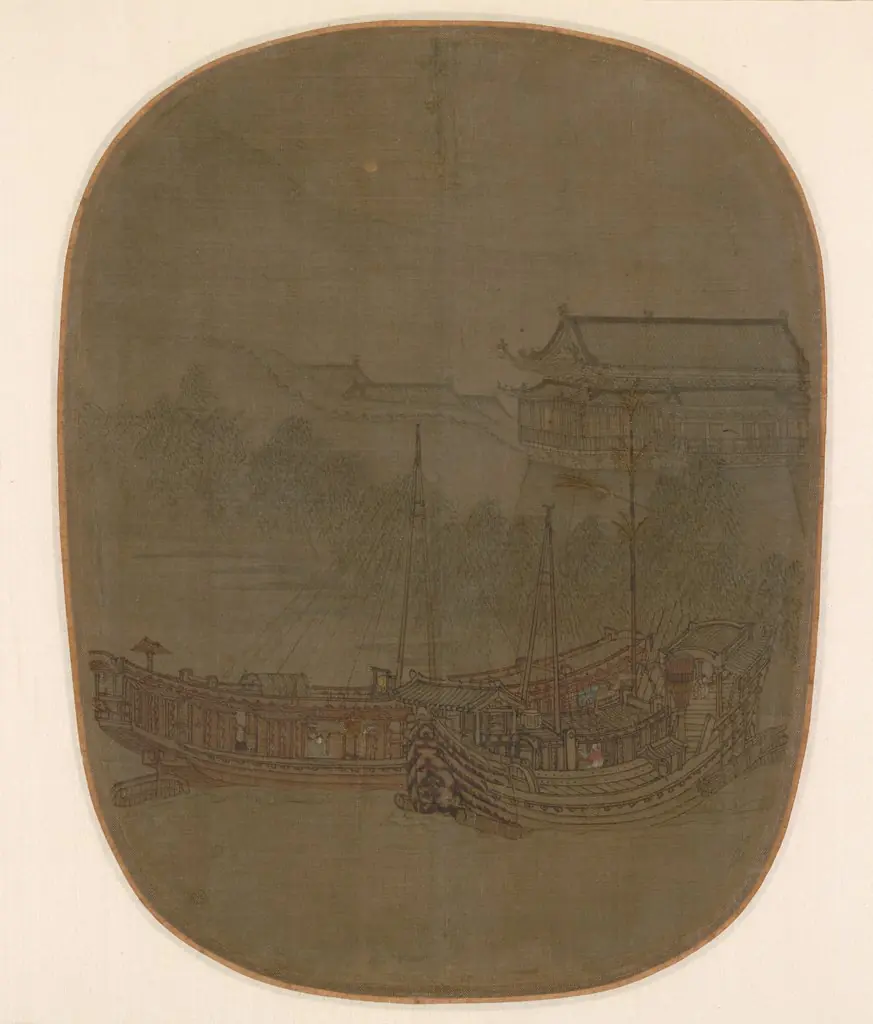 Boats at Anchor on West Lake at the City Gate
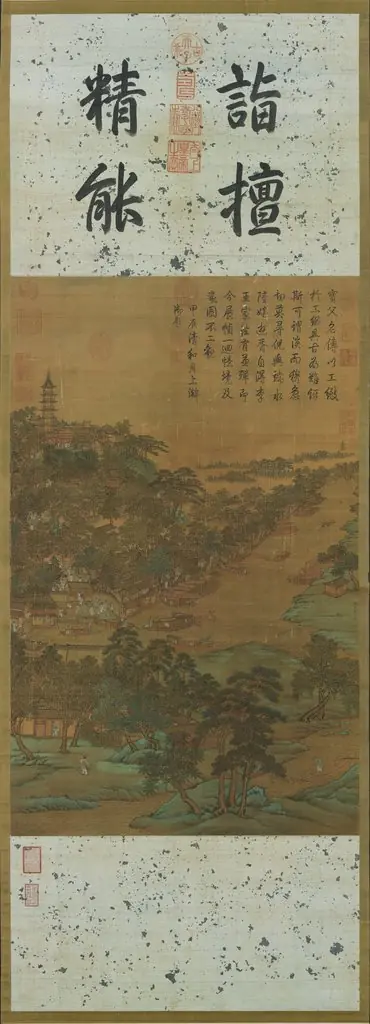 明仇英虎邱圖 軸
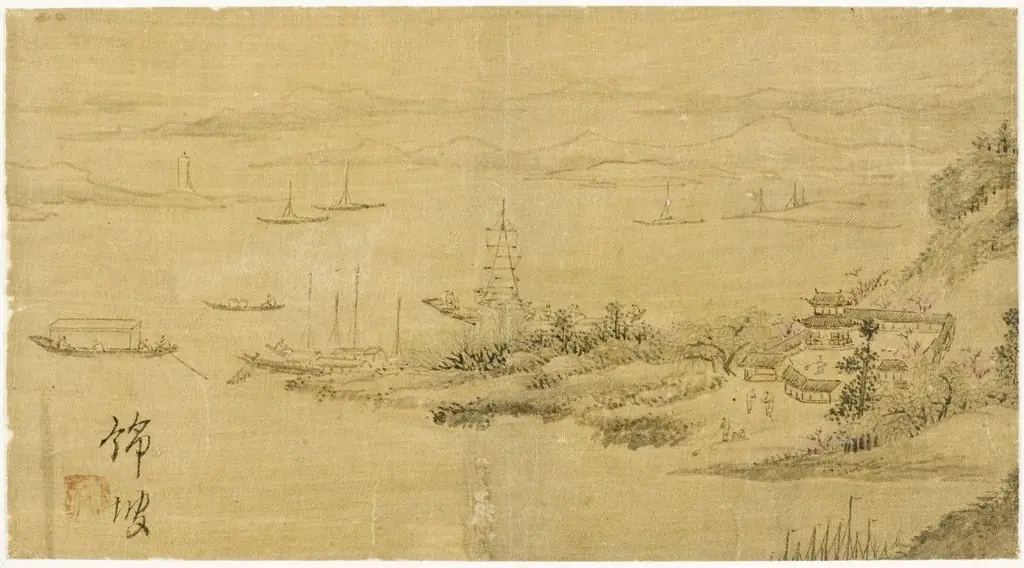 River Village at Dusk
 Album of Landscapes: Leaf 8
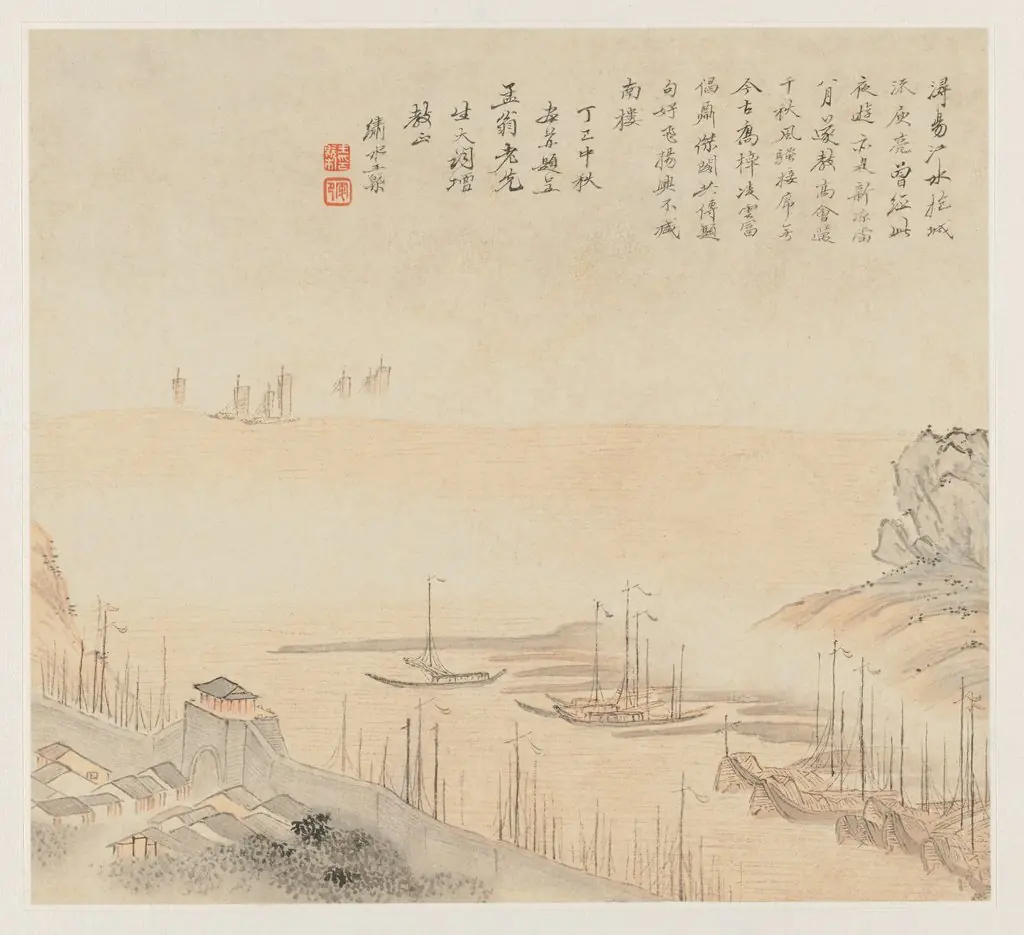 Album of Landscapes: Leaf 8
 Full Sail on the Misty River
 Snowscape with Figures
 Fisherman
 Mountain Market, Clear with Rising Mist
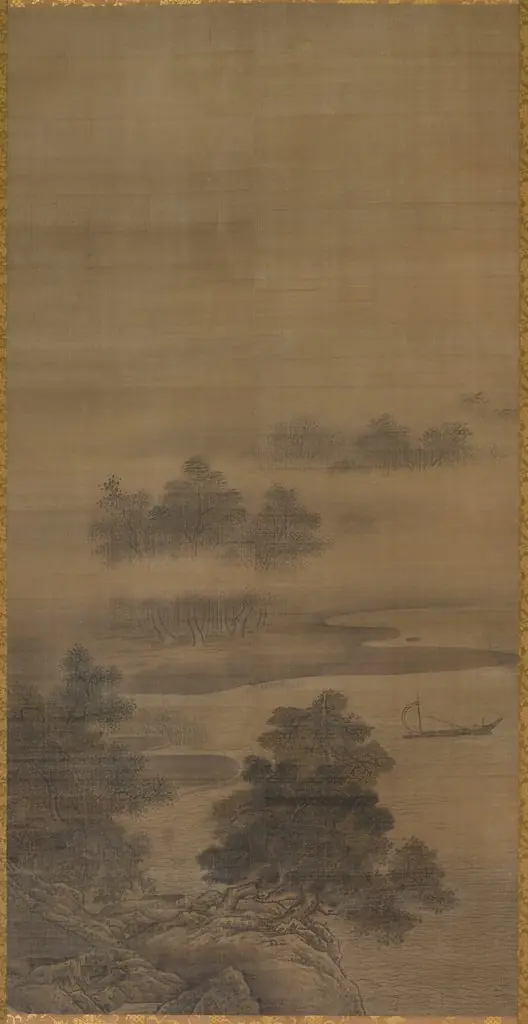 Returning Sails off a Distant Shore, from Eight Views of Xiao-Xiang
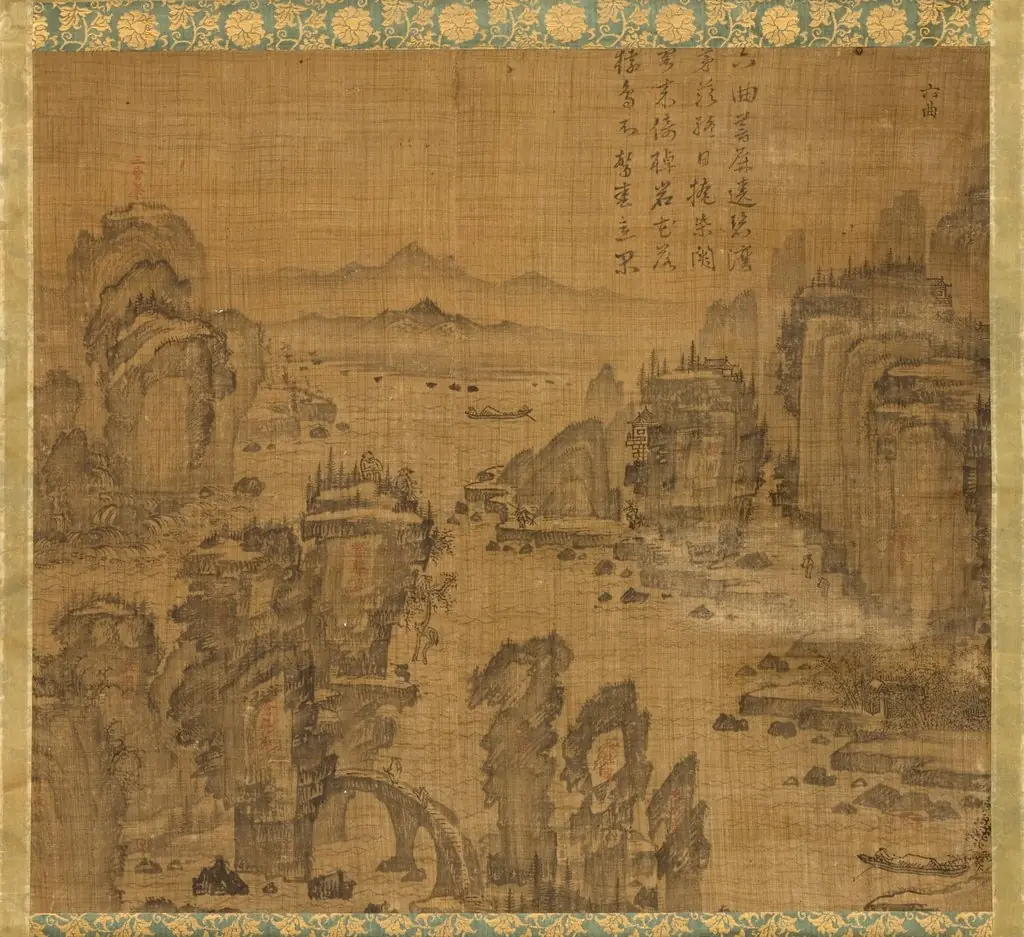 The Sixth of the Nine Bends, WuYi Mountain (Xing Zhong Feng)