Artwork
Album of Landscapes: Leaf 8
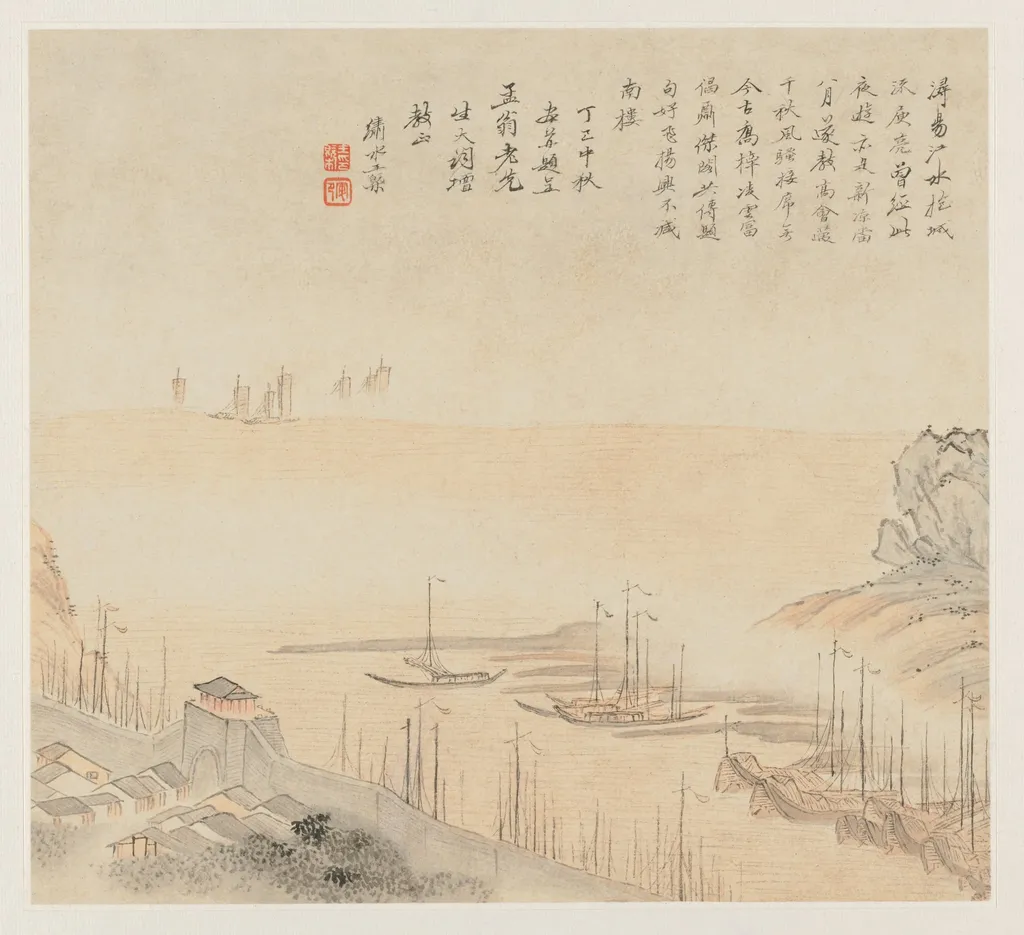
Album of Landscapes: Leaf 8 is an unspecified painting by the Baroque artist Wang Gai. It dates from 1677 and is held in the collection of the Cleveland Museum of Art.
About this work
Overview
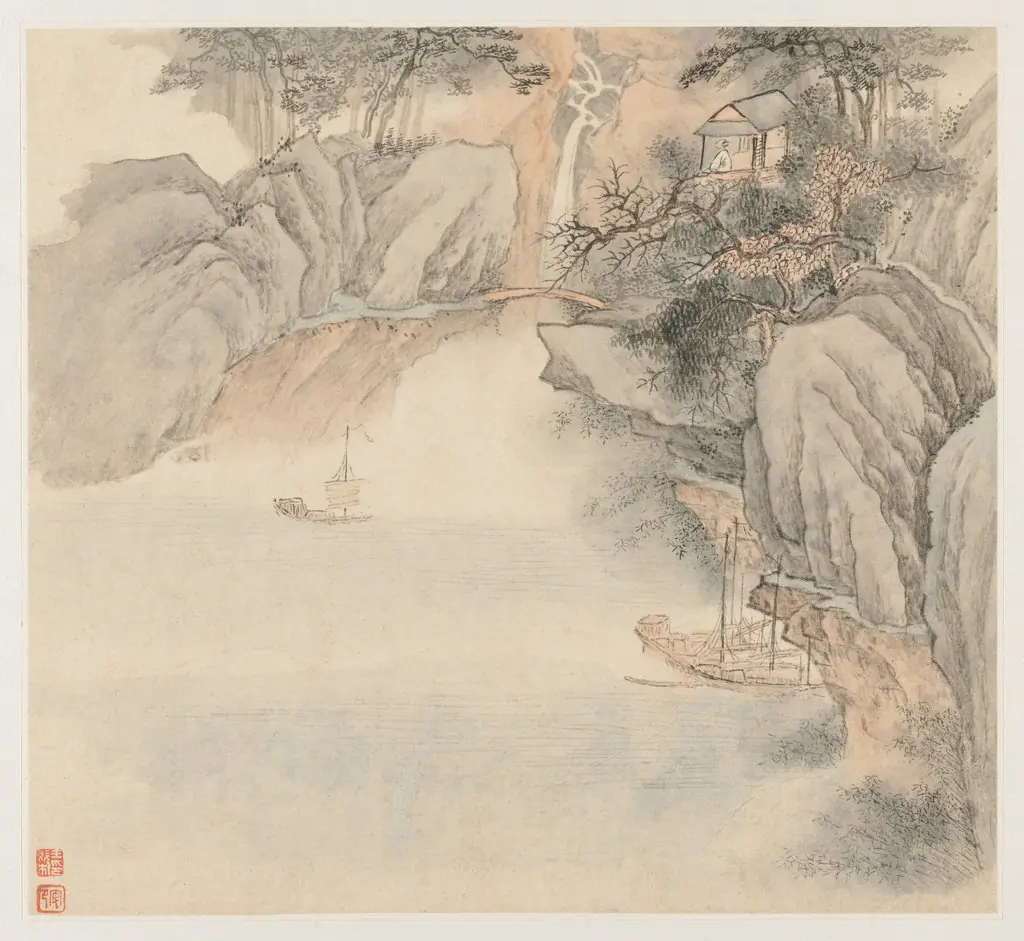
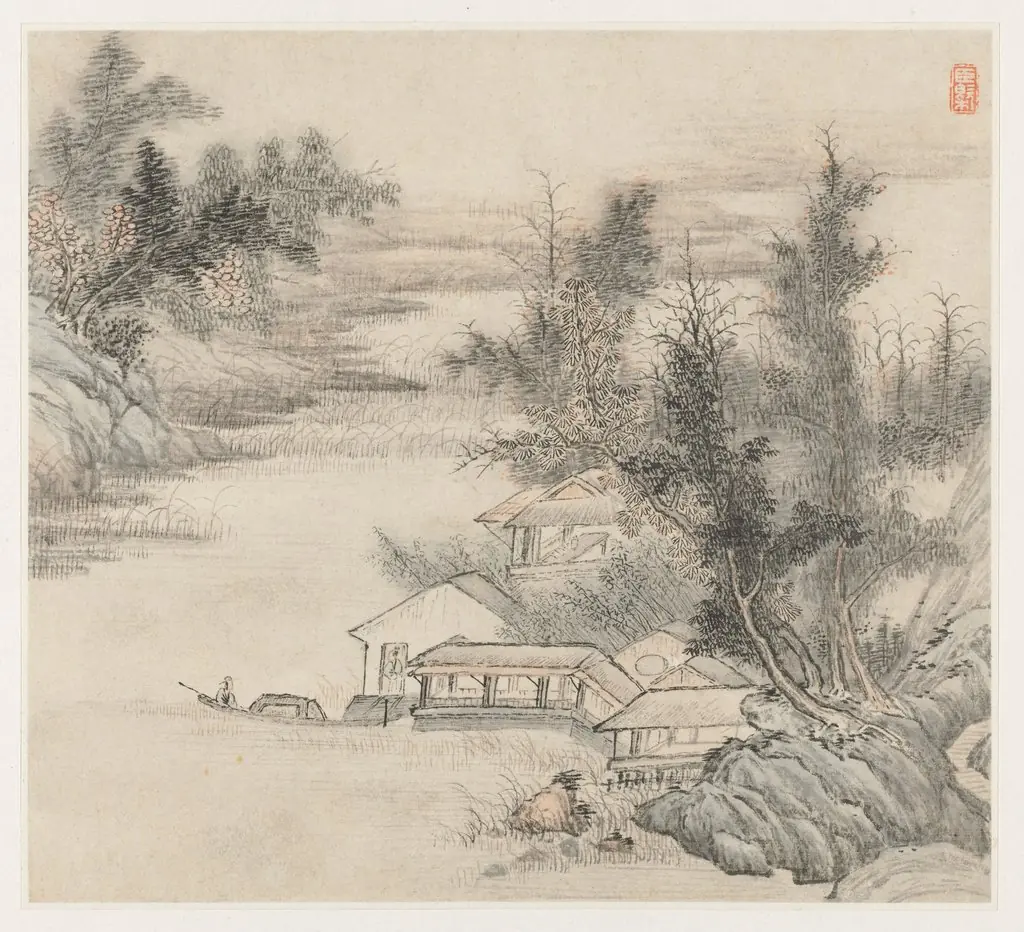
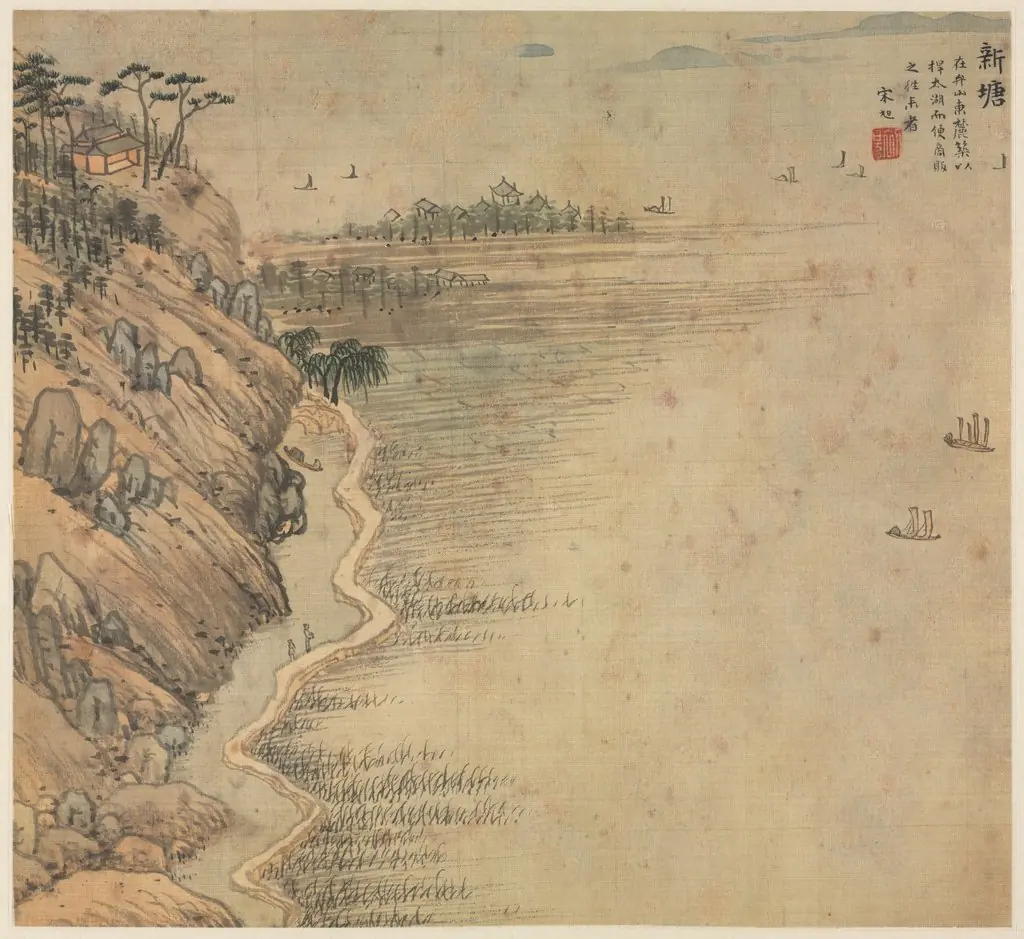
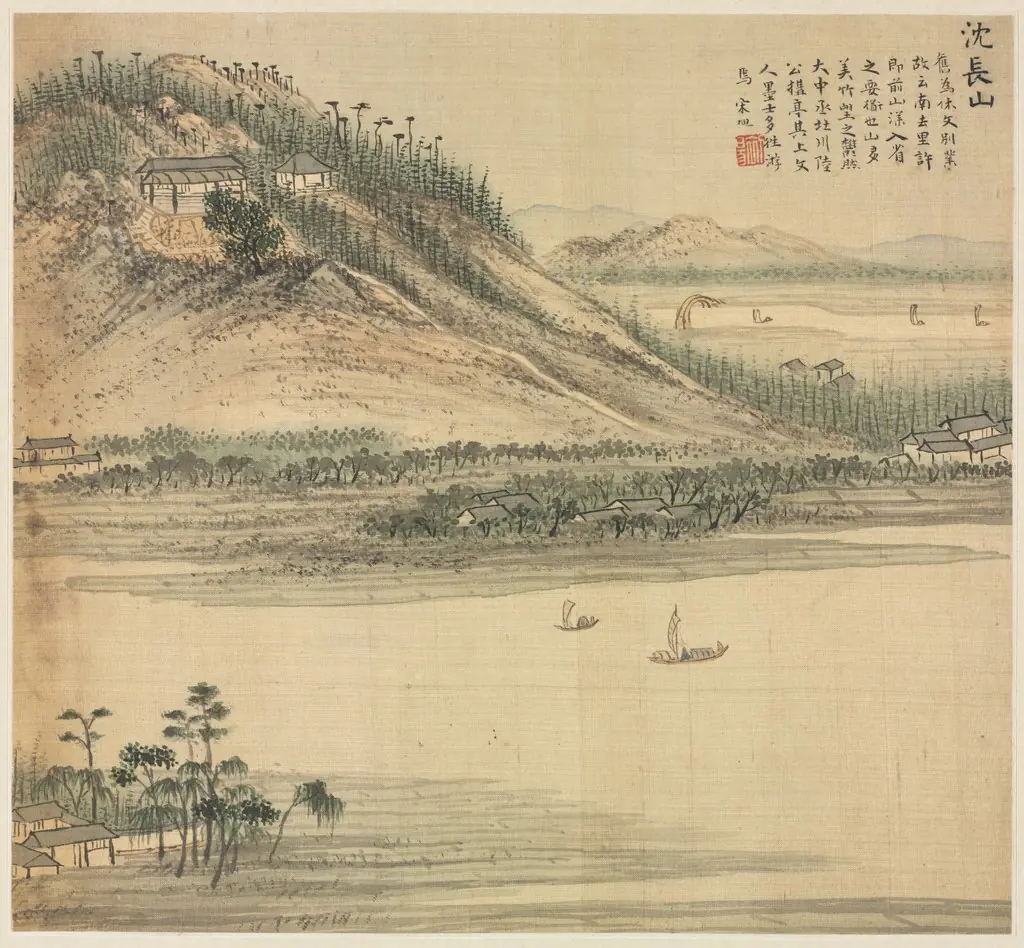
Album of Landscapes: Leaf 8 is a Chinese landscape painting executed in 1677 by Wang Gai. The work forms part of a larger album of scenes and is presently in the collection of the Cleveland Museum of Art. It presents a quiet riverside setting rendered with delicate coloration and a measured compositional balance.
Subject & Meaning
To the left a modest village emerges, its structures anchored by a conspicuous tower that may denote a local landmark or administrative building.
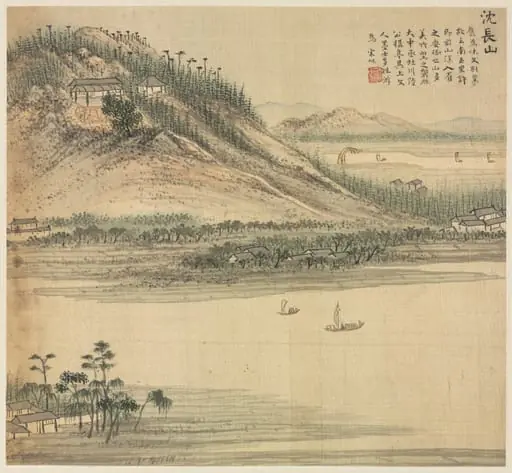
The composition centers on a stretch of water populated by several small boats, suggesting everyday river traffic. To the left a modest village emerges, its structures anchored by a conspicuous tower that may denote a local landmark or administrative building. Distant mountains rise behind the settlement, framing the scene and reinforcing a sense of harmonious coexistence between humanity and nature.
Technique & Style
Wang Gai employs soft, layered brushstrokes and a restrained palette of muted greens, blues, and earth tones. Light and shadow are subtly modulated to convey depth, particularly in the receding mountains and the reflective surface of the water. The overall handling reflects the literati tradition’s emphasis on atmospheric suggestion over meticulous detail.
History & Provenance
Created during the early Qing dynasty, the painting was originally part of a bound album of landscape studies. It entered the Cleveland Museum of Art’s holdings through a 20th‑century acquisition, though the precise chain of ownership prior to its museum entry remains sparsely documented.
Context
The work exemplifies the scholarly landscape genre that flourished among educated officials in the 17th century, where artists conveyed personal reflection through idealized natural settings. Wang Gai’s inclusion of a village and boats aligns with contemporary interests in depicting the rhythms of rural life within a broader philosophical framework.
Artist & collection