Artwork
Hilda Amalia Brusewitz (f. 1853)
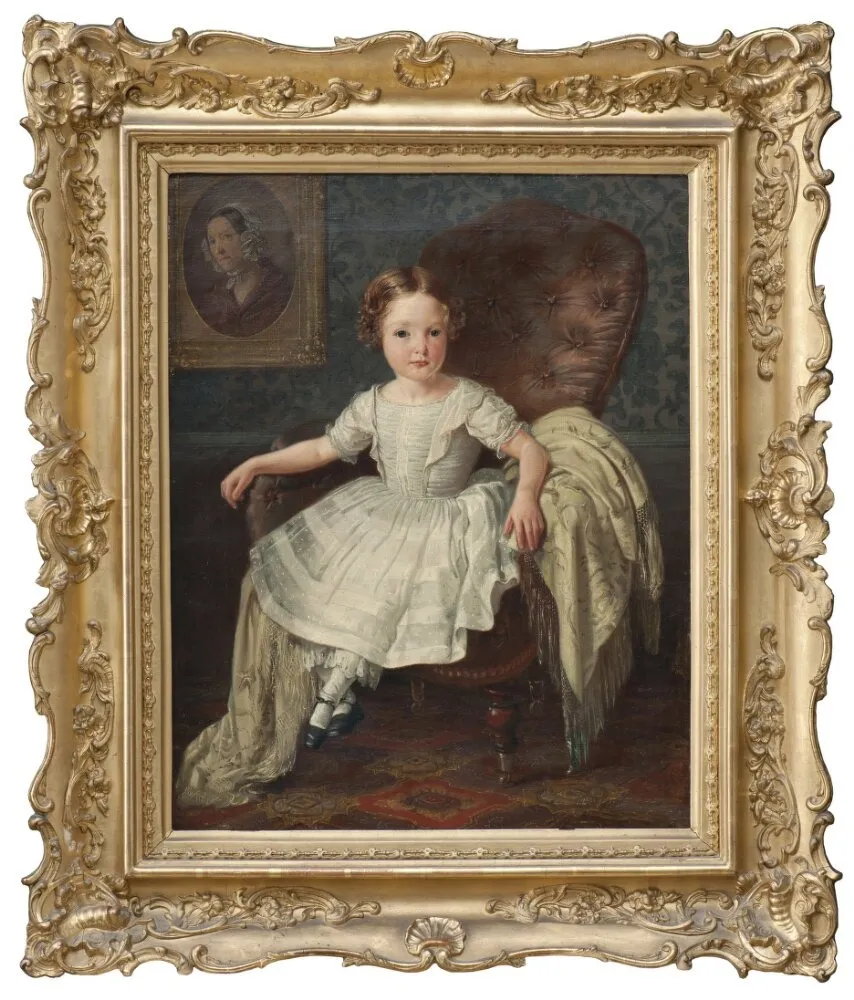
Hilda Amalia Brusewitz (f. 1853) is an oil painting by the Biedermeier artist Gustaf Brusewitz. It dates from 1854 and is held in the collection of the Nationalmuseum.
About this work
Overview
Painted in 1854 by Gustaf Brusewitz, this oil portrait depicts his daughter, Hilda Amalia Brusewitz, born in 1853. The work is part of the Nationalmuseum’s collection in Stockholm. Rendered with careful attention to detail, the painting captures a quiet, intimate moment of childhood, framed within a domestic interior. The composition balances simplicity with subtle atmospheric depth.
Subject & Meaning
The portrait of a woman on the wall behind her may reference familial lineage or serve as a visual echo, reinforcing themes of continuity and domestic identity.
The subject is a young girl, portrayed in a composed, still posture that suggests both innocence and quiet dignity. Her white dress and neatly styled bob contrast with the darker tones of the chair and background, emphasizing her presence. The portrait of a woman on the wall behind her may reference familial lineage or serve as a visual echo, reinforcing themes of continuity and domestic identity.
Technique & Style
Brusewitz employed oil paint with visible, deliberate brushwork to model form and texture. Chiaroscuro is used subtly to define the girl’s features and the contours of the chair, lending volume without dramatic contrast. The background’s floral wallpaper and muted blue tone provide a soft counterpoint, allowing the figure to emerge with quiet clarity. The rendering avoids idealization, favoring a naturalistic observation of light and surface.
History & Provenance
The painting remained within the Brusewitz family before entering the Nationalmuseum’s collection. Its early date—just one year after the sitter’s birth—suggests it was painted as a personal record rather than a commissioned work. The museum acquired it as part of its broader effort to document 19th-century Swedish domestic portraiture.
Context
Created during a period when Swedish artists increasingly turned to intimate, domestic subjects, the portrait reflects a shift away from formal aristocratic imagery. Brusewitz, though not widely known, participated in this emerging trend, capturing private moments with sensitivity. The inclusion of a secondary portrait in the background aligns with contemporary practices of embedding familial memory within domestic scenes.
Legacy
The painting stands as a modest but significant example of early Swedish domestic portraiture. It offers insight into how middle-class families engaged with visual culture in the mid-19th century, using art to preserve personal history. While not widely exhibited, it contributes to the understanding of how childhood and family life were visually articulated in Sweden during this era.
Artist & collection

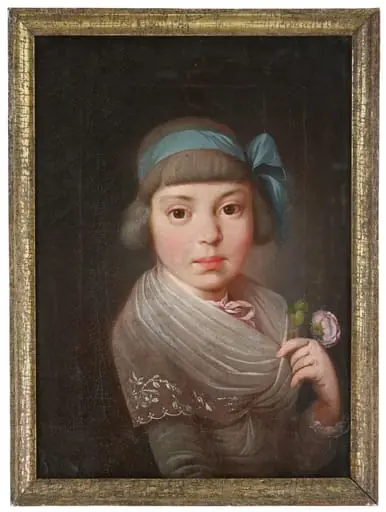 Bildnis eines kleinen Mädchens mit gepuderter Pagenfrisur
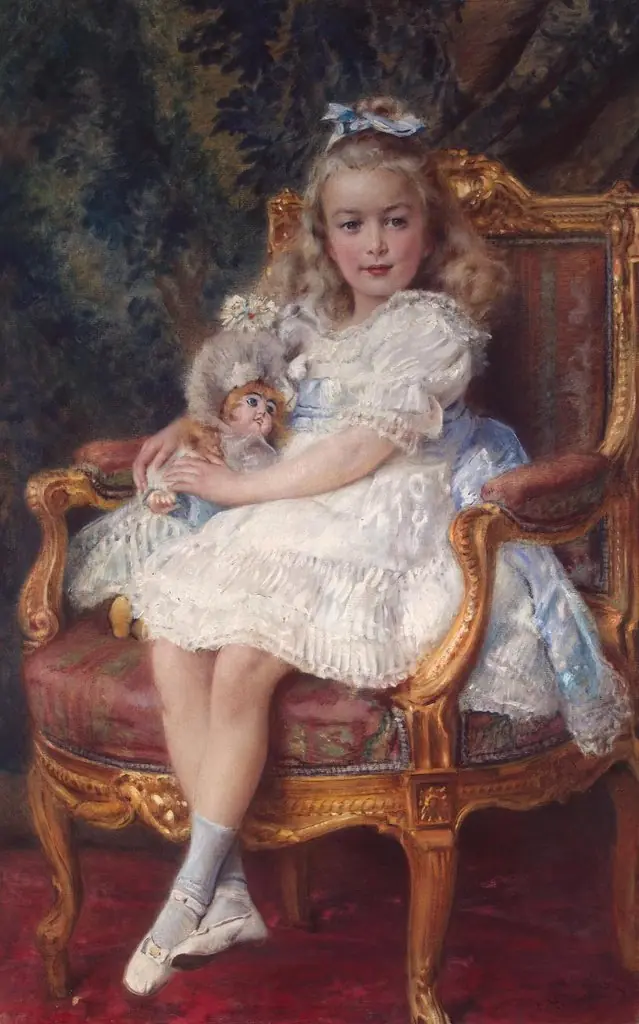 Portrait of Varvara Bibikova
 Karolina Bygler. Model to the Sculptor Johan Niclas Byström
 Florine Turner
 Alma Cecilia (Cely) Mechelin (1866-1950)
 De eerste tand
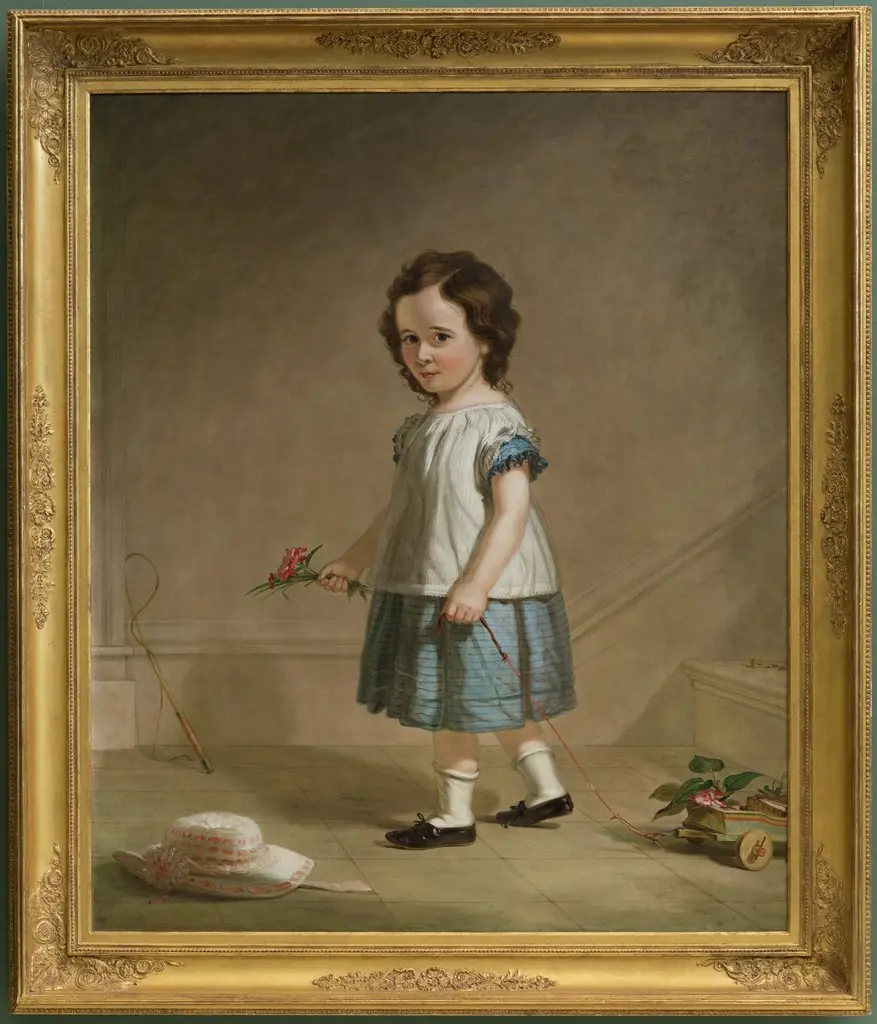 Portrait of William Wickham Mills Smith
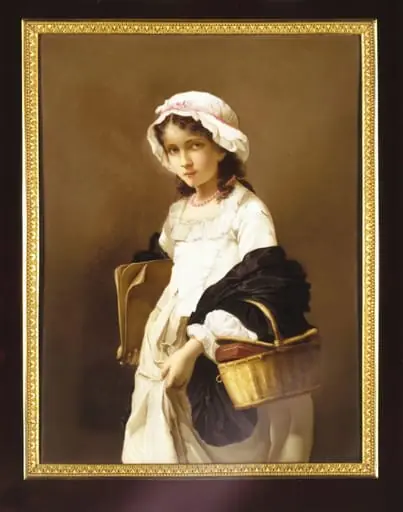 Untitled
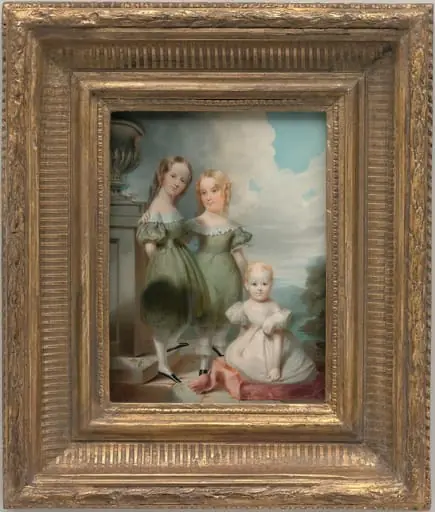 The Children of Homer Ramsdell, Esq.
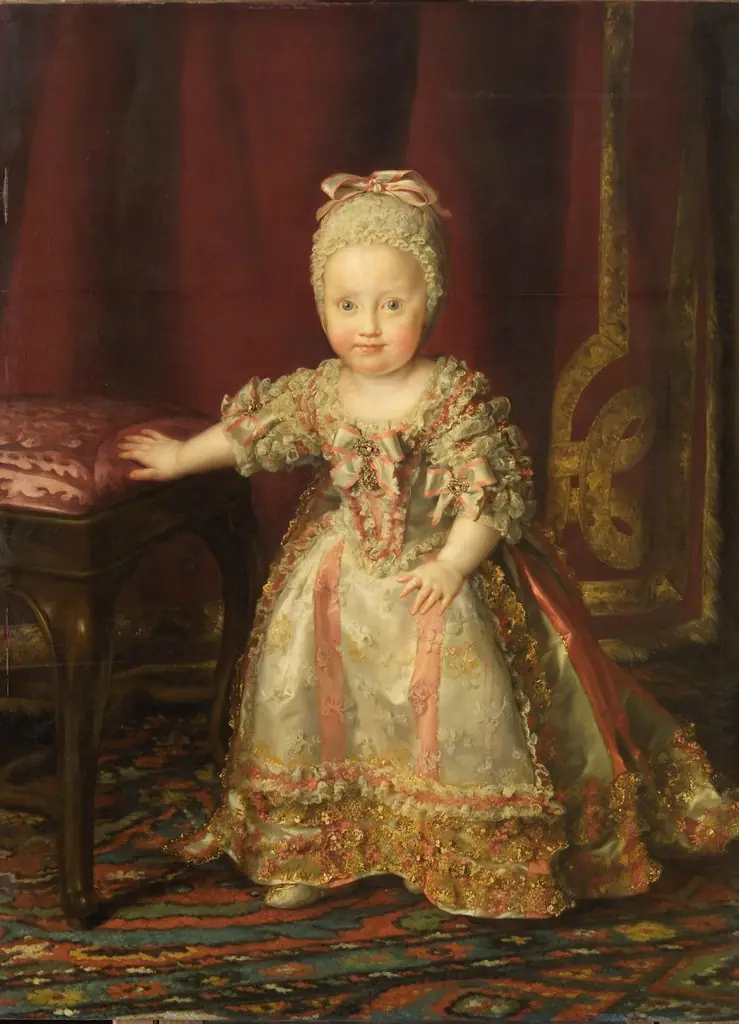 Infantin Maria Theresa von Neapel (1772-1807)
 Minnie Willard
 Helena Maria Brusewitz (1849-1932)