Artwork
Untitled
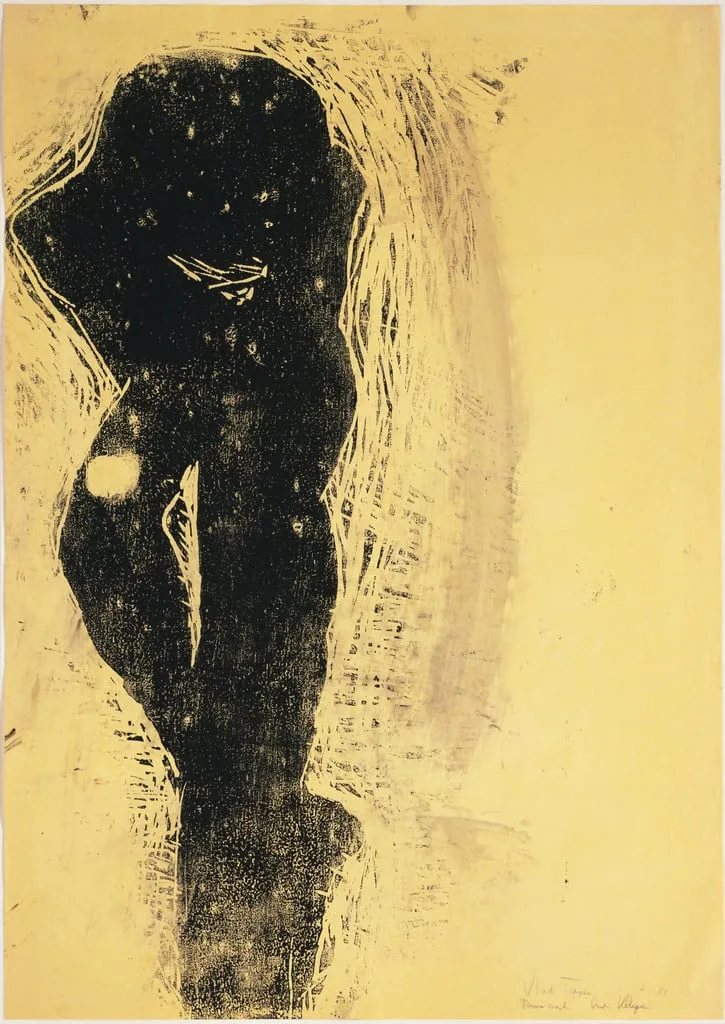
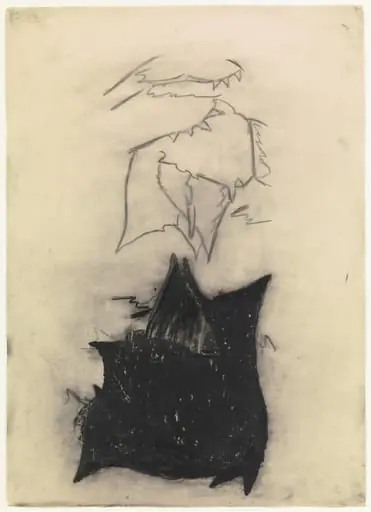
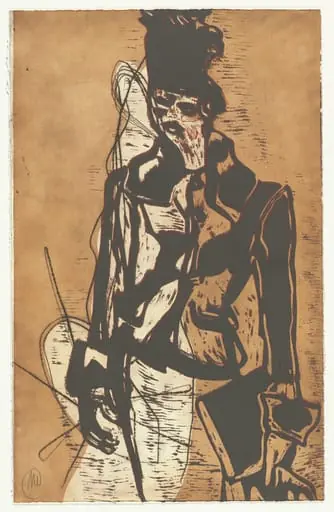
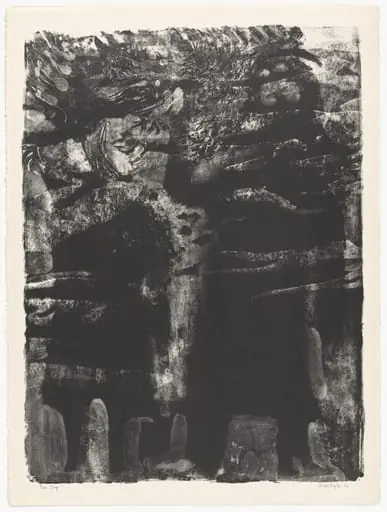
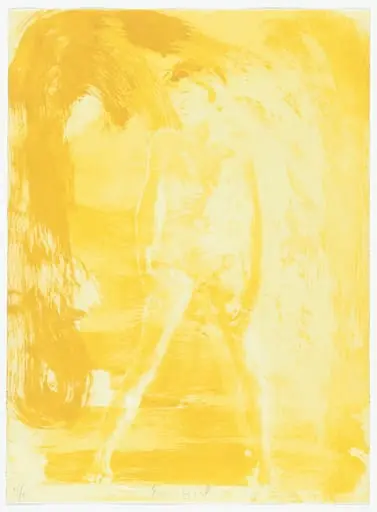
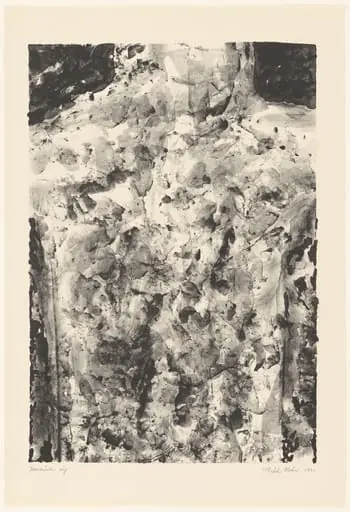
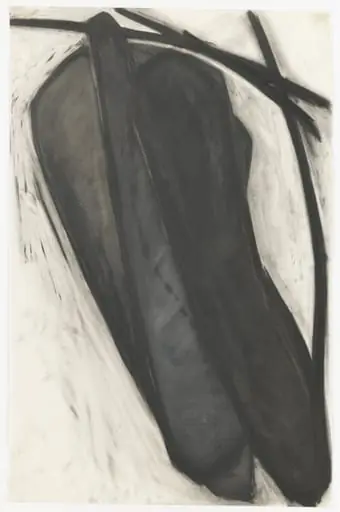
Untitled is an ink print by Gustav Kluge. It dates from 1984 and is held in the collection of the Museum of Modern Art.
About this work
Overview
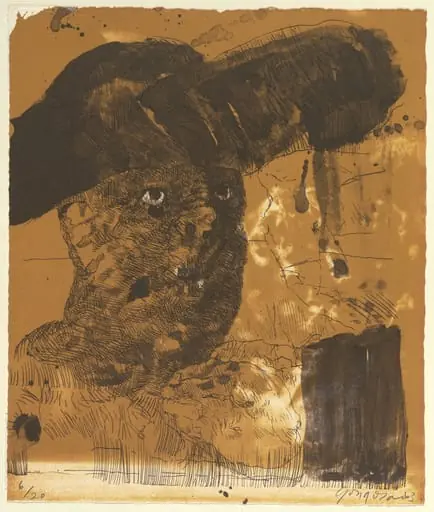
Created in 1984, this woodcut by Gustav Kluge is part of The Museum of Modern Art’s collection. The work combines carved woodblock printing with hand-applied ink washes, resulting in a layered surface where precise lines meet soft, uneven tones. The image presents a solitary, faceless figure in profile, rendered with minimal detail yet strong visual presence.
Subject & Meaning
The figure stands sideways, turned away from the viewer, its identity obscured by a broad-brimmed hat. Its angular form and rigid posture suggest anonymity or detachment. The lack of facial features and the muted background evoke a sense of isolation, inviting interpretation without offering clear narrative cues. The figure becomes a symbol rather than a portrait.
Technique & Style
Kluge employed traditional woodcut carving to produce bold, linear contours, then added diluted ink washes to create atmospheric depth. The pale yellow and gray washes appear scratched and uneven, mimicking the texture of aged paper. This combination of sharp carving and blurred washes gives the image a tactile, almost weathered quality.
History & Provenance
The work entered The Museum of Modern Art’s collection shortly after its creation. No public record indicates prior ownership or exhibition history before its acquisition. Its inclusion in the museum’s print department reflects an interest in postwar German printmaking and the use of traditional techniques in contemporary contexts.
Context
Made during a period of renewed interest in printmaking among German artists, the piece aligns with a broader movement that revived handcrafted methods as a counterpoint to mass media imagery. Kluge’s restrained aesthetic and focus on solitary figures echo themes common in postwar European art, emphasizing psychological distance over literal representation.
Legacy
Though not widely reproduced, the work contributes to understanding how woodcut techniques were adapted in late 20th-century art. Its quiet intensity and material honesty have influenced later artists exploring the emotional potential of printmaking, particularly those drawn to ambiguity and minimalism in figural representation.
Artist & collection