Artwork
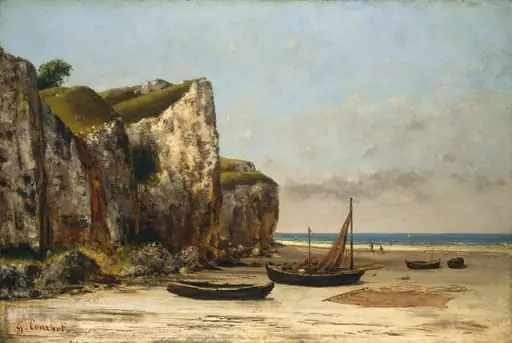
The Cliff at Étretat
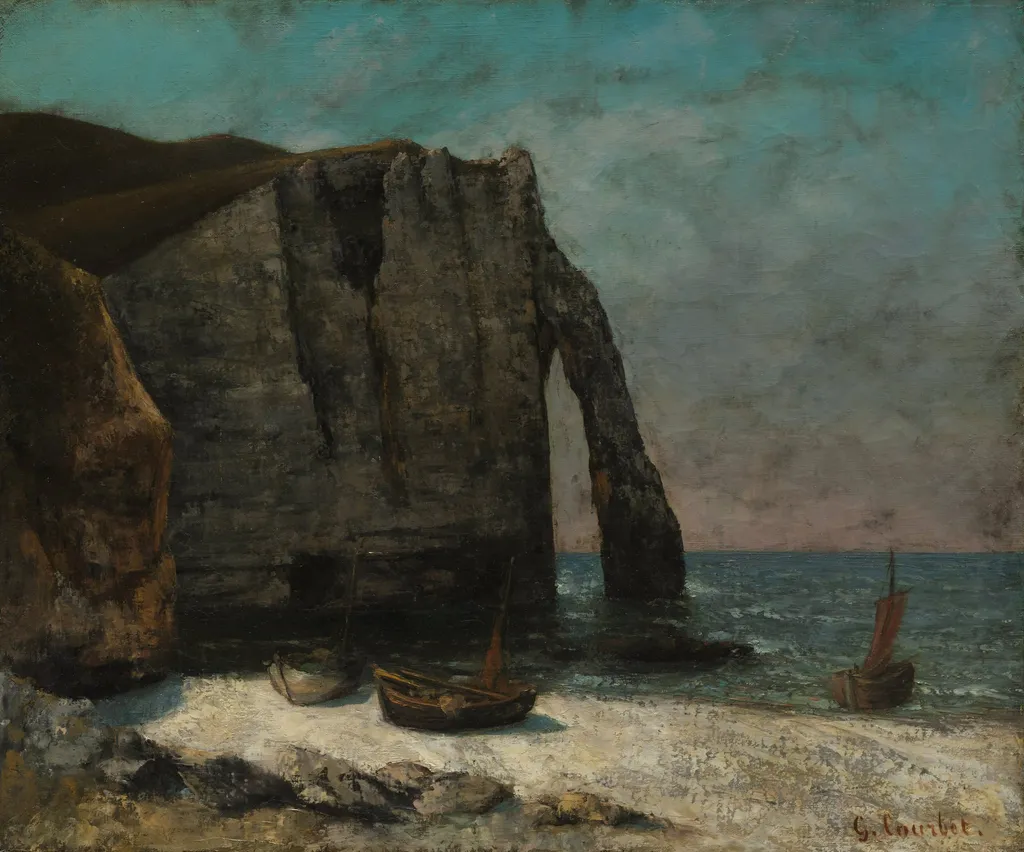
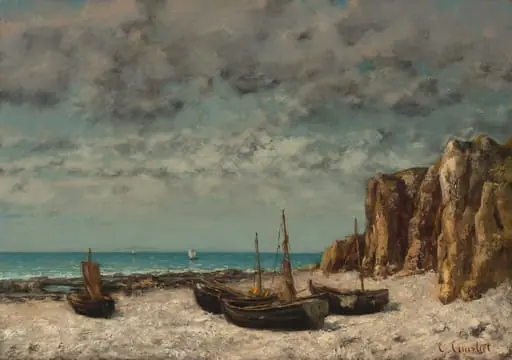
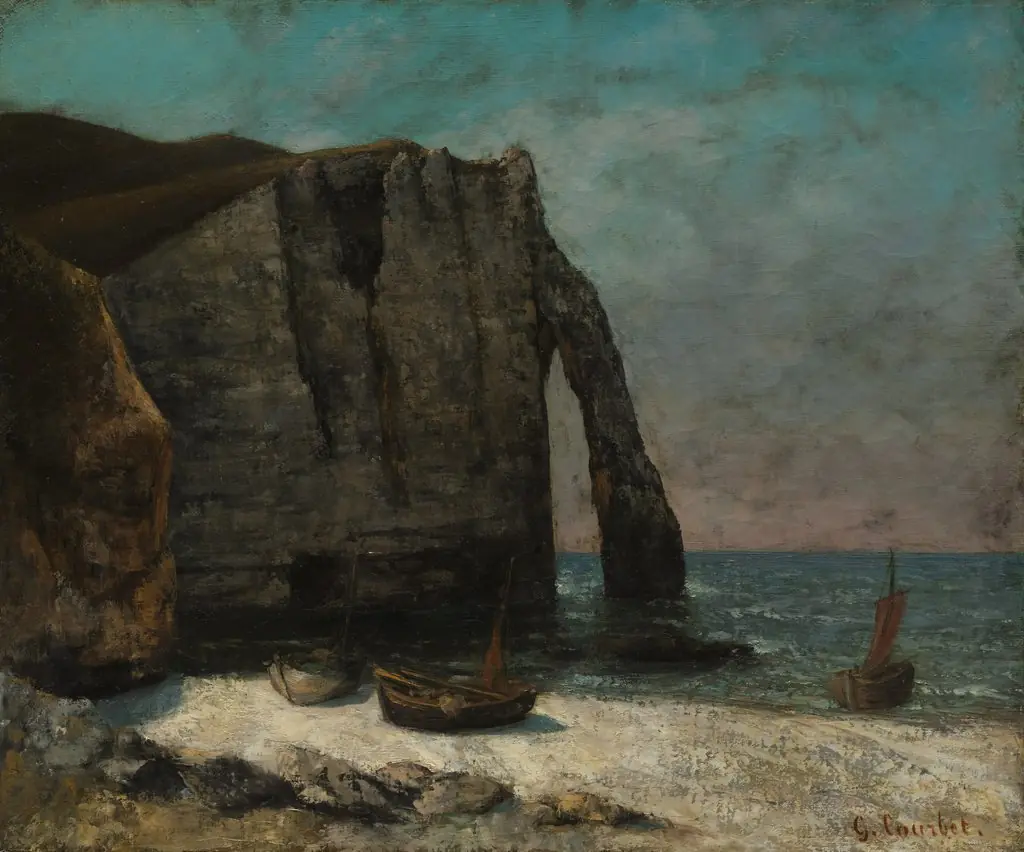
The Cliff at Étretat is an unspecified painting by the Impressionist artist Gustave Courbet. It dates from 1872 and is held in the collection of the Cleveland Museum of Art.
About this work
Overview
Painted in 1872, *The Cliff at Étretat* is a landscape by Gustave Courbet, created during his exile in Normandy following the fall of the Paris Commune.
Painted in 1872, *The Cliff at Étretat* is a landscape by Gustave Courbet, created during his exile in Normandy following the fall of the Paris Commune. It captures a specific coastal formation in northern France, rendered without mythological or sentimental embellishment. Courbet’s focus on the physical presence of nature aligns with his broader commitment to Realism, rejecting idealized compositions in favor of direct, unmediated observation.
Subject & Meaning
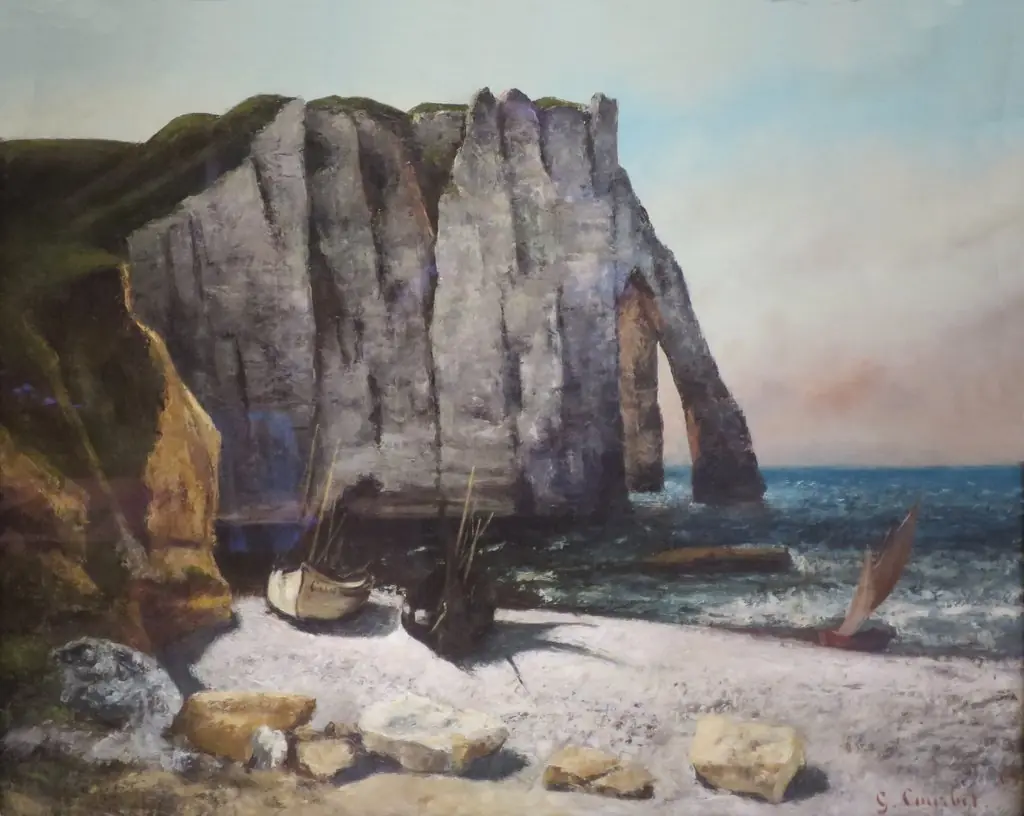
The painting depicts the natural limestone arches and rugged cliffs of Étretat, a well-known coastal site. Two small boats rest near the shore, their scale emphasizing the immensity of the geology. There is no human narrative or symbolic layer—only the enduring presence of land, sea, and sky. The work conveys a quiet awe for nature’s raw structure, devoid of romantic drama or moral allegory.
Technique & Style
Courbet applied paint thickly with a palette knife and brush, using impasto to build the texture of the cliffs and the turbulence of the sea. The brushwork is deliberate and tactile, rendering rock surfaces as fractured and weathered. The sky and water are mixed with muted blues and grays, avoiding smooth gradations. This physical handling of paint reinforces the material reality of the scene, rejecting academic polish.
History & Provenance
Courbet painted this work during his self-imposed stay in Normandy after the collapse of the Paris Commune in 1871. He had been exiled from Paris and turned to the Normandy coast for subject matter. The painting remained in his possession until his death in 1877, after which it passed through private collections before entering a public museum. Its survival reflects its significance within his late oeuvre.
Context
In the 1870s, Courbet’s Realism stood in contrast to both academic history painting and the emerging Impressionist focus on light and atmosphere. While his peers began to explore fleeting effects, Courbet persisted in depicting the solid, enduring forms of nature. His work at Étretat contributed to a broader shift in French art toward direct engagement with the physical world, influencing later movements that valued structural integrity over illusion.
Legacy
Courbet’s emphasis on materiality and direct observation laid groundwork for later artists who questioned traditional representation. The bold handling of paint in *The Cliff at Étretat* prefigured the textural experiments of the Post-Impressionists and the fragmented forms of early Cubism. Though not widely celebrated in his lifetime, his approach to landscape became a touchstone for modern artists seeking to ground art in tangible reality.
Own this work as a print
Artist & collection
Artist
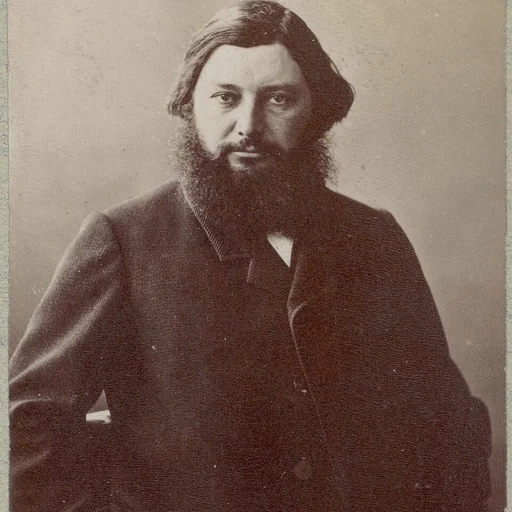
Jean Désiré Gustave Courbet (UK: KOOR-bay; US: koor-BAY; French: ; 10 June 1819 – 31 December 1877) was a French painter who led the Realism movement in 19th-century French painting.