Artwork
The Wave
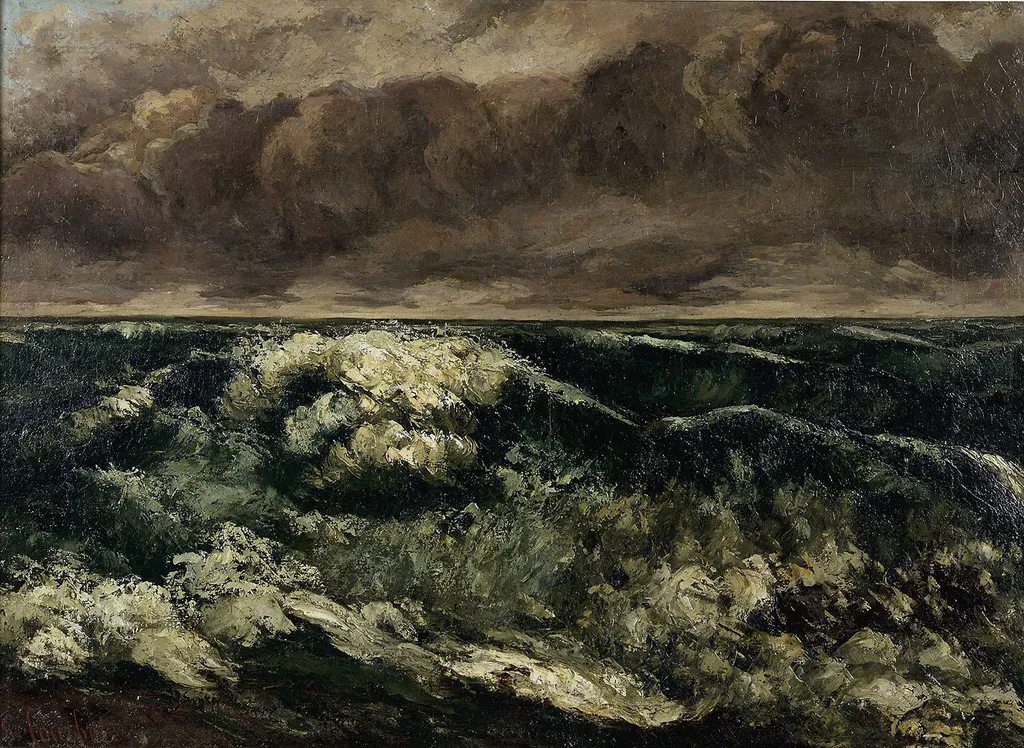
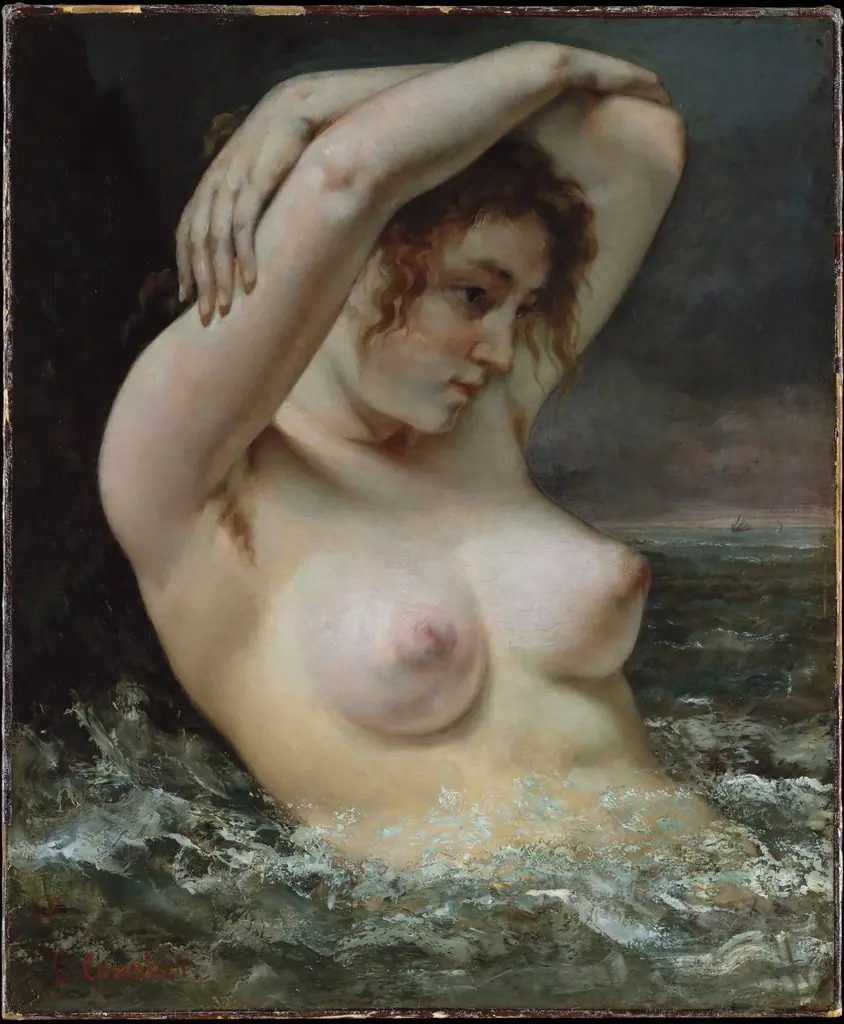
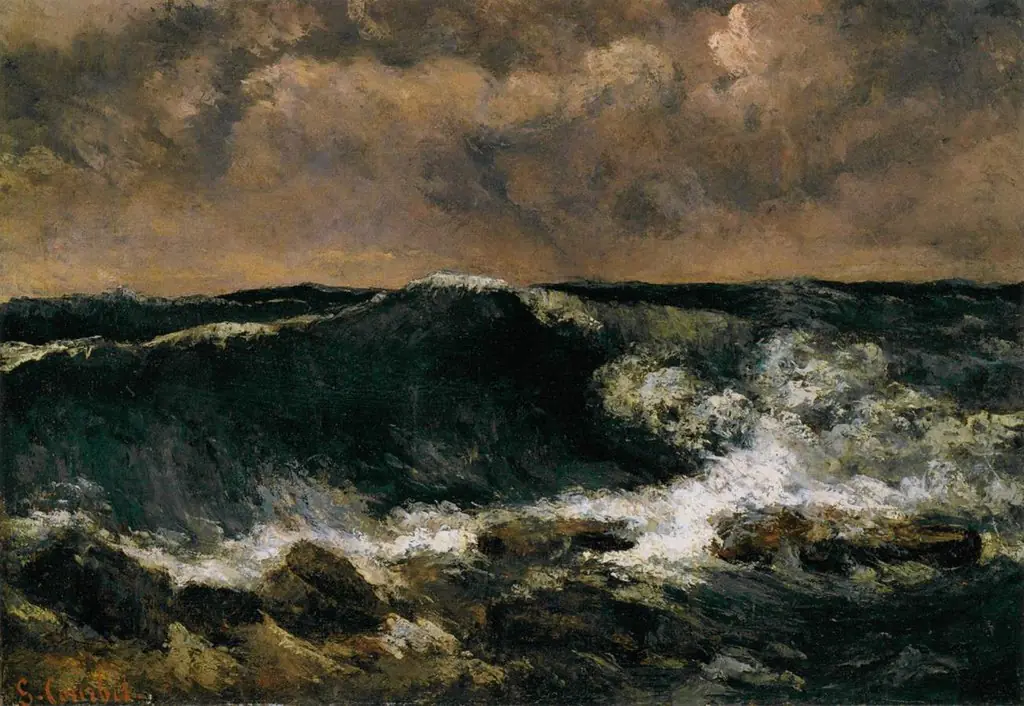
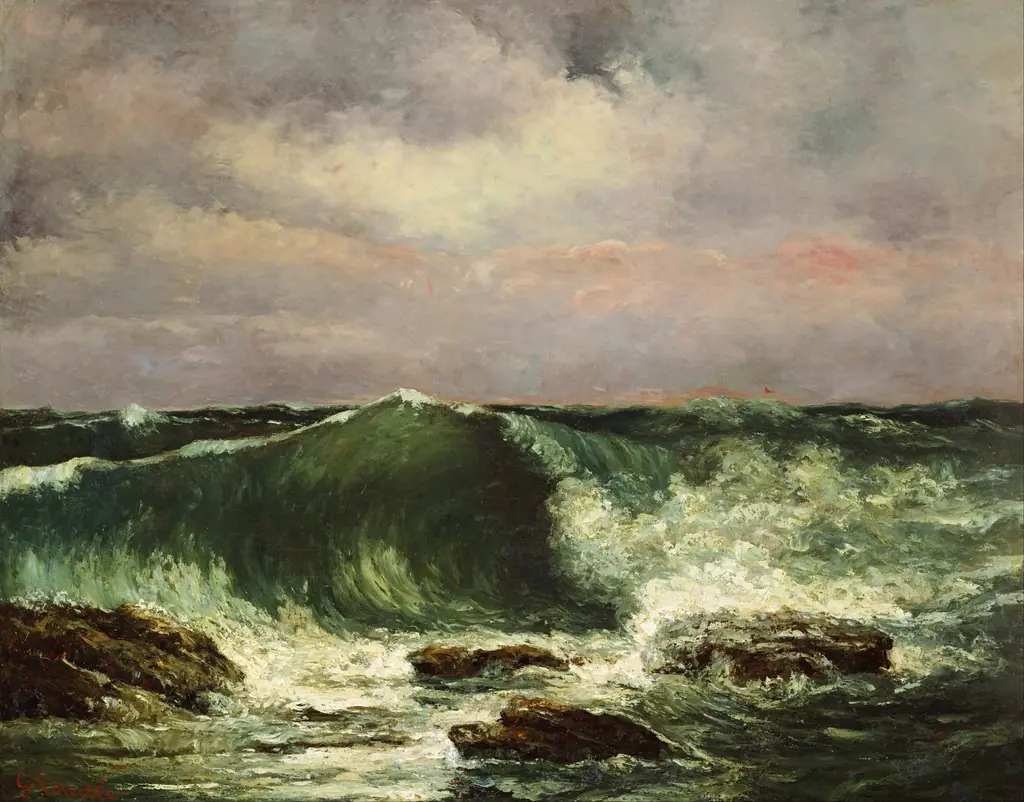
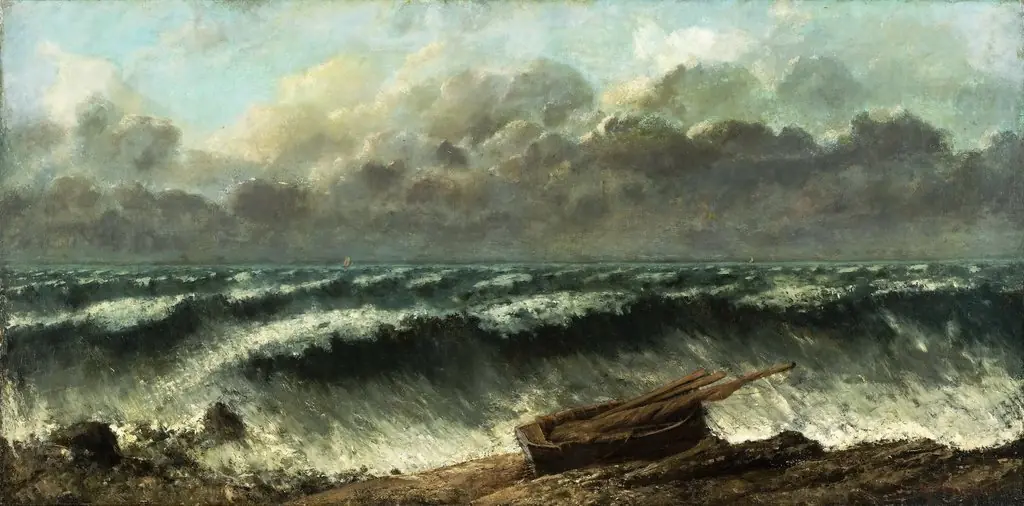
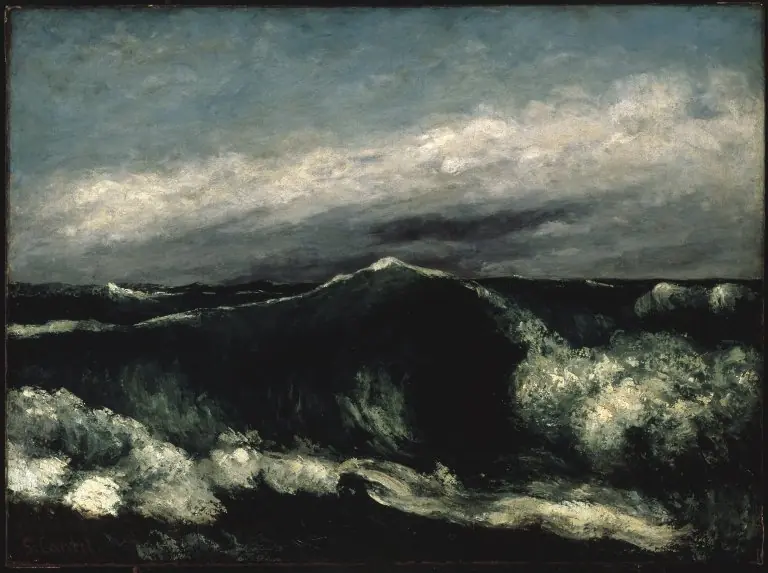
The Wave is an oil painting by the Realist artist Gustave Courbet. It dates from 1869 and is held in the collection of the Museum of Fine Arts of Lyon.
About this work
Overview
Painted in 1869, *The Wave* is an oil work by Gustave Courbet that captures the Atlantic Ocean in a moment of violent motion.
Painted in 1869, *The Wave* is an oil work by Gustave Courbet that captures the Atlantic Ocean in a moment of violent motion. Unlike the idealized seascapes of his contemporaries, Courbet rendered the sea with unembellished directness, emphasizing its physical presence over symbolic meaning. The painting reflects his lifelong dedication to depicting the natural world as it is observed, not as it is imagined.
Subject & Meaning
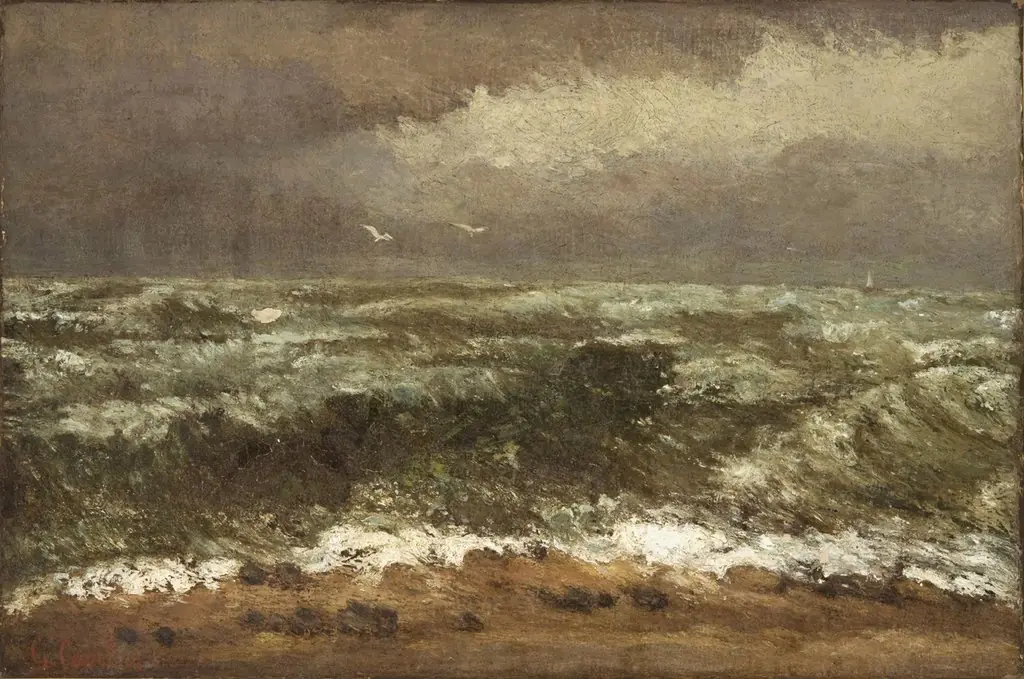
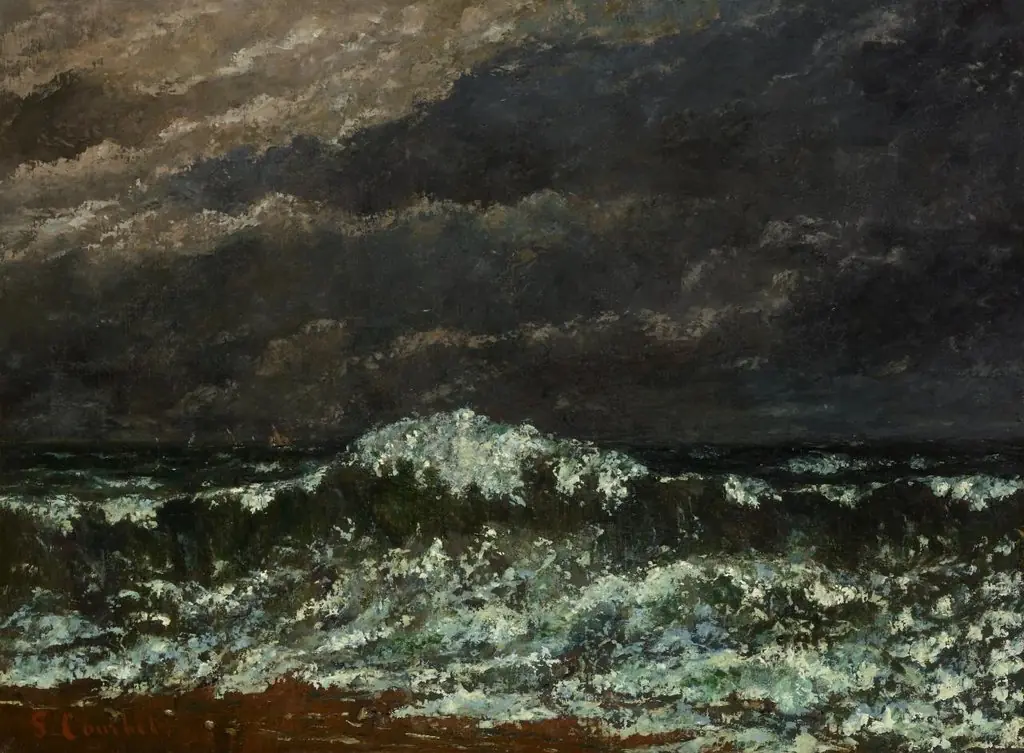
The painting centers on a towering, breaking wave, its crest shattered into spray, looming over a dark, churning sea. No human figures or vessels interrupt the scene; the focus remains solely on the ocean’s raw energy. Courbet presents nature as an autonomous, indifferent force—neither benevolent nor malevolent, but undeniably powerful. The absence of narrative or moralizing reinforces his realist philosophy.
Technique & Style
Courbet applied oil paint with thick, deliberate strokes, building texture to mimic the wave’s turbulent surface. Shades of deep green, slate gray, and white are layered to suggest foam, depth, and motion. The brushwork is unrefined and visible, rejecting smooth academic finishes. The sky, rendered in heavy, cloud-laden tones, presses down on the sea, enhancing the sense of atmospheric pressure and elemental force.
History & Provenance
Created during Courbet’s mature period, *The Wave* was painted while he was actively engaged in coastal observations along Normandy’s shores. It was not commissioned but produced as part of his personal exploration of natural phenomena. The painting remained in his possession until his death, later entering public collections through inheritance and acquisition by French institutions.
Context
In the late 1860s, Courbet stood apart from the Salon’s preference for historical or mythological themes. His focus on ordinary, unmediated nature—storms, rocks, rivers—challenged prevailing artistic norms. *The Wave* emerged alongside other seascapes that rejected Romantic drama in favor of empirical observation, aligning with broader shifts in European art toward direct engagement with the physical world.
Legacy
Courbet’s unidealized treatment of nature influenced later artists who sought to capture transient effects and material presence. His textured brushwork and emphasis on the physicality of paint prefigured techniques adopted by Impressionists and, later, Cubists. While not widely exhibited in his lifetime, *The Wave* became a touchstone for those redefining painting as an act of sensory record rather than idealized representation.
Artist & collection
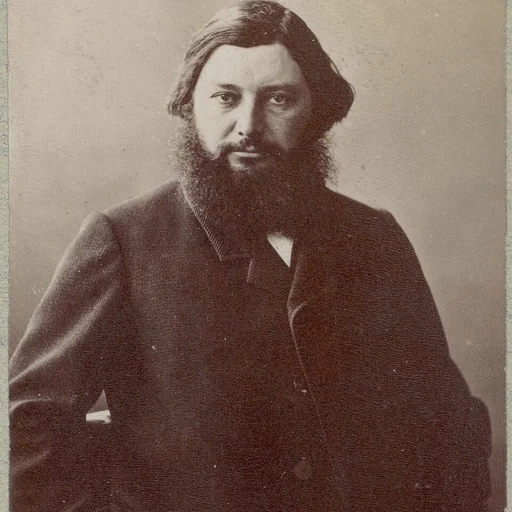
Artist
Jean Désiré Gustave Courbet (UK: KOOR-bay; US: koor-BAY; French: ; 10 June 1819 – 31 December 1877) was a French painter who led the Realism movement in 19th-century French painting.