Artwork
The Wave (La Vague)
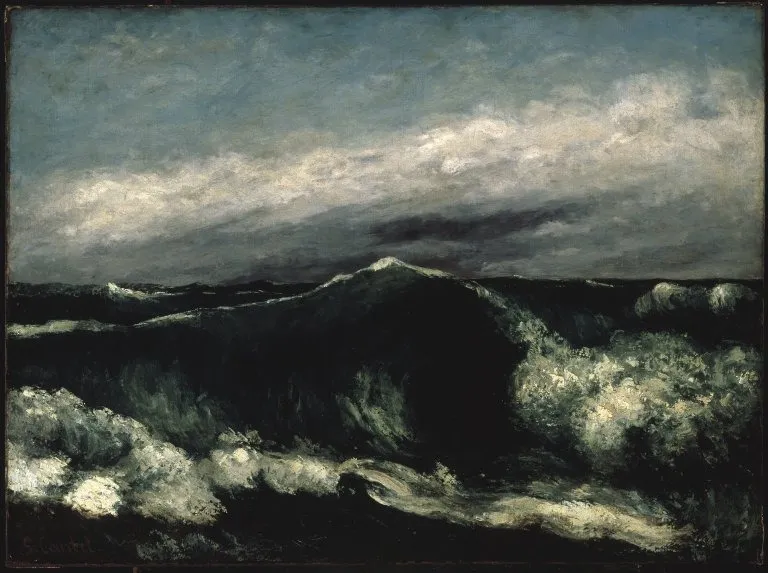
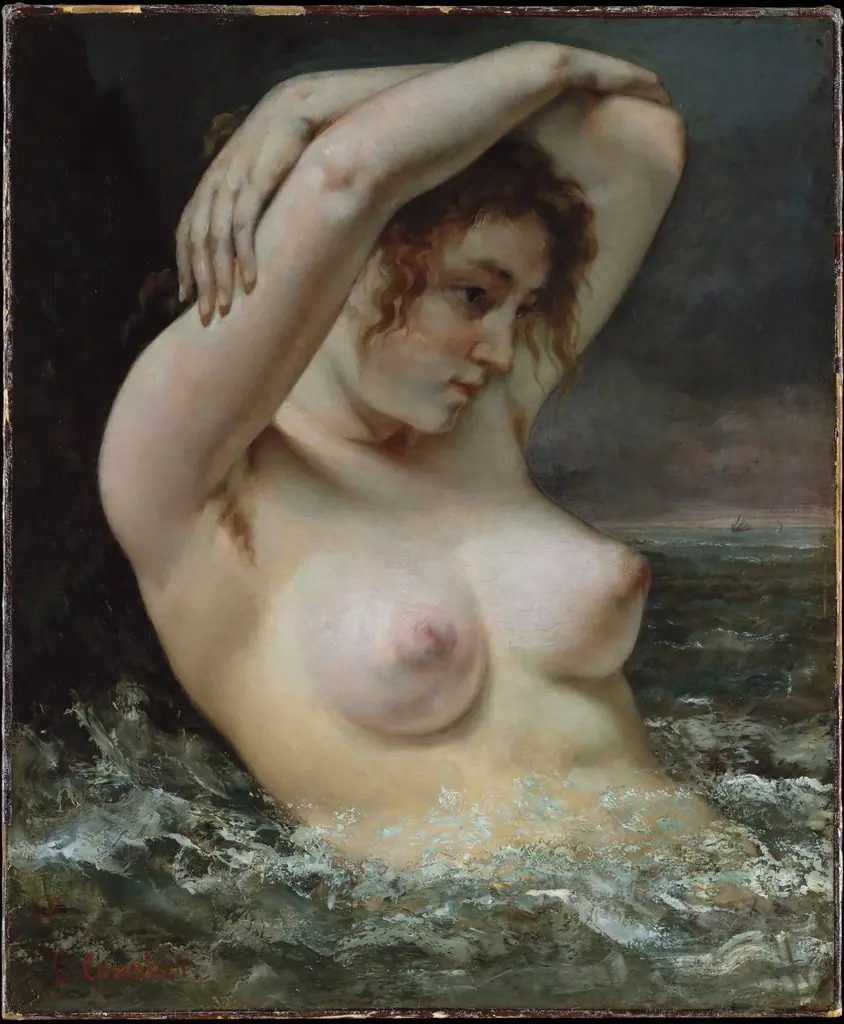
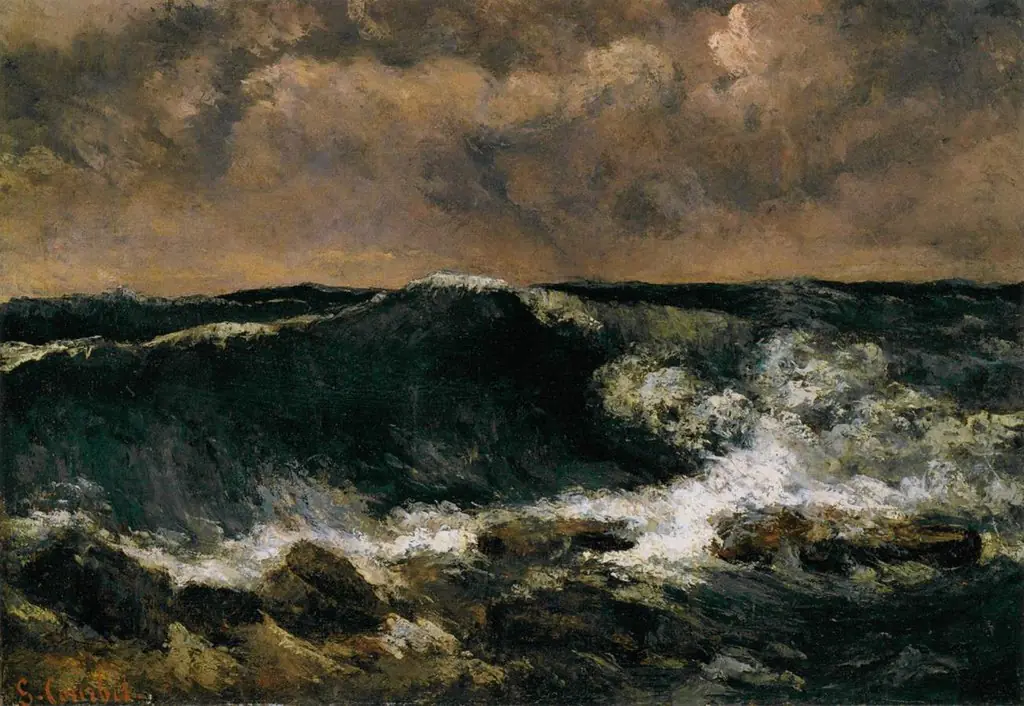
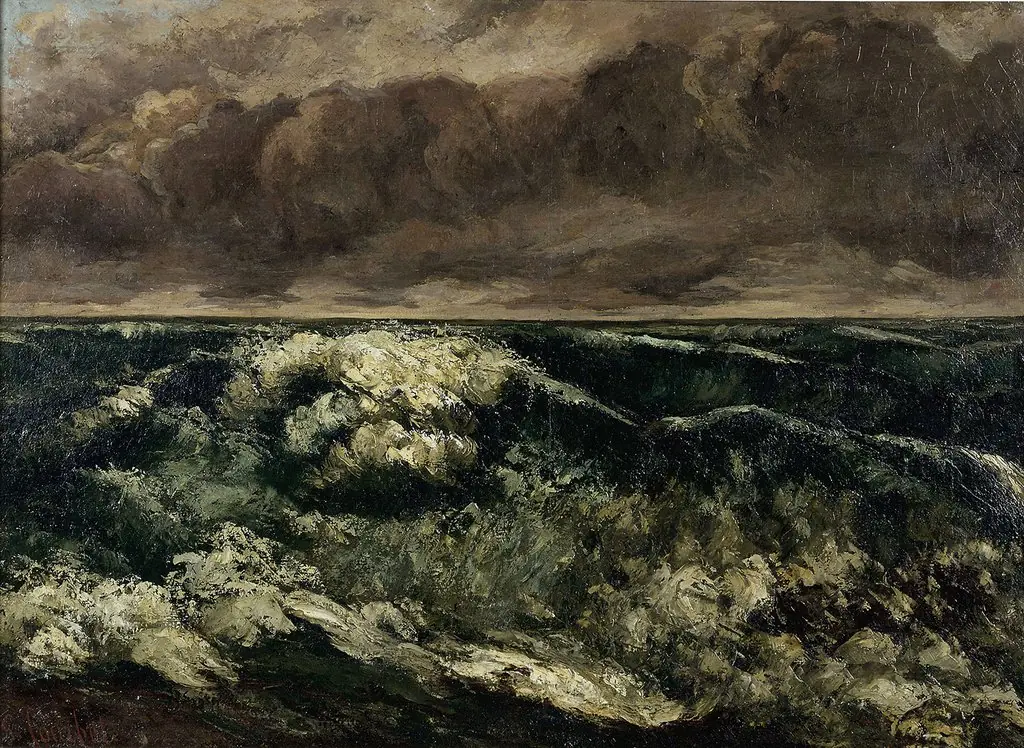
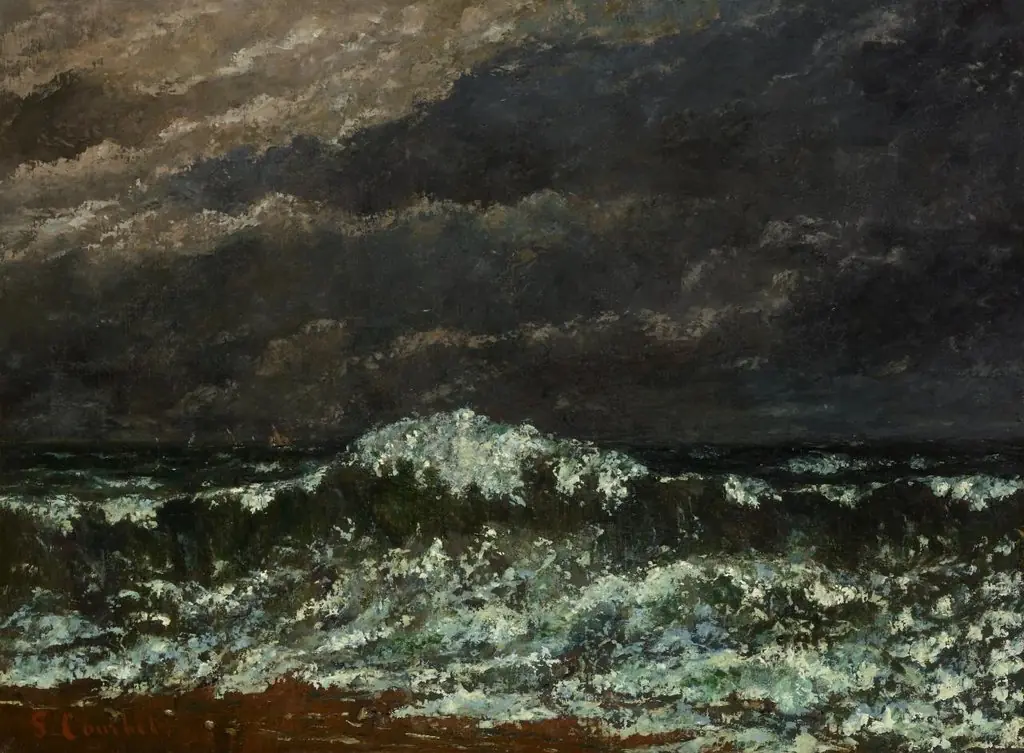
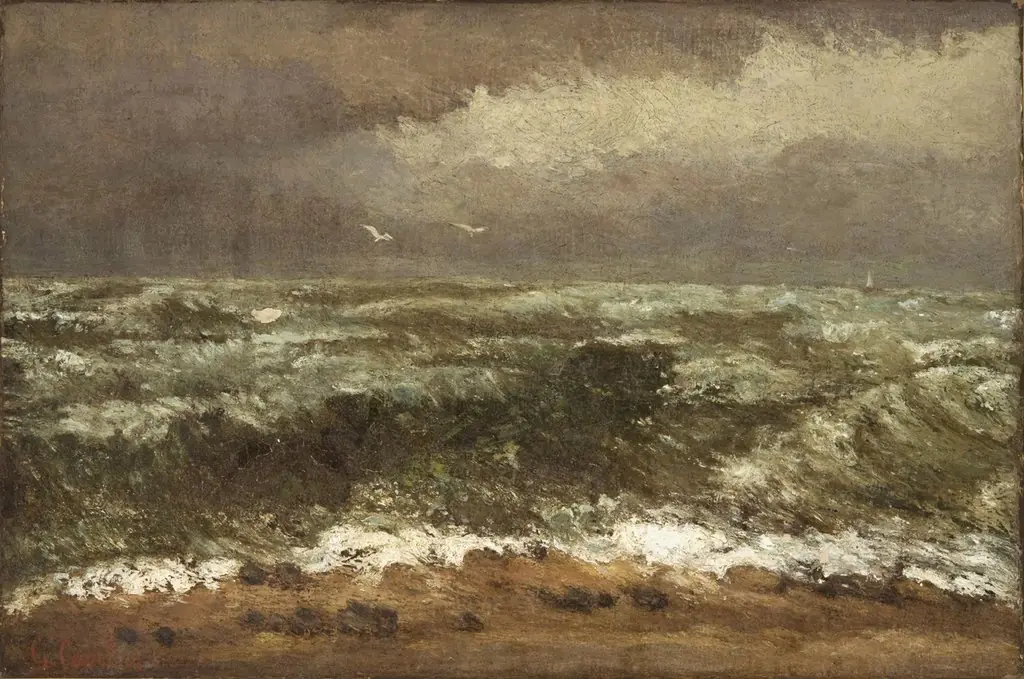
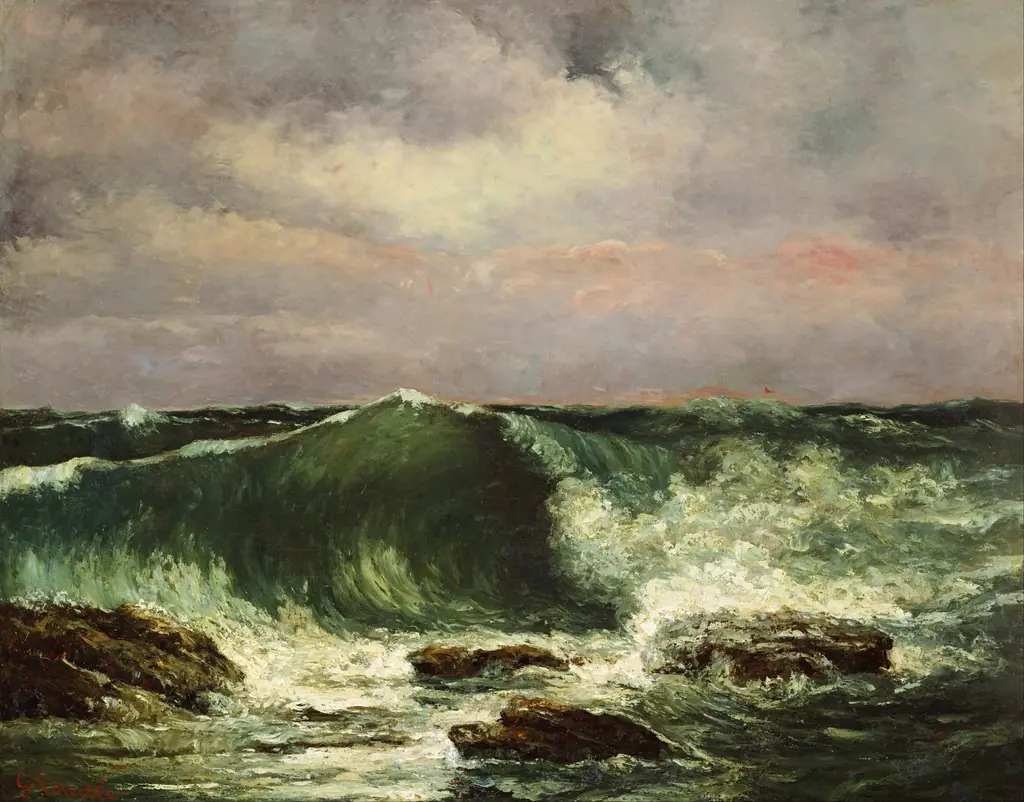
The Wave (La Vague) is an oil painting by the Realist artist Gustave Courbet. It dates from 1869 and is held in the collection of the Brooklyn Museum.
About this work
Overview
Executed in oil on canvas, the work reflects his dedication to portraying the physical world without idealization.
Gustave Courbet painted *The Wave* in 1869 as part of his sustained engagement with natural forces. Executed in oil on canvas, the work reflects his dedication to portraying the physical world without idealization. Unlike the dramatic landscapes of Romanticism, Courbet sought to capture the sea’s raw, unmediated presence, grounding his vision in direct observation rather than narrative or symbolism.
Subject & Meaning
The painting presents a single, towering wave mid-collapse against a rocky shoreline. There is no human presence, no vessel, no narrative — only the sea’s elemental force. The dark, churning mass and frothing crest suggest nature’s indifference to human scale. Courbet’s focus on this moment implies a quiet reverence for the ocean’s autonomy, stripping it of myth or moral allegory.
Technique & Style
Courbet applied thick, textured brushstrokes to convey the weight and motion of water. Pigments were layered aggressively, creating a tactile surface where dark blues and grays dominate, punctuated by sharp whites of foam. The sky, muted and broken by patches of pale blue, reinforces the scene’s somber tone. His handling of paint emphasizes materiality, aligning with Realism’s emphasis on physical truth over illusion.
History & Provenance
Painted during Courbet’s mature period, *The Wave* was created shortly before his political involvement in the Paris Commune. It was likely intended for private collection, not public exhibition, and remained in French hands for much of its early history. Its provenance traces through private collectors and institutions, reflecting its status as a significant but understudied work within his marine series.
Context
In the late 1860s, Courbet was increasingly isolated from the official art establishment, yet his focus on ordinary subjects and natural phenomena gained traction among younger artists. *The Wave* emerged alongside other seascapes that challenged academic hierarchies, positioning nature not as backdrop but as subject. This shift prefigured the Impressionists’ interest in light and atmosphere, though Courbet’s approach remained more grounded in mass and texture.
Legacy
Though less celebrated than his rural scenes, *The Wave* contributed to a broader redefinition of landscape painting. Its emphasis on materiality and direct observation influenced later movements, particularly Cubism’s interest in fractured forms and Impressionism’s focus on transient effects. Courbet’s unembellished treatment of nature helped dismantle traditional compositional norms, paving the way for modernist experimentation.
Artist & collection
Artist
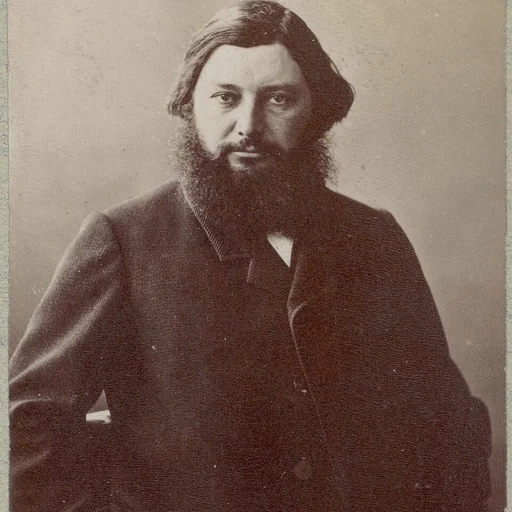
Jean Désiré Gustave Courbet (UK: KOOR-bay; US: koor-BAY; French: ; 10 June 1819 – 31 December 1877) was a French painter who led the Realism movement in 19th-century French painting.