Artwork
Woman from Spakenburg
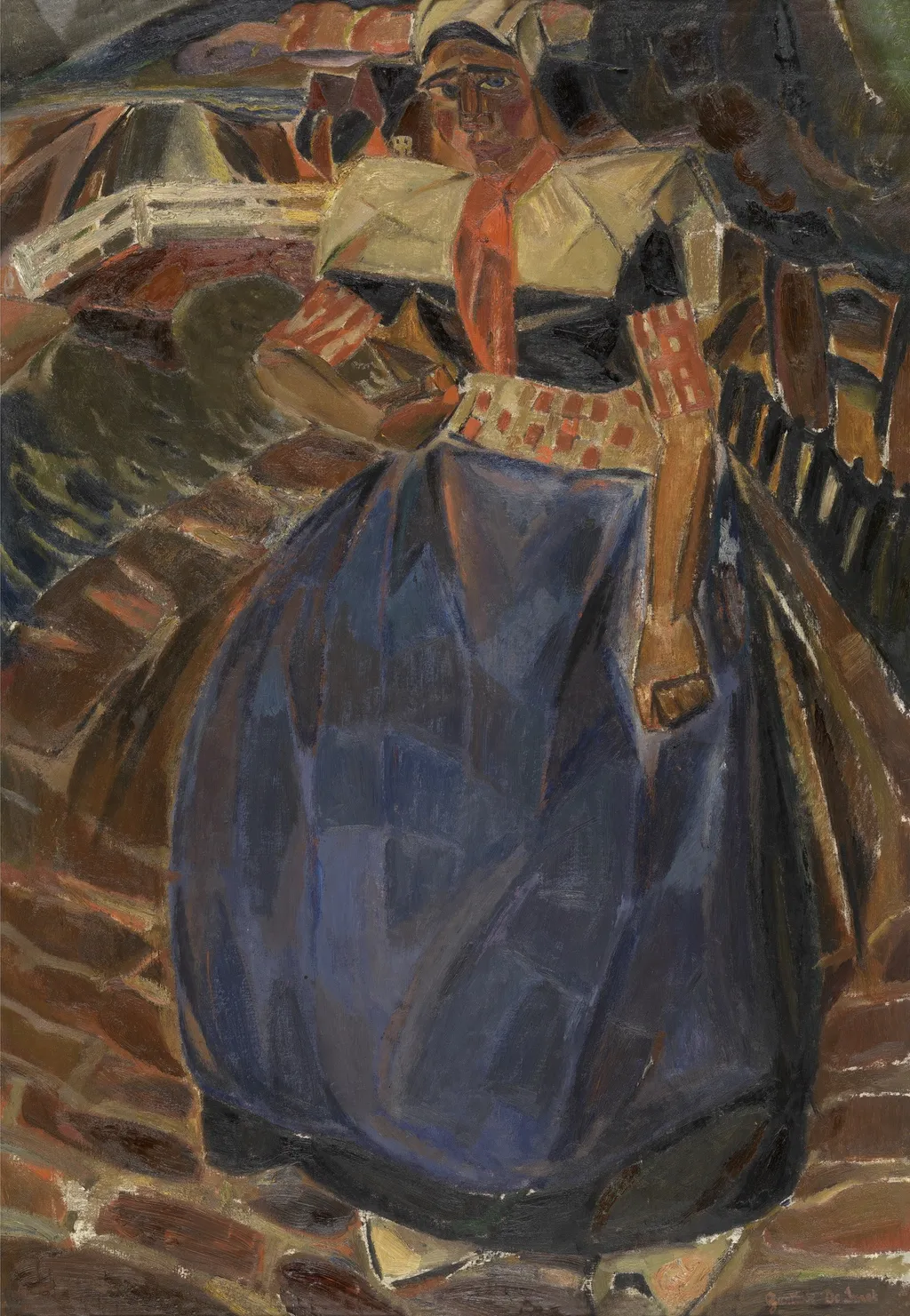
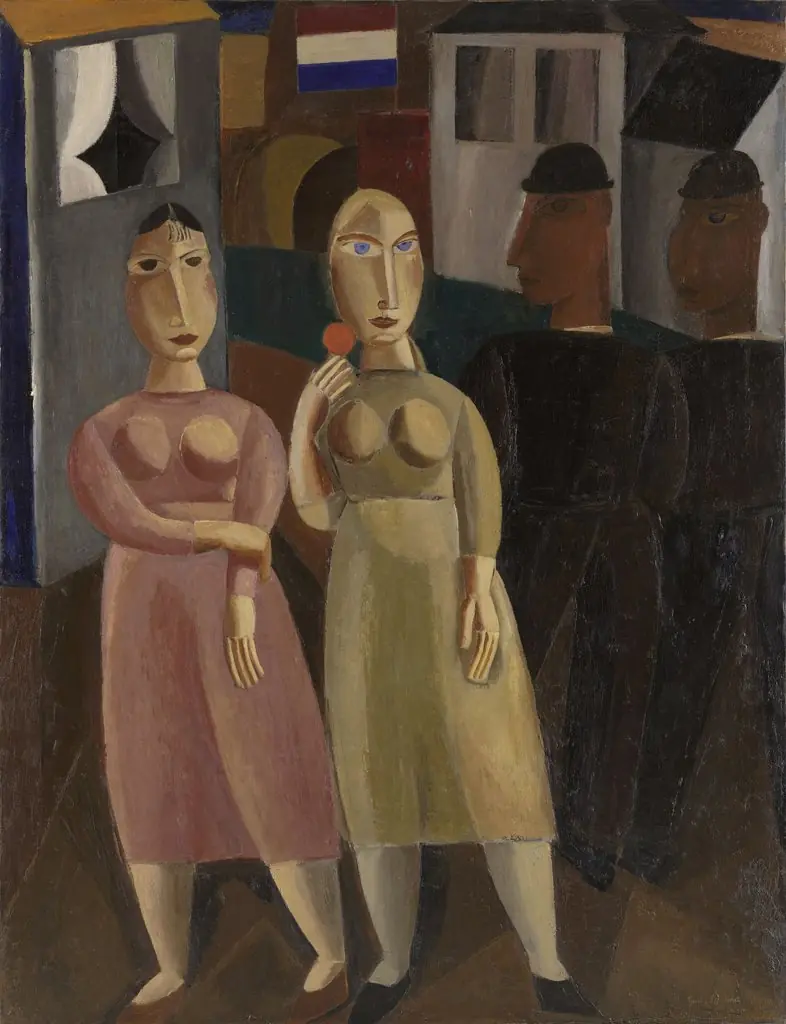
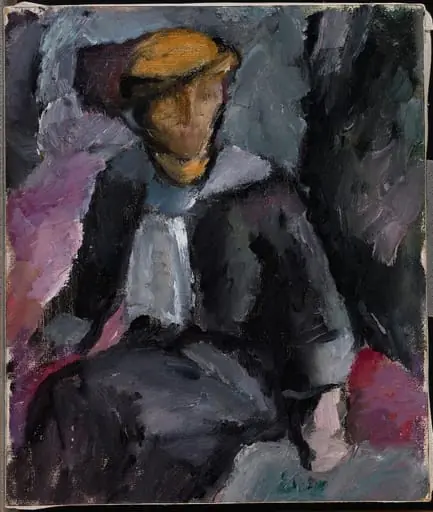
Woman from Spakenburg is an oil painting by Gustave De Smet. It dates from 1917 and is held in the collection of the Royal Museum of Fine Arts Antwerp.
About this work
Overview
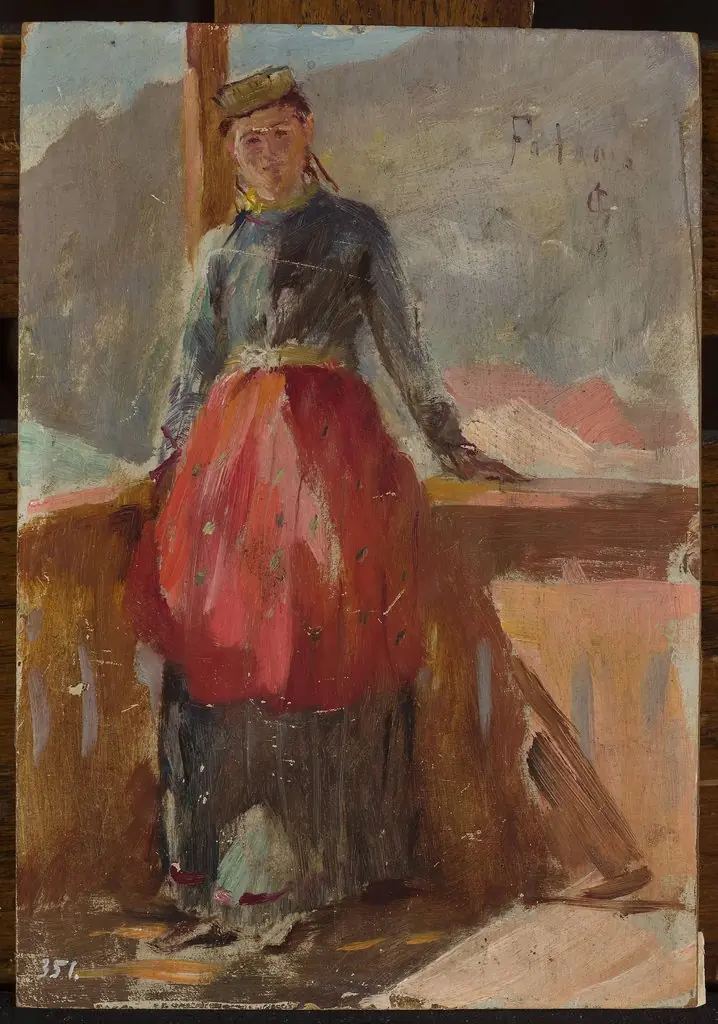
Woman from Spakenburg is a 1917 painting by Belgian artist Gustave De Smet, a key figure in Flemish Expressionism. The work depicts a woman in traditional Dutch attire set against a backdrop of architecture, characterized by the movement's distinct visual language.
Subject & Meaning
The subject, a somber-faced woman dressed in predominantly blue with white apron and red scarf, conveys introspection through her posture. The inclusion of a bridge and houses behind her adds contextual depth, framing her within a specific, contemplative environment.
Technique & Style
Executed in a Cubist-influenced style, the painting features geometric shapes and bold, expressive brushstrokes. This technique, coupled with a vibrant color palette, generates a dynamic visual tension between form and emotional subduedness.
History & Provenance
Created in 1917, the painting is part of De Smet's portrait series. It is currently housed in the Royal Museum of Fine Arts Antwerp, highlighting its significance within Belgian artistic heritage.
Context
Woman from Spakenburg reflects the influences of German Expressionism and Cubism on Flemish Expressionism, a movement De Smet helped establish alongside artists like Constant Permeke and Frits Van den Berghe.
Legacy
As a work of Flemish Expressionism, it contributes to the broader understanding of early 20th-century European avant-garde movements, exemplifying the style's emotional intensity and formal innovation.
Own this work as a print
Artist & collection

Artist
Gustave Franciscus De Smet, also known as Gustaaf De Smet and Gust De Smet (21 January 1877 – 8 October 1943) was a Belgian painter and printmaker.