Artwork
Musical Works of Ernest Doré: Souvenir of Alsace, Alsatian Dance - Title Page
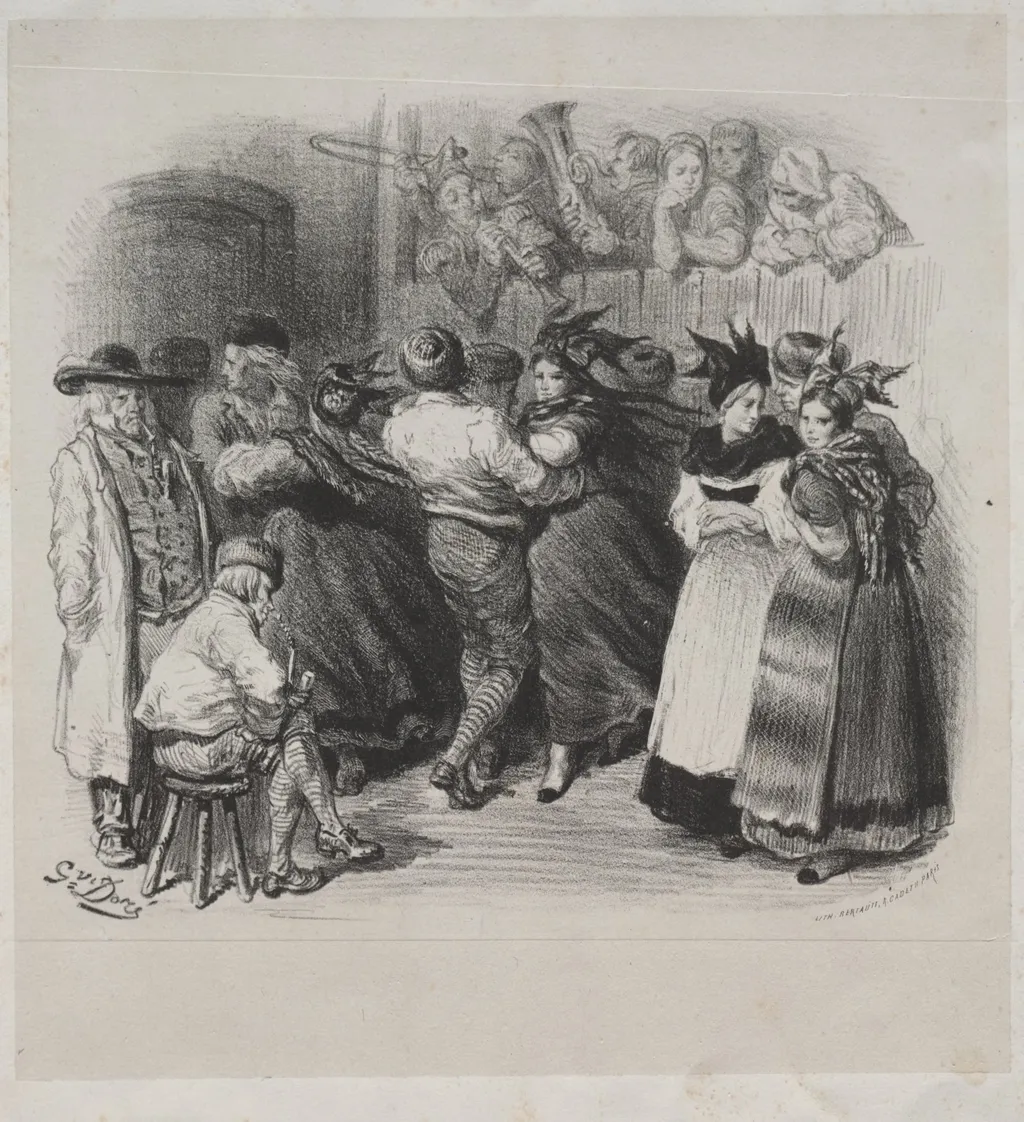
Musical Works of Ernest Doré: Souvenir of Alsace, Alsatian Dance - Title Page is a print by the Impressionist artist Gustave Doré. It dates from 1804 and is held in the collection of the Cleveland Museum of Art.
About this work
Overview
' Rendered in ink, the image captures a moment of communal celebration with a sense of immediacy, blending realism with subtle supernatural elements.
This printed title page belongs to a musical composition by Ernest Doré, illustrated by Gustave Doré around 1804. It serves as the frontispiece for a piece titled 'Souvenir of Alsace, Alsatian Dance.' Rendered in ink, the image captures a moment of communal celebration with a sense of immediacy, blending realism with subtle supernatural elements. The work is part of the collection at The Cleveland Museum of Art.
Subject & Meaning
The scene depicts a traditional Alsatian dance, with figures in period attire moving in close formation, suggesting a festive gathering. A child seated nearby observes quietly, anchoring the image in everyday life. Above, translucent, elongated forms hover—possibly ancestral spirits or memories—hinting at the cultural weight of the dance as both celebration and remembrance. The composition merges the tangible with the ethereal, evoking a connection between present and past.
Technique & Style
Gustave Doré employed rapid, fluid ink lines to convey motion and texture, avoiding fine detail in favor of expressive energy. The figures are suggested rather than fully rendered, with shadows and overlapping forms enhancing the sense of crowded movement. The ghostly background elements are rendered with lighter, more fragmented strokes, contrasting with the denser, darker outlines of the dancers. This technique creates a dynamic tension between the earthly and the spectral.
History & Provenance
The print was produced as part of a musical publication attributed to Ernest Doré, likely in the early 19th century. It entered the collection of The Cleveland Museum of Art through documented acquisition, though its exact path from publication to museum remains partially unrecorded. The work reflects the period’s practice of integrating illustrative art into musical scores, a common feature in Romantic-era publications.
Context
In early 1800s Alsace, folk dances were vital expressions of regional identity, often tied to seasonal rituals and communal memory. Gustave Doré’s illustration aligns with a broader European interest in folk traditions during the Romantic era, where artists and composers sought to capture local customs with emotional depth. The inclusion of spectral figures may reflect contemporary fascination with the supernatural as a metaphor for cultural continuity.
Legacy
Though not widely reproduced, this title page exemplifies Gustave Doré’s early engagement with narrative illustration and folk themes, predating his more famous literary engravings. It stands as a quiet testament to the intersection of music, regional culture, and visual art in 19th-century France. The work continues to inform studies of Romantic-era print culture and the visual representation of folk life.
Artist & collection
Artist
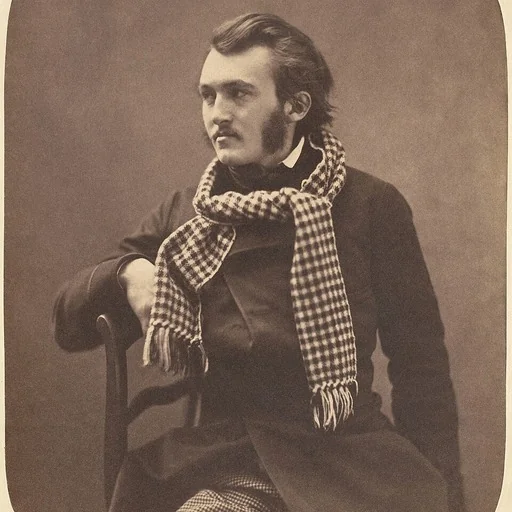
Paul Gustave Louis Christophe Doré was a French printmaker, illustrator, painter, comics artist, caricaturist, and sculptor.

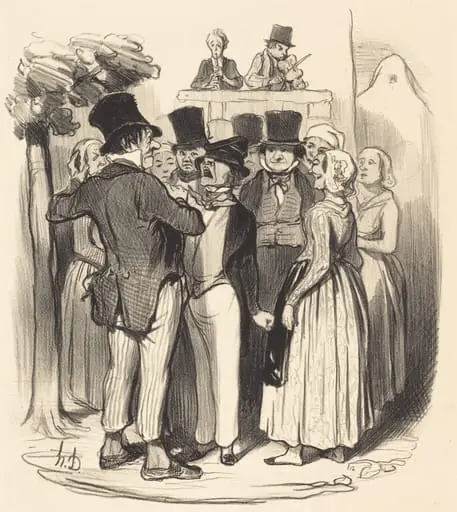 Ah! Gringalet d'Paris... tu viendras faire danser...
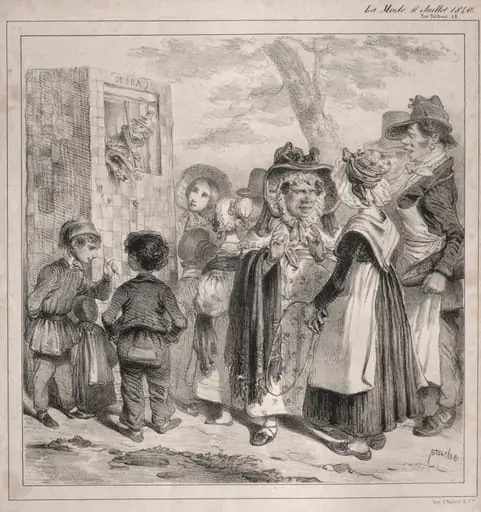 Voyez-vous ma Chère! c'est la police qui fait jouer ces polichinels là, pour détourner l'attention...
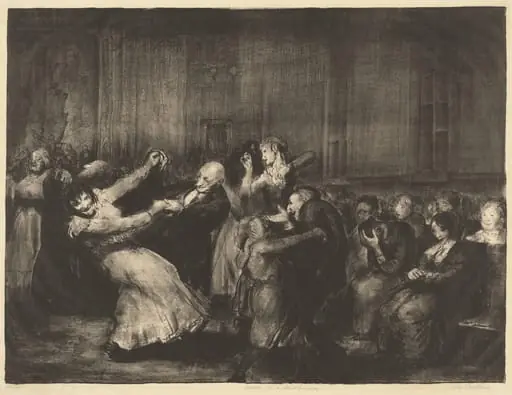 Dance in a Madhouse
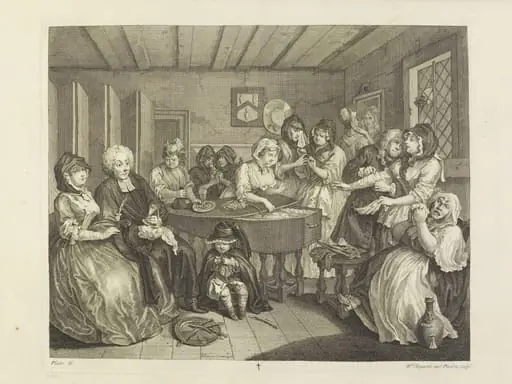 The Harlot's Progress
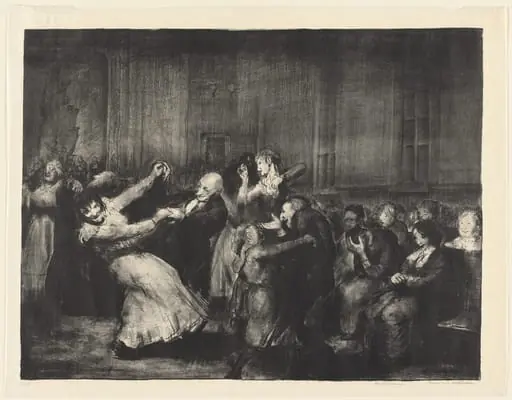 Untitled
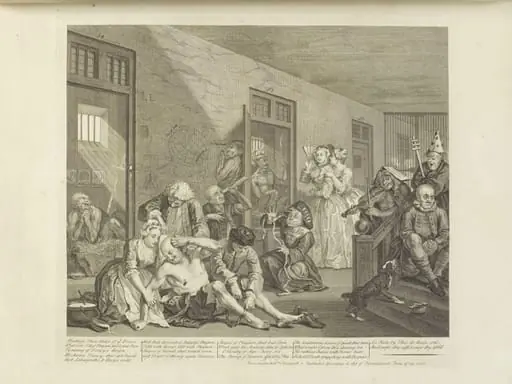 The Rake's Progress
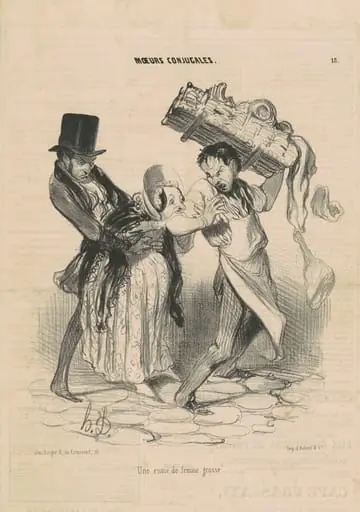 Une envie de femme grosse
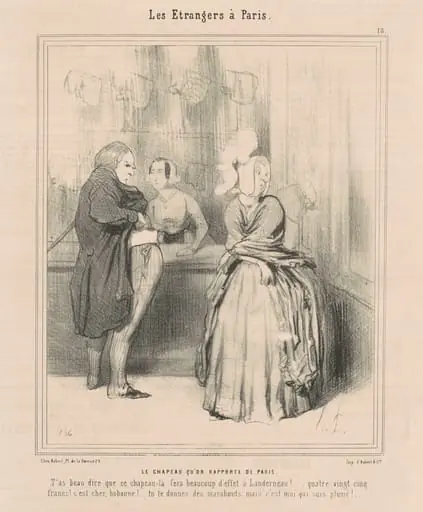 Le chapeau qu'on rapporte de Paris
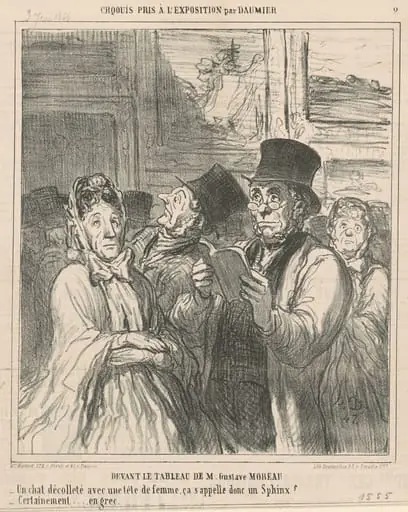 Devant le tableau de M. G. Moreau
 Devant le tableau de M. G. Moreau
 Grand Gueux va! je voudrais t'y voir
 Dance in a Madhouse