Artwork
Coachmen
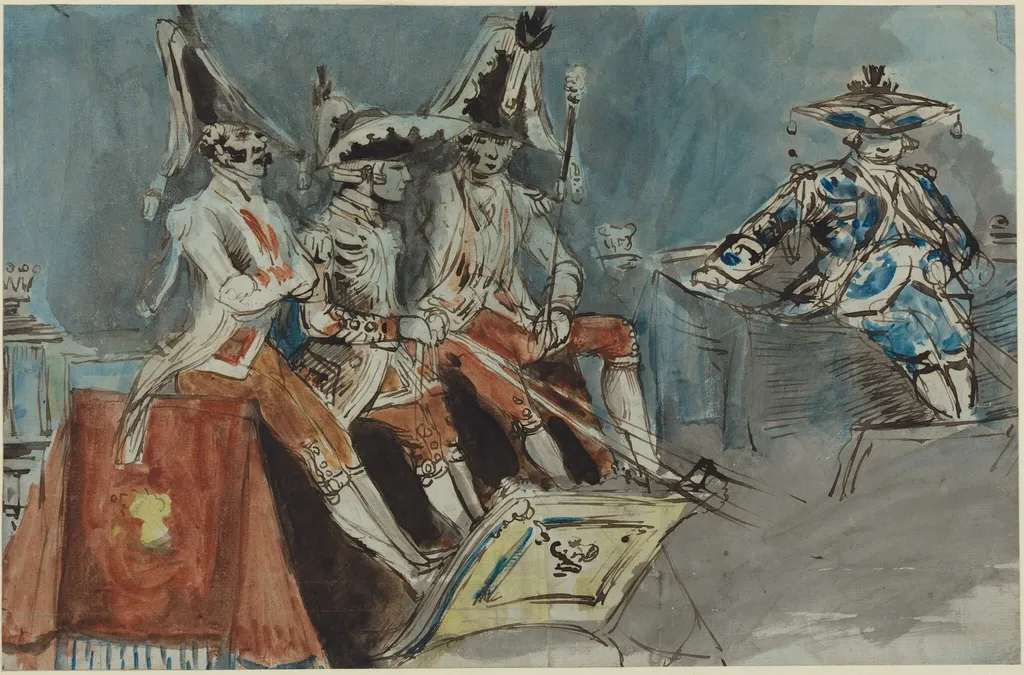
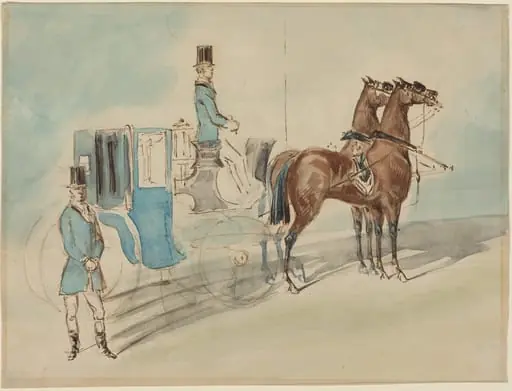
Coachmen is an ink drawing by the Romanticist artist Constantin Guys. It dates from 1848 and is held in the collection of the National Gallery of Art.
About this work
Overview
Created in 1848, *Coachmen* is a drawing by French illustrator Constantin Guys. Executed with brush, brown ink and watercolor on laid paper, the work presents a small interior scene populated by four men in period dress. The composition captures a moment of informal interaction among the figures, set against a muted blue wall and a table covered with a blue cloth.
Subject & Meaning
The four figures—two seated, two standing—are dressed in tall hats and elaborate attire, suggesting they are preparing for a social occasion or a formal engagement. Their relaxed postures and conversational gestures convey a sense of camaraderie, offering a glimpse into mid‑nineteenth‑century urban leisure and the customs of the emerging middle class.
Technique & Style
Guys employed a combination of brown ink line work and delicate watercolor washes, allowing the ink to define the figures while the translucent pigment softens the atmosphere. The laid paper surface adds a subtle texture that interacts with the watercolor’s muted tones, producing a gentle, almost dreamlike quality characteristic of Guys’ illustrative approach.
Context
At the time of its creation Guys was known for his reportage of contemporary events, notably as a correspondent during the Crimean War, and for contributions to both British and French periodicals. *Coachmen* reflects his interest in everyday urban scenes, aligning with the broader Romantic fascination with the fleeting moments of modern life.
Artist & collection
Artist
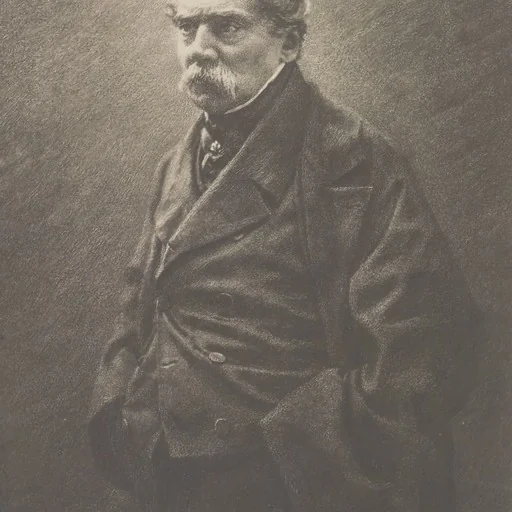
Constantin Guys (born Ernest-Adolphe Guys de Saint-Hélène, December 3, 1802 – December 13, 1892) was a French Crimean War correspondent, water color painter and illustrator for British and French newspapers.

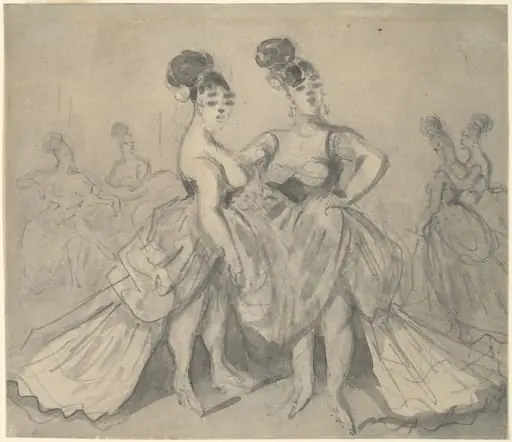
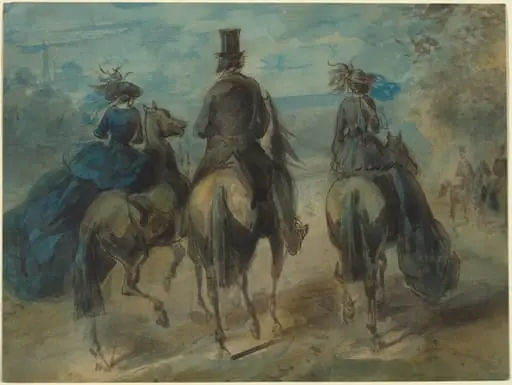
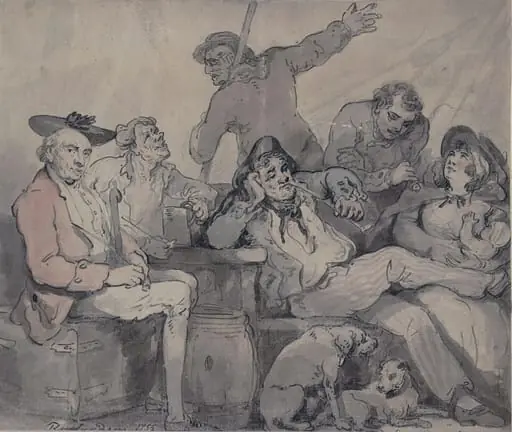 Group sketched on board 'The Europa'
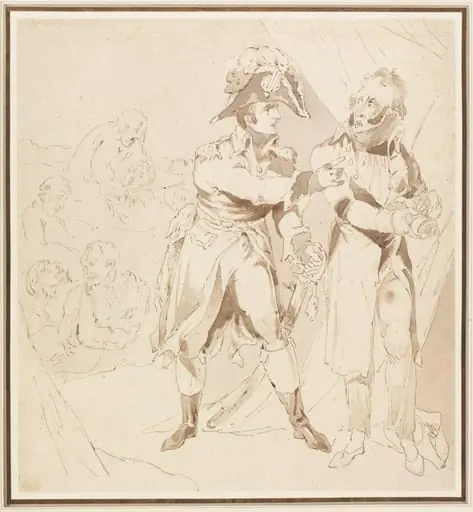 Buonaparte Ordering Five Hundred & Eighty of his wounded Soldiers to be poisoned at Jaffa
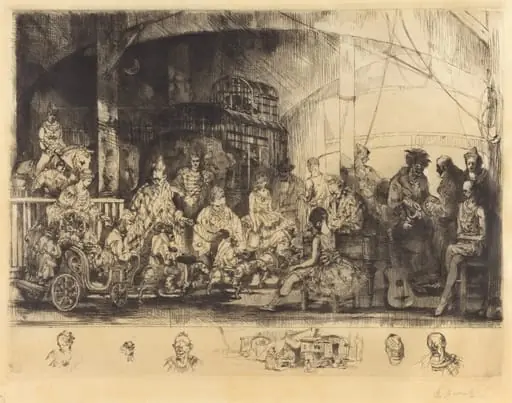 Frattelini Circus
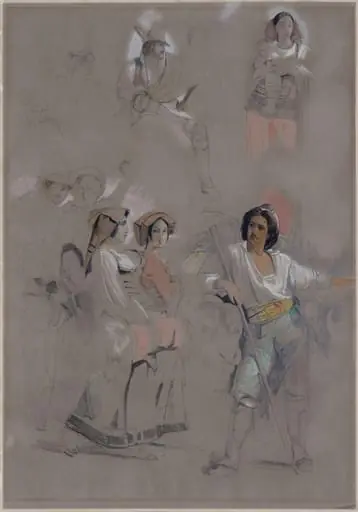 Figures in Italia Costume
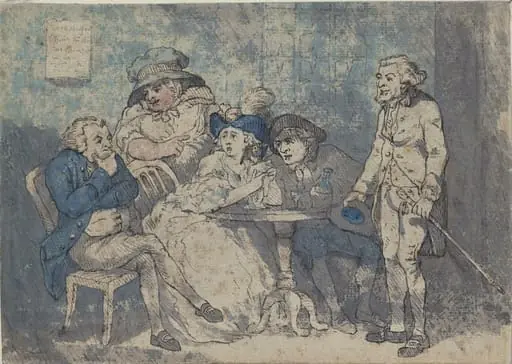 The Guilty Couple
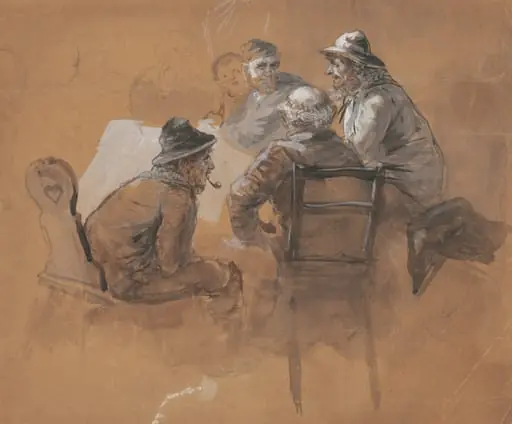 Fishermen
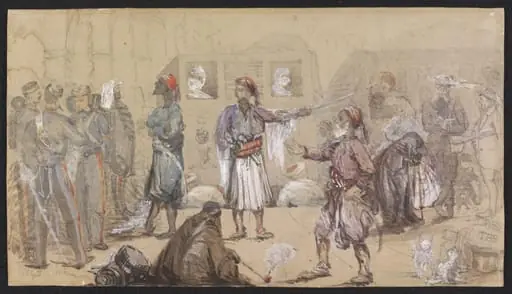 Railway Station, Alexandria
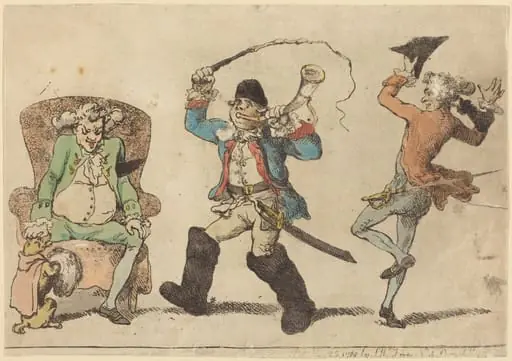 A Frenchman in November
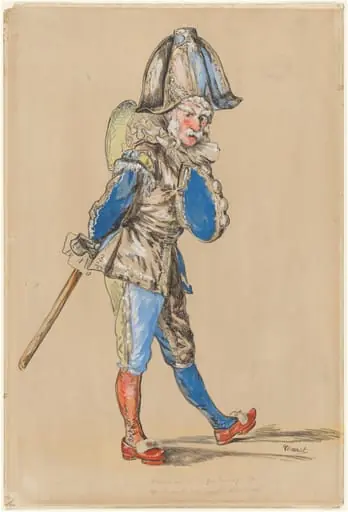 Polichinelle
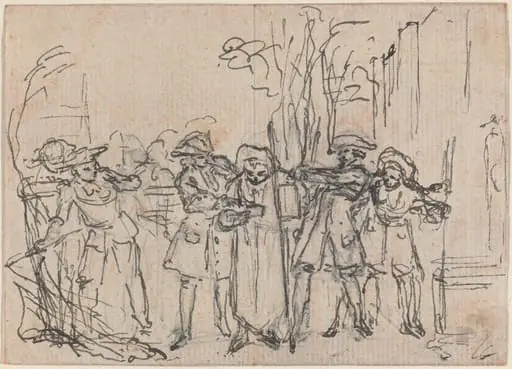 Hob Surprised by Sir Thomas with Mr. Friendly's Letter
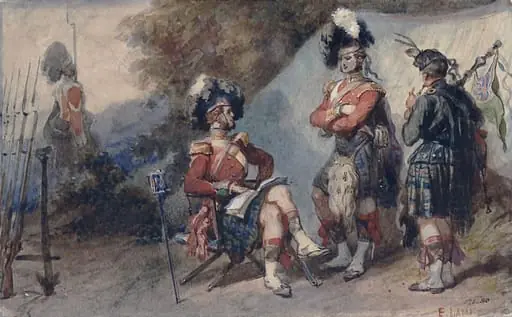 Officers at Cobham Camp, 1854
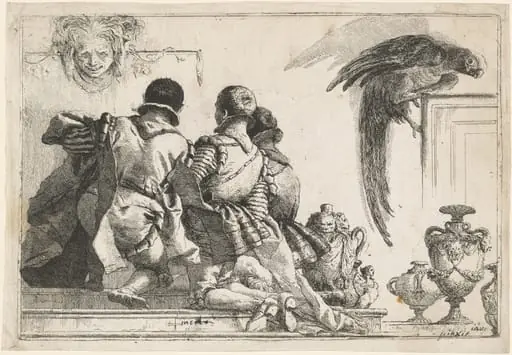 Kneeling Pages, a Mask, and a Parrot