Artwork
Interior with Dancer
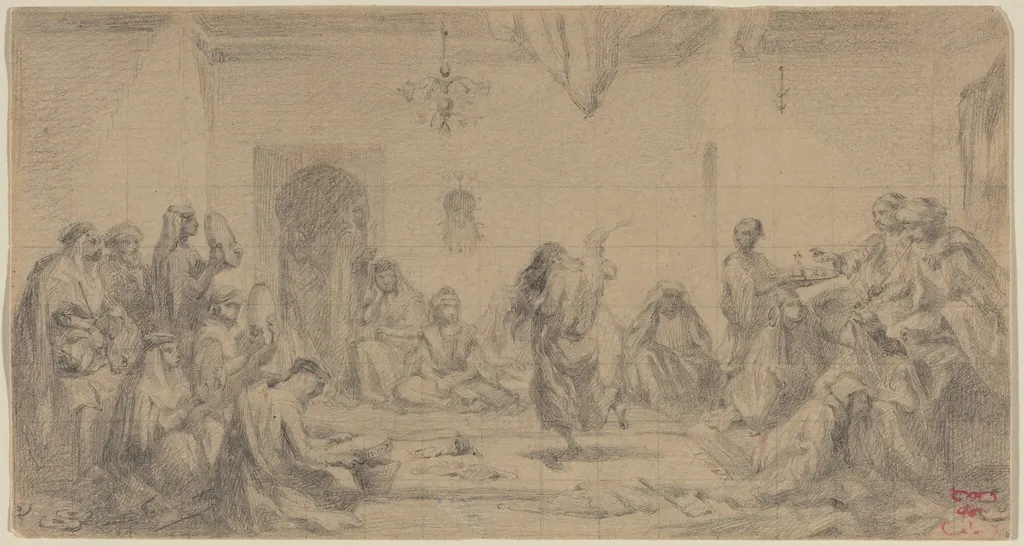
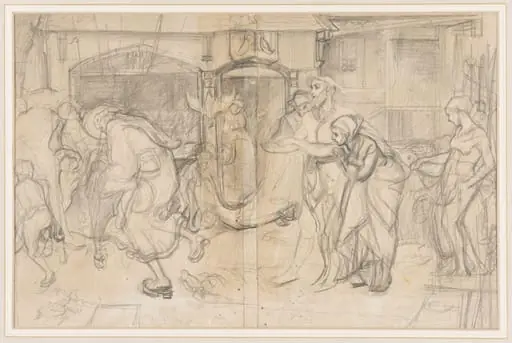
Interior with Dancer is a graphite drawing by the Romanticist artist Edmond Hédouin. It dates from 1854 and is held in the collection of the National Gallery of Art.
About this work
Overview
The work is not a finished painting but a preparatory study, squared for transfer, suggesting it was intended as a composition for a larger piece.
Created in 1854 by Edmond Hédouin, this graphite drawing on buff wove paper captures a domestic interior animated by a dancer and musicians. The work is not a finished painting but a preparatory study, squared for transfer, suggesting it was intended as a composition for a larger piece. Its delicate lines and careful arrangement reveal an artist focused on capturing motion and spatial dynamics within a confined setting.
Subject & Meaning
At the center, a dancer with flowing hair and draped garments moves amid a circle of musicians and observers. The scene suggests a private performance, possibly in a bourgeois home, where music and dance serve as social ritual. The figures are engaged but not theatrical, implying intimacy over spectacle. The composition conveys rhythm and shared attention, emphasizing human connection rather than narrative drama.
Technique & Style
Hédouin employed fine graphite lines to suggest texture and movement, using varied pressure to define fabric folds, hair, and instrument details. The squared grid on the paper indicates a methodical transfer process, common in academic training. The fluidity of the dancer’s form and the loose rendering of surrounding figures contrast with the structured interior, creating a dynamic tension between spontaneity and order.
History & Provenance
The drawing remains in private or institutional collections, with no public record of exhibition prior to the 20th century. Its survival as a study rather than a finished work suggests it was valued for its compositional insight rather than as a standalone piece. Hédouin’s limited surviving oeuvre makes this a rare document of mid-19th-century French draftsmanship.
Context
Produced during the height of Romanticism in France, the drawing reflects the era’s interest in expressive movement and emotional atmosphere, though it avoids overt drama. Unlike grand Romantic paintings, this work focuses on quiet, everyday performance. It aligns with contemporaneous genre scenes that elevated domestic moments, bridging academic tradition and emerging realism.
Legacy
Though Hédouin is not widely known today, this drawing offers insight into the working methods of lesser-documented artists of the period. Its preservation highlights the importance of preparatory studies in 19th-century art practice. The piece contributes to understanding how movement and intimacy were visually negotiated in private, non-monumental art.
Artist & collection


 A Bishop Blessing a King
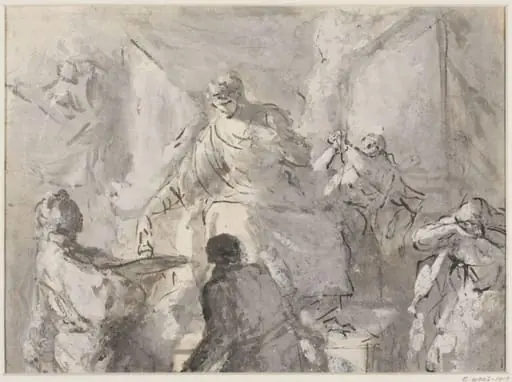 A seated figure receiving an offering
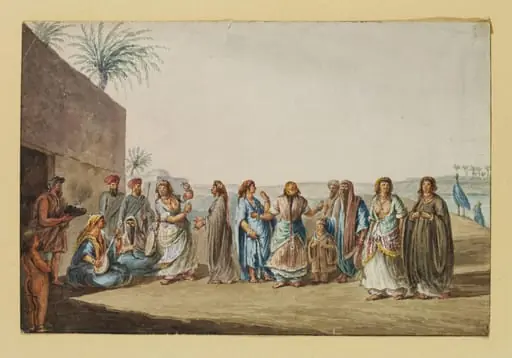 An Egyptian Ball, At Ned Sili
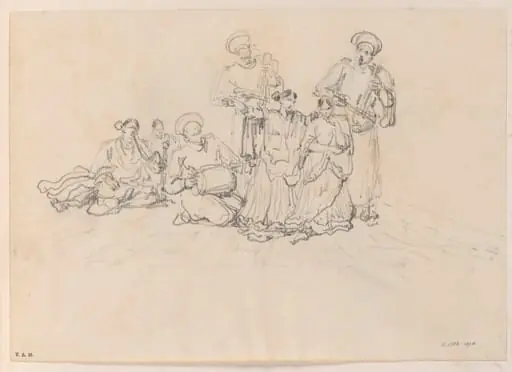 A group of Indian musicians and dancers
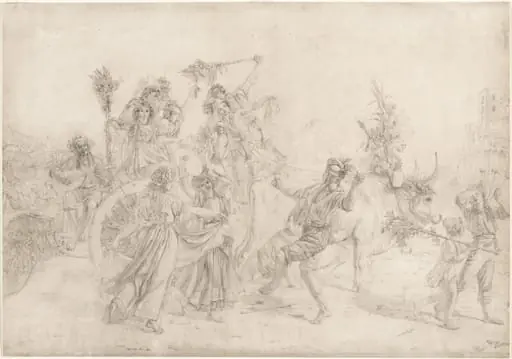 Pilgrims Returning from the Feast Day of the Madonna dell'Arco
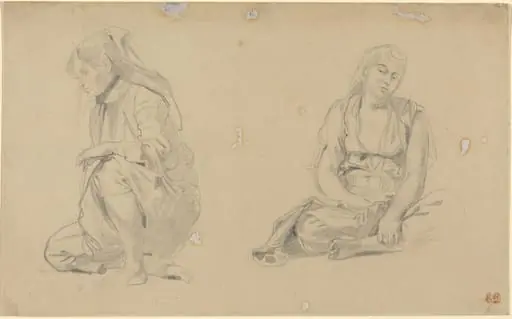 Women of Algiers
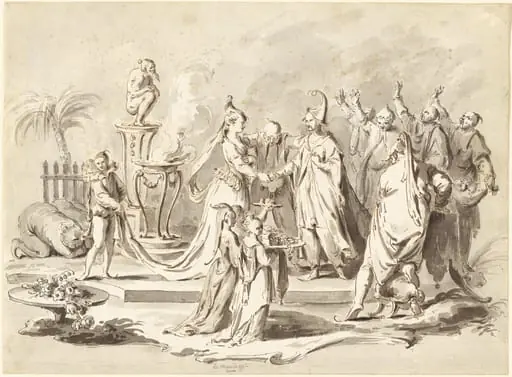 The Marriage of Europe and China
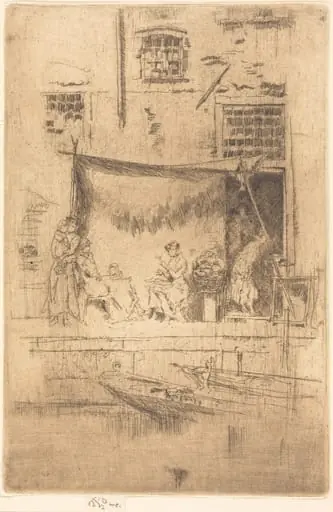 Fruit-Stall
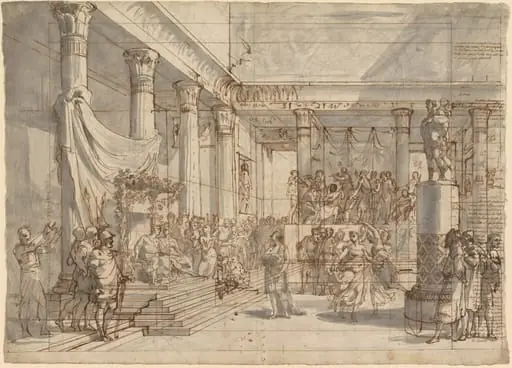 Timotheus Playing the Lyre before Alexander and Thaïs in the Hall of the Palace at Persepolis
 Rats
Rats Christ Disputing with the Doctors: a Sketch
![Figure Studies [recto], by Giovanni Battista Cipriani](https://artifactworldgallery.com/img/giovanni-battista-cipriani--figure-studies-recto--32b47b1a71716a78-w320.webp) Figure Studies [recto]
Figure Studies [recto]