Artwork
An Egyptian Ball, At Ned Sili
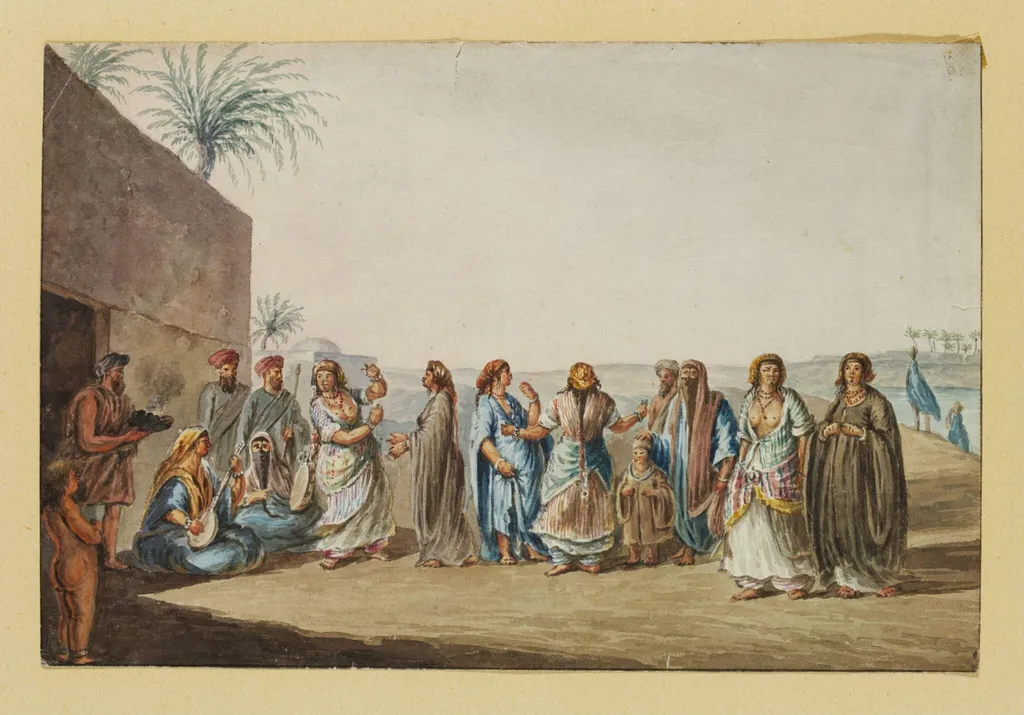
An Egyptian Ball, At Ned Sili is a watercolor work on paper by the Romanticist artist Luigi Mayer. It dates from 1792 and is held in the collection of the Victoria and Albert Museum.
About this work
The men wear turbans, robes, and turbans, while the women have flowing dresses with bright colors like blue and red.
This painting shows a group of people gathered outside a simple building, maybe a house or shop. The men wear turbans, robes, and turbans, while the women have flowing dresses with bright colors like blue and red. One woman holds a child, another plays a small drum, and a few men stand with hands in their sleeves. Palm trees and a distant desert horizon frame the scene.
The artist painted this in 1792, showing a moment of everyday life in Egypt. The bright colors and lively poses make it feel full of energy.
Look up Romanticism to see how this painting fits into that art movement.
Overview
Luigi Mayer's watercolour *An Egyptian Ball, At Ned Sili* captures a vibrant scene of everyday life in 18th-century Egypt, depicting a gathering of locals outside a simple building, replete with dynamic figures, colorful attire, and a desert backdrop.
Subject & Meaning
The artwork focuses on a communal moment, possibly a dance performance, in the Nile village of Ned Sili. Figures are engaged in various activities: a woman tends to a child, another plays a drum, while men observe with hands tucked in their sleeves, conveying a sense of lively communal interaction.
Technique & Style
Executed in watercolour in 1792, the piece is characterized by bright, expressive colors (notably blues and reds in the women's dresses) and energetic poses, aligning with the expressive and emotive qualities of the Romantic movement.
History & Provenance
Originally possibly a preparatory study for an 1802 aquatint, the watercolour was owned by W.T. Spencer before its acquisition in 1967. Comparable versions exist in prints and reproductions held by institutions like the Fine Art Society and Eyre & Hobhouse.
Context
Created during a period of European fascination with Orientalist themes, *An Egyptian Ball* reflects Mayer's on-site observations, offering a window into Egyptian daily life of the time, though its interpretation may also be influenced by contemporary European artistic and cultural biases.
Legacy
While not explicitly revolutionary, the piece contributes to the broader legacy of Orientalist art and the development of watercolour techniques in the late 18th century, with its energetic depiction of everyday life making it a notable example within Mayer's oeuvre.
Artist & collection

Artist
Luigi Mayer (1755–1803) was an Italian-German artist and one of the earliest and most important late 18th-century European painters of the Ottoman Empire.

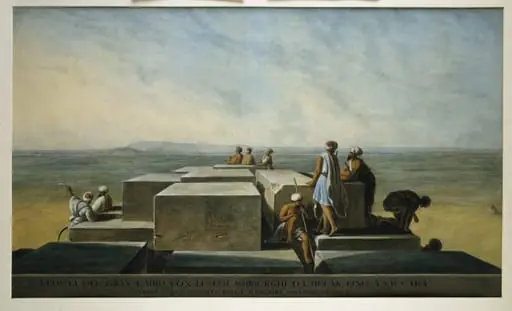 View of Grand Cairo from the Summit of the Great Pyramid of Giza
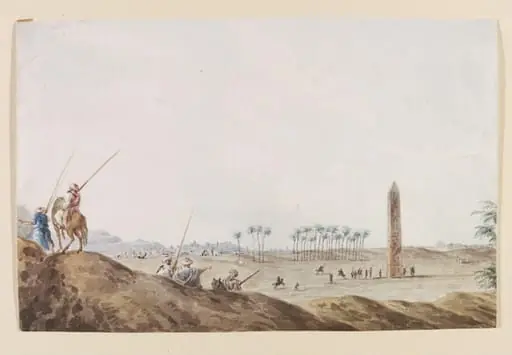 An Ancient Obelisk At Matarea, Formerly Heliopolis
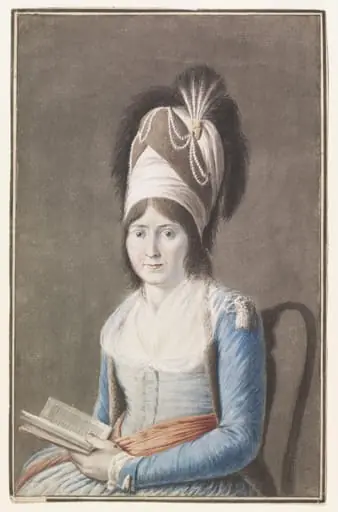 Portrait of Clara Mayer
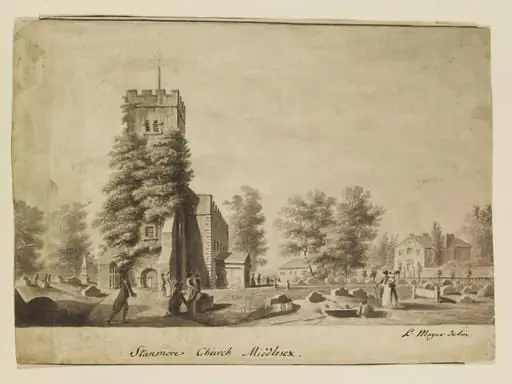 Stanmore Church Middlesex
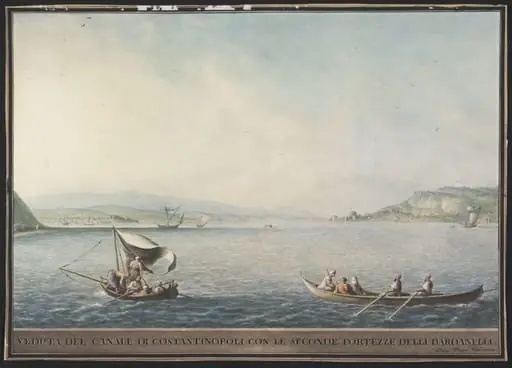 View of the Straits with the Second Fortress of the Dardanelles
![Dance of Peasants [possibly in Belgrade near Constantinople], by Luigi Mayer](https://artifactworldgallery.com/img/luigi-mayer--dance-of-peasants-possibly-in-belgrade-near-constantinople--e0530a0b87d5c4c1-w320.webp) Dance of Peasants [possibly in Belgrade near Constantinople]
Dance of Peasants [possibly in Belgrade near Constantinople]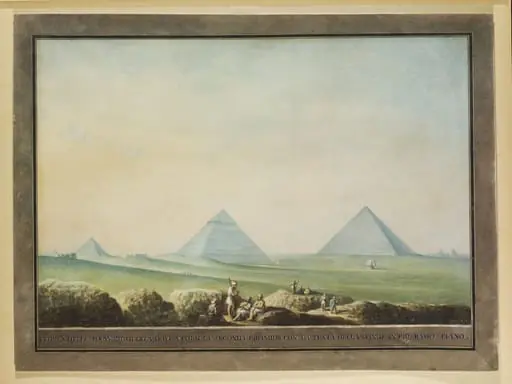 The Pyramids of Giza
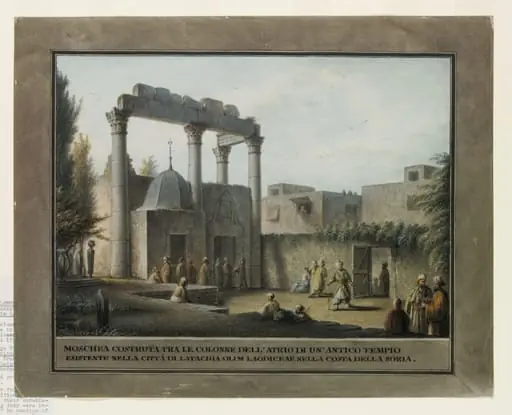 Mosque built between the columns of an ancient temple in Latakia on the coast of Syria, about 1800
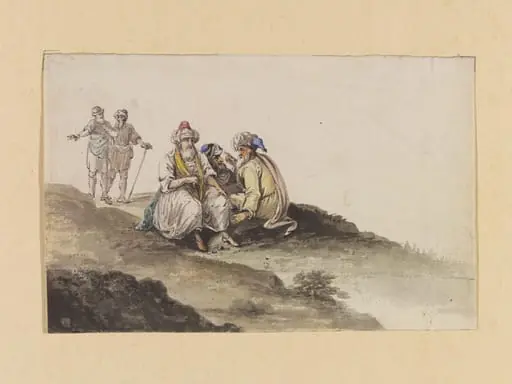 A Group of Turks
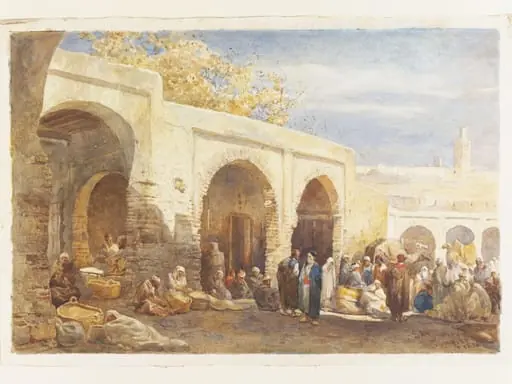 The Corn Market, Tangier
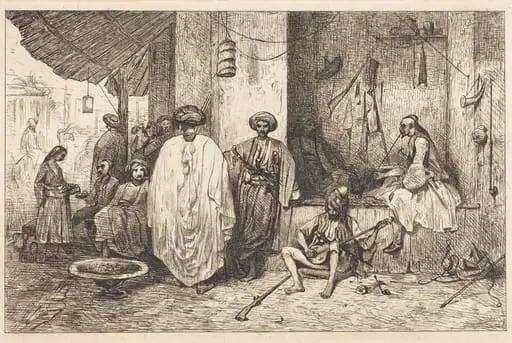 Le Corps de Garde
![Advanced guard & Baggage of the Royal artillery landi[ng] a[t] Alexandria en route for India, by T. B. S.](https://artifactworldgallery.com/img/t-b-s--advanced-guard-baggage-of-the-royal-artillery-landi-ng-a-t-a--605f6f4d9d8dfe93-w320.webp) Advanced guard & Baggage of the Royal artillery landi[ng] a[t] Alexandria en route for India
Advanced guard & Baggage of the Royal artillery landi[ng] a[t] Alexandria en route for India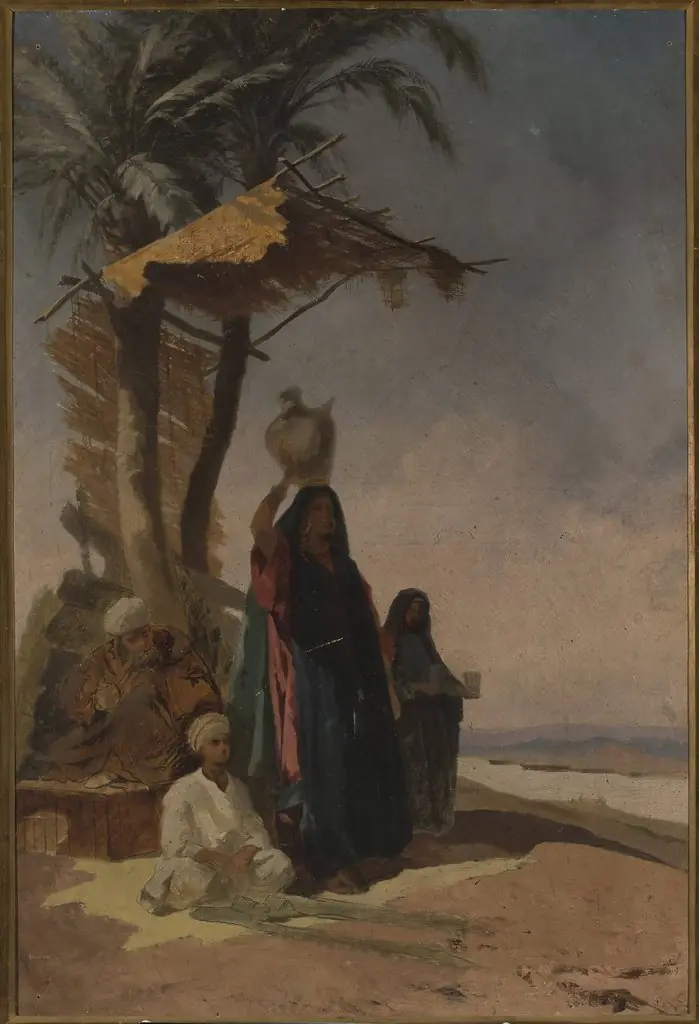 Eastern genre scene under a palm tree
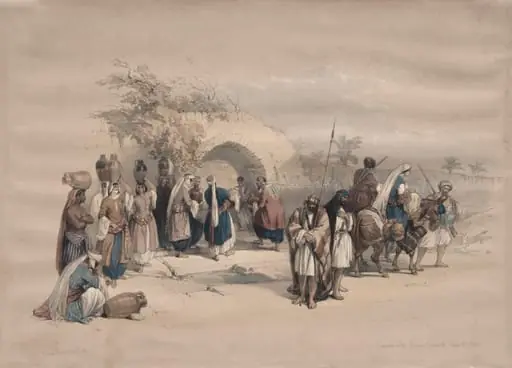 Fountain of the Virgin, Nazareth
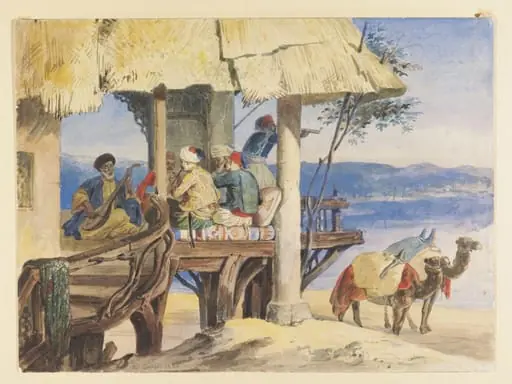 Turkish Musicians in a coffee-house overlooking the Bosphorus
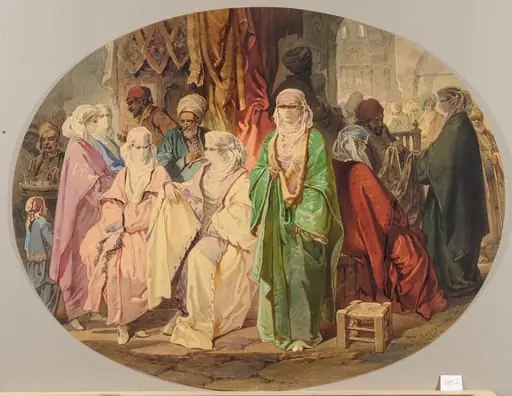 Bazar
Bazar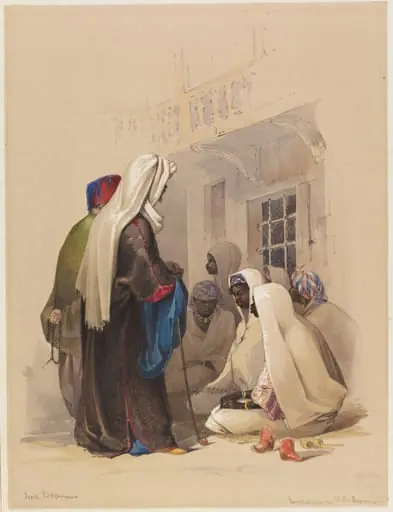 Yesir Bazar
 Halt at an Oasis
 Tobias and his wife say goodbye to his in-laws in order to return to his father
 à Minieh, Egypte