Artwork
Interior
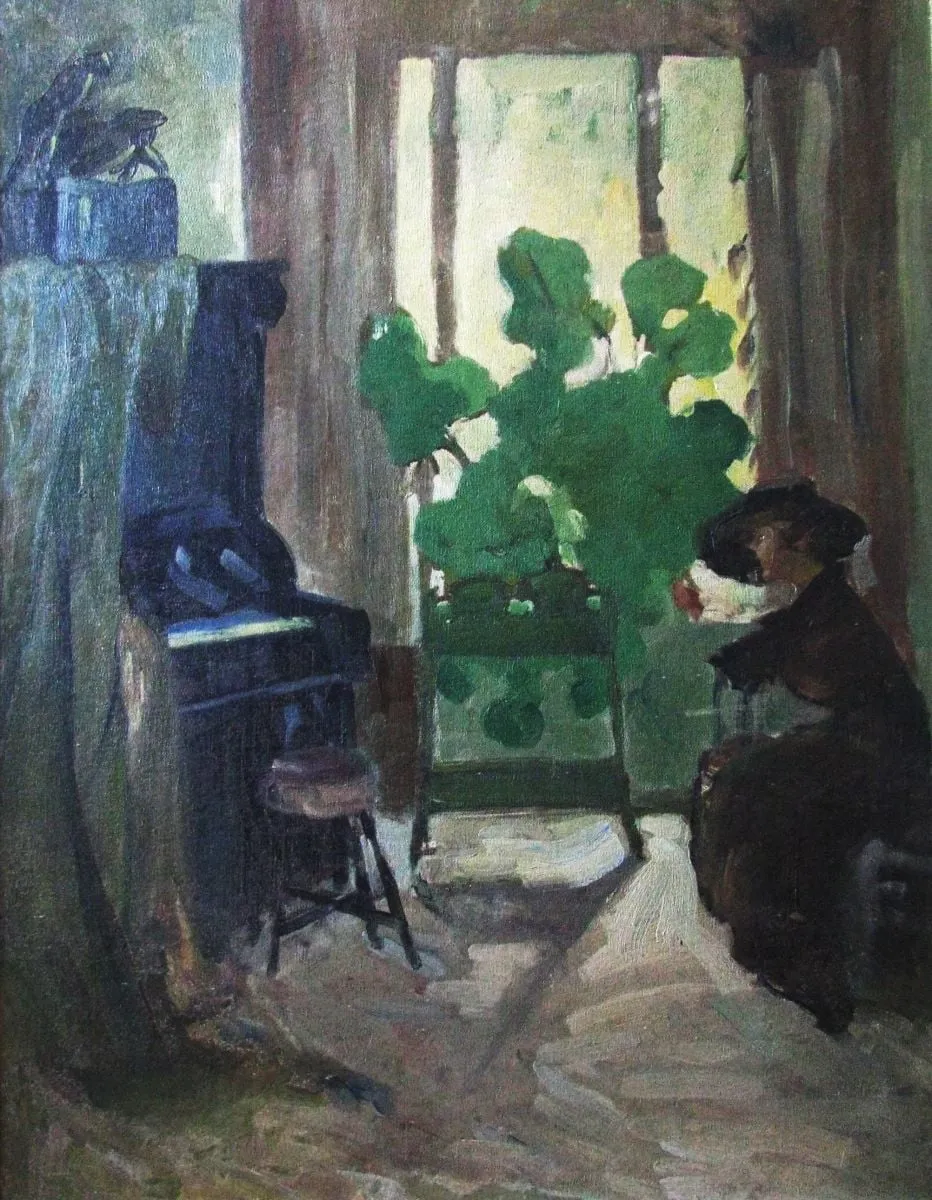
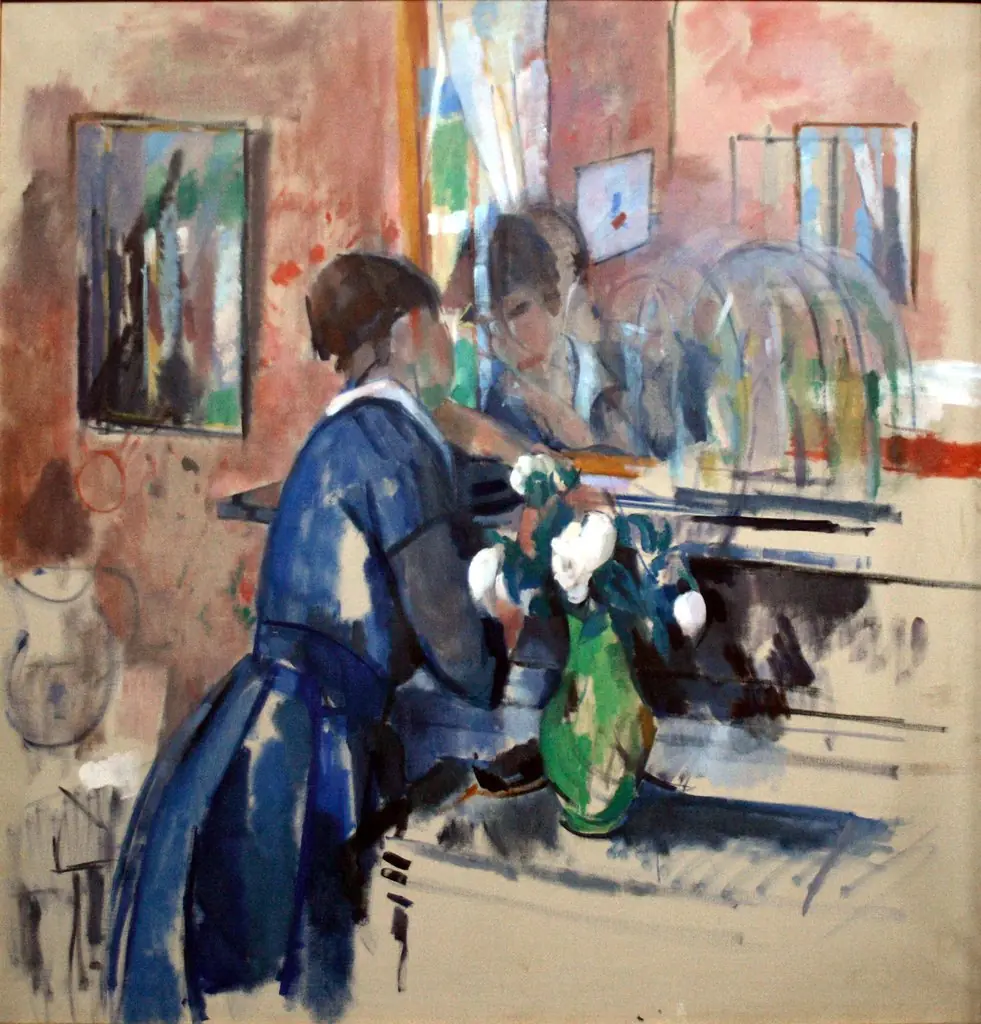
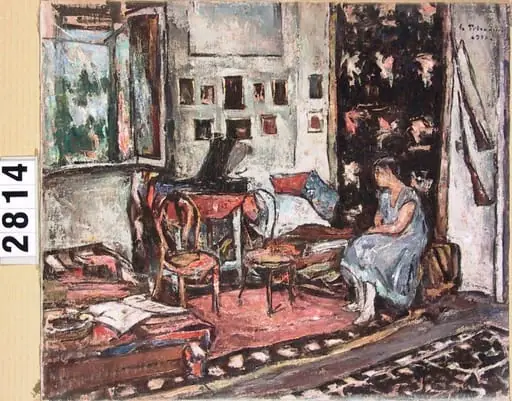
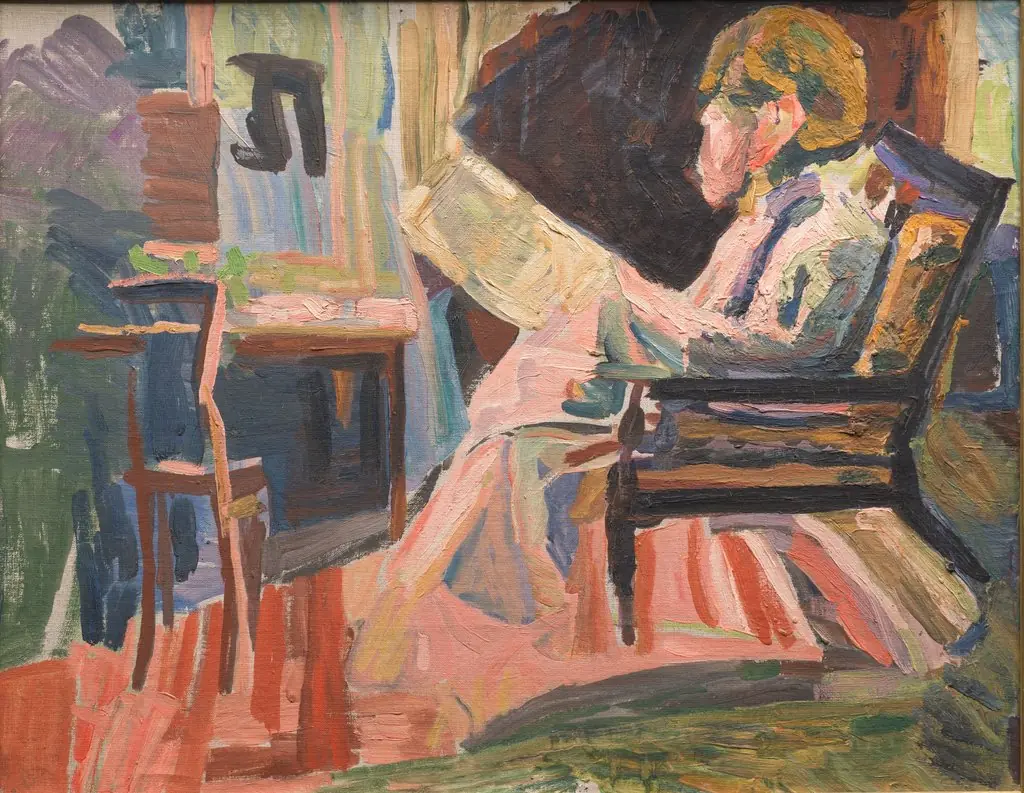
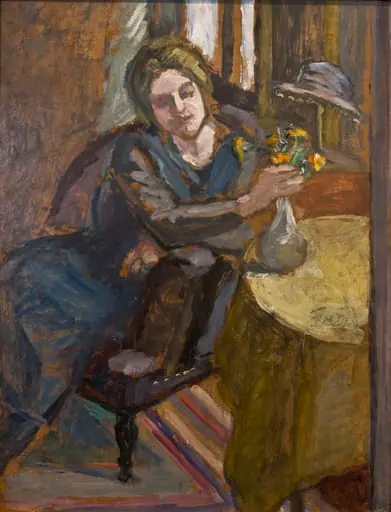
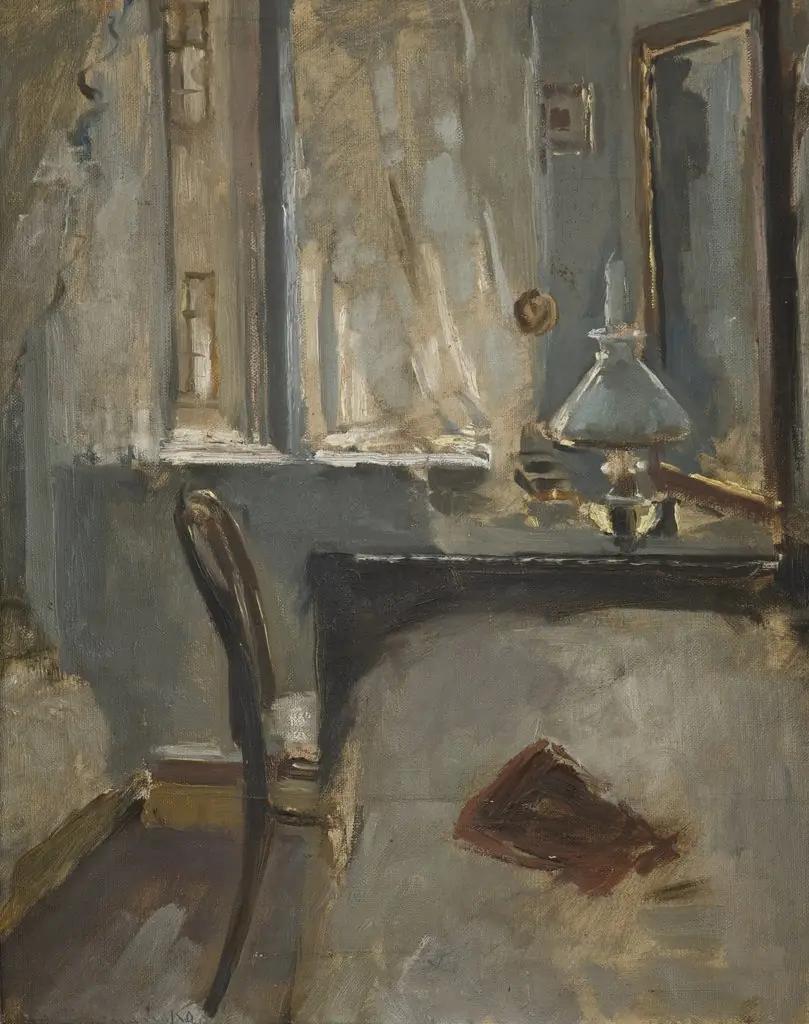
Interior is a print by Dimitrie Hârlescu. It is held in the collection of the Ion Irimescu Art Museum.
About this work
Overview
A potted plant near the window introduces organic life into the sparse environment, reinforcing the sense of solitude and calm that defines the composition.
This interior scene captures a quiet moment in a modestly furnished room, illuminated by soft daylight streaming through a large window. A woman, dressed in dark attire, sits with her back turned, her presence adding stillness rather than narrative. A potted plant near the window introduces organic life into the sparse environment, reinforcing the sense of solitude and calm that defines the composition.
Subject & Meaning
The figure’s turned back invites contemplation rather than engagement, suggesting introspection or withdrawal. The absence of facial expression or interaction with the space emphasizes solitude. The stillness of the room, devoid of clutter or activity, transforms the scene into a meditation on quietude, where the woman becomes an emblem of inner peace rather than a portrait of identity.
Technique & Style
Light is carefully modulated to define the room’s architecture and texture, with gentle gradations suggesting natural illumination. Brushwork is restrained, favoring smooth transitions over detail, enhancing the sense of serenity. The limited palette—dominated by muted tones with the plant as the sole contrast—supports an atmosphere of restraint and harmony.
History & Provenance
The work is attributed to Dimitrie Hârlescu, a Romanian artist active in the late 19th and early 20th centuries. While few of his interior scenes survive in public collections, this piece aligns with his known interest in domestic tranquility and subtle light effects. Its provenance remains undocumented beyond private holdings in Romania.
Context
Hârlescu’s work emerged during a period when Romanian artists were turning from grand historical themes toward intimate, everyday scenes. This painting reflects a broader regional shift toward quiet realism, influenced by French and Dutch interior traditions but adapted to local sensibilities of modesty and stillness.
Legacy
Though not widely exhibited, this painting contributes to an understudied strand of Romanian art that prioritizes atmosphere over drama. It remains a quiet reference point for later artists exploring domestic solitude, preserving a tone of restraint that distinguishes it from more theatrical contemporaries.
Artist & collection
Artist
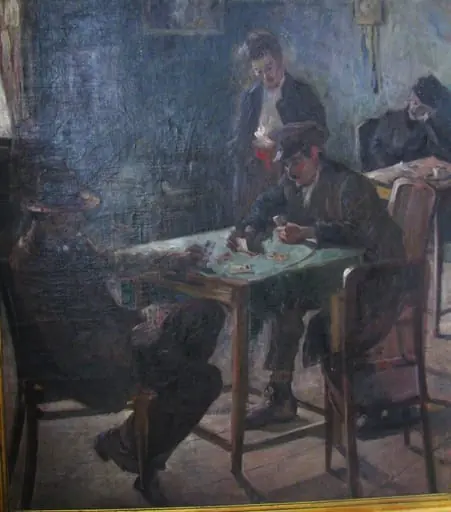
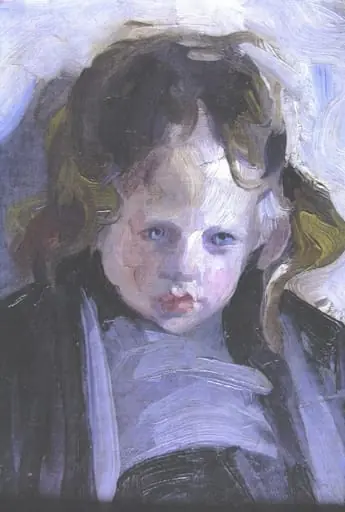
Romanian painter Dimitrie Hârlescu left small scenes of everyday life—card players in cafés, quiet moments with women, and simple portraits.