Artwork
Jucătorii de cărți (Colț de cafenea)
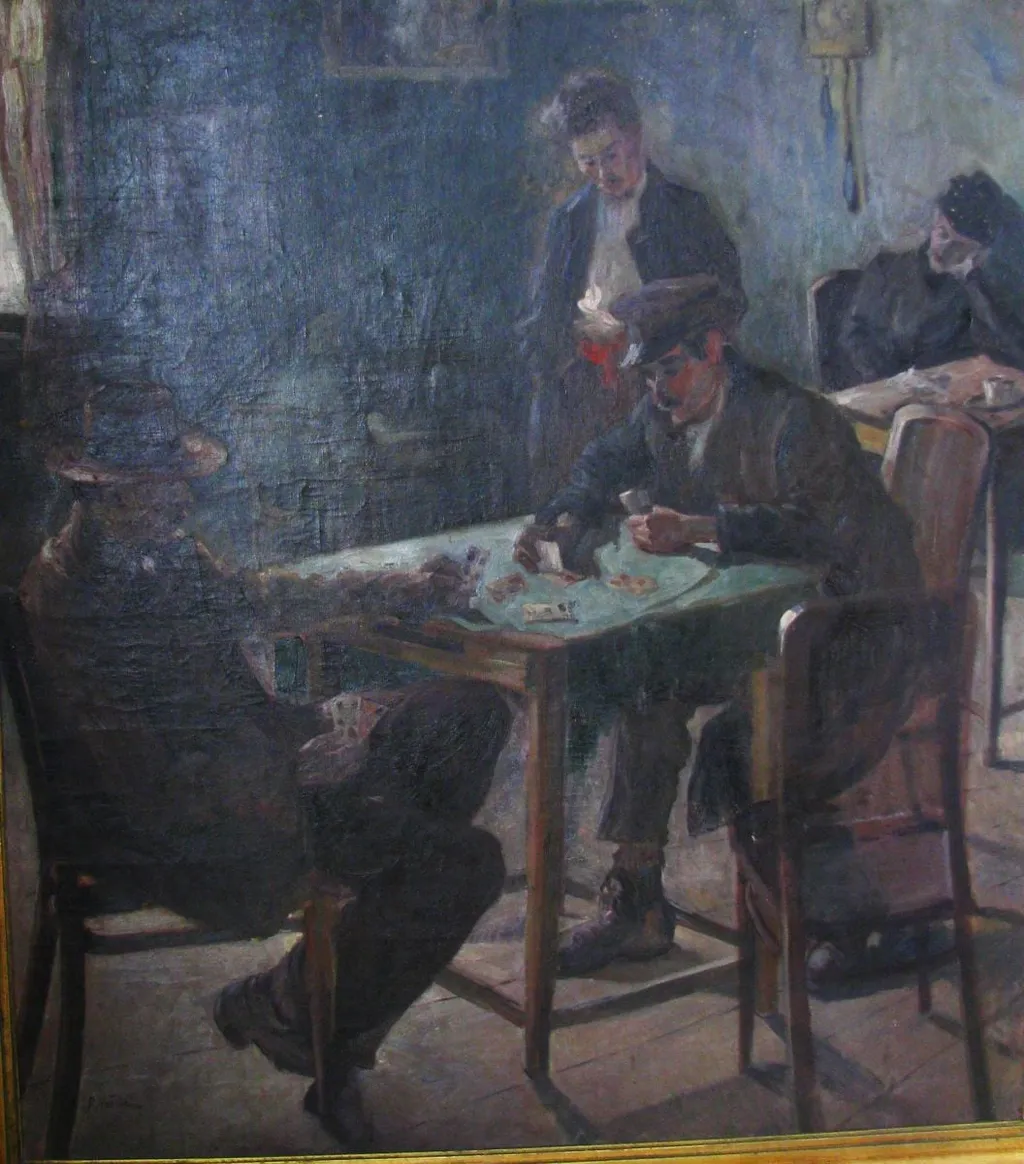
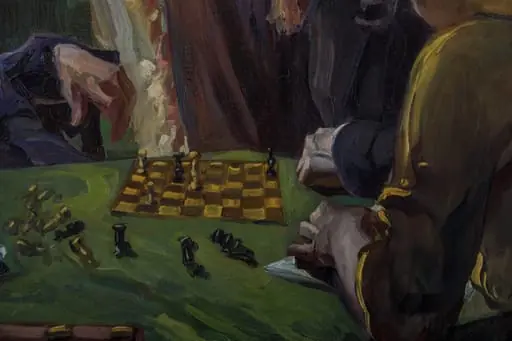
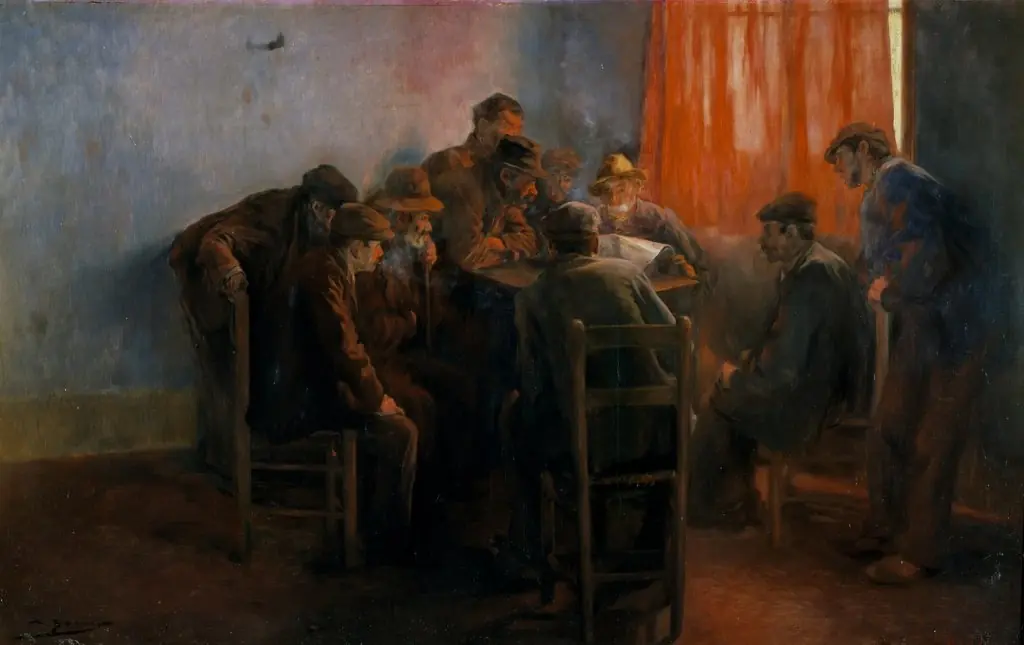
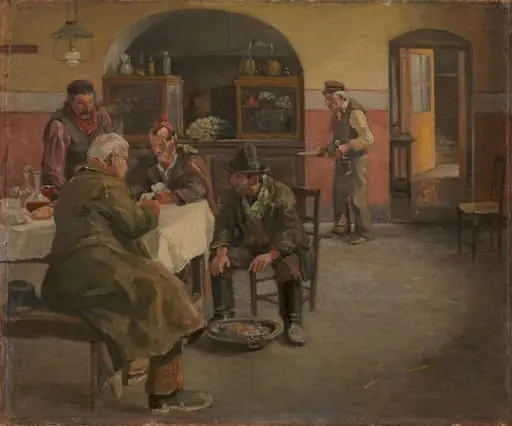
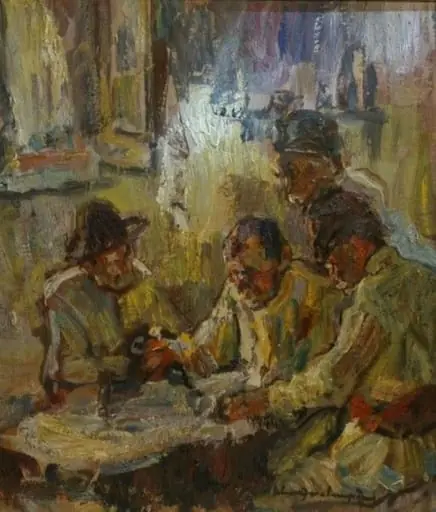
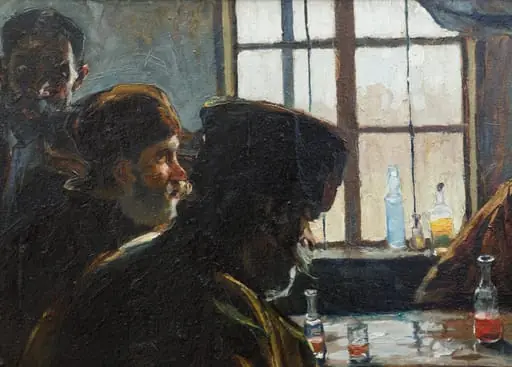
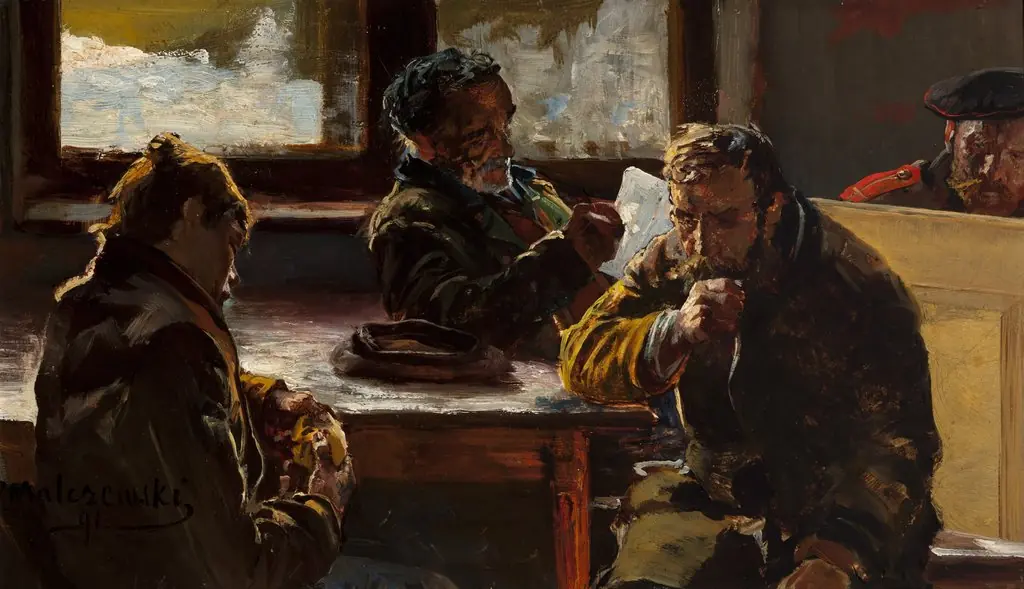
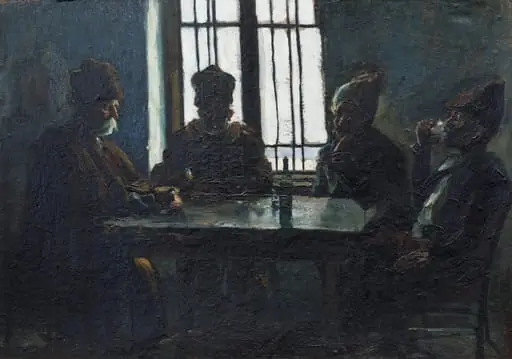
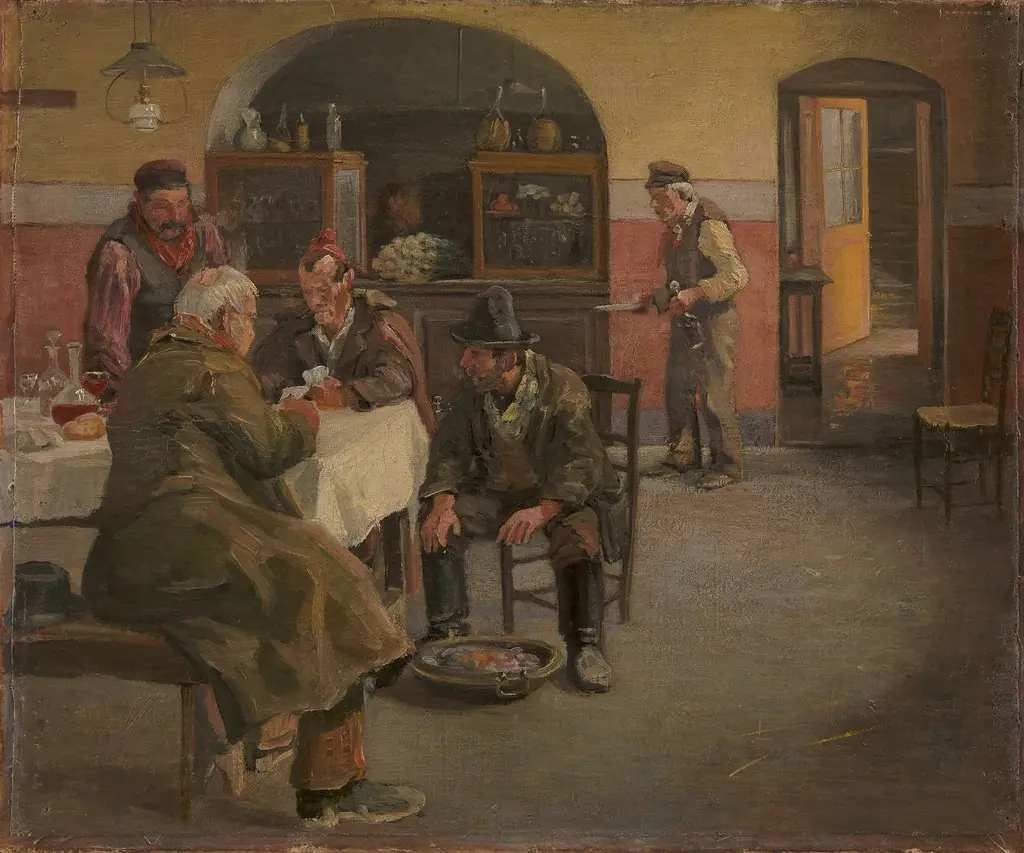
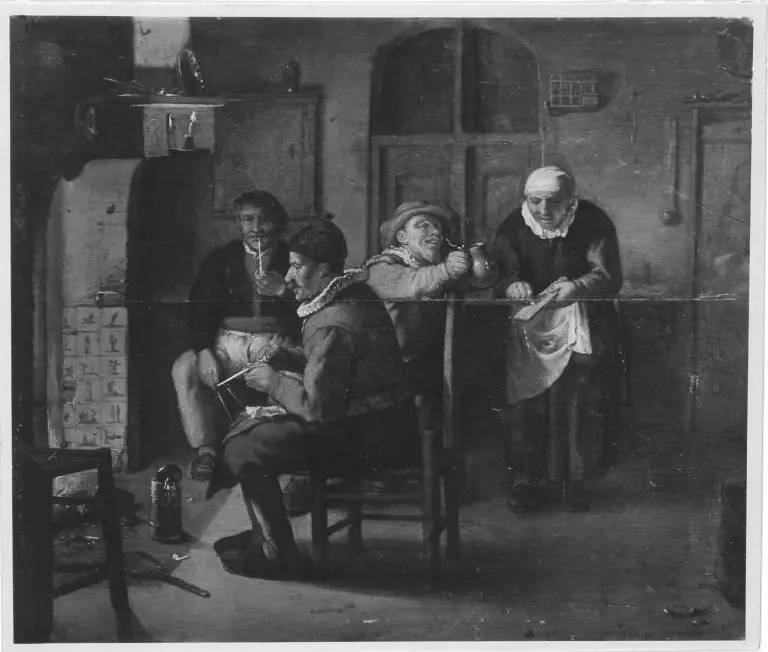
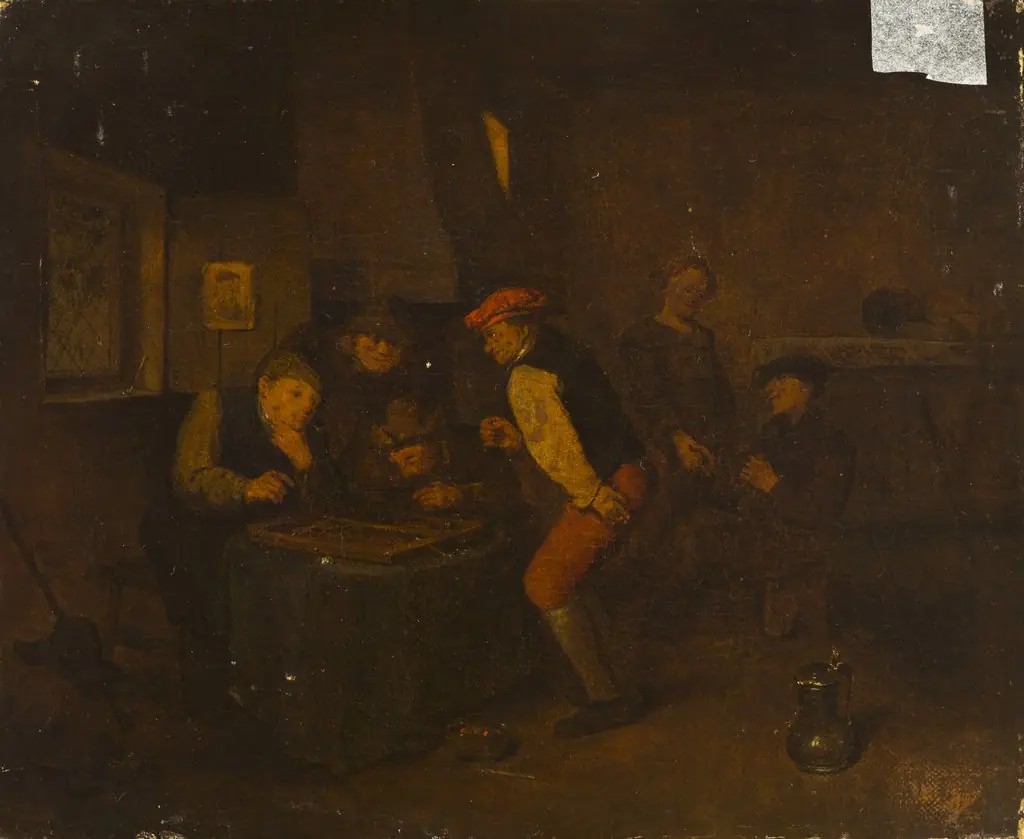
Jucătorii de cărți (Colț de cafenea) is an unspecified painting by Dimitrie Hârlescu. It is held in the collection of the Ion Irimescu Art Museum. A dim interior houses a group of men engaged in a card game, rendered with stark contrasts of light and shadow.
About this work
Overview
The only illumination enters from the left, carving out faces and hands while leaving the rest in near darkness.
A dim interior houses a group of men engaged in a card game, rendered with stark contrasts of light and shadow. The scene is intimate and confined, with no visible exit or window, emphasizing isolation. The figures are dressed in dark clothing, their postures tense, suggesting concentration or conflict. The only illumination enters from the left, carving out faces and hands while leaving the rest in near darkness.
Subject & Meaning
The painting captures a moment of quiet intensity among working-class men in a humble setting. Their focus on the cards implies stakes beyond mere recreation—perhaps financial strain or personal rivalry. The cluttered table, with cigarettes and scattered objects, hints at habitual, unglamorous rituals. No smiles or gestures of camaraderie appear; the mood is one of solitary engagement within a shared space.
Technique & Style
Chiaroscuro dominates the composition, with sharp transitions between light and shadow defining form and directing focus. The central figure, leaning forward, is illuminated most intensely, drawing the eye to his expression and hands. Brushwork is restrained but precise, avoiding ornamentation. The palette is muted—browns, blacks, and muted grays—reinforcing the somber tone and limiting visual distraction.
History & Provenance
The work originates from early 20th-century Romania, likely painted in the 1910s or 1920s. It reflects the artist’s engagement with urban marginal life, a recurring theme in Romanian realism of the period. The painting remained in private collections until entering a national museum’s holdings in the mid-20th century, where it was cataloged under its Romanian title, Jucătorii de cărți (Colț de cafenea).
Context
The scene aligns with broader European traditions of genre painting that depicted lower-class leisure, such as Dutch 17th-century card players or French realist works. In Romania, such imagery carried social weight during a time of rapid urbanization and class tension. The café corner, a common gathering place for laborers, became a site for quiet dramas, rendered without sentimentality or moral judgment.
Legacy
The painting is recognized as a key example of Romanian interwar realism, valued for its unembellished portrayal of everyday life. It influenced later artists seeking to document social conditions without romanticization. Though not widely exhibited abroad, it remains a touchstone in national art history for its psychological depth and restrained technique.
Artist & collection
Artist
Romanian painter Dimitrie Hârlescu left small scenes of everyday life—card players in cafés, quiet moments with women, and simple portraits.