Artwork
În cârciumă
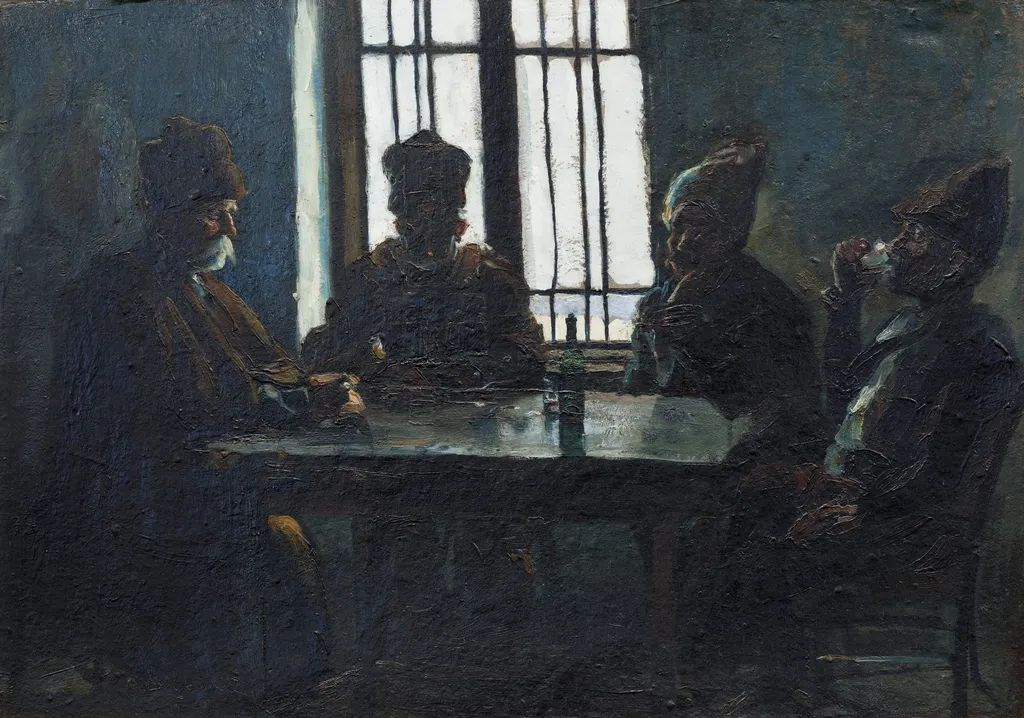
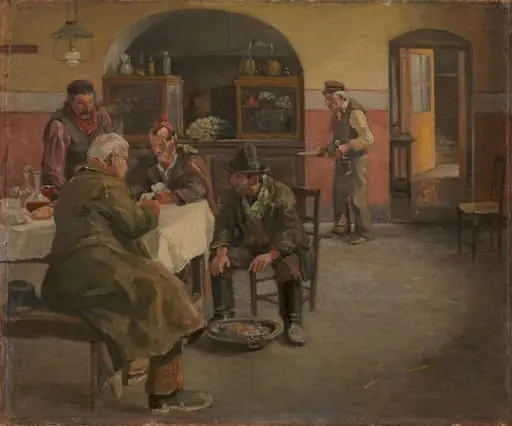
În cârciumă is a print by Rudolf Schweitzer-Cumpăna. It dates from 1850 and is held in the collection of the National Museum of Art of Romania.
About this work
Overview
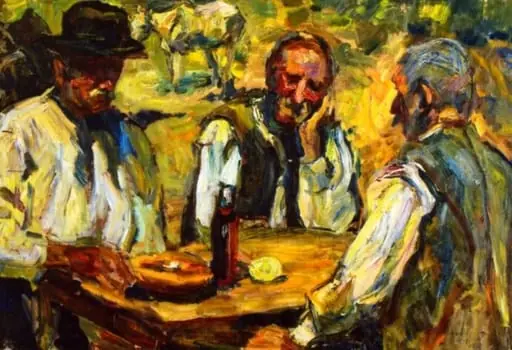
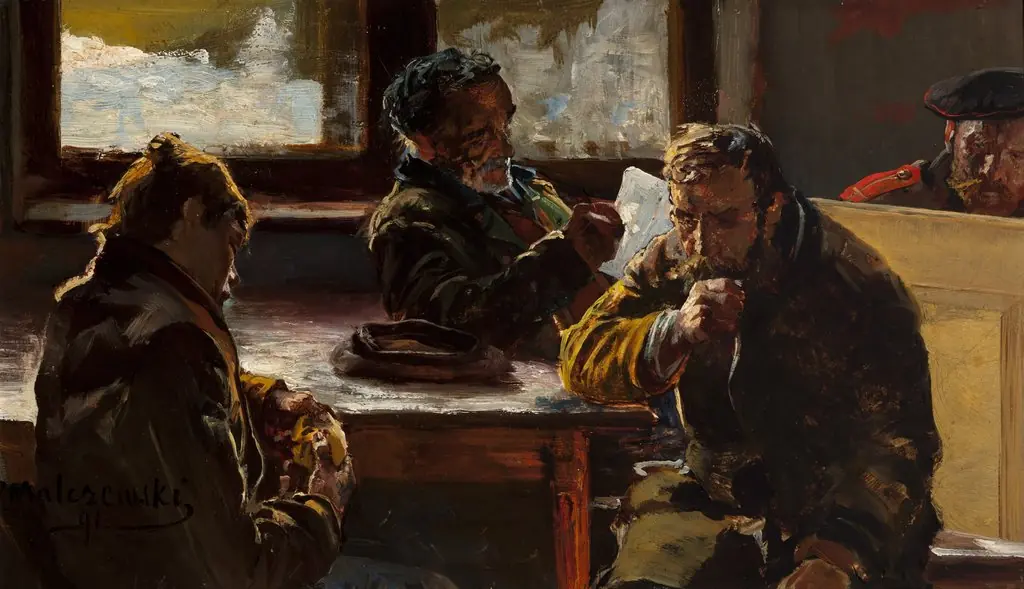
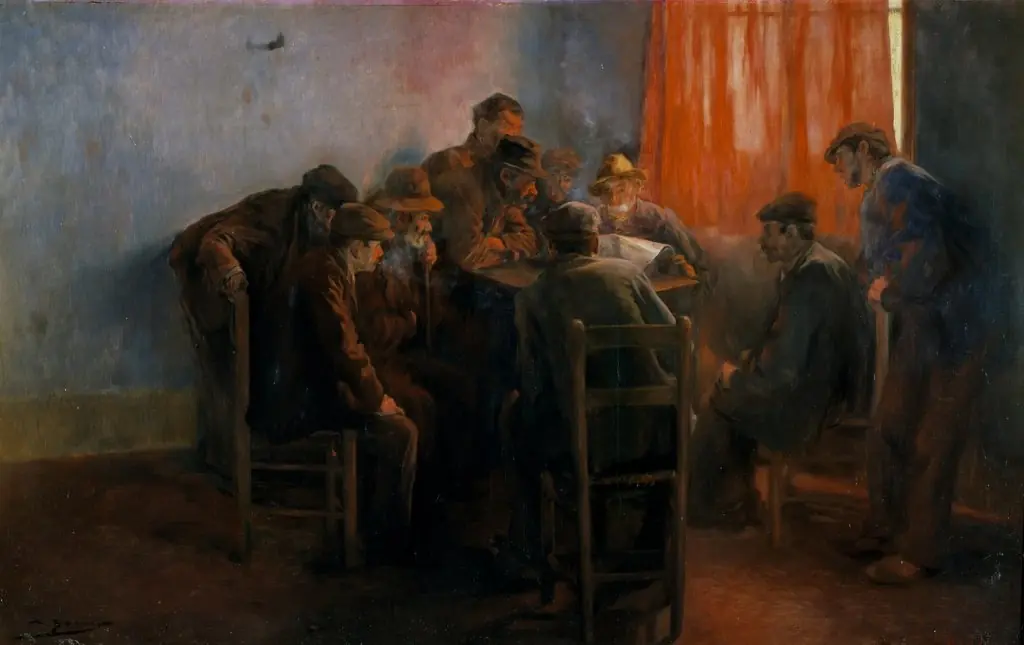
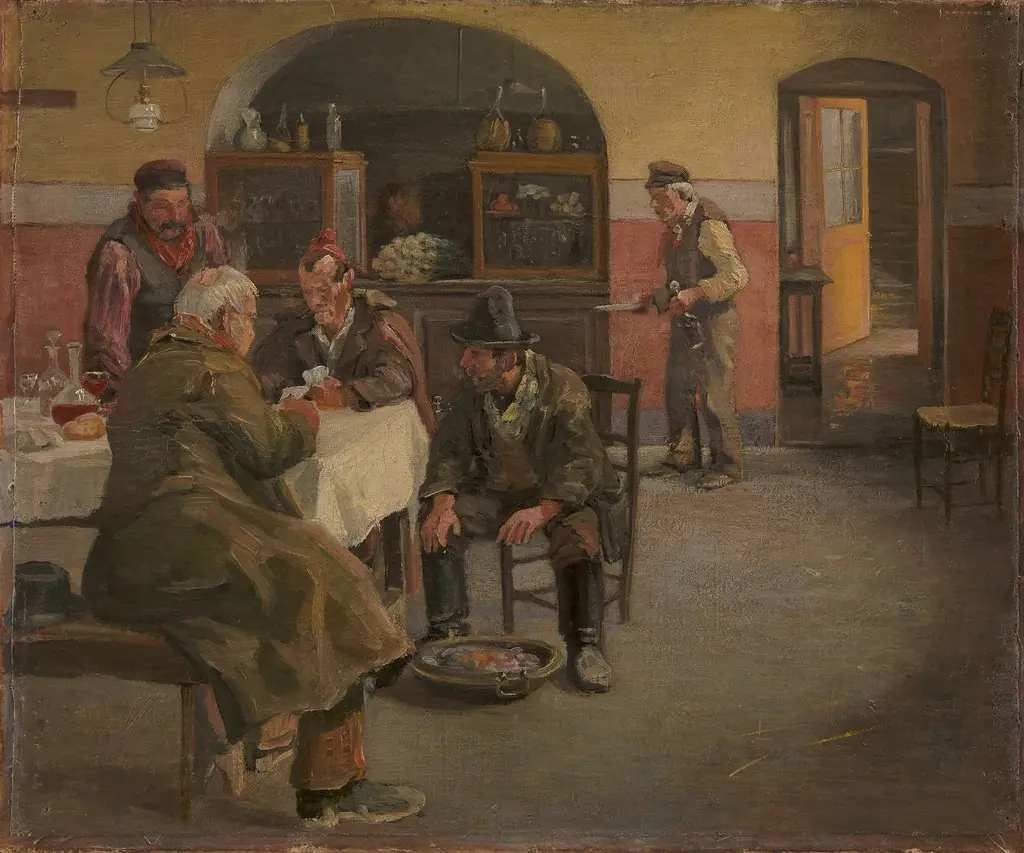
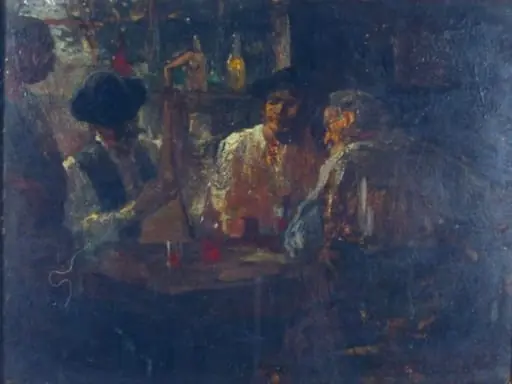
Painted around 1850 by Rudolf Schweitzer-Cumpăna, În cârciumă depicts a quiet interior scene of men gathered in a tavern.
Painted around 1850 by Rudolf Schweitzer-Cumpăna, În cârciumă depicts a quiet interior scene of men gathered in a tavern. The composition centers on a wooden table laden with drink vessels, surrounded by figures in dark attire. A barred window behind them admits muted light, reinforcing the enclosed, intimate setting. The work captures a moment of shared stillness rather than revelry, with an emphasis on atmosphere over narrative.
Subject & Meaning
The figures, all male and dressed uniformly in somber garments, suggest a working-class or rural milieu. Their postures and gestures imply quiet conversation rather than celebration, evoking a sense of routine companionship. The barred window and dim lighting hint at confinement or restraint, subtly contrasting the warmth of their interaction. The scene reflects social bonds formed in modest, everyday spaces, without overt symbolism or moral judgment.
Technique & Style
Schweitzer-Cumpăna employs chiaroscuro to model forms and define spatial depth, with light filtering from the barred window to illuminate faces and glassware. Dark, muted tones dominate the palette, enhancing the room’s intimacy. Brushwork is restrained, favoring solidity over detail, particularly in the clothing and furniture. The composition is tightly framed, directing attention to the group’s quiet communion and the textures of wood, glass, and fabric.
History & Provenance
The painting’s early history is not well documented, but it is associated with the artist’s Romanian roots and his engagement with local scenes during the mid-19th century. Likely created during a period of growing interest in genre painting across Eastern Europe, it remained in private hands until entering institutional collections. Its survival reflects its quiet resonance with regional artistic traditions rather than widespread acclaim.
Context
In mid-1800s Romania, artists increasingly turned to everyday life as subject matter, moving away from religious or aristocratic themes. În cârciumă aligns with this shift, echoing similar tavern scenes in German and French realism. The barred window may reference social or political conditions of the time, though the painting avoids overt commentary. It reflects a broader European trend of finding dignity in ordinary, unidealized moments.
Legacy
Though not widely exhibited or reproduced, În cârciumă endures as a modest but thoughtful example of Romanian genre painting. It contributes to the understanding of how local artists interpreted social life with restraint and observation. Its influence is indirect, shaping later regional depictions of communal spaces, but it remains a quiet testament to the artist’s attention to human presence in humble settings.
Artist & collection
Artist
Rudolf Schweitzer-Cumpăna was a Romanian painter. Born in Pitești into an ethnic German family, he finished high school in his native town before attending the Royal Academy of Arts at Berlin from 1904 to 1909, studying…