Artwork
Dove Valley, Tissington
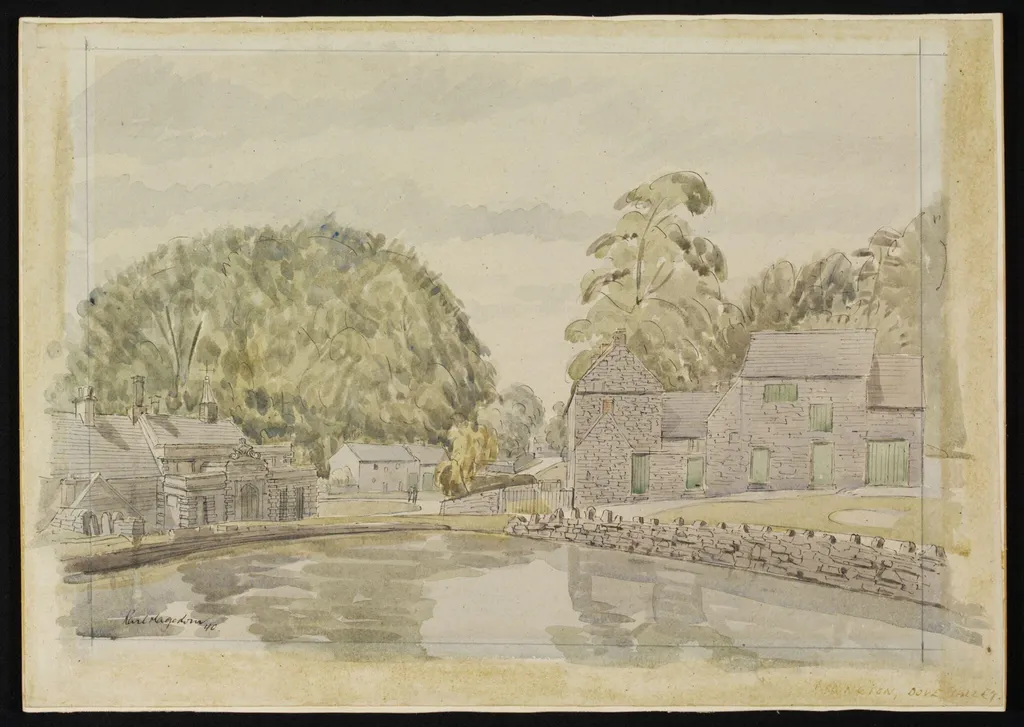
Dove Valley, Tissington is a watercolor work on paper by Hagedorn. It dates from 1940 and is held in the collection of the Victoria and Albert Museum.
About this work
Overview
Dove Valley, Tissington is a 1940 watercolour by Hagedorn, depicting a serene village scene in Derbyshire. The painting is part of the Recording Britain collection.
Subject & Meaning
The watercolour shows Tissington's village pond and surrounding houses, capturing a tranquil atmosphere. The scene includes a stone bridge, a church with a tall steeple, and a thatched-roof house under a large tree.
Technique & Style
Hagedorn's loose, sketchy lines convey movement in the water and trees, giving the painting a fresh, spontaneous feel. The colour palette is subdued, featuring grays, greens, and browns, with a touch of bright green on the house shutters.
History & Provenance
The watercolour was created as part of the Recording Britain project, commissioned by the Committee for the Employment of Artists in Wartime during World War II to document significant British landscapes.
Context
The Recording Britain project, directed by Sir Kenneth Clark, aimed to preserve a visual record of the British landscape amid wartime destruction and social change.
Artist & collection
Artist
Karl Hagedorn (11 September 1889 – 1969), who signed himself Hagedorn, was a painter and illustrator. He was born in Berlin in 1889 but settled in Manchester, England, in 1905.

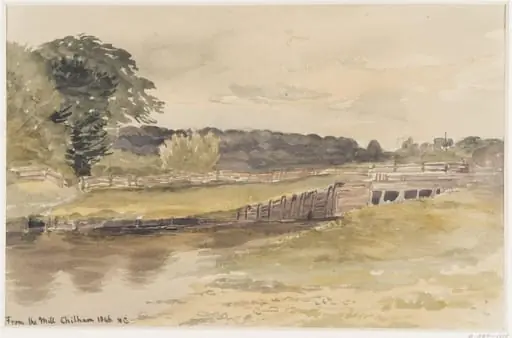 'From the Mill, Chilham'
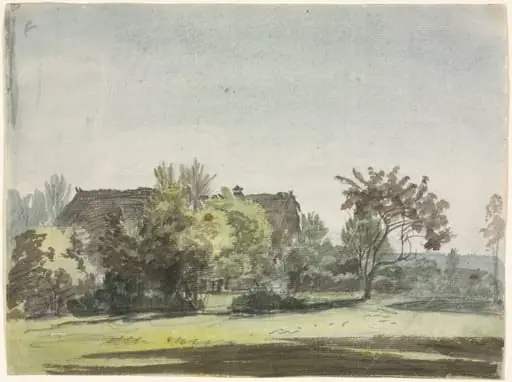 Farmhouse behind Trees
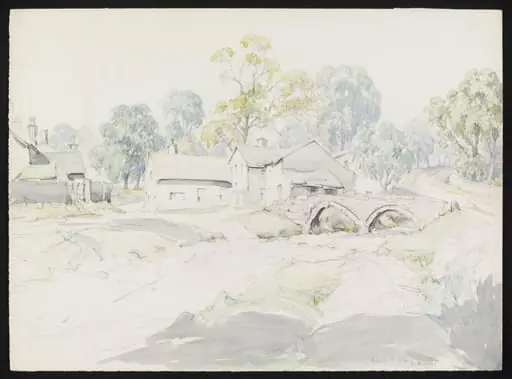 Wycoller Village
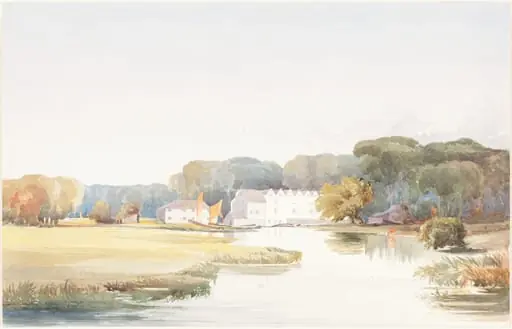 Horstead Mill on the River Bure, Norfolk
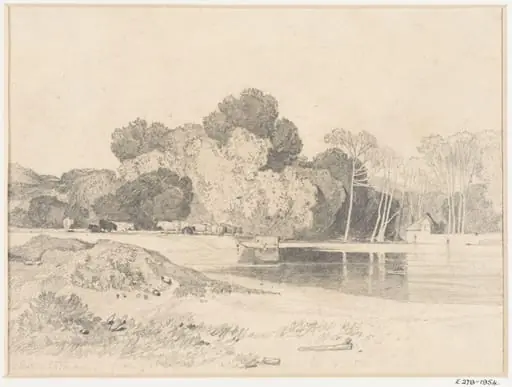 Cattle grazing beside a lake
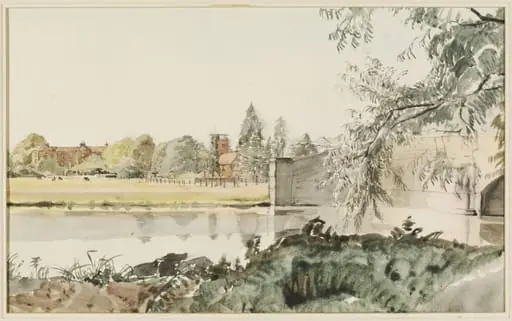 Cranford
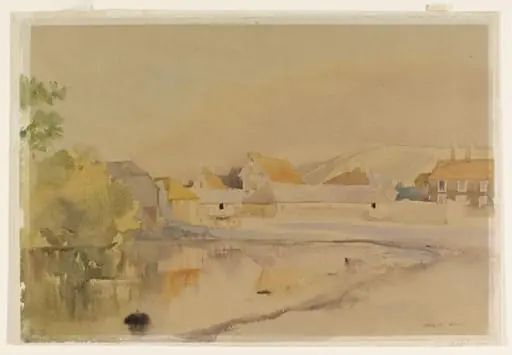 The Pond, Ditchling
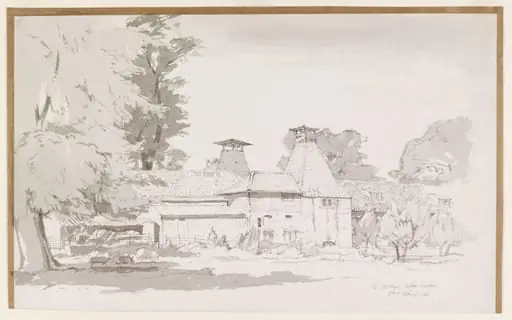 The Maltings, Saffron Walden
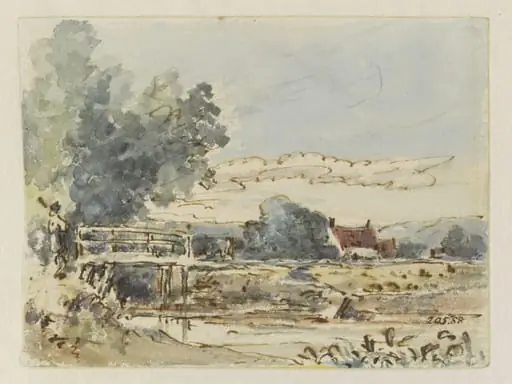 A bridge over a stream, with a cottage behind
 In Danny Park, near Hassocks, Sussex
 Malmesbury
 Columbarian, South Stoke