Artwork
Wycoller Village
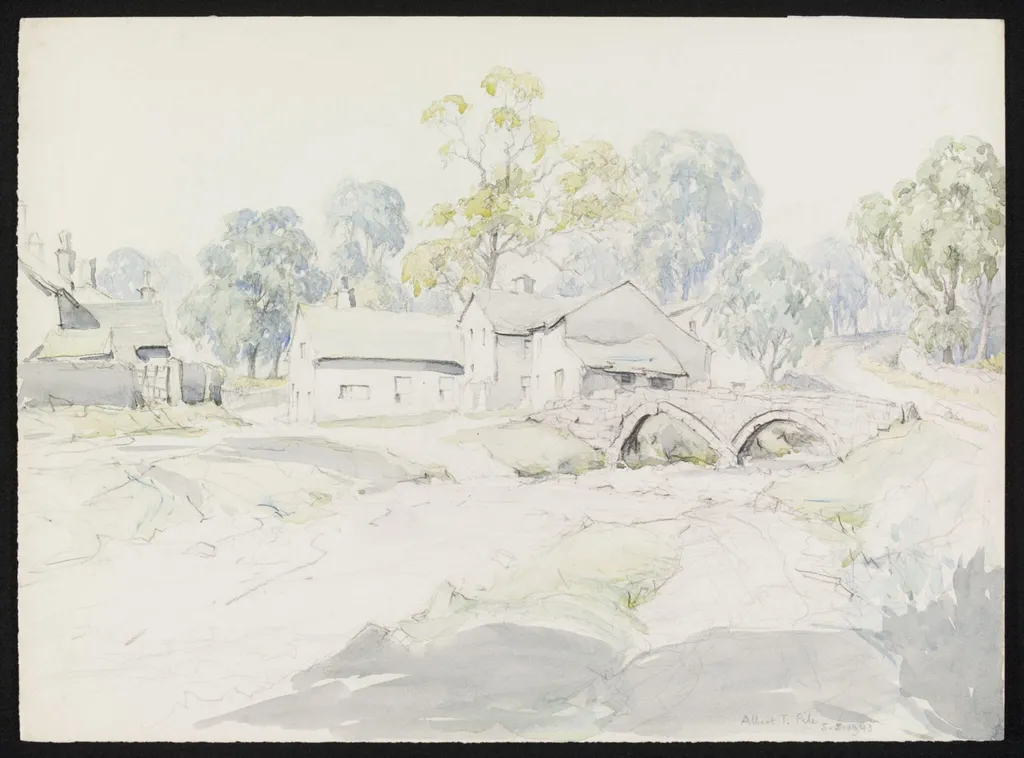
Wycoller Village is a watercolor work on paper by the Social Realist artist Pile. It dates from 5 and is held in the collection of the Victoria and Albert Museum.
About this work
The artist used quick, loose brushstrokes to capture the scene, leaving some areas almost empty.
This sketch shows a quiet village with simple houses and a church steeple in the distance. The buildings are small and plain, with a few trees scattered around. The ground is rough, with some rocks and a small stream running through it. The colors are mostly soft and muted, with light washes of blue and green.
The artist used quick, loose brushstrokes to capture the scene, leaving some areas almost empty. The date in the corner tells us this was painted in 1943, likely from memory or a quick visit.
Next, check out the Victoria and Albert Museum to see more works like this.
Overview
Wycoller Village is a watercolour painting depicting a serene village scene with a stone bridge and surrounding landscape.
Subject & Meaning
The painting shows Wycoller village, capturing its tranquil atmosphere with simple houses, a church steeple, and a natural setting. It represents a moment in time for a village considered significant to British identity.
Technique & Style
The artist employed loose brushstrokes and soft, muted colors to convey the scene, using light washes of blue and green. Some areas of the painting are left relatively empty, suggesting a quick or observational approach.
History & Provenance
This work was created in 1943 as part of the 'Recording Britain' collection, a project that documented landscapes and buildings at risk due to war or modernization.
Context
The 'Recording Britain' initiative, funded by the Pilgrim Trust and overseen by Sir Kenneth Clark, aimed to preserve a visual record of Britain's changing identity between 1940 and 1943.
Artist & collection

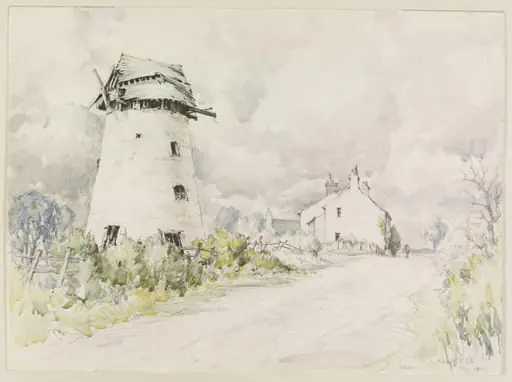 Windmill at Staining, near Blackpool
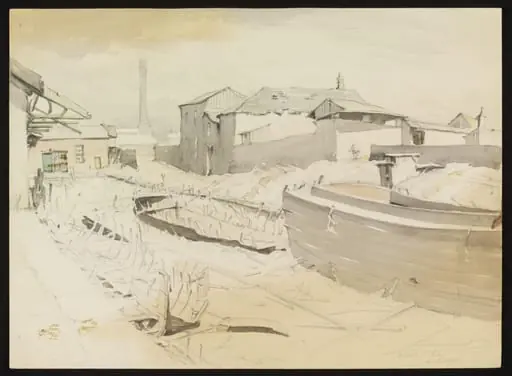 An old part of the Ship Canal, Quay Street, Manchester
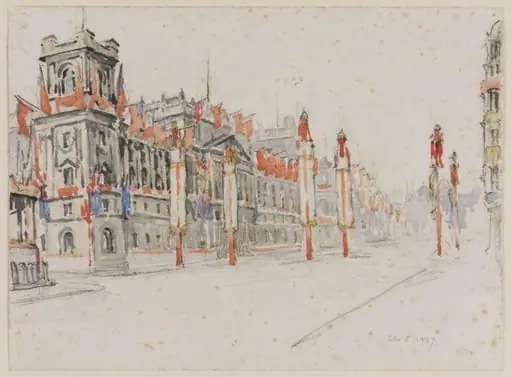 The Foriegn Office looking up Whitehall
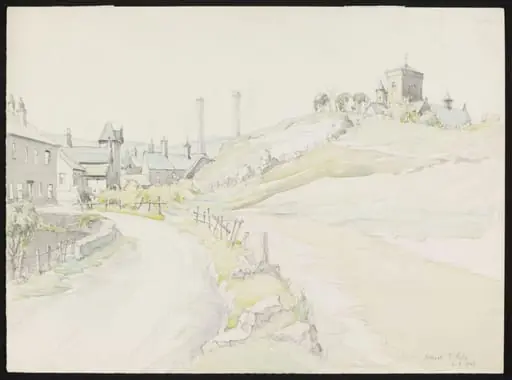 The church and village of Lumb
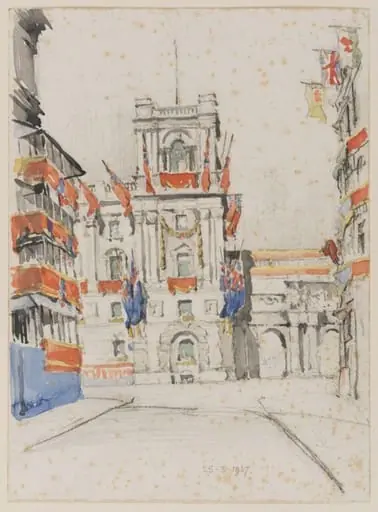 Foreign Office with stands
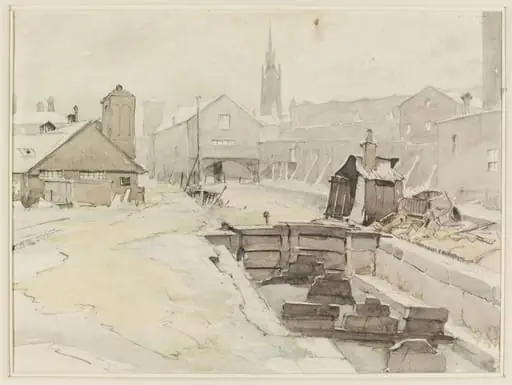 Manchester Ship Canal, Quay Street, Manchester
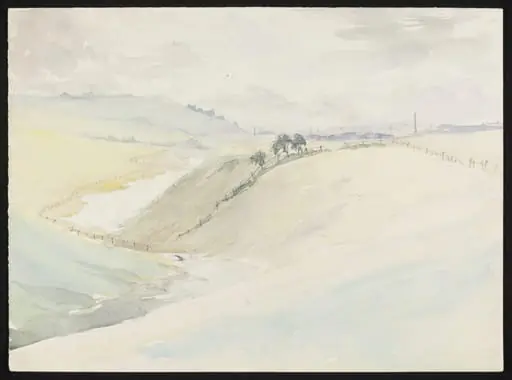 Looking towards Bury from the North of the city
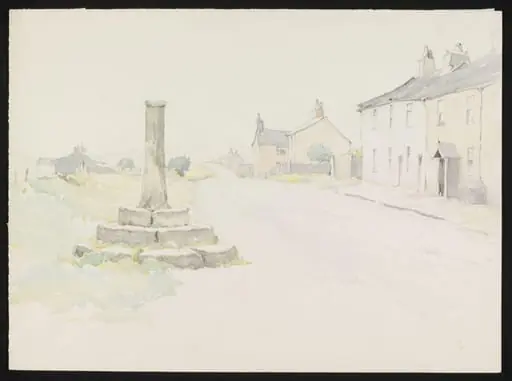 The Village Street and Roman Cross, Affetside
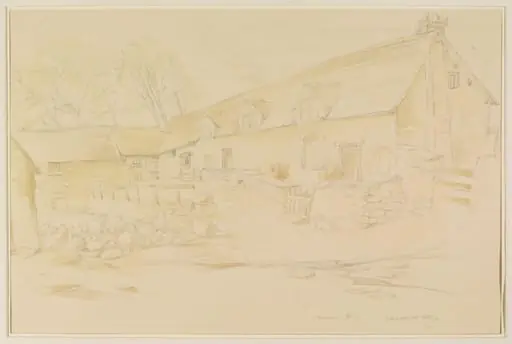 Berwyn Farm, Swch Cae Rhiw, Denbighshire
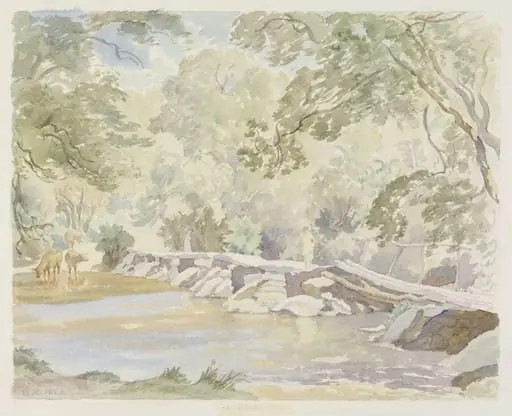 Tarr Steps, Exmoor
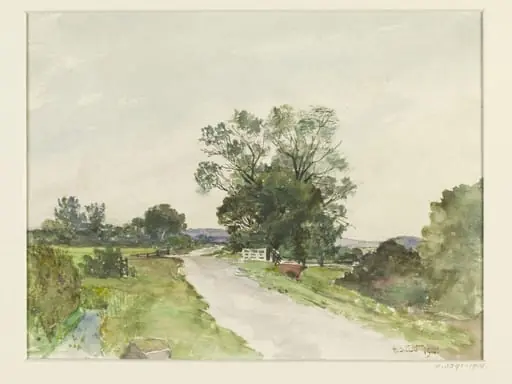 Landscape with road in flat country
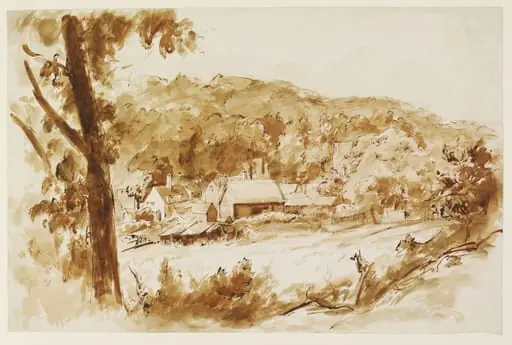 Turville Village
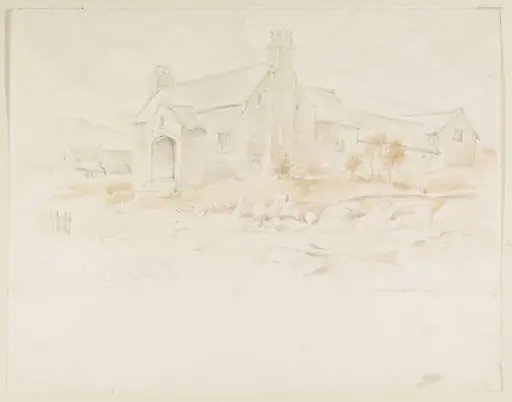 Farm above Selattyn, Denbighshire
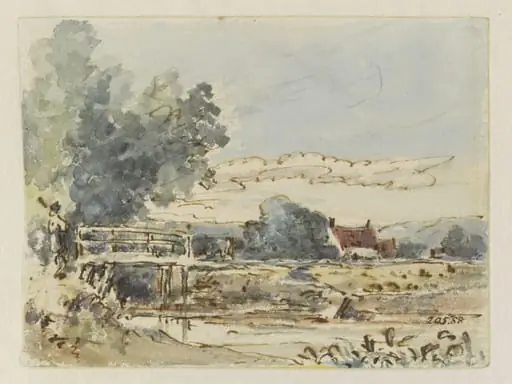 A bridge over a stream, with a cottage behind
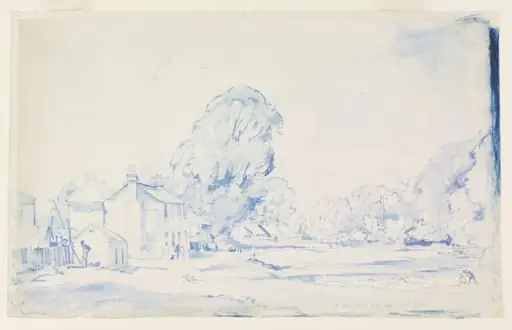 The Village Shelter, Eton Wick
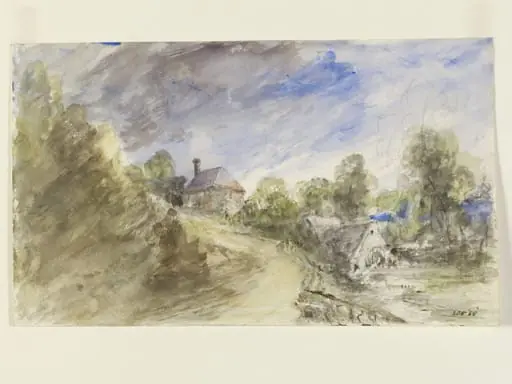 A cottage and water-mill at Bignor
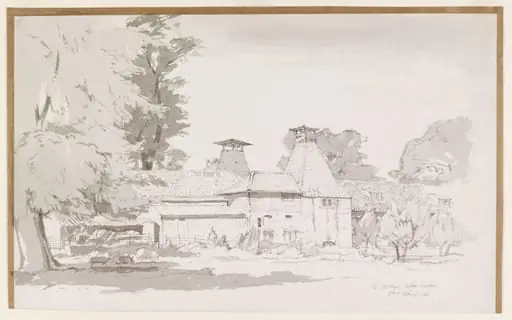 The Maltings, Saffron Walden
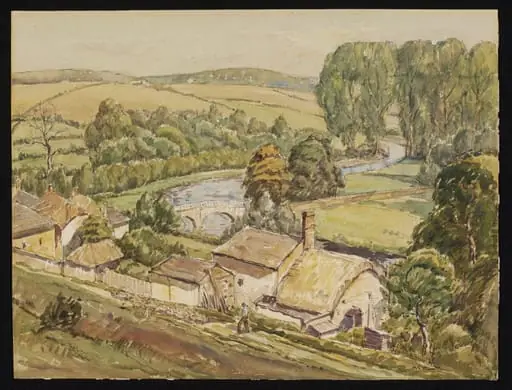 Woodford Bridge in the Avon Valley