Artwork
In Danny Park, near Hassocks, Sussex
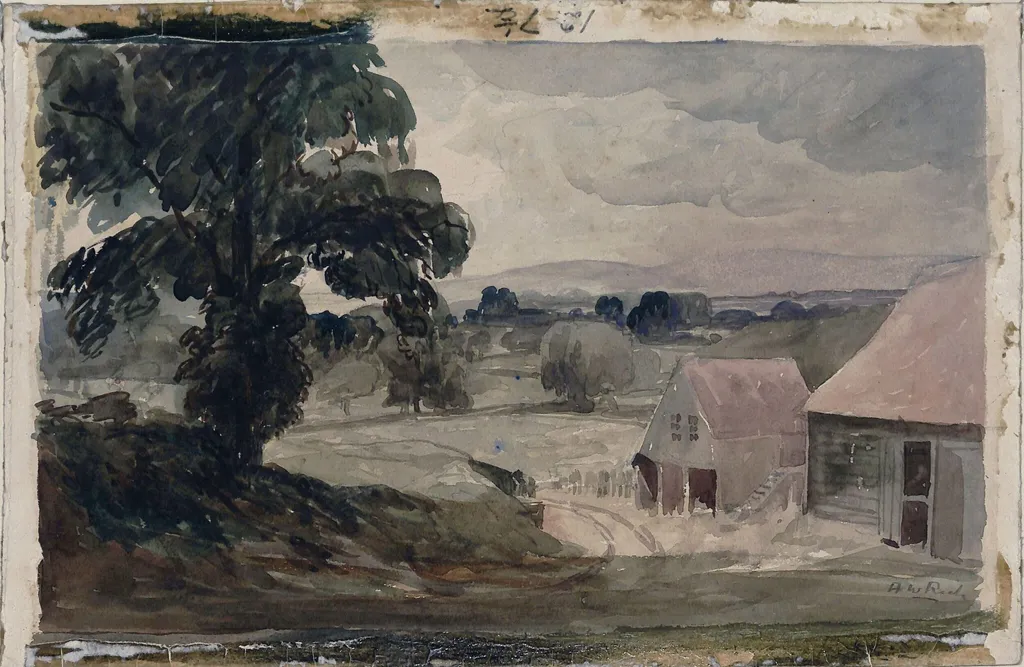
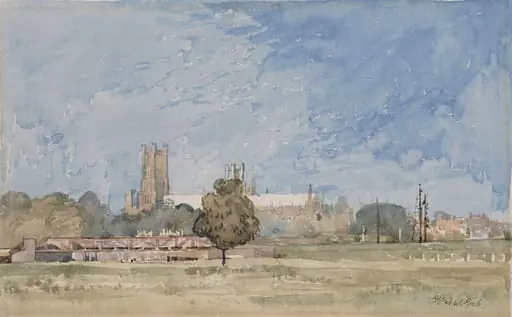
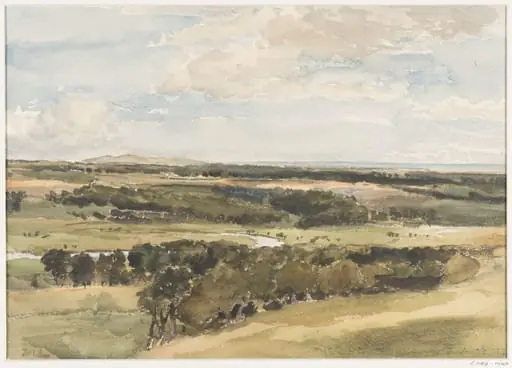
In Danny Park, near Hassocks, Sussex is a watercolor work on paper by the Impressionist artist Alfred Rich. It dates from 1880 and is held in the collection of the Victoria and Albert Museum.
About this work
Overview
Alfred Rich created this watercolour depicting Danny Park near Hassocks in Sussex. The work is signed and titled on its reverse, confirming its origin and subject. Executed in transparent washes, the painting captures a quiet rural moment with minimal detail and restrained tones, reflecting a spontaneous, observational approach common in late 19th-century British watercolour practice.
Subject & Meaning
The composition invites contemplation rather than narrative, emphasizing the quiet dignity of the English countryside.
The scene presents a modest farmhouse nestled on a low slope, partially shaded by a large tree on the left. The surrounding fields recede into a hazy distance, suggesting solitude and stillness. There is no human activity visible; the focus lies in the quiet harmony between land, structure, and sky. The composition invites contemplation rather than narrative, emphasizing the quiet dignity of the English countryside.
Technique & Style
Rich employed loose, fluid brushwork and thin layers of watercolour to suggest form without definition. The palette is limited to soft earth tones—muted greens, browns, and a faint pinkish hue on the roof—creating a subdued atmosphere. The sky is rendered with pale washes and faint cloud traces, while the landscape fades gently into the distance. The effect is deliberately unpolished, prioritizing immediacy over finish.
History & Provenance
The painting’s inscription on the reverse confirms its authorship and subject, a common practice among British watercolourists of the period. While no detailed ownership history is recorded, its modest scale and unassuming style suggest it was likely a personal study or private work, not commissioned. It remains within the tradition of topographical watercolours produced by amateur and professional artists alike in rural England.
Context
Rich’s work aligns with the broader British watercolour movement of the late 1800s, where artists turned to landscape as a subject of quiet observation. Unlike grand Romantic vistas, this scene reflects a shift toward intimate, everyday views of the countryside. Its informal handling echoes emerging trends in plein air painting, though without the bold colour or light effects of French Impressionism.
Legacy
Though not widely exhibited or collected during Rich’s lifetime, this watercolour exemplifies a quiet, understated strand of British landscape art. Its value lies in its sincerity and restraint, offering a glimpse into how artists engaged with their immediate surroundings. It stands as a modest but thoughtful record of a specific place, preserved through simple, deliberate brushwork.
Artist & collection
Artist
Alfred Rich painted quiet English buildings in watercolour between about 1880 and 1920.

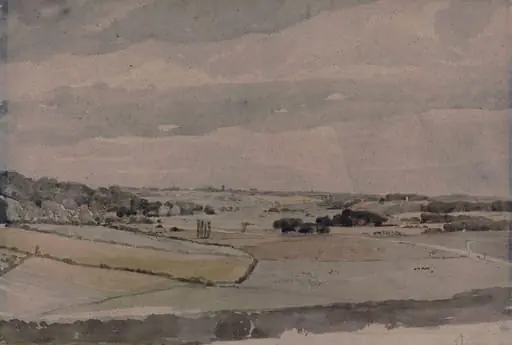 Landscape
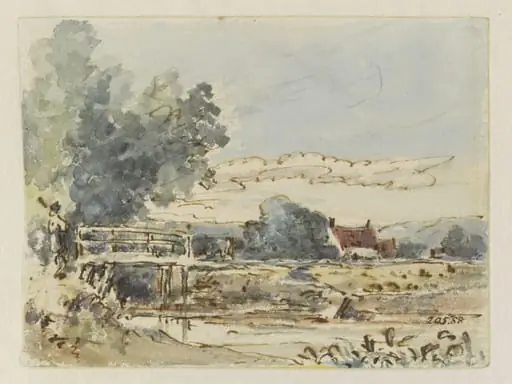 A bridge over a stream, with a cottage behind
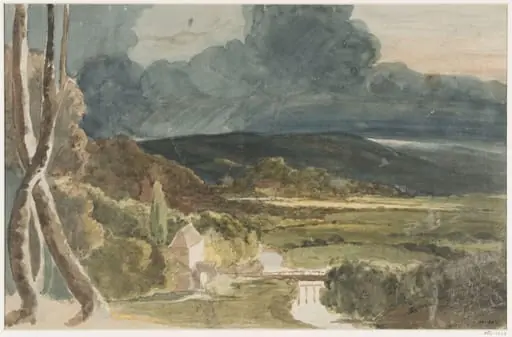 Landscape with river and mountains
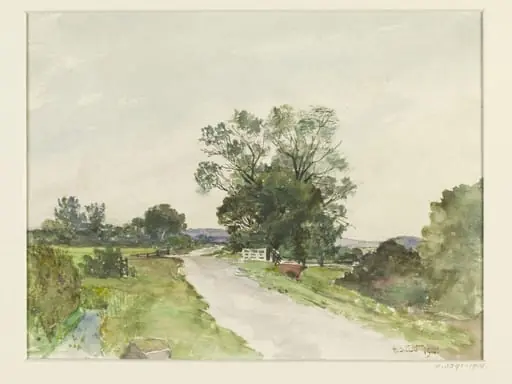 Landscape with road in flat country
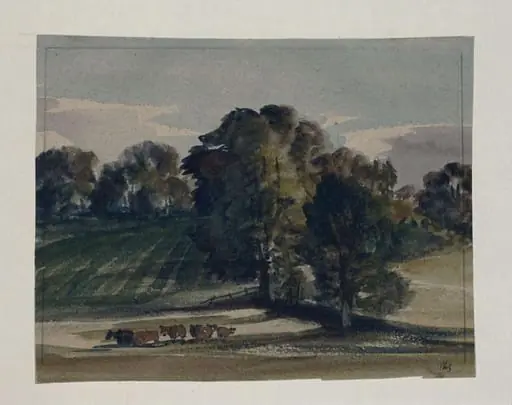 Coneycroft Farm, Compton
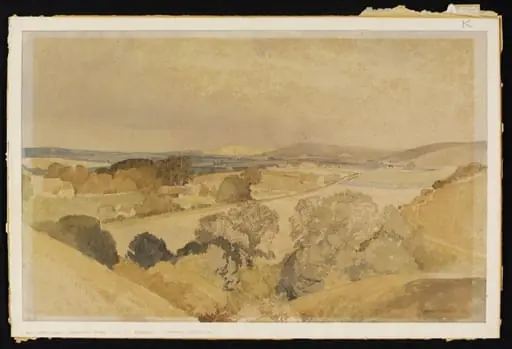 The Southdown, Underhill Road; Edburton, and the Road Eastwards
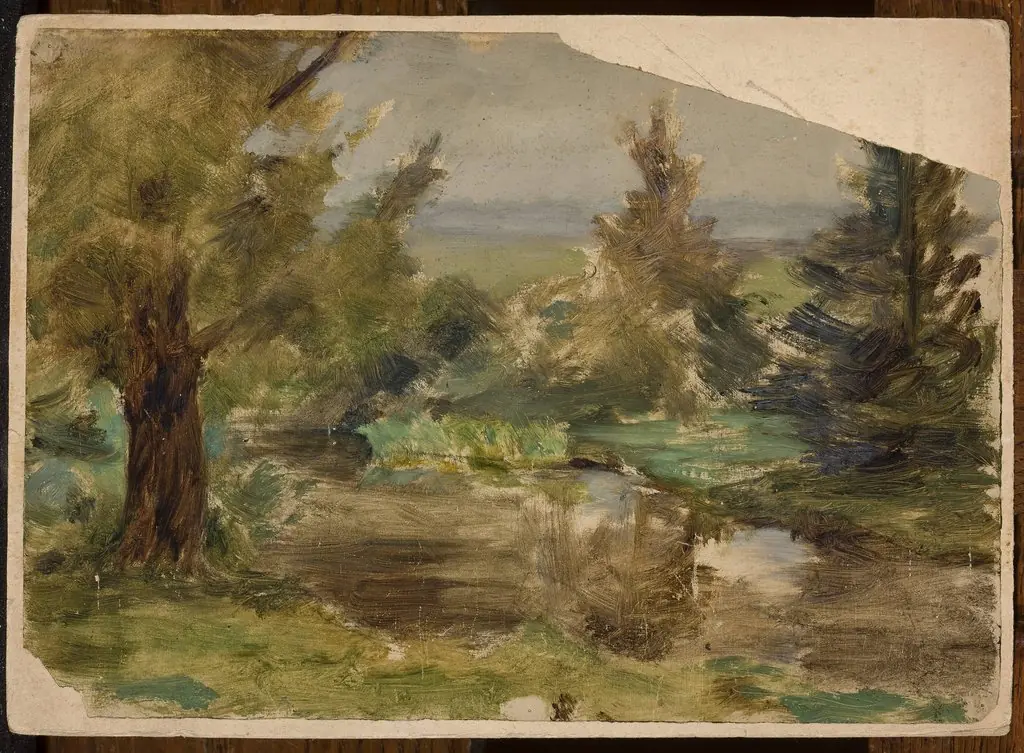 Study from Podolia
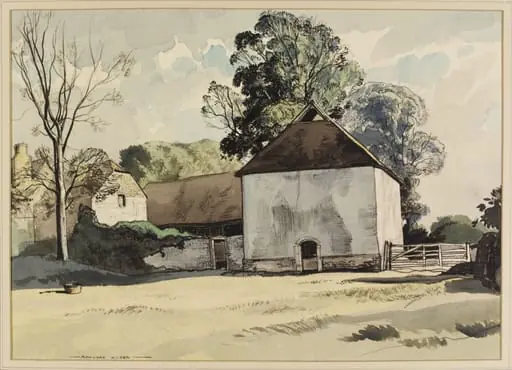 Saxon Dovecote, Lullington, near Alfriston, Cuckmere Valley
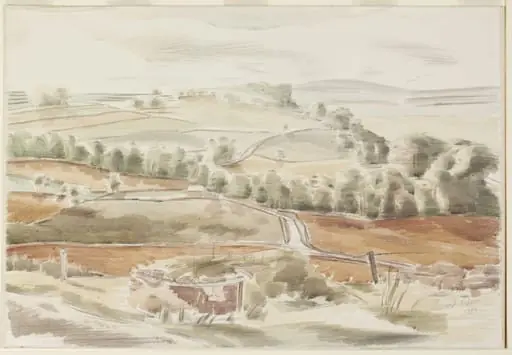 The Porter Valley, No.1
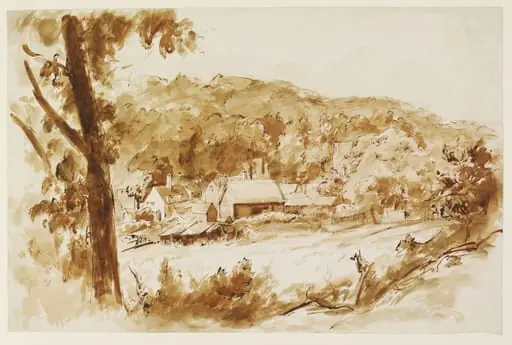 Turville Village
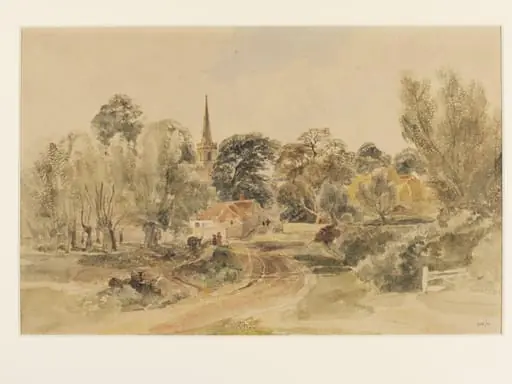 Wilsford, Lincolnshire
 Arundel Park