Artwork
Galata. from The Golden Horn. Constantinople
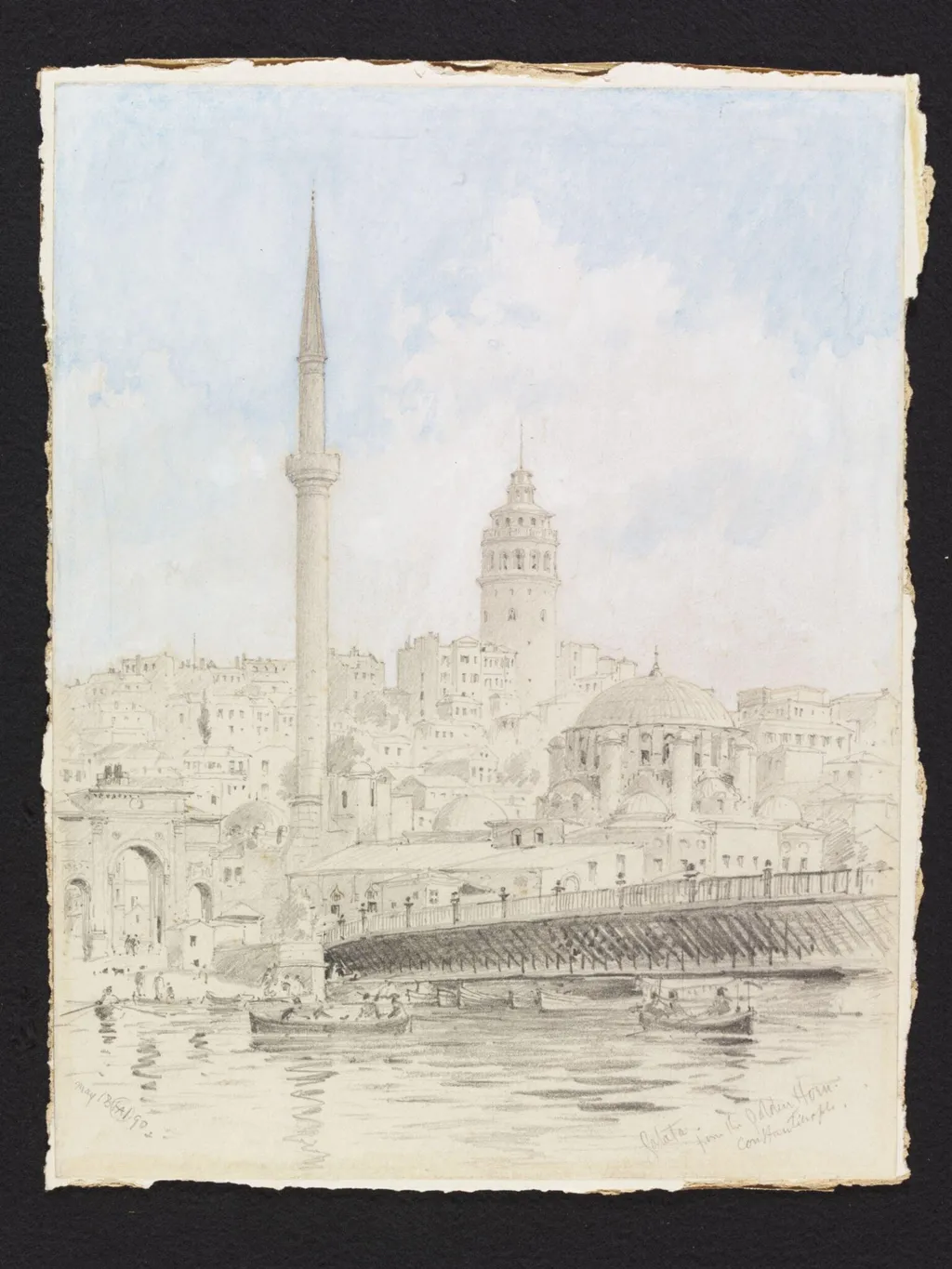
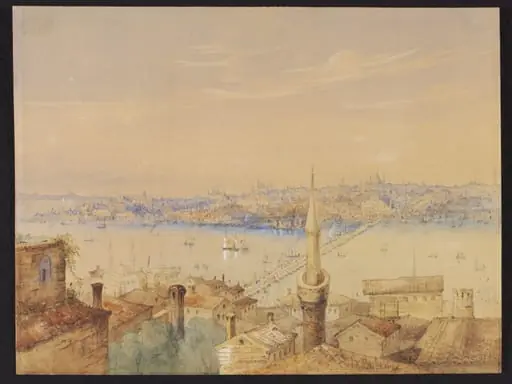
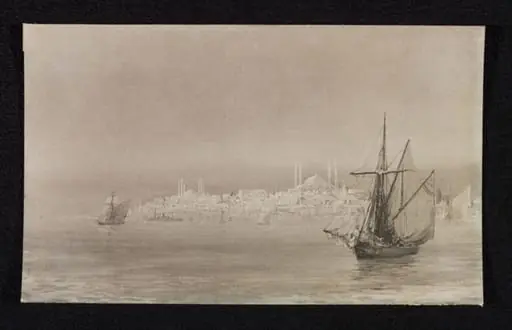
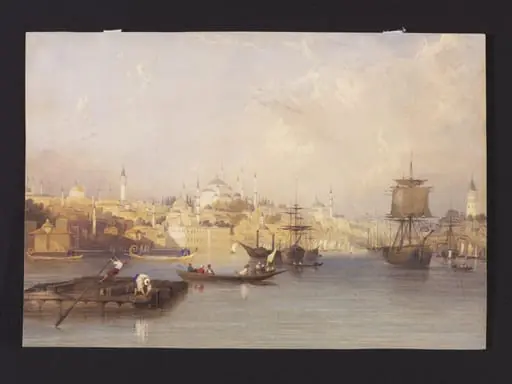
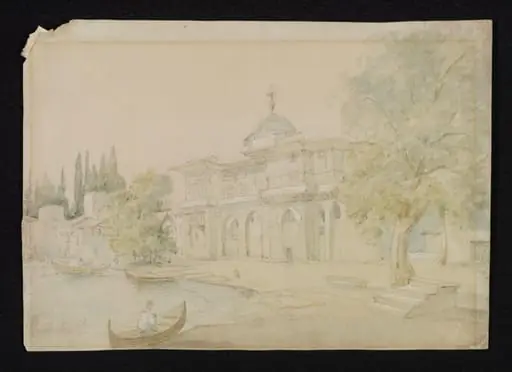
Galata. from The Golden Horn. Constantinople is a watercolor work on paper by the Impressionist artist Axel Herman Haig. It dates from 1890 and is held in the collection of the Victoria and Albert Museum.
About this work
Overview
The work captures a stretch of the Golden Horn’s shoreline, focusing on the Galata Tower and surrounding architecture.
Axel Herman Haig created this watercolour in 1890 as part of a series documenting Constantinople’s urban landscape. The work captures a stretch of the Golden Horn’s shoreline, focusing on the Galata Tower and surrounding architecture. Executed in delicate washes and light pencil, it reflects Haig’s interest in architectural detail and atmospheric perspective, typical of his travel studies during the late 19th century.
Subject & Meaning
The scene centers on the Galata Tower, a medieval Genoese structure, alongside the Azap Kapi Mosque, symbolizing the layered history of the city. Figures and animals along the docks suggest daily life in a bustling port, while the bridge and small boats imply movement and commerce. The composition emphasizes continuity between Ottoman and earlier European influences in the urban fabric.
Technique & Style
Haig employed transparent watercolour with restrained pencil underdrawing to suggest texture and depth without heavy detail. The paper’s worn surface and faint smudging indicate frequent handling, possibly during fieldwork. His method prioritizes light, air, and spatial recession over precision, aligning with the tradition of topographical watercolour practiced by British artists abroad.
History & Provenance
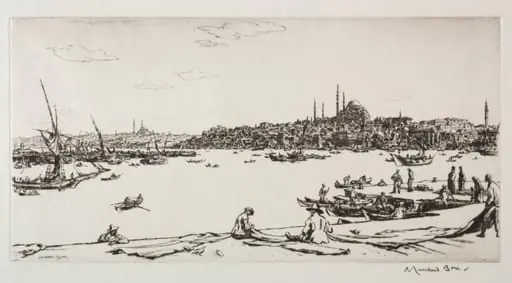
Created in 1890, the watercolour was likely made during Haig’s travels in the Ottoman Empire. He later reworked the subject into two etchings in 1918, suggesting its enduring significance to him. The piece entered the Victoria and Albert Museum’s collection, where it remains part of its holdings of 19th-century architectural studies.
Context
In the late 19th century, European artists and architects increasingly documented the changing cities of the Eastern Mediterranean. Haig’s work reflects this trend, capturing Constantinople at a time of transition—between imperial legacy and modernization. His focus on vernacular architecture and everyday activity contrasts with grander, more idealized Orientalist depictions of the era.
Legacy
Though not widely exhibited, Haig’s watercolours of Constantinople contributed to a broader archive of architectural observation. His attention to detail and sensitivity to light influenced later topographical artists. The survival of this work, along with its later etchings, offers insight into how Western artists interpreted and preserved the visual character of a city in flux.
Artist & collection
Artist
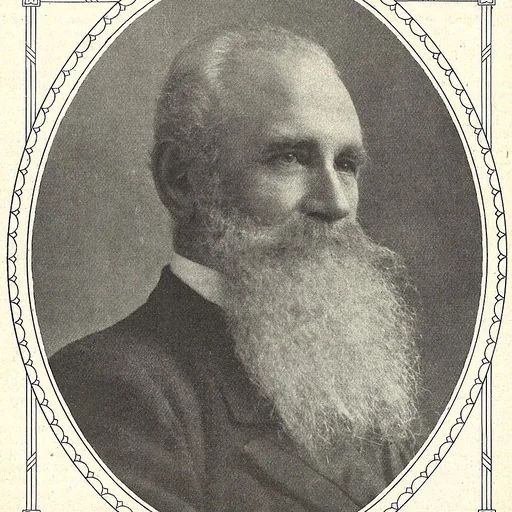
Axel Herman Haig RE (Swedish: Axel Herman Hägg; 10 November 1835 –23 August 1921) was a Swedish-born artist, illustrator and architect.