Artwork
Constantinople. From the Entrance to the Golden Horn
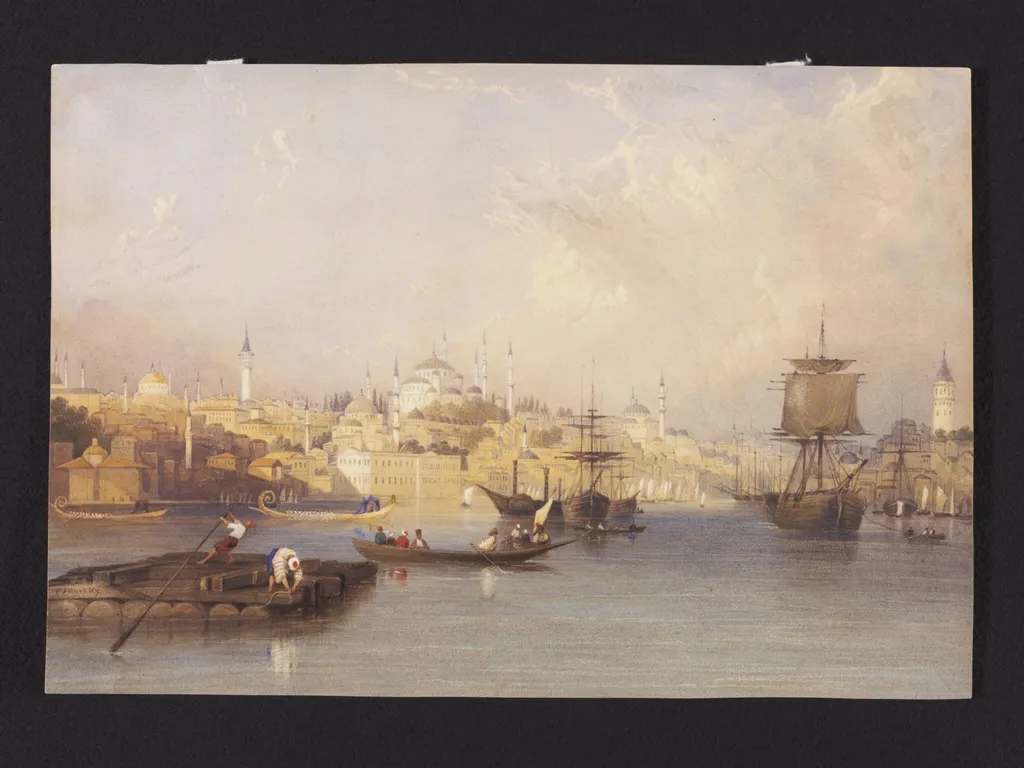
Constantinople. From the Entrance to the Golden Horn is a watercolor work on paper by the Romanticist artist Charles F. Buckley. It dates from 1841 and is held in the collection of the Victoria and Albert Museum. This watercolour is a reproduction of an engraving by J.
About this work
Overview
Created for the 1838 publication *Constantinople and the Scenery of the Seven Churches of Asia Minor* by R.
This watercolour is a reproduction of an engraving by J. Cousen, originally based on a drawing by T. Allom. Created for the 1838 publication *Constantinople and the Scenery of the Seven Churches of Asia Minor* by R. Walsh, it functioned as the book’s frontispiece. The work captures a panoramic view of the city from the entrance to the Golden Horn, reflecting the period’s interest in visually documenting the Ottoman capital for European audiences.
Subject & Meaning
The scene presents Constantinople as a layered urban landscape, where maritime activity and architectural grandeur coexist. Rowboats shuttle across the calm waters, while larger vessels lie at anchor, suggesting both daily life and commercial exchange. The skyline, dominated by domes and minarets, conveys the city’s religious and imperial identity. The composition emphasizes harmony between human activity and the built environment, without overt political or religious commentary.
Technique & Style
The artist employs delicate watercolour washes to render soft atmospheric effects, particularly in the hazy sky and reflective water. Light is used subtly to highlight architectural forms, giving the buildings a luminous quality against the muted backdrop. Shadows from the boats are rendered with precision, enhancing the sense of stillness and clarity. The technique reflects a topographical approach, prioritizing accuracy and tonal harmony over expressive brushwork.
History & Provenance
The watercolour was produced as part of a commercial publishing project in 1838, derived from an earlier engraved plate. It was not an original sketch but a reproduction intended for mass distribution, aligning with the era’s trend of illustrated travel literature. The work entered the Victoria and Albert Museum’s collection as part of its broader holdings in 19th-century British topographical art, preserving its role in visual documentation of the Ottoman Empire.
Context
In the 1830s, European interest in the Eastern Mediterranean surged, fueled by travel writing and imperial curiosity. Artists like Allom and publishers like Walsh catered to audiences seeking idealized, orderly depictions of foreign cities. This image, though based on observation, conforms to a romanticized aesthetic common in British illustrated books, balancing realism with a sense of serene, timeless grandeur.
Legacy
As a reproduced image in a widely circulated volume, this watercolour contributed to shaping European perceptions of Constantinople during a period of political transition. Its preservation in the Victoria and Albert Museum underscores its value as a historical artifact of visual culture, offering insight into how distant cities were interpreted, framed, and consumed by Western audiences in the early Victorian era.
Artist & collection
Artist
Charles F. Buckley kept a tiny studio above a spice shop in Constantinople, where he sketched the city’s shifting light on watercolors no bigger than a postcard. He spent thirty years obsessively drawing the same…

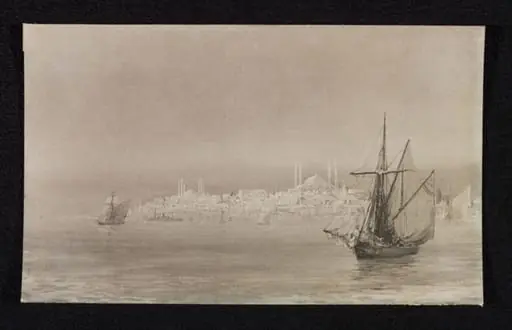 Entrance to the Golden Horn, Constantinople
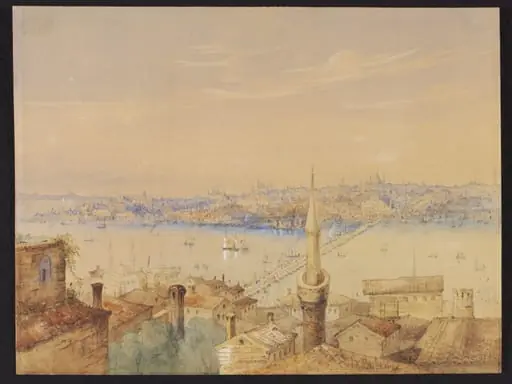 View of Constantinople from Pera across the Golden Horn
![Constantinople from Pera, looking across the Golden Horn to Seraglio Point, by Michel-François Préaulx [Préaux]](https://artifactworldgallery.com/img/michel-francois-preaulx-preaux--constantinople-from-pera-looking-across-the-golden-horn-to-s--cb81cecd6955bf28-w320.webp) Constantinople from Pera, looking across the Golden Horn to Seraglio Point
Constantinople from Pera, looking across the Golden Horn to Seraglio Point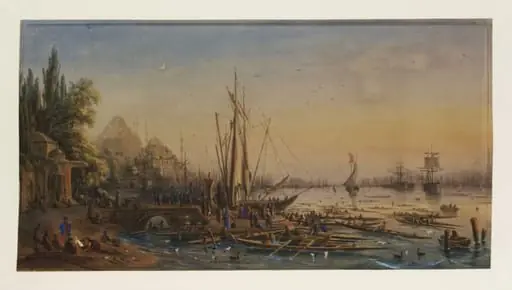 Harbour of Constantinople
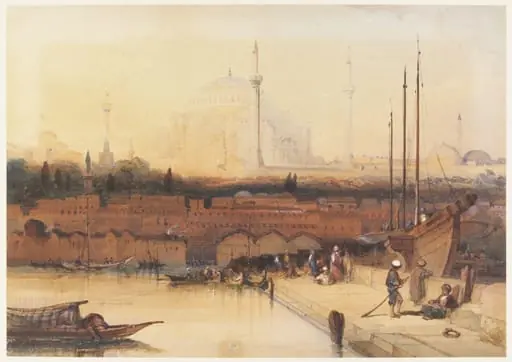 St. Sophia, Constantinople
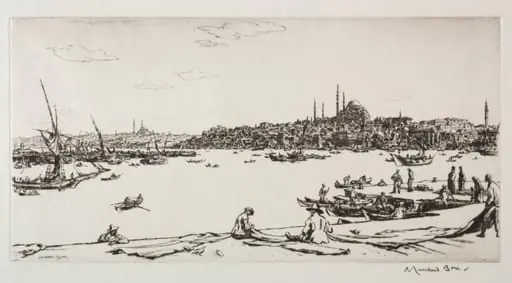 Constantinople
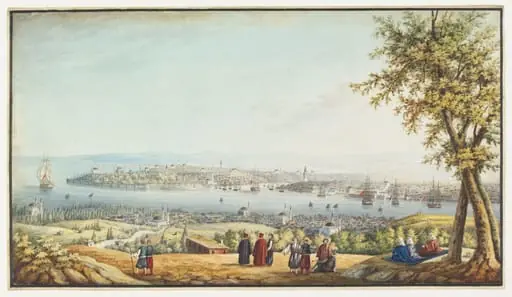 Constantinople and the Bosphorus from above Scutari
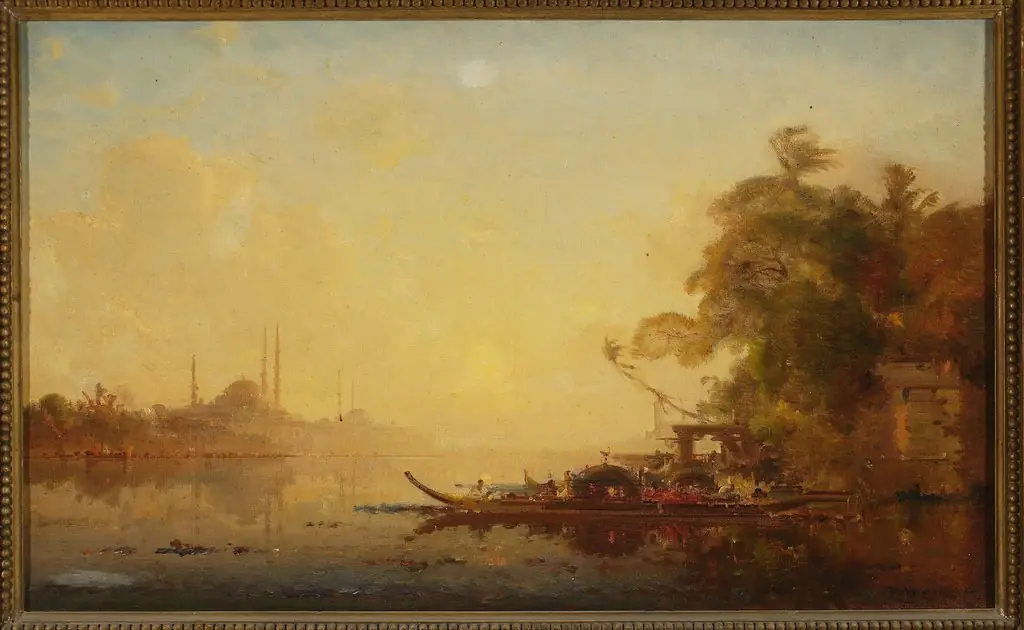 View of Constantinople
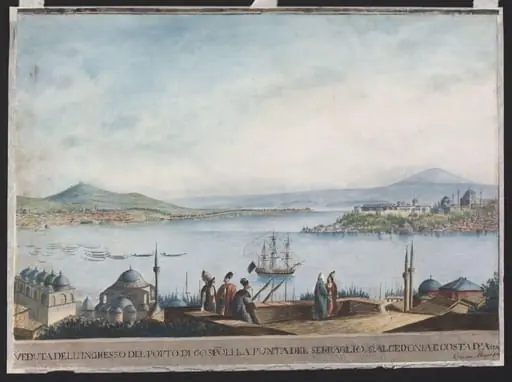 Entrance to the Port of Constantinople
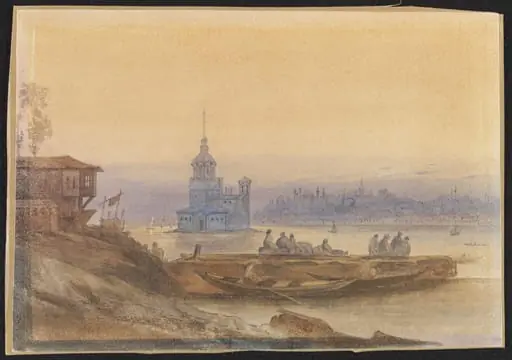 Leander's Tower at Constantinople
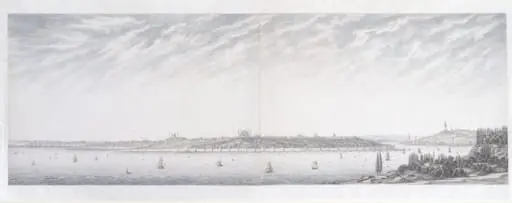 Constantinople from the Asian shore
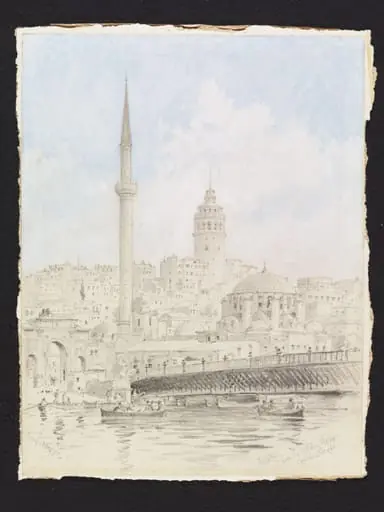 Galata. from The Golden Horn. Constantinople
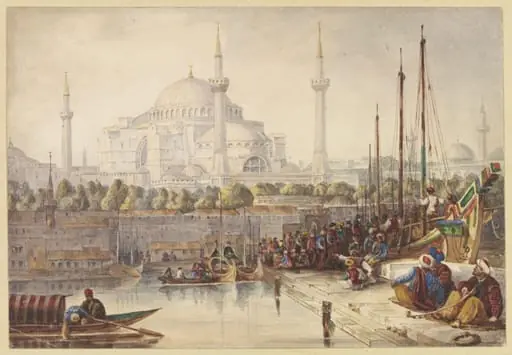 St.Sophia, from the Bosphorus
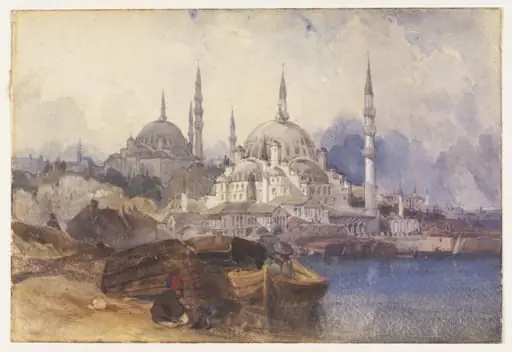 The Yeni Valide Camii and the Süleymaniye Mosque, with the Golden Horn in the forground
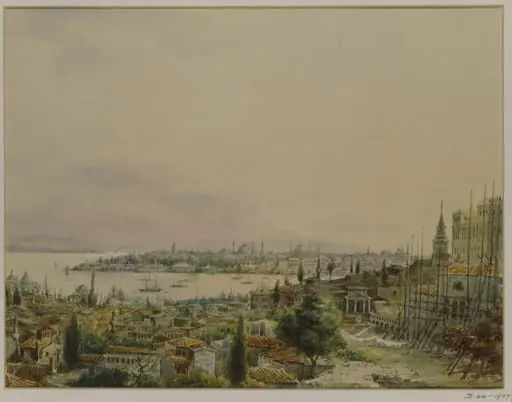 View of Constantinople from Pera
![Yeni Valide Camii [New Mosque] and Haghia Sophia from the Golden Horn, by John Richard Coke Smyth](https://artifactworldgallery.com/img/john-richard-coke-smyth--yeni-valide-camii-new-mosque-and-haghia-sophia-from-the-gold--da58b2fc47388c7c-w320.webp) Yeni Valide Camii [New Mosque] and Haghia Sophia from the Golden Horn
Yeni Valide Camii [New Mosque] and Haghia Sophia from the Golden Horn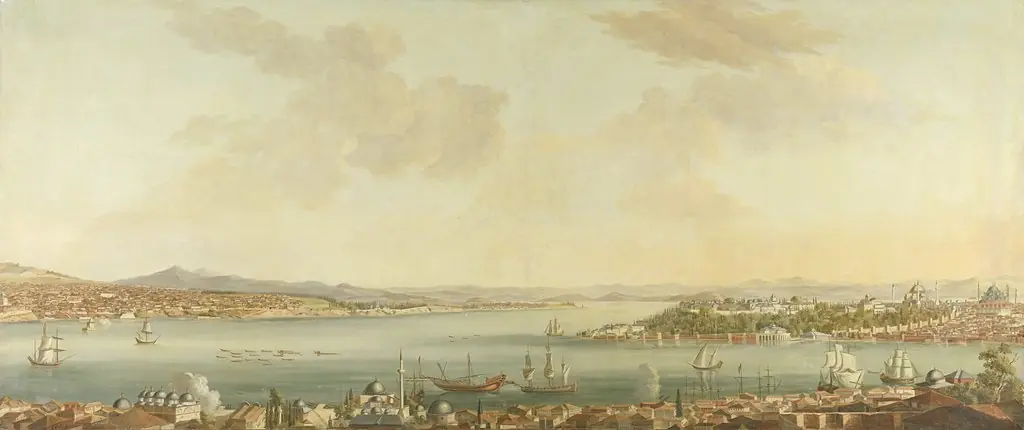 View of Constantinople (Istanbul) and the Seraglio from the Swedish Legation in Pera
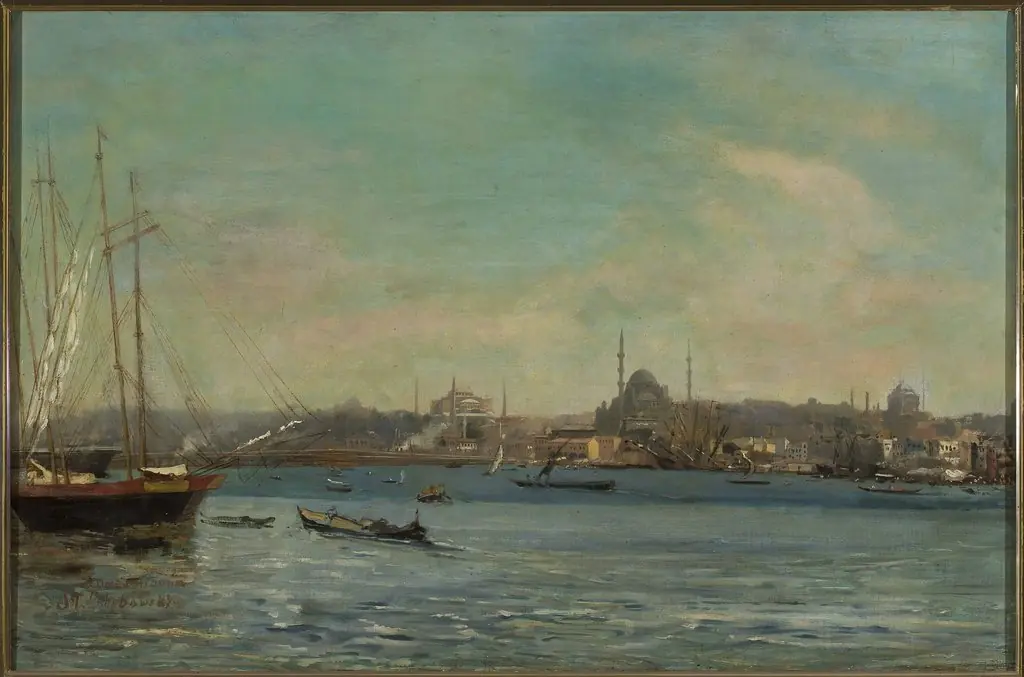 Panorama of Istanbul
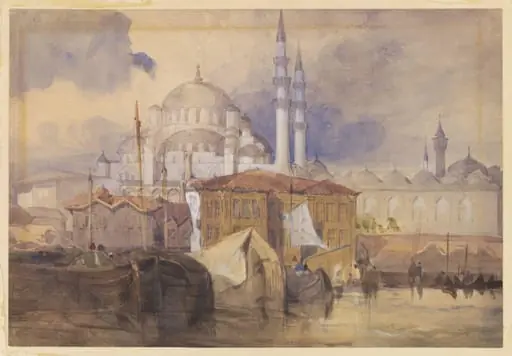 The Yeni Valide Camii