Artwork
Untitled
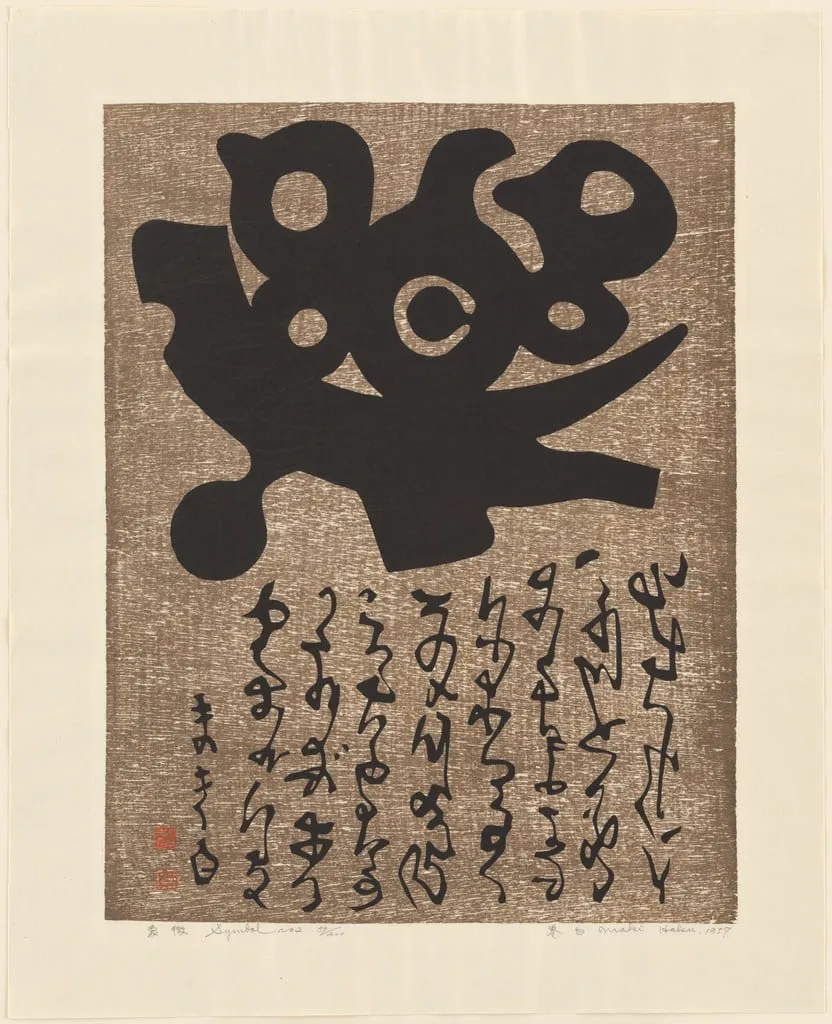
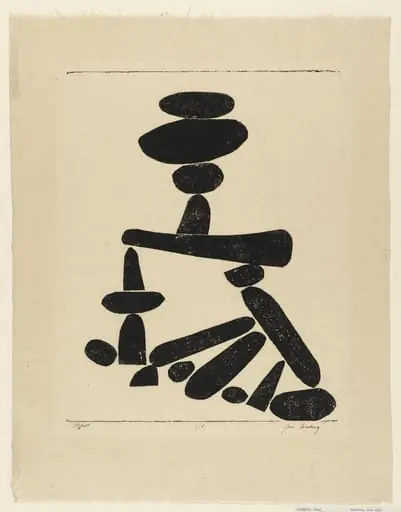
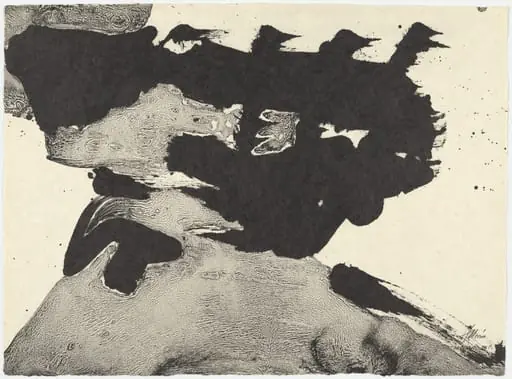
Untitled is an ink print by Haku Maki. It dates from 1957 and is held in the collection of the Museum of Modern Art.
About this work
Overview
As a self-taught practitioner aligned with the sōsaku-hanga movement, Maki emphasized personal expression over traditional craftsmanship.
Created in 1957, this woodcut by Haku Maki—born Maejima Tadaaki—is a quiet yet forceful example of postwar Japanese printmaking. As a self-taught practitioner aligned with the sōsaku-hanga movement, Maki emphasized personal expression over traditional craftsmanship. The work’s stark contrast and simplified forms reflect his interest in abstraction and material experimentation, distinguishing it from more ornate print traditions of the era.
Subject & Meaning
The print offers no literal narrative, instead presenting abstract forms that suggest organic or cosmic imagery. A large, irregular dark shape dominates the upper field, its interior dotted with smaller circles, possibly evoking celestial bodies or cellular structures. Below, angular, brush-like Kanji characters appear not as legible text but as rhythmic visual elements, hinting at language’s physicality rather than its semantic content.
Technique & Style
Maki carved directly into wood, using bold, unrefined lines to produce high-contrast black shapes against a pale background. His approach favored immediacy over precision: the edges are uneven, the ink slightly unevenly applied, yet the composition feels deliberate. He sometimes carved into wet cement to create textured surfaces, and though this piece lacks that effect, its tactile quality suggests a similar interest in material resistance and spontaneity.
History & Provenance
The work entered the collection of The Museum of Modern Art in New York, reflecting institutional recognition of sōsaku-hanga’s significance in modern art. Maki, though less widely known than contemporaries like Onchi Kōshirō, gained attention for his radical methods and rejection of commercial print conventions. This piece, unsigned and untitled, aligns with his practice of prioritizing process over authorial signature.
Context
In postwar Japan, artists like Maki sought to redefine printmaking as a medium of individual expression rather than collaborative production. The sōsaku-hanga movement rejected the ukiyo-e model of division of labor, insisting the artist should design, carve, and print their own work. Maki’s use of Kanji as visual rhythm, not linguistic message, responded to broader cultural shifts in identity and communication after the war.
Legacy
Maki’s experimental approach influenced later generations of Japanese printmakers who embraced abstraction and material experimentation. His willingness to treat wood and ink as physical substances—rather than mere tools for representation—expanded the boundaries of the medium. Though his output was modest, his work remains a touchstone for those exploring the intersection of calligraphy, abstraction, and printmaking in modern art.
Artist & collection
Artist
Maki Haku (巻白; 1924–2000) is the artistic name of Maejima Tadaaki, who was born in Ibaraki Prefecture.

 Snow, Moon, Flower Calligraphy
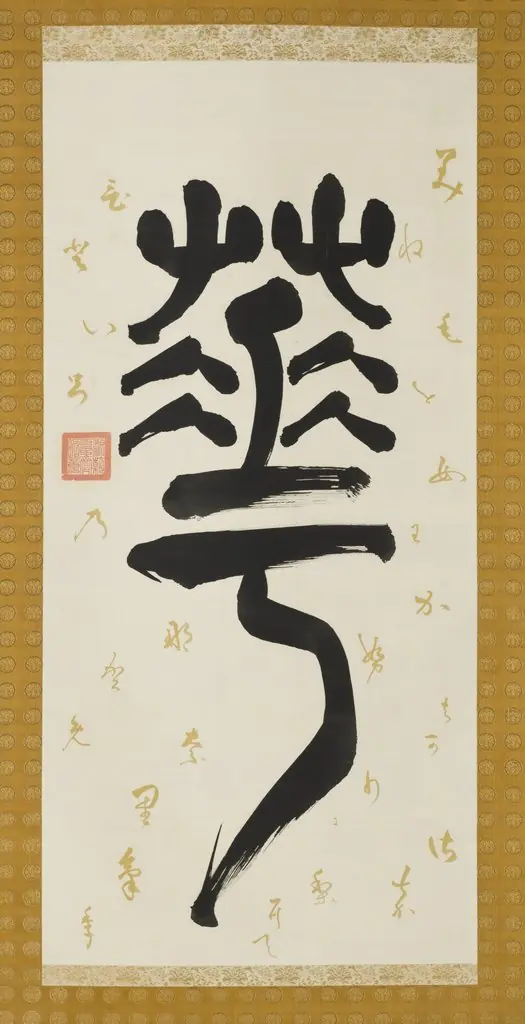
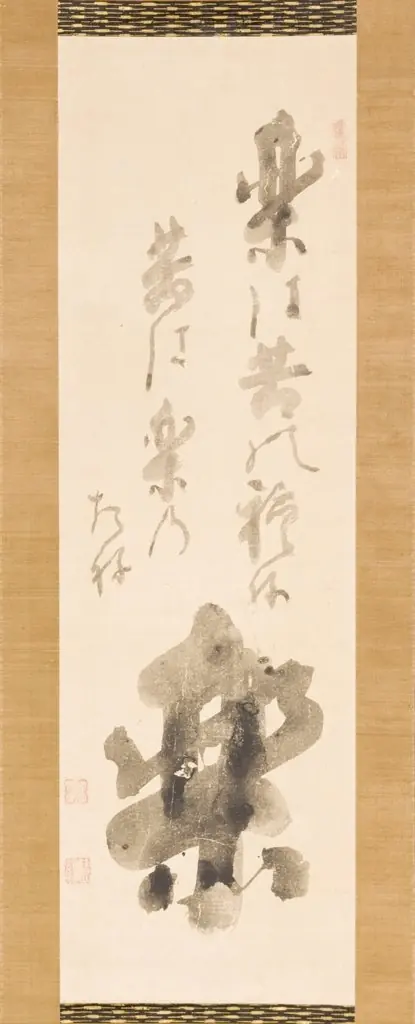 'JOY: In joy lie the seeds of sufferings; in sufferings lie the seeds of joy (RAKU: Raku wa kū no tane; Kū wa raku no tane)'
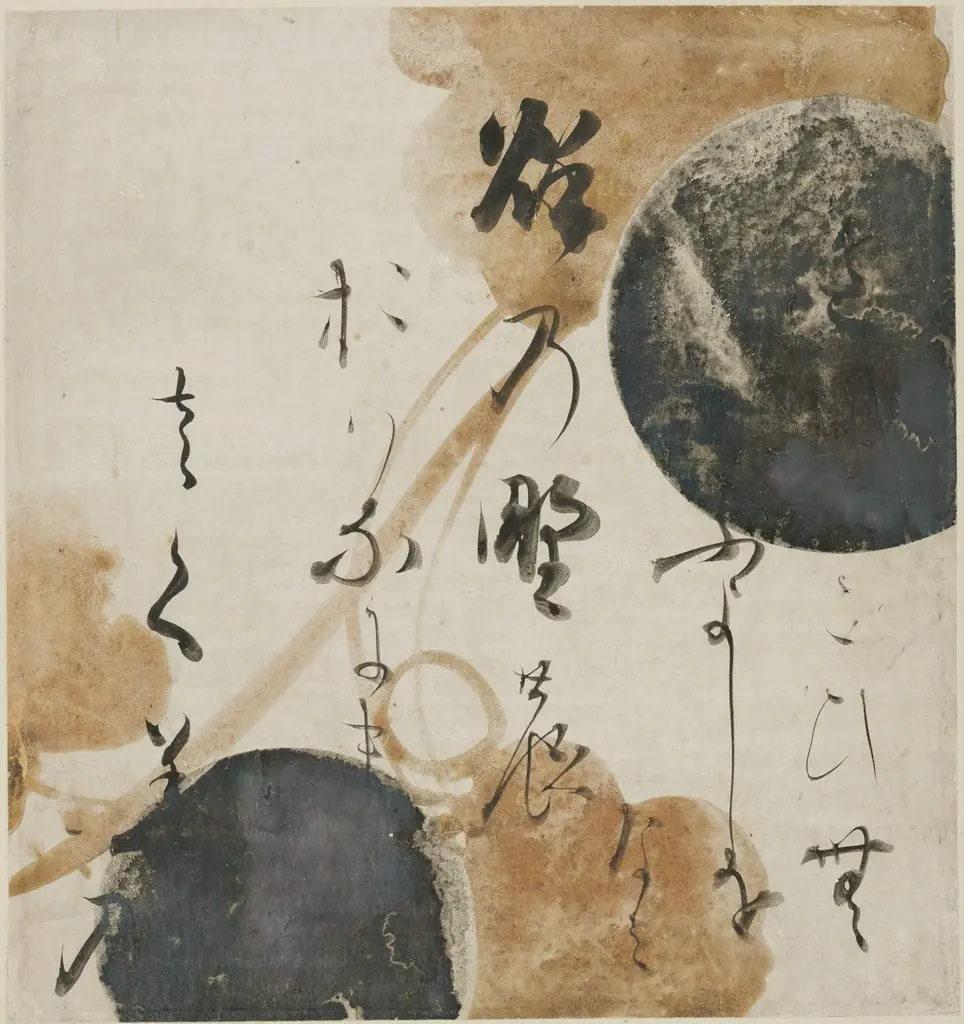 Poem from the Kokin Wakashu ("Collection of Japanese Poems of Ancient and Modern Times")
 Untitled
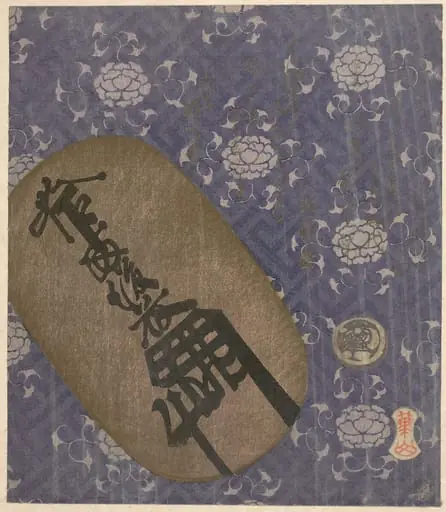 Untitled
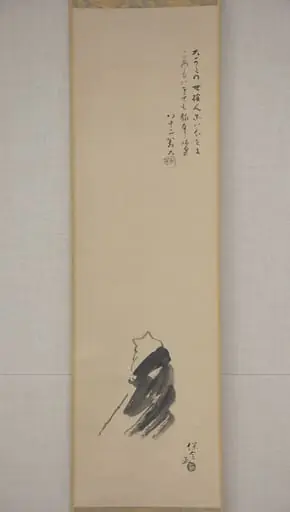 Untitled
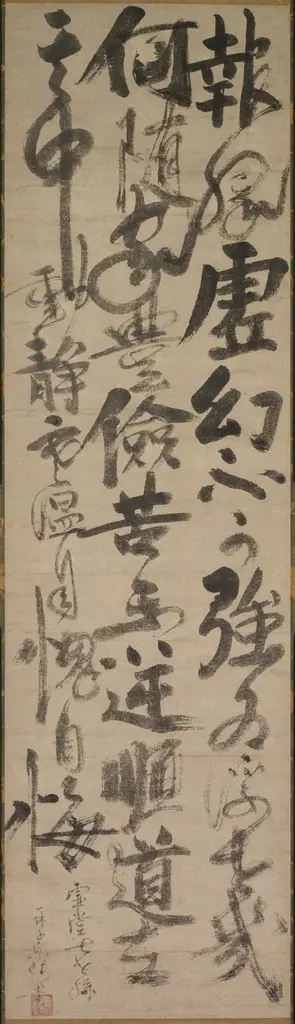 Reflections of Priest Foyen
![For a hundred years [I have been] a person with no attachments, by Jiun](https://artifactworldgallery.com/img/jiun--for-a-hundred-years-i-have-been-a-person-with-no-attachments--b29f06e3a79d2459-w320.webp) For a hundred years [I have been] a person with no attachments
For a hundred years [I have been] a person with no attachments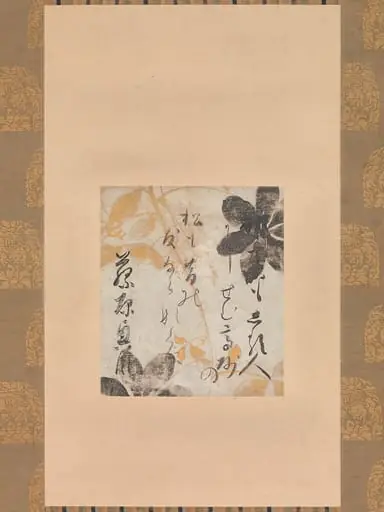 鉄線下絵和歌色紙|Poem by Fujiwara no Okikaze with Underpainting of Clematis
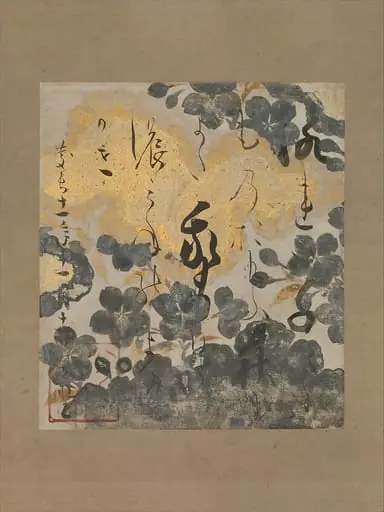 本阿見光悦書・俵屋宗達下絵 桜下絵和歌色紙 鴨長明|Poem by Kamo no Chōmei with Underpainting of Cherry Blossoms
 Untitled