Artwork
Untitled
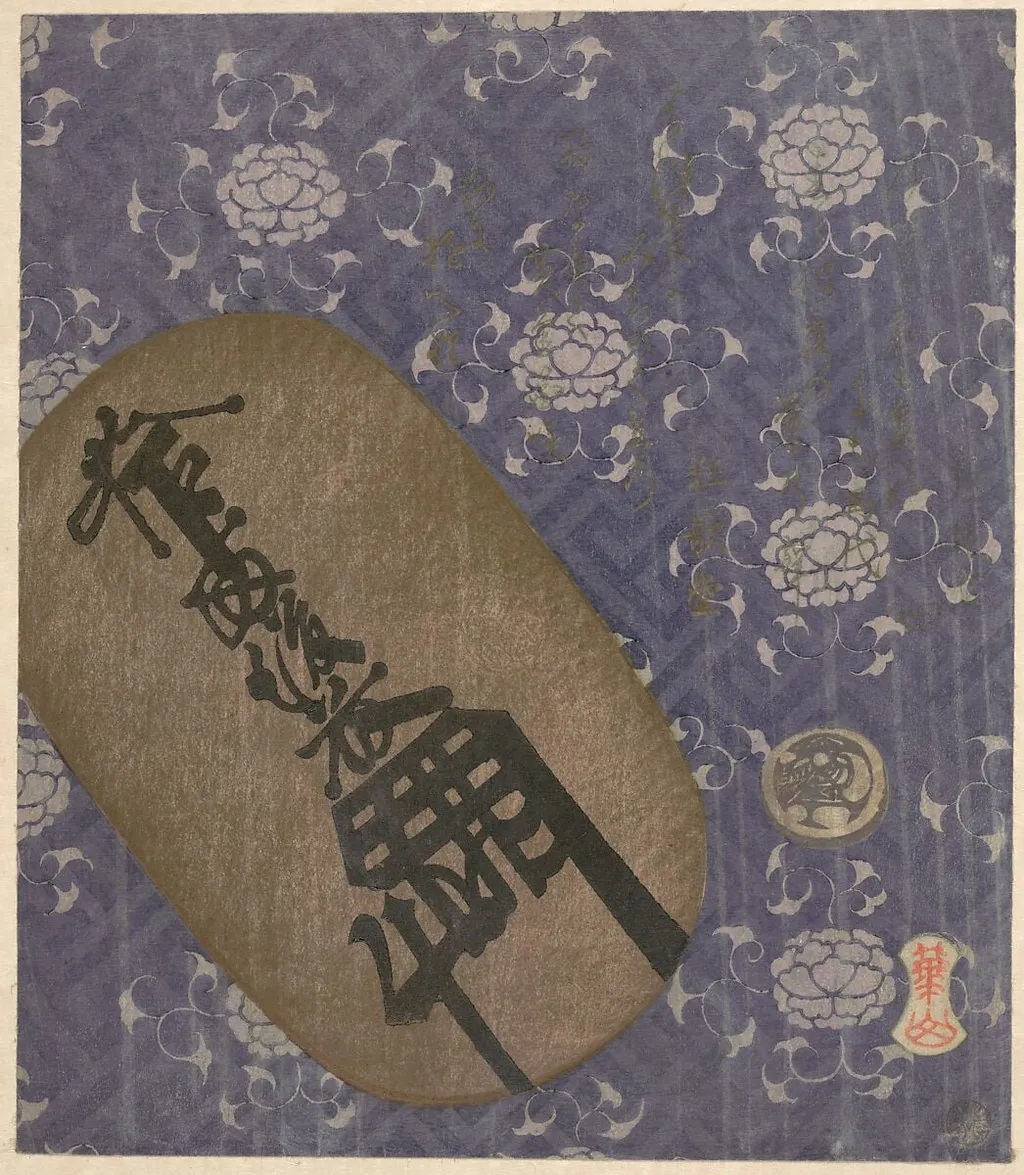
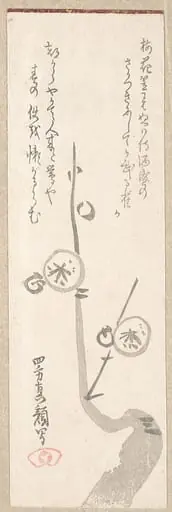
Untitled is an ink print by the Romanticist artist Watanabe Kazan. It dates from 1822 and is held in the collection of the Metropolitan Museum of Art.
About this work
Overview
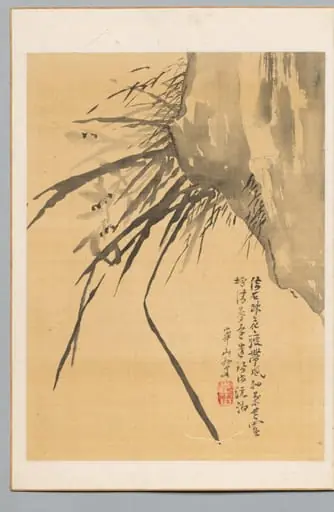
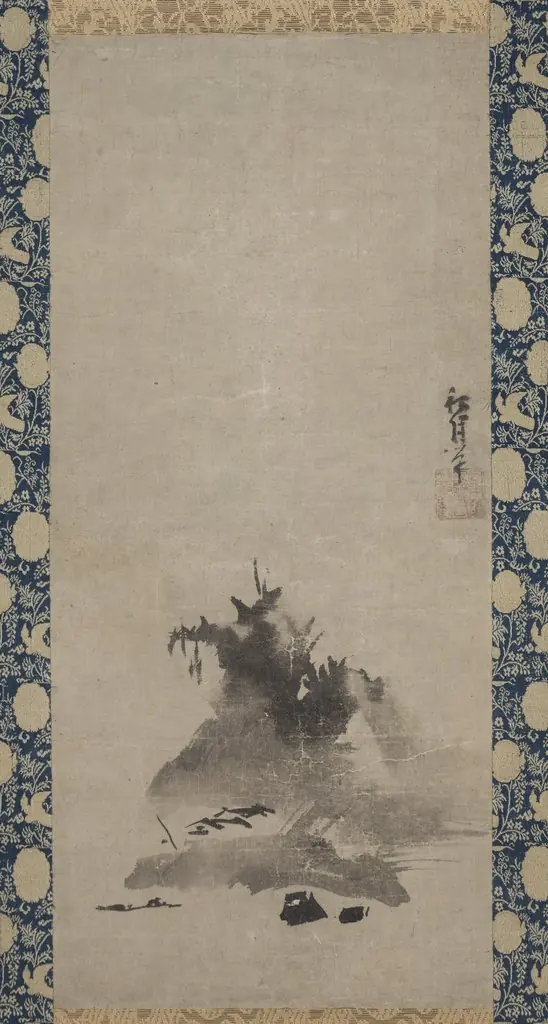
Executed in ink and color on paper, it features minimalistic composition centered on a textured stone bearing calligraphic inscriptions.
This woodblock print, dated 1822, is attributed to Watanabe Kazan and belongs to the surimono genre—privately commissioned prints circulated among literary and artistic circles. Executed in ink and color on paper, it features minimalistic composition centered on a textured stone bearing calligraphic inscriptions. Its intimate scale and refined execution reflect its function as a personal, non-commercial object rather than a mass-produced image.
Subject & Meaning
The print displays two lines of Japanese characters inscribed on a dark stone, their meaning tied to poetic or philosophical sentiment common in Edo-period literati culture. The surrounding floral motifs—light purple blossoms and winding vines—suggest natural cycles and transient beauty, themes central to Japanese aesthetics. The seals in the corners likely identify the artist or patron, reinforcing the print’s role as a private exchange among connoisseurs.
Technique & Style
The stone’s surface is rendered with bold, irregular brushstrokes that mimic the texture of weathered rock, achieved through deliberate, almost abrasive ink application. The background employs soft washes of blue with delicate purple floral patterns, contrasting the stone’s ruggedness. Cross-hatching and layered pigments create subtle depth, while the limited palette enhances the print’s restrained elegance, typical of surimono’s refined aesthetic.
History & Provenance
Created during Watanabe Kazan’s later years, the print emerged from a network of artists and scholars who exchanged surimono as tokens of intellectual camaraderie. It entered The Metropolitan Museum of Art’s collection through documented acquisition, preserving its origin within the Edo-period private print tradition. Its survival is notable, as many such works were fragile and rarely intended for public display or long-term preservation.
Context
Surimono prints flourished in early 19th-century Japan as luxury items commissioned by poetry groups or wealthy patrons. Unlike commercial ukiyo-e, they prioritized artistic experimentation and literary allusion over mass appeal. Kazan, trained in both Nihonga and Western techniques, infused his surimono with a quiet individuality, blending traditional Japanese motifs with a personal, expressive brush language uncommon in mainstream printmaking.
Legacy
Though not widely known outside specialist circles, this print exemplifies the quiet sophistication of Edo-period literati print culture. Its survival offers insight into how artists used private formats to explore form, language, and nature beyond public demands. Later collectors and scholars recognized its significance as a rare, personal artifact of artistic dialogue, preserving it as a testament to a marginalized yet vital strand of Japanese print history.
Artist & collection


![Study of a Rock [verso], by Paul Cezanne](https://artifactworldgallery.com/img/paul-cezanne--study-of-a-rock-verso--2a77a4e7ad0b3a79-w320.webp)