Artwork
Asher B. Durand
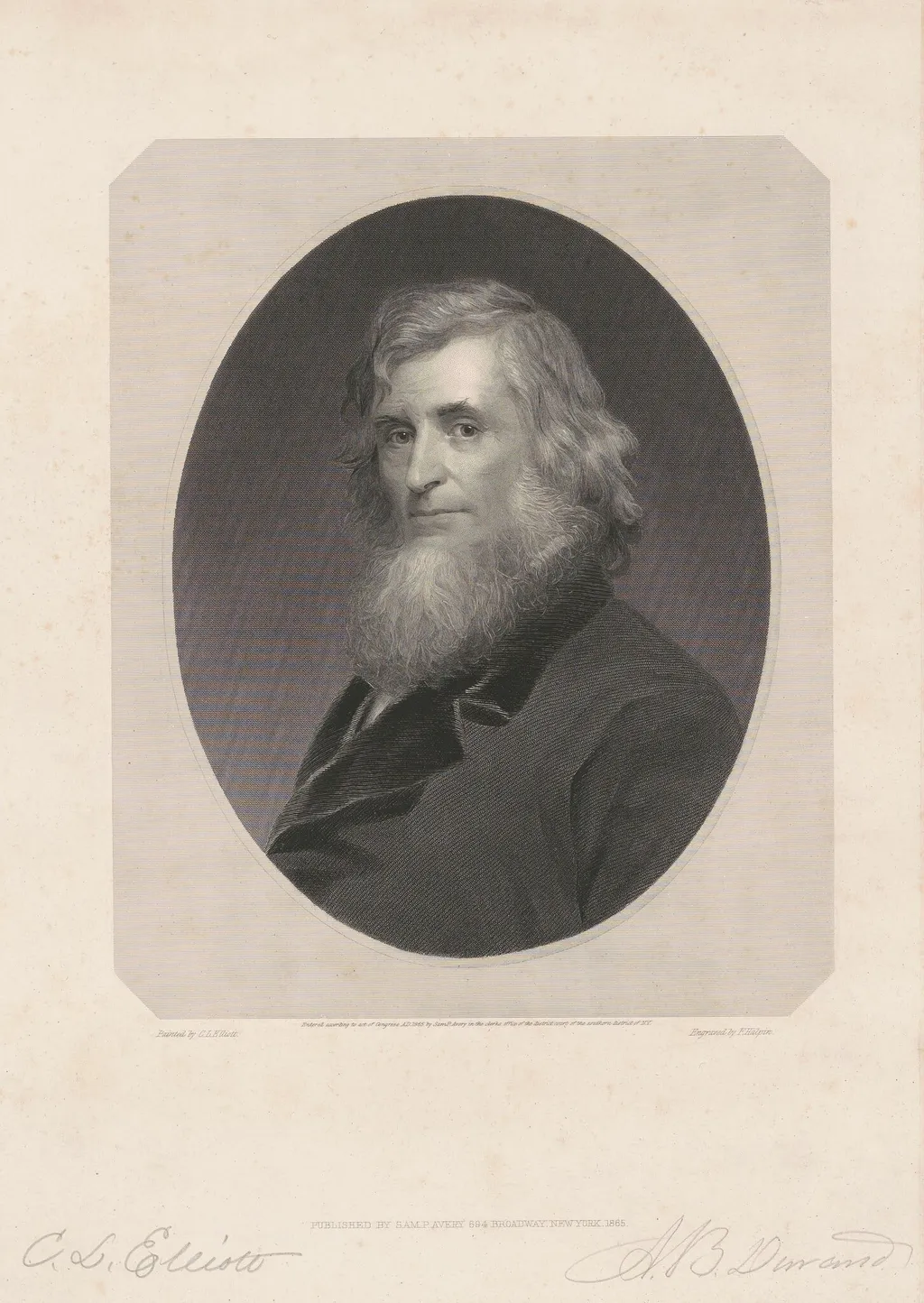
Asher B. Durand is an ink print by the Impressionist artist Frederick Halpin. It dates from 1865 and is held in the collection of the National Gallery of Art.
About this work
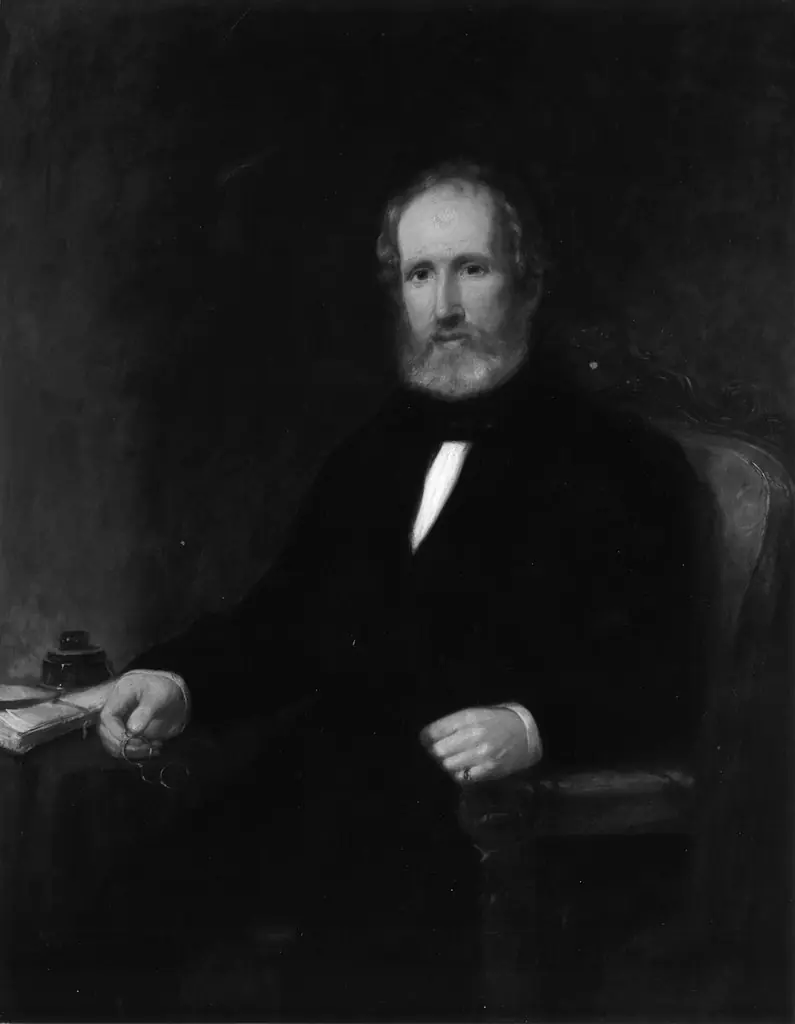
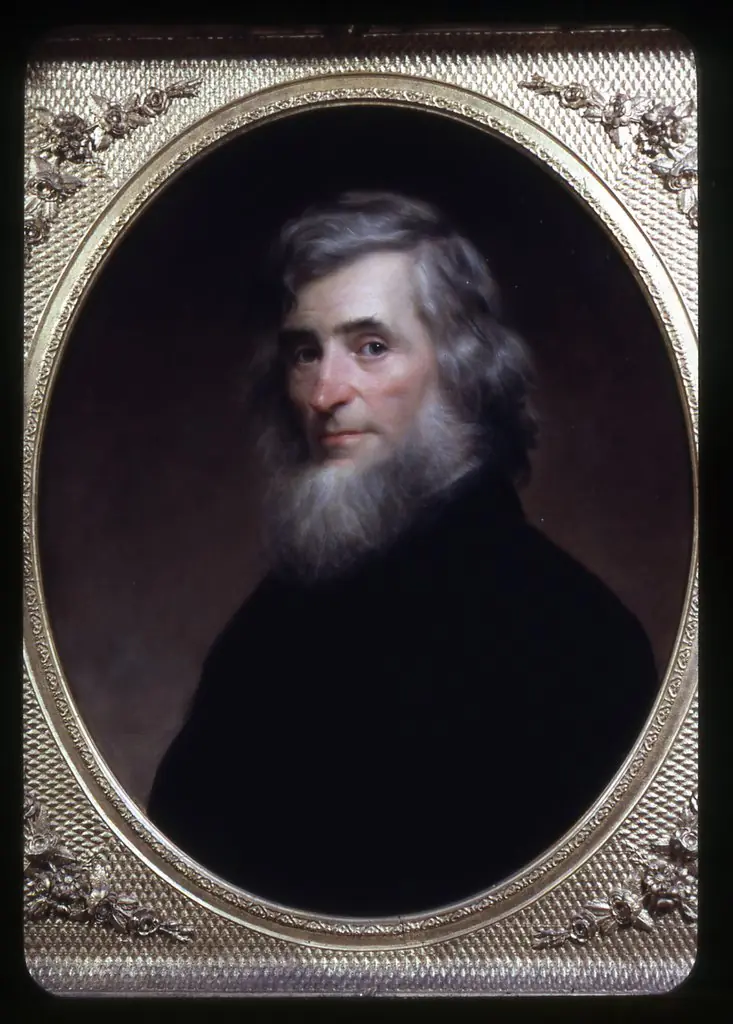
This is a black-and-white portrait of an older man with a full white beard and glasses.
This is a black-and-white portrait of an older man with a full white beard and glasses. He’s wearing a dark bow tie and a patterned jacket. The background is plain, keeping all focus on his face.
The text at the bottom says this is an engraving from 1865, made by Frederick Halpin. Engravings like this were often used for portraits in newspapers or books.
Look up engraving to see how artists carved these detailed images.
Overview
Frederick Halpin’s 1865 print presents a black‑and‑white likeness of the American landscape painter Asher B. Durand. Executed as an engraving with chine collé on wove paper, the image concentrates on Durand’s aged face, framed by a plain background that directs attention to his expression.
Subject & Meaning
The portrait depicts Durand with a full white beard, spectacles, and a dark bow tie beneath a patterned jacket. The solemn demeanor and direct gaze convey the stature of a respected artist of the Hudson River School, emphasizing his intellectual and creative presence.
Technique & Style
Halpin employed traditional copper engraving, incising fine lines to render tonal variation. The chine collé technique, attaching a thin paper layer to the wove support, enhances surface smoothness and allows crisp detail, typical of mid‑nineteenth‑century portrait prints intended for reproduction.
History & Provenance
Created in 1865, the print was likely produced for inclusion in periodicals or biographical volumes, a common practice for disseminating images of notable figures. Its attribution to Halpin and the specific paper type suggest it originated from a commercial engraving workshop in the United States.
Context
During the 1860s, engravings served as the primary method for reproducing portraits in newspapers and books, preceding photographic printing. Durand’s prominence as a leading landscape artist made his likeness a frequent subject for such publications, reinforcing his public reputation.
Artist & collection